This is the third installment in a multi-part series of articles that examines the ongoing saga of issues connected to the University of New England’s controversial research pier project
By RANDY SEAVER | Editor
The University of New England today describes its relationship with the city of Biddeford as “broken,” and the school recently filed a lawsuit against the city, alleging unfair treatment by the city’s code enforcement office.
School officials say the city is deliberately trying to prevent the construction of a 180-foot research pier that has already been approved by numerous agencies, including Biddeford’s Planning Board.
. . .
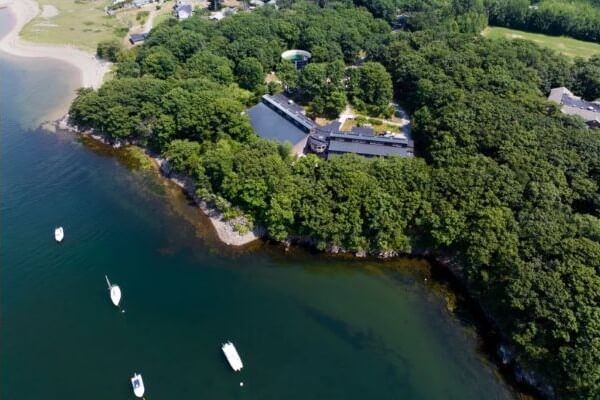
For its part, the city has filed its own lawsuit, alleging that the Saco River Corridor Commission (SRCC) – one of the regulatory agencies tasked with reviewing the pier project – overlooked one of its own prior rulings when approving the permit for a concrete and steel pier on the Saco River.
UNE officials sent a letter to Biddeford’s mayor and city attorney, asking if the city would consider a “third-party” mediation process to help work out their differences without the expense of ongoing legal battles.
Biddeford Mayor Liam LaFountain politely rejected UNE’s call for mediation, saying such a move would be inappropriate, especially since the city is awaiting a finding from the Maine Superior Court.
Over the last two years, several Biddeford residents have raised concerns about the approval process for the pier, complaining that the city’s own harbormaster was sidelined from the review process and alleging that the new pier will adversely impact other maritime uses on the river.
University officials, however, say the pier project is designed to provide the school with year-round access to a large, 60-foot research vessel that will be used to support ongoing and award-winning maritime research efforts. They also say only two moorings will be impacted and have offered to reimburse any relocation costs.
. . .
Escalating tensions
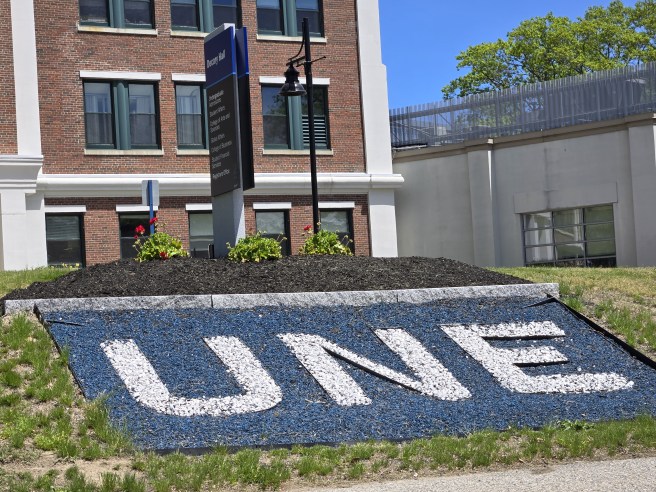
The tension and surrounding controversy between UNE and the city has had a notable impact on local politics, other development projects — and it has amplified a long simmering stew of accusations and finger pointing that intensified shortly after UNE publicly announced their plans to construct the new research pier.
In the latest development, the Biddeford City Council earlier this month voted 7-2 to extend what was originally described as a temporary six-month development moratorium at UNE’s Biddeford campus.
The city says it simply needs more time to review and update specific zoning ordinances that have not been reviewed for more than a quarter century. The city says it is trying to be “careful and thorough” and wants to recognize concerns raised by several citizens and others who also rely on year-round access to the river.
“The moratorium is a procedural
— Mayor Liam LaFountain
tool, not a judgment about the university.”
UNE claims the city is being unfair, saying Biddeford officials are simply trying to create a “retroactive reversal” of a previously approved project.
Furthermore, school officials contend that the development moratorium is hamstringing their efforts to address several other maintenance and infrastructure projects that are not connected to the pier and scattered throughout the coastal campus.
Biddeford Mayor Liam LaFountain said the council’s June 2 decision is not a new restriction nor a permanent ban. He also says the intent of the moratorium has not changed since it was first approved by the city council in January.
LaFountain says state law allows the city to extend the moratorium if the problem that prompted the moratorium still exists, and if the city is making reasonable progress toward solving it.
“The moratorium is a procedural tool, not a judgment about the university,” LaFountain told the Gazette.
The mayor also says the city has been making a “good faith and rigorous” effort to update its ordinances, address public concerns and carefully review growth at UNE’s Biddeford campus, pointing out that he appointed UNE President James Herbert to serve on the committee that is now reviewing the “institutional zone.”
. . .
The 250-foot “buffer” zone | A procedural oversight?
. . .
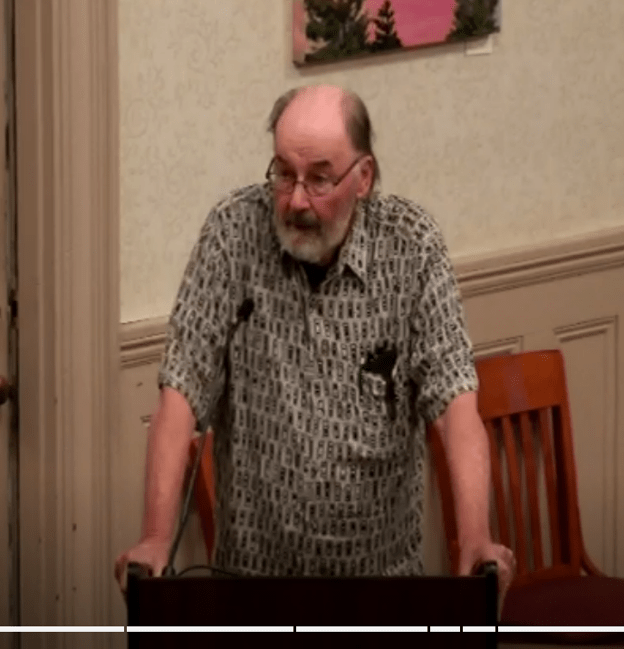
Biddeford residents Mark Robinson and Richard Rhames both publicly supported the council’s decision to extend the moratorium.
Speaking from the podium during the city council’s June 2 meeting, Robinson emphatically expressed support for the work and commitment of the Institutional Zone Review Committee, pointing out that the committee has had 13 public meetings in just the last 14 weeks.
“You all ran on transparency and accountability,” Robinson told the council, invoking campaign themes that were echoed throughout the city’s Nov. 2025 municipal election.
“The committee has been doing real work, and there is a lot of information that needs to be considered,” Robinson said. “I want UNE to get their pier, but laws need to apply equally.”
During his remarks, Robinson specifically reminded the council about a 250-foot shoreland protection zone “buffer” that was agreed upon between the city and UNE in 2001.
The so-called “buffer zone” was considered in 2001 as a formal compromise that would allow the university to build new dormitories that would exceed height-limit standards.
The buffer zone agreement was then incorporated into the Saco River Corridor Commission’s (SRCC’s) approval of the dormitory construction plans.
“I want UNE to get their pier,
— Mark Robinson, Biddeford
but laws need to apply equally.”
The city now says that the SRCC either overlooked or failed to consider the 250-foot buffer when approving UNE’s pier proposal in 2024.
The issue of the buffer zone and its potential implications on the overall pier project is now being reviewed by the Maine Superior Court, a lawsuit that was filed by the city – seeking legal guidance about whether the university’s plans violate previous agreements.
University officials say that shoreline protection buffer does not preclude any development activity within the zone. The school wants to now clear several mature trees along the shoreline and build a new road to support the new research pier.
For his part, Rhames said the SRCC’s failure to consider the 250-foot development zone was the result of “some ball dropping” that could be blamed on administrative turnover during the last 25 years. “Institutional memory has been lost,” Rhames said.
“Dredging up history is important,” Rhames told the council, echoing support for their decision to seek legal guidance from the court.
“We are a government of laws, not of men,” Rhames said. “The (IZR) Committee has been doing good work. If there’s only one side talking, you don’t really know what’s going on.”
No one from the university attended the city council’s June 2 meeting.
UNE filed its lawsuit against the city in response to Code Enforcement Officer Roby Fecteau’s denial of a building permit for the pier project. Fecteau said his office could not approve the project while the city’s court case against the SRCC is still pending.
Fecteau’s decision to not issue the building permit for UNE’s pier was upheld in a 2-1 decision by the Biddeford Zoning Board of Appeals in May.
So, how did we get here; and where are we going?
. . .
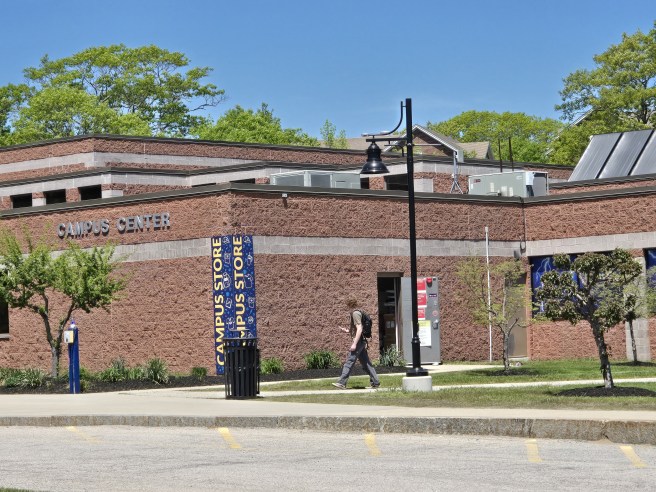
More than 25 years ago –under then Mayor Donna Dion — the city of Biddeford adopted a new ordinance to control and oversee rapid growth and development at the University of New England’s Biddeford campus.
Part of that ordinance triggered the formation of an “Institutional Zone.” The new zoning ordinance only applies to university-related development and is focused primarily upon UNE’s expanding coastal campus.
Along with the new zone, the 2001 city council also created an “Institutional Zone Review Committee” to review and develop zoning and planning recommendations that would give the city a clearer picture of the school’s growth plans and guidance for any future development.
That committee completed its initial assessment and made recommendations for the council to consider in its future planning and zoning decisions.
For the next 20 years, the city seemed to have a cordial and somewhat quiet relationship with the university.
The school moved forward on several new projects – such as new athletic fields, a new marine research facility and construction of the Harold Alfond athletic complex on the other side of Rte. 9.
While there have always been some pockets of public suspicion and concern about the university’s role in the larger community, the city quickly became much more focused on other issues, including revitalization of its downtown area, closing a controversial regional trash incinerator and expanding retail development on the western side of the city.
But shortly after the university announced its plans to construct a new, year-round research pier on the Saco River – public tension and controversy were reignited, and UNE once again found itself in a defensive posture.
School officials said they have been working with engineers and marine consultants since 2017 to develop a project that would allow year-round access for ongoing marine research efforts.
But abutting neighbors and others said the new pier would have a “forever” scenic and recreational impact on the lower estuary of the Saco River.
Existing mooring holders said the new pier would adversely impact them, and many people throughout the community raised strenuous concerns about the city’s decision to sideline Harbormaster Paul Lariveire from his statutory role in granting approval for the project.
The nature of the review process itself became a pivotal and dominant issue in the city’s Nov. 2025 municipal elections.
Location, location, location
Many of those raising concerns about the proposed pier – including some of the most vocal opponents — say their opposition is based solely on the pier’s proposed location, which they say would adversely impact other boaters on the river.
“I want the university to have its pier and be able to do the important marine research they want to do,” said John Shafer. “But we have to wonder why they are so adamant about one particular location that would negatively impact other people who use the Saco River.”
But the university says that it is more than willing to work with those who are leasing moorings in the area where the pier would be built. The school says only two existing moorings would be impacted by their project and have offered to cover all expenses related to the relocation of those two moorings.
The city’s harbormaster disputes the university’s claim and says as many as seven current mooring locations would be impacted if the pier is constructed where the university wants it built.
The harbormaster says the school should build its pier parallel to the shore, which would not impact any existing moorings and actually provide greater water depth for docking and turning a large 60-foot vessel.
University officials have consistently said that their proposed location was extensively reviewed by engineering and maritime consultants. They say the pier was carefully designed to provide year-round access for docking a research vessel.
. . .
Impact on other river users?
. . .
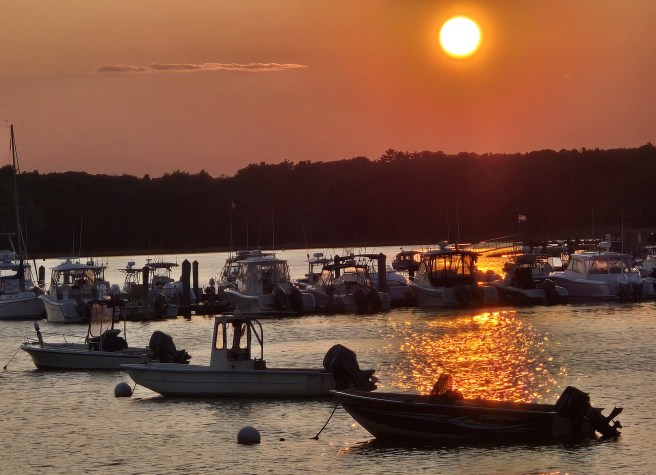
Biddeford’s harbormaster has repeatedly said that the university’s proposed pier will adversely impact “several” nearby vessel moorings.
The university says their project will only impact two current mooring location, and in both cases have offered to pay and reimburse fees requited to move those moorings.
The harbormaster, however, says that relocating the moorings is not as simple as it may appear to those who are not familiar with the river or how mooring locations are determined and maintained by state and federal laws.
“You can’t just pick up a mooring and move it a few hundred feet,” Lariviere said. “There are procedures and several factors to consider — never mind the requirements of following federal, state and local laws.”
Lariviere says he can only relocate or terminate an existing mooring under three specific circumstances: the mooring interferes with navigation for other vessels; if the mooring is damaged or poses risk and/or harm to other vessels; or if the mooring lease holder does not pay his/her annual mooring fees to the city.
Other than those specific exemptions, Lariviere says he simply cannot move any mooring just because another party wants to construct a project on the river. Moreover, Lariviere says there is waiting list with a backlog of individuals hoping to secure a mooring location on the Saco River.
According to Lariviere, determining a mooring’s location is a unique process that takes into consideration the vessel’s size and type as well as the impacts of both tide and weather conditions.
While several mooring holders have raised concerns about how the pier will impact them and their livelihood, at least one mooring owner says he is hoping a compromise can be reached between the university and impacted mooring holders.
. . .
NEXT | The future of lower Saco River mooring holders
PREVIOUSLY
PART ONE | UNE says their relationship with Biddeford is broken
PART TWO | UNE strikes back, files lawsuit against Biddeford
. . .
YOUR THOUGHTS ?


This story was made possible by the generous support of our readers and this local business sponsor

.
Local Journalism Thrives When Community Stands Behind It
.
STAY CONNECTED | SUBSCRIBE FOR FREE TODAY

THE BIDDEFORD GAZETTE
“Keeping You Connected to Biddeford”
Editorial Standards & Policies
© 2026 Biddeford Gazette, Inc. All Rights Reserved
 BIDDEFORD GAZETTE