
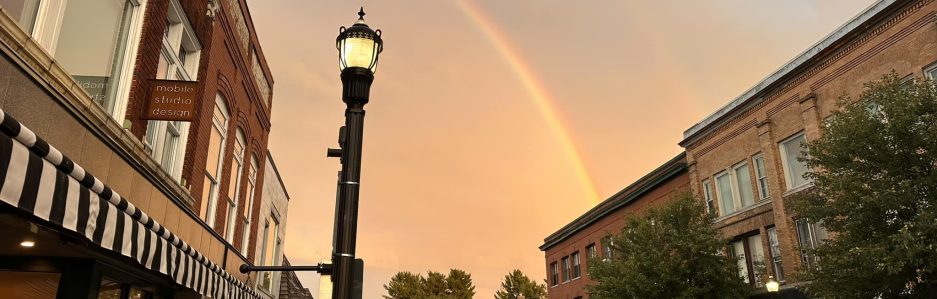
The city is facing numerous economic challenges. We need to consider a new approach based on fundamental fairness and cooperation.
Community Opinion | By JIM KRAUSE, Biddeford
For weeks — maybe months — now I have been listening to and reading comments about “Biddeford taxes are too high, they spend-spend-spend,” and yada-yada-yada.
I also hear things like “The University of New England is the largest employer and contributes so much to the tax base.”
Let me start by saying this: I don’t know if Biddeford spends money stupid or not, but I do know how to do a little basic research.
The city is currently asking for a substantial budget increase. This requested increase – although initially proposed at a much larger number – follows on the heels of consecutive property tax increases over the last few years.
I read both the city’s initially proposed budget and then the revised ‘bare bones’ budget that was released by City Manager Truc Dever earlier this month.
RELATED | See the Gazette’s detailed budget page (updates and downloadable reports)
__________
This is going to sound controversial, but I don’t think what the city manager is asking for is out of line with the current economy, sorry.
Don’t get me wrong. I don’t like it. I also believe Biddeford’s taxes are higher than what I think they should be, compared to similar cities (based on population and size).
According to current figures from the U.S. Bureau of Labor and Statistics, here are some facts that I think people are forgetting when they gripe about the increase as compared to 2025:
Gasoline/Fuel | up 31%
–– U.S. Bureau of Labor Statistics
Office Supplies | up 8.2%
Food/Groceries | up 14%
Energy Prices | up 12.4%
Merchandise/Shipping | up 5.9%
Nationally, inflation is up to 3.3 percent and expected to rise further, according to several economists and financial analysts.
A NEW APPROACH?
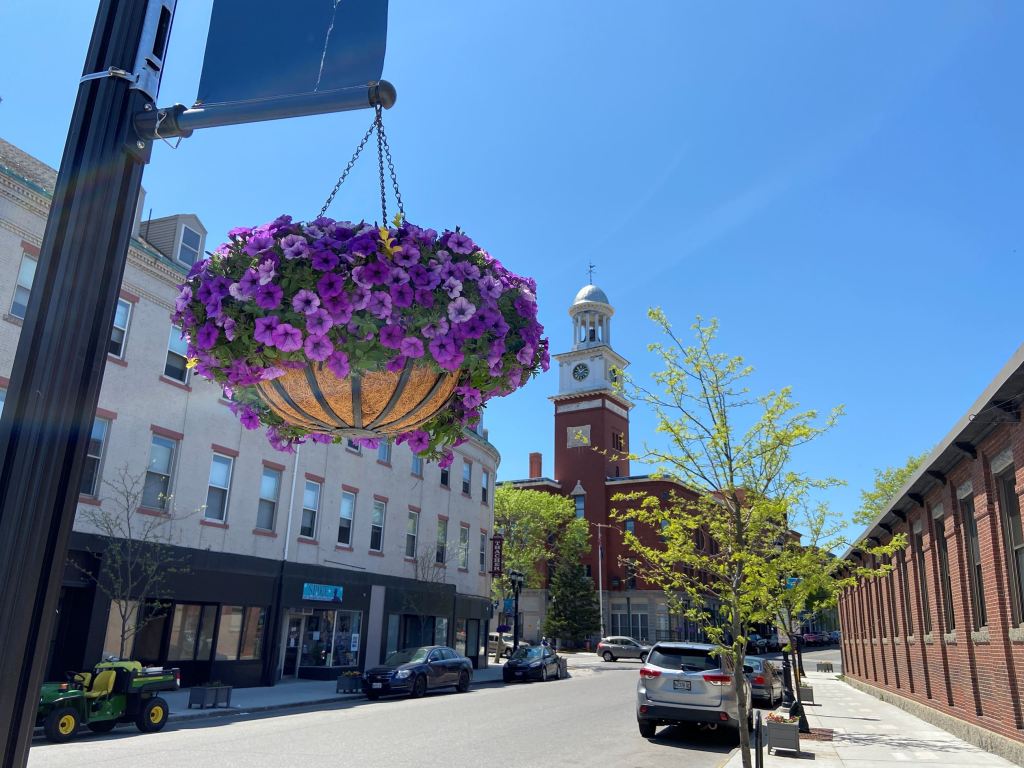
Sure, we can go through the budget — line item by line item — and we can all gripe about hanging flower baskets on Main Street — which I think is a stupid thing to complain about. Have just a little pride, people. Keep the flowers.
But are those trivial things going to bloat the budget? No, they aren’t. In any business, your biggest expense is typically tied to payroll (and associated insurance/pensions).
__________
Ask yourself, where does the tax revenue come from?
In Biddeford, about 65 percent of our revenue comes directly from property taxes. We don’t pay income tax to Biddeford, and there is no local sales tax. The state sharing portion (where people’s income tax does go) is actually a small portion of the remaining 35 percent.
The issue, as I see it, comes down to one basic factor. The city is asking residents to pay the majority of the budget load. Although this approach is pretty normal, there is a caveat to be mentioned here.
Properties owned by the University of New England (UNE) are — of course — not taxed by the city. This is standard practice in any community. Colleges, universities, hospitals and other non-profits are exempt from paying property taxes.
This situation was much more palatable when UNE was operating as a small, somewhat quiet, liberal arts college; formerly St. Francis College.
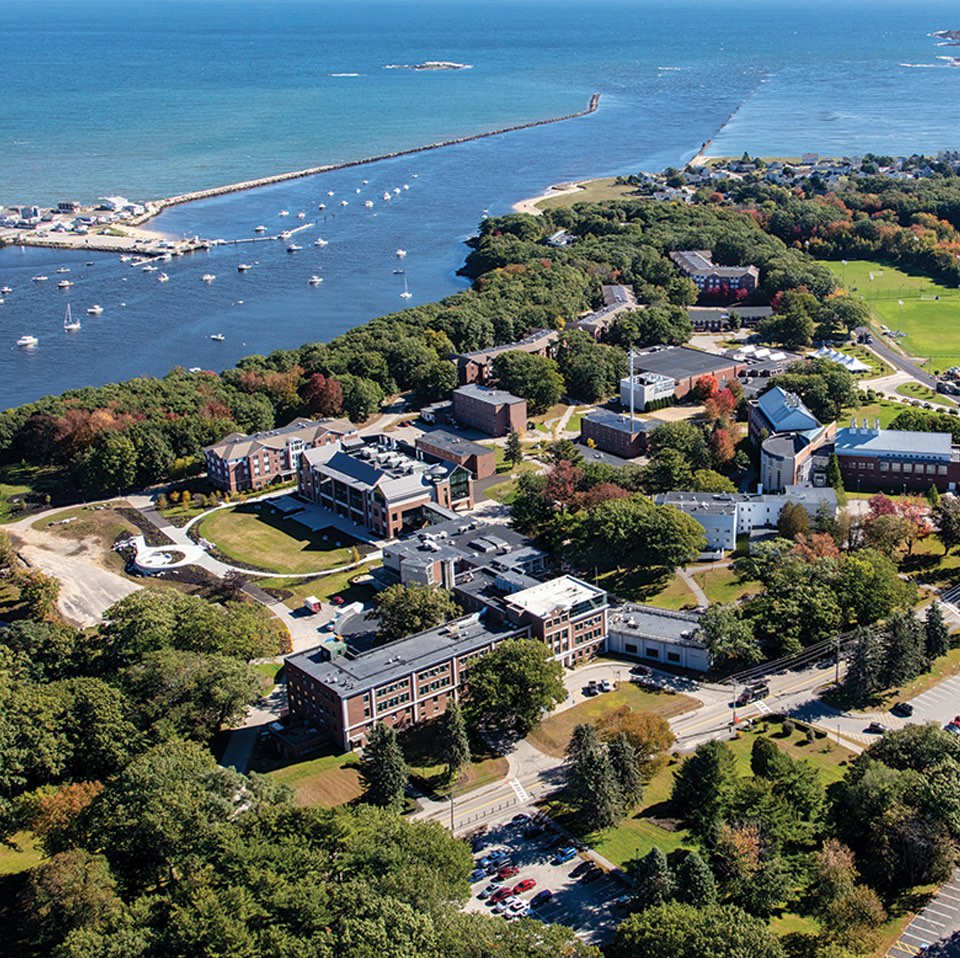
But over the last 30 year, the university has been able to purchase more and more property, and has expanded its campus footprint with new buildings and facilities, including large dormitories, new athletic fields, administrative offices and research facilities all located in proximity to Biddeford’s pristine coastal shoreline – the city’s most desirable real estate.
__________
More often than not, each parcel UNE purchase goes from tax producing to non-tax producing, notable exception would be the recent news about UNE’s option to acquire roughly 20 acres of river-front land and buildings now owned and operated by St. Joseph’s Convent, another non-profit.
RELATED | The city, the convent and the university. What happened?
The bulk of UNE’s Biddeford campus is located on land that is quite literally worth millions in potential residential property taxes that will never be available to help share the city’s work load and provide all of its neighbors with some significant tax relief.
The university and its most rigorous supporters do a pretty good job of touting their positive economic benefits to the city. Maybe they should also acknowledge their other impacts on the community, such as the frequent (2-3 times per week) calls for fire and rescue services, or the impacts of increased traffic
If UNE wants to have a “partnership” with the city whenever they want to build a new multi-million-dollar project, maybe they should also step up their game beyond their annual – and rather piddly – payment in lieu of taxes (PILOT), roughly $100,000 per year.
According to the Association of American Universities, a property tax exemption is governed by state and local laws, which usually require the property to be used exclusively for educational purposes.
I’m thinking we need to seriously review how non-profits are taxed. Same goes for churches, why are they tax free? By definition, a church is “an organized body of believers often representing a specific denomination” according to Merriam-Webster.
Hey, city council — my house is now a church because me and my family, we believe (in something). Please send me my tax-exempt letter.
For those who will invariably say “all of the employees and students contribute taxes,” do they? Really?
There is no local income tax, so any revenue is based on state contributions. Those 2,500 or so students are probably not paying any real state income tax based on their total income. And the faculty and staff (according to Maine tax records) comprising roughly 1,000 employees? About 20 percent of them are under the poverty levels and qualify for enough exemptions that their tax base is also essentially non-relevant.
This leaves those of us who actually live in Biddeford with about 800 employees who pay state income taxes, working for an employer that pays nothing in property tax, which is the real revenue stream for the city.
CONSIDER ALL THE FACTORS
This column isn’t just about UNE or any other non-profit organization.
I’m just asking my neighbors to consider all the factors leading to this year’s rather rough municipal budget process.
Inflation is currently out of control. If you don’t want to raise taxes, then expect to see fewer police patrols, more roadway potholes, etc.
Residential taxpayers need — and deserve — some property tax relief. We should be looking at valuable land that isn’t being taxed because it is a parking lot for a dormitory or a soccer field.
We should be looking at valuable
land that isn’t being taxed
because it is a parking lot
for a dormitory or a soccer field.
We also need to be more realistic about our infrastructure. Everyone gripes about the cost of these sewer projects, but what do you want the city to do? Some of these projects are more than 100 years old.
These problems are not going to fixed in one year.
It is both unrealistic and unfair to blame the current city council for these problems. These problems have been built over many years of deferred maintenance and economic realities that are well beyond the city’s control or grasp.
Our current financial situation is the result so many ingredients turning the soup sour.
To fix this, we will need to adopt a team effort that is built upon creativity, collaboration and efficiency.

ABOUT THE AUTHOR | Jim Krause is a volunteer, contributing features writer for the Biddeford Gazette. A native of Pennsylvania, he has been living in Biddeford since 2023. The opinions expressed here are solely those of the author and are not intended to express the viewpoints of the Gazette’s staff, publisher or community sponsors.
SPEAK UP | The Biddeford Gazette strongly encourages robust, diverse and respectful community conversations directly related to the city of Biddeford. To submit your own guest column, Go Here
__________
READER FEEDBACK
DEBRA CASALINO | This article is right on target! As a taxpayer for over 5 decades in Biddeford, it is criminal that the city relies almost entirely on residents – many of whom are on fixed income – to support an ever-increasing budget. It is time to evaluate other sources of income and allow the residents who make this city a vibrant place to live some relief from astronomically high taxes so that we can continue to enjoy living here. Has anyone in City Hall considered the downstream impact of such high property taxes?? Residents will continue to leave, business will leave, young people will find alternative places to live…Biddeford will be forever a Mill town that could not quite become anything else than a “has-been”. PLEASE City governance, look to the nonprofits and other sources – such as UNE to pay their fair share of tax to support a thriving city and its growth.
SHELLY MOORE | Well said!
JIM THOMAS | The remarks outlined in this article are right on target. UNE needs to pay more for the city services than a mere $100,000 a year. The citizens need to understand deferred infrastructure repairs need to be addressed sooner rather than later.
85 percent of a city budget is salary and benefits, so that’s where the biggest savings in a municipal budget is coming from. Reduction in force maybe an option but there are consequences to that decision as well. Priorities are going to have to be made, a good city manager working with the elected leadership, city employees, businesses, residents and UNE all working together can meet these challenges. Keep talking and a solution can be found. This all comes from 35 years in the public management profession and a native kid from Lewiston, Maine.
__________
YOUR THOUGHTS?


__________
STAY CONNECTED | SUBSCRIBE FOR FREE TODAY
BIDDEFORD GAZETTE
BRACE FOR IMPACT | Biddeford’s Professional & Trusted News Source
Biddeford Gazette | Our Editorial Standards & Policies
© 2026 Biddeford Gazette, Inc. All Rights Reserved
 BIDDEFORD GAZETTE