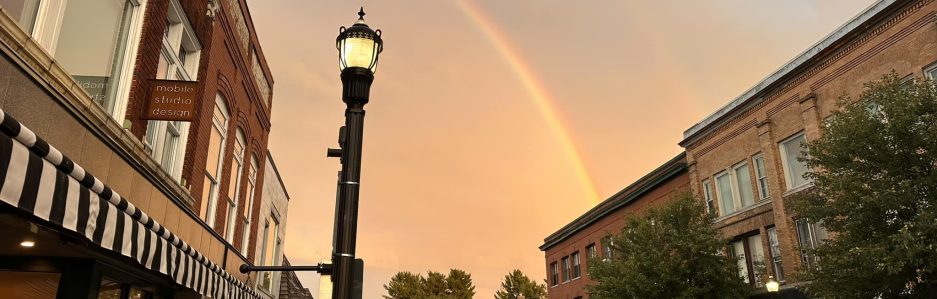
Doug Sanford | A preacher’s son, developer

For nearly 50 years, Biddeford’s most iconic ‘bootstrap developer” has demonstrated a deep love for the city.

By RANDY SEAVER | Editor

When looking back over the last 50 years of Biddeford’s history, there is no question that Doug Sanford played an extraordinarily pivotal and significant role in resurrecting a community that was brimming with potential but mired in despair.
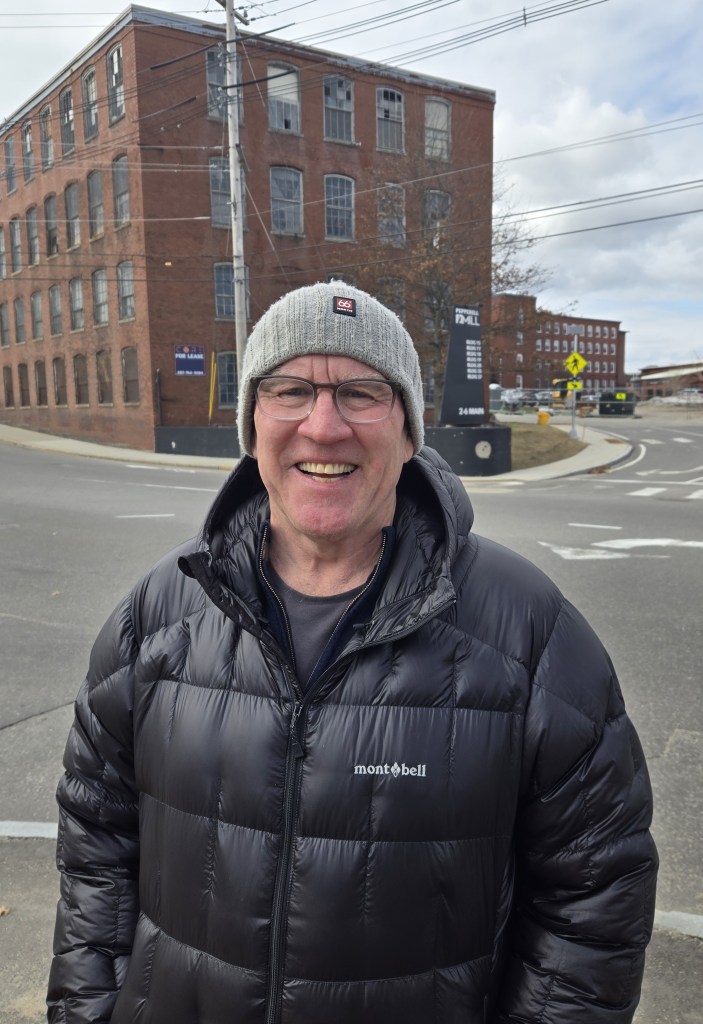
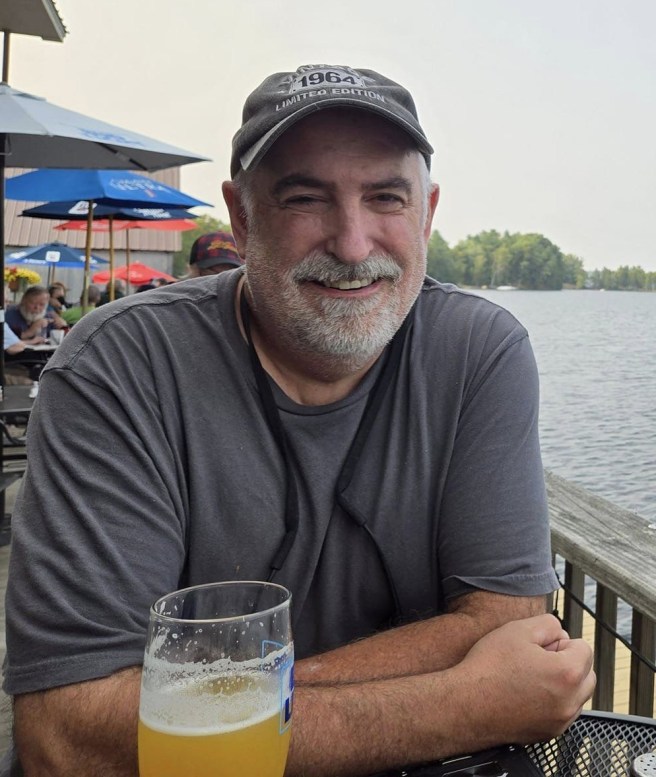
WHERE HE MADE HIS MARK | Doug Sanford stands near the entrance of the North Dam Mill complex, part of the former Biddeford Textile Company that now offers luxury, riverfront apartments and scores of small, locally owned businesses. (Seaver photo)

_____________

Sanford, 68, could easily be described as the walking, talking definition of a bootstrap real estate developer. His projects and fingerprints can be found throughout Biddeford, most notably his renovation and revitalization of several vacant downtown mill buildings.

A few critics – generally those who offer public commentary from the sidelines – routinely dismiss Sanford’s numerous contributions to Biddeford – painting a picture of a “wealthy real estate developer from away.”

That misinformed narrative hardly holds water.

Although Sanford has been able to successfully capitalize on many of his investments, he first arrived in Biddeford more than 45 years ago – fueled only by an excessive intake of caffeine, a meager savings account and an instant love and admiration for the city of Biddeford.

“Doug has this mix of tenacity and creativity that really made the mill redevelopment possible,” said Delilah Poupore, executive director of the Heart of Biddeford, a nonprofit organization dedicated to the revitalization of downtown Biddeford.

“He saw something in Biddeford when a lot of people didn’t, and then just kept finding ways to make it work, tenant by tenant,” Poupore added. “He’s always been willing to push a little further than what people expect, and I suppose that can open you up to criticism; but it’s also what got Biddeford on the map.”

Poupore credits Sanford as the “spark” that led to the kind of walkable, livable downtown that her organization is continually working to promote and develop.

“From the Heart of Biddeford perspective, Doug and [his wife] Lauren have been thoughtful partners in the revitalization of the downtown and in supporting our organization in ways that have truly mattered.”

Former Biddeford Mayor Alan Casavant ran his first mayoral campaign in 2011 on a pledge to continue expanding on the foundational work of former Mayor Wallace Nutting and others who saw lots of potential in the city’s downtown area, despite the presence of a municipal trash incinerator that was located only 900 yards away from City Hall.

Casavant, a former history teacher at Biddeford High School, said he often taught his students about the historical impacts of industrialist John Rockerfeller and his ability to “see down the road and around the corner.”

“Doug Sanford had the same knack for seeing things that other people – for a variety of reasons – just could not see,” Casavant recalled.

“His reputation as a true visionary for Biddeford will certainly stand the test of time,” Casavant added. “He saw those shuttered mills as much more than just empty real estate. He saw the real potential, and he risked a lot to bring that vision to reality.”

Former newspaper publisher David Flood – another early believer in downtown Biddeford’s potential — described Sanford as a man of vision and hard work in his own 2015 blog post about the real estate developer who helped chart a new course for the city | Doug Sanford has been investing in Biddeford since the early 1980s.

________________

“He’s always been willing to push a little further than what people expect, and I suppose that can open you up to criticism; but it’s also what got Biddeford on the map.”

— Delilah Poupore, Heart of Biddeford

Humble beginnings and life lessons | A preacher’s son

Sanford was born as the youngest son of a modest church minister in central, rural New Hampshire. The family — including four other children and Sanford’s mother — had limited income and they relied on the generosity of the church, living in an adjacent parsonage building.

When Sanford was still quite young, he worked alongside his older brothers and his father, helping to build the family’s very first home in Auburn, New Hampshire, a small community located roughly 12 miles east of Manchester.

“You know, I do remember going to the town dump after dark and helping my father and brother load abandoned timbers that we used to build that house,” he laughed during a recent interview with the Gazette.

Sanford speaks fondly of his father and the lessons that he taught his children during one of the most socially turbulent periods of American history.

“The Vietnam War was consuming discussions everywhere,” Sanford recalled. “And then you had the assassinations of both Bobby Kennedy and Dr. Martin Luther King.

“My father was a steadying force during those difficult times. He offered sage wisdom for both his congregation and us kids.”

Sanford described his father as a “social justice leader,” a man who was proud of his role in coordinating a visit of several other New Hampshire ministers to Dr. King’s funeral.

“I learned a lot from my father,” Sanford recalled. “He was such a kind and decent man, always leading with his heart. Always willing to help those around him.”

Sanford and his wife, Lauren, were able to buy a 250-year-old, run-down house with 40 acres of land (but no mule) in the small, pastoral town of Shapleigh, Maine.

“They were offering owner financing, and that was a good thing because we had no [expletive] money,” he laughed. “The funniest part of that story is that we discovered – after a survey – that we actually had 120 acres.”

Sanford was now supporting his own young family by working in construction.

“We called that place the Sanford Family Project,” Sanford recalled with a chuckle. “When I say we had no money, I mean it. We had to come up with $4,000 cash for the down payment. I literally had quarters stacked on the table.”

Doug and Lauren raised three children, Cas, a 38-year-old attorney; Max, a 36-year-old veterinarian; and Jordan, a 33-year-old private equity manager.

“I call my kids a lawyer, a doctor and an Indian chief,” he laughed.

But today, Sanford’s top priority is spending time with his four grandchildren.

“I am very proud of my kids,” he said. “When I look back, I know –without hesitation – that your family is everything. Without them, I’m nothing.”

Now somewhat retired, Doug and Lauren enjoy time with their family on what was once a dairy farm in Waterford, a small community located in western Maine.

Welcome to Biddeford | A dicey proposition

Sanford first arrived in Biddeford in 1981. He didn’t have much money, but he had earned a decent credit score and a favorable commercial reputation from investments he made in a few small residential projects throughout New Hampshire.

The first property that caught Sanford’s eye in Biddeford was a large building owned by Herve and Romeo Binette on the corner of South and Elm streets.

“It was in tough shape, but I thought it had good bones,” Sanford said. “The very best part was that it had a ‘For Sale’ sign out front,” he laughed.

It was another owner-financed opportunity, and once again Sanford had to scramble and push all his chips to the center of the table to make the purchase work.
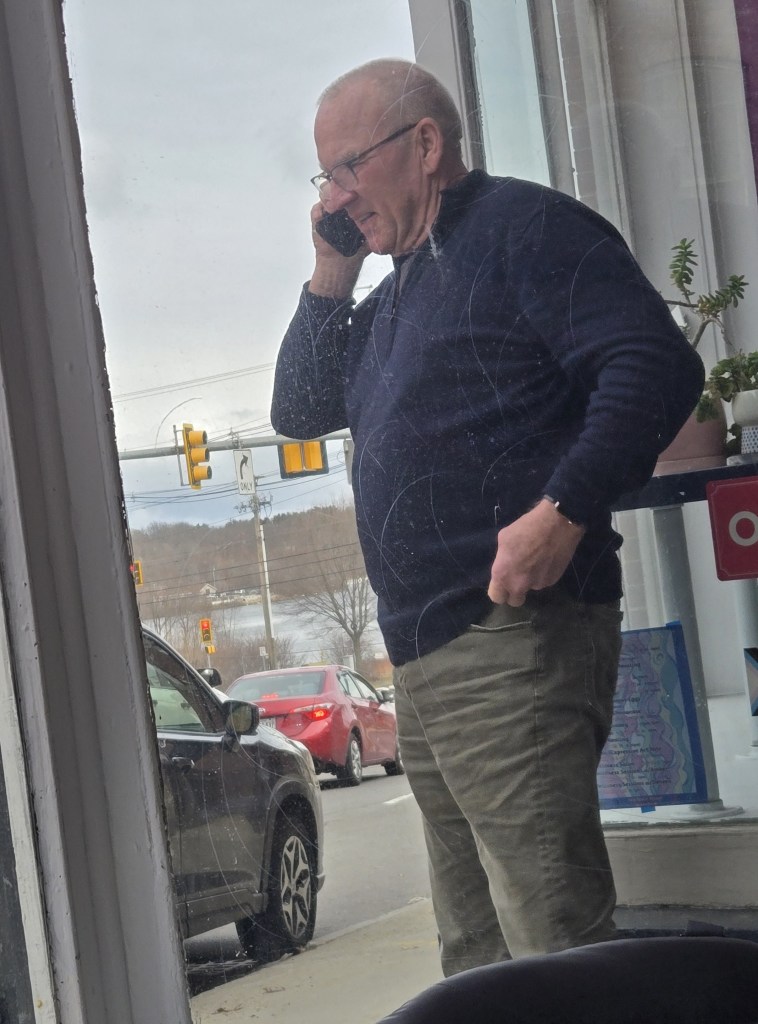
STILL WORKING THE PHONE | Doug Sanford takes a quick phone call during our interview at Time & Tides on Main Street in Biddeford (Photo by Randy Seaver)

_______________

A little old lady who played piano

The only tenant that came with the building was an older woman who had actually been born and raised in the very same apartment on the building’s second-floor.

“She had one of those old Kerosene stoves that was also the unit’s heating source,” he recalled, rolling his eyes. “That stove scared the [expletive] out of me. I thought I was going to lose my entire investment in some terrible fire.”

According to Sanford, his new elderly tenant would often visit area nursing homes and play piano to entertain convalescent patients.

“You’re not going to believe this,” Sanford says, whispering and leaning over the table at the Time & Tides coffee shop on Main Street. “She only paid $25 per month in rent.”

“What the hell was I supposed to do?” he laughed, throwing his arms up in the air. “You think I’m going to evict a sweet little old lady who plays piano for senior citizens? Honest to God, she was literally born in that apartment. Talk about a public relations disaster.”

[At this point, we had to momentarily pause the interview because both Sanford and I were laughing so hard that it was difficult to speak.]

_______________

She was only paying $25 per month in rent. You think I’m going to evict a sweet little old lady who plays piano for senior citizens? Honest to God, she was literally born in that apartment. Talk about a public relations disaster.”

— Doug Sanford

A passion for Biddeford | Despite the odds

Sanford’s legendary piece-by-piece approach to revitalizing Biddeford’s downtown core was anything but easy.

“The 1980s were a really difficult and challenging time for Biddeford,” Sanford recalled. “A lot of people were giving up hope about the city’s future.”

Even today, many of Biddeford’s older residents often reminisce about the heyday of downtown shopping on Main Street in the 1940s and 1950s, when retailers like Woolworth’s, Butler’s and Youland’s jewelry store catered to a growing population of hardworking and thrifty millworkers.

But as the popularity of suburban shopping malls – such as the Maine Mall in South Portland –continued to rise, Biddeford’s downtown retailers experienced declining revenues.

More heartbreaking was the hard reality that Biddeford’s once thriving downtown textile mills were now winding down, unable to keep pace with foreign imports and increasing government regulations.

Those mills were the central and driving force of Biddeford’s economy right up until the last remaining were laid off and the doors were permanently closed.

City leaders in the 1980s found themselves engulfed in a myriad of public policy challenges.

The textile mills – the city’s largest employer and taxpayer – were winding down and headed toward extinction.

New consumer shopping trends created a ripple-effect of bad news in the downtown area. Once thriving shops were now boarded up with “For Lease” signs plastered on plywood meant to deter vandals.

On top of all that, the mayor and city council were facing increasing pressure from state regulators about the municipal landfill that was located on the Andrews Road.

In retrospect, the city made the horrendous decision to allow the development of a trash-to-energy incinerator smack dab in the middle of a dying and neglected downtown.

“But who can really blame them?” asked one Biddeford resident, speaking on the condition of anonymity. “They were sold a bill of goods with all sorts of promises and guarantees. Hindsight is always 20-20.”

Biddeford embraced the MERC incinerator as a way to maybe help the struggling mills by offering ventilation steam for industrial heating capacity. MERC was going to be the city’s biggest taxpayer. They were going to create nearly 100 good-paying, union jobs.

The bad part? MERC became a regional trash incinerator, accepting municipal solid waste (MSW) from more than 23 other communities throughout Maine and New Hampshire.

The unending stench of burning trash – combined with frequent explosions created by improperly disposed propane tanks – set Biddeford on a collision course toward failure.

City politics descended into chaos. There was plenty of finger-pointing and even accusations of “good-old boys” selling their souls, hinting at corruption that was never proven.

From the outside, Biddeford looked like a war zone, a dysfunctional city unable to get out of its own way.

But Doug Sanford saw things differently.

A new path forward for Biddeford

“Yup, there were people who questioned my sanity,” Sanford laughed. “But I just couldn’t look away from the potential. I believed in the city of Biddeford even when so many leaders had stopped believing in Biddeford.”

Sanford started small and carefully. A building here and a building there, all the while developing solid working relationships with local and state officials.

He also forged relationships with community partners, including donations to nonprofit organizations throughout the city.

The legend is true: Sanford was eventually able to purchase the abandoned 380,000 square-foot North Dam mill complex – former home of the Biddeford Textile Company — for $1 per square-foot. But he was taking a huge personal risk.

“It was all on the line,” he recalled. “You know what they say? Go big or go home.”

Sanford had to rely on his own assets because commercial lenders had serious concerns about potential liability issues, especially because Sanford was preparing to renovate 150-year-old brick buildings along the shore of the Saco River.

“The banking guys looked at it as a liability, not an asset,” he said. “But I just decided to move forward.”

 That was not Sanford’s last major investment in Biddeford.

It was all on the line. You know what they say? Go big or go home.”

When the Pepperell Mill closed a few years later, Sanford purchased that property, too. “The two mills shared the resources of a steam plant,” he explained.

Other – better financed — real estate developers also wanted that property. Even city leaders doubted Sanford’s ability to pull off such a large and complex investment.

Sanford – sometimes forced to fight tooth and nail with other developers and certain city officials — persisted and won.

He converted that former mill complex as a business incubator for several emerging local businesses such as Hyperlite and Angelrox.

Portland Pie Company later decided to offer a location in that building.

“The pieces fell together nicely,” Sanford said. “It was a big risk for me – and for the city of Biddeford. I’m glad it worked out.”

Never miss an update | Subscribe for free today!

_______________

THE BIDDEFORD GAZETTE | Biddeford’s Trusted, Professional News Source

Our editorial standards and policies: Biddeford Gazette | Standards & Policies

© 2026 Biddeford Gazette, Inc. All Rights Reserved

INTERVIEW | David Kurtz, city councilor, lawyer and hiker

By RANDY SEAVER, Editor

David Kurtz takes in a deep breath – pauses – and looks away, toward the coffee shop’s window before answering one of our questions during an informal and candid interview.

Kurtz, 39, is one of the three new Biddeford city councilors who were each first elected to office in November.

Despite the relaxed setting on a Tuesday afternoon at the Time & Tides coffee shop on Main Street, Kurtz approaches our questions with the same style of deliberative and thoughtful responses that are becoming his public trademark.

He is a serious man but is also equally funny and somewhat self-deprecating.

Biddeford City Councilor David Kurtz (Seaver photo)

Our hour-long conversation is free-wheeling. At times the mood is light and jovial. But Kurtz also doesn’t pull any punches when talking about growing up as “a geek” with divorced parents in southern Maine.

And he is as serious as a heart attack when discussing some of the issues now facing the city of Biddeford.

“There is absolutely no question,” he said. “We need to do better, but I also think we’re on the right track.”

Kurtz’s childhood was much less than anything that could be described as idyllic. His father struggled with a drug addiction. His mother did her best to raise her son alone on a meager income.

Despite those somewhat gritty circumstances, Kurtz heaped praise on both of his parents.

“They both loved and supported me unconditionally,” he recalled. “They were doing the best that they could do. Yes, my father had a substance use disorder, but he read to me every night when I visited him on weekends or vacation days.”

Here are three things everyone should know about David Kurtz.

First, he wore open-toed sandals to the interview, despite piles of frozen snow on the sidewalks and mid-February freezing temperatures.

A few hours later, he was dressed in a jacket and necktie for a meeting with his constituents at City Hall to discuss priorities for the city’s recreational assets. No sandals. Polished shoes.

Secondly, Kurtz worked in a liquor store when he was just 17 years old. “I looked more like 39 back then, than I do today,” he laughed.

Finally, Kurtz is often accompanied by his mother, Cynthia, during public events, including last week’s ward meeting and while enjoying the city’s annual downtown Winterfest celebration.

Sometimes people need to be willing to grab a shovel and help pick up some shit.”

In his very first bid for public office, Kurtz was unopposed in his quest for the council’s Ward Five seat.

Kurtz received 553 votes – a little less than 73 percent of the total ballots cast in that council race. According to the city clerk’s office, 211 voters in Ward Five left that particular ballot choice blank.

Ward Five – previously represented by Neva Lance, Julian Schlaver, Victoria Foley and Amy Clearwater – includes the city’s downtown area and a sprawling collection of repurposed former mill buildings.

While Biddeford is, in fact, Maine’s youngest city (35.6 median age), Ward Five is also arguably the most diverse, youngest and politically progressive of Biddeford’s seven voting wards.

Kurtz is a corporate lawyer. He graduated from the University of Southern Maine’s Law School in 2016.

Today, Kurtz is employed as a corporate lawyer for Robert S. Gitmeid & Associates, a New York-based firm with offices in all 50 states. Kurtz runs the firm’s Maine and Vermont offices.

Kurtz “shares a bed and custody of two cats” with his girlfriend, Dani, a veterinarian. The couple lives in a newly constructed residential building on Upper Falls Road (formerly Gooch Street).

Meet the new guy

Kurtz takes a sip from his coffee as we begin the Q & A portion of our meeting.

“Okay, I’m ready,” he laughed. “Let me have it.”

You double-majored in economics and bio chemistry at Hampshire College. Bio chemistry?

“All my friends were pre-med. I couldn’t keep up with their conversations, so I decided to try a new tact.” (Laughs)

How and why did you get involved in city politics?

“I served on the Recycling & Waste Management Commission. I found it fascinating. I got to work closely with [Public Works Director] Jeff Demers. Man, that guy knows a lot.”

“On that committee, I worked alongside [city councilors] Brad Cote, Jake Pierson and Abigail Woods and with Liam [LaFountain] before he became mayor.”

You’re not a Biddeford native.

“No. Almost, but not quite.” (Laughs) “I wasn’t born here, and I’m a bit self-conscious about that. I am from Maine, if that helps. (Laughs). My dad lived in Biddeford. My mom lived in Kennebunk. I commuted between the two communities during my childhood.”

You say you grew up in a financially challenged household, yet you ended up at Waynflete, a prestigious private high school. How did that happen? Good grades?

“Exactly. I was as shocked as anyone that I got in.”

Serving on the city council is often a thankless and tedious endeavor. Did you think it through before taking out nomination papers?

“Oh sure. I talked with [former Mayor] Marty Grohman and Norm [Belanger] and Liam – the three guys running for mayor. They didn’t try to talk me out of it.”

What motivated you to run?

“I saw where the city was heading, and I had my own concerns, I’m of the belief that sometimes people need to be willing to grab a shovel and help pick up some shit.”

What are your current committee assignments?

“I serve on the Policy Committee, the Citizens Advisory Committee and the Diversity, Equity and Inclusion Committee. I also serve as the city council liaison on both the Biddeford Housing Authority and the Heart of Biddeford.”

You’re keeping busy.

“Pretty much. I also have a pretty time-consuming job. Dani and I are planning a vacation in 2028.” (Laughs)

You seem to be a good fit for this particular ward.

“Well. Thank you for that, kind sir. I feel at home in this ward. Many of my constituents are just like me – – relatively new arrivals in the city. I want to make sure their voices are heard.”

Future political plans?

“Nope. This is the end of the line for me.”

Your father read to you nightly. What books?

“Rudyard Kipling, Robert Heinlen, Issac Asimov – all the good Jewish writers.” (Laughs)

Hobbies? Background?

“I’m a big fan of long-distance hiking. I was actually a ‘ridge runner’ with the Appalachian Mountain Club.”

Is gentrification a concern for Biddeford?

“I think so, and I’m part of the issue. Higher-income, newer professional resident. We have to work through it without denying the challenges.”

You describe yourself as a “political leftie.” What’s your mission statement as a city councilor?

“I want the lowest taxes possible without cutting essential services.”

Note: The Biddeford Gazette will be conducting similar interviews with the other eight members of the city council over the next few weeks.

____________________

ABOUT THE AUTHORRandy Seaver is the editor and founder of the Biddeford Gazette. He has been covering Biddeford news and politics for nearly three decades. He may be reached by email: randy@randyseaver.com

Never miss an update! Subscribe for free today!

THE BIDDEFORD GAZETTE | A Legacy of Trusted, Independent Journalism

Our editorial standards and policies: Biddeford Gazette | Standards & Policies

© 2026 Biddeford Gazette, Inc. All Rights Reserved
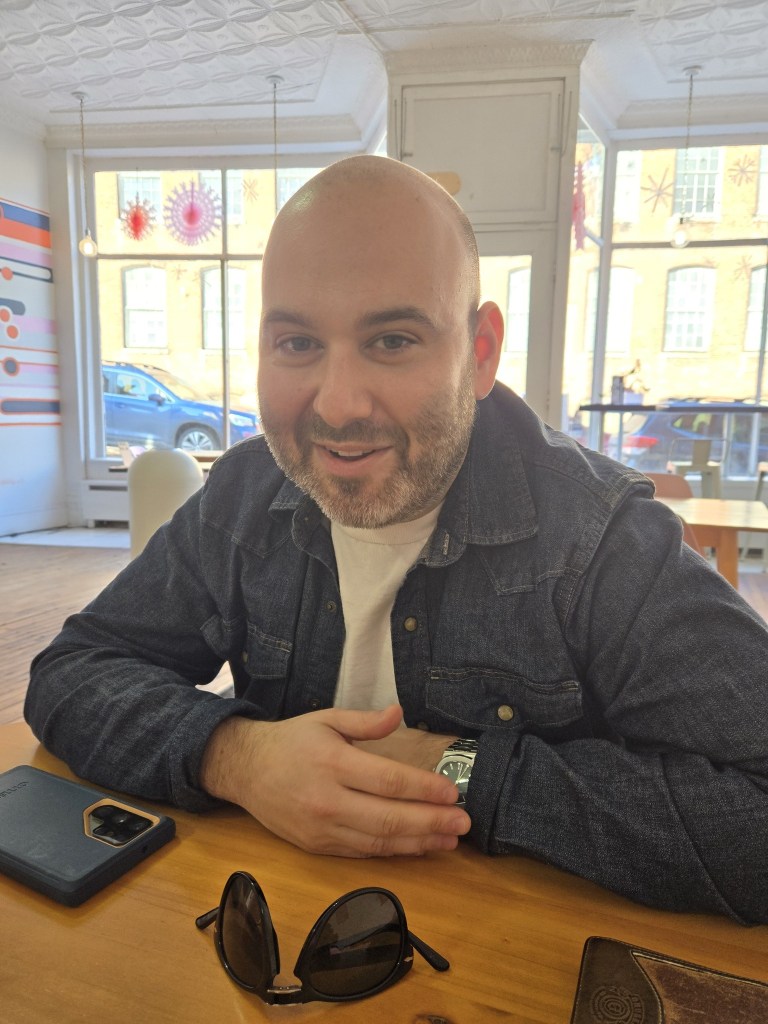
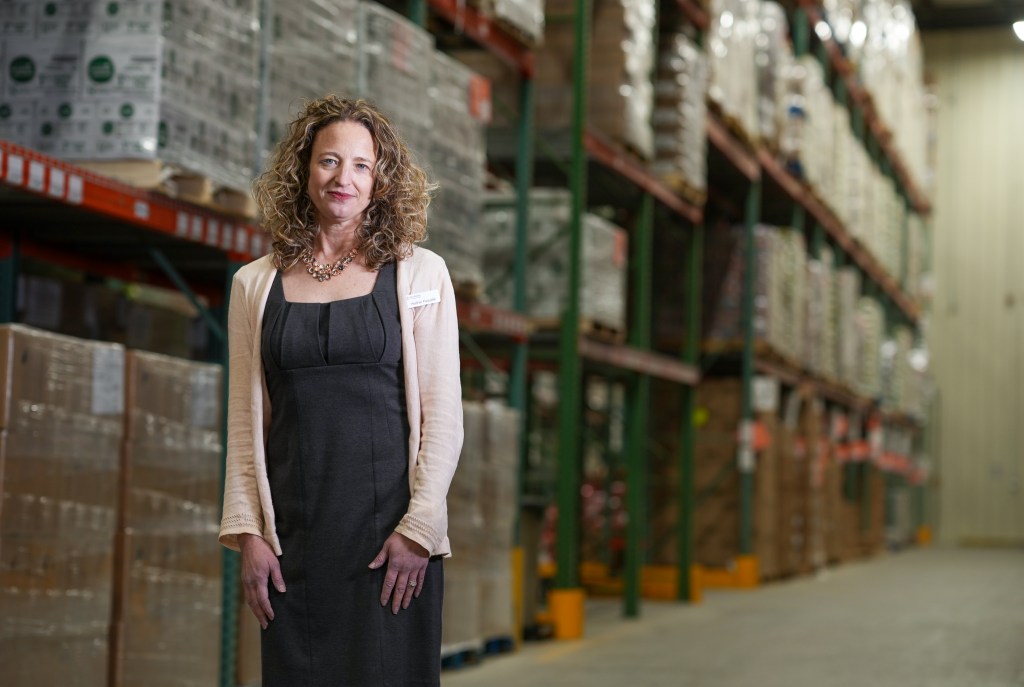
Heather Paquette: President of Good Shepherd Food Bank of Maine

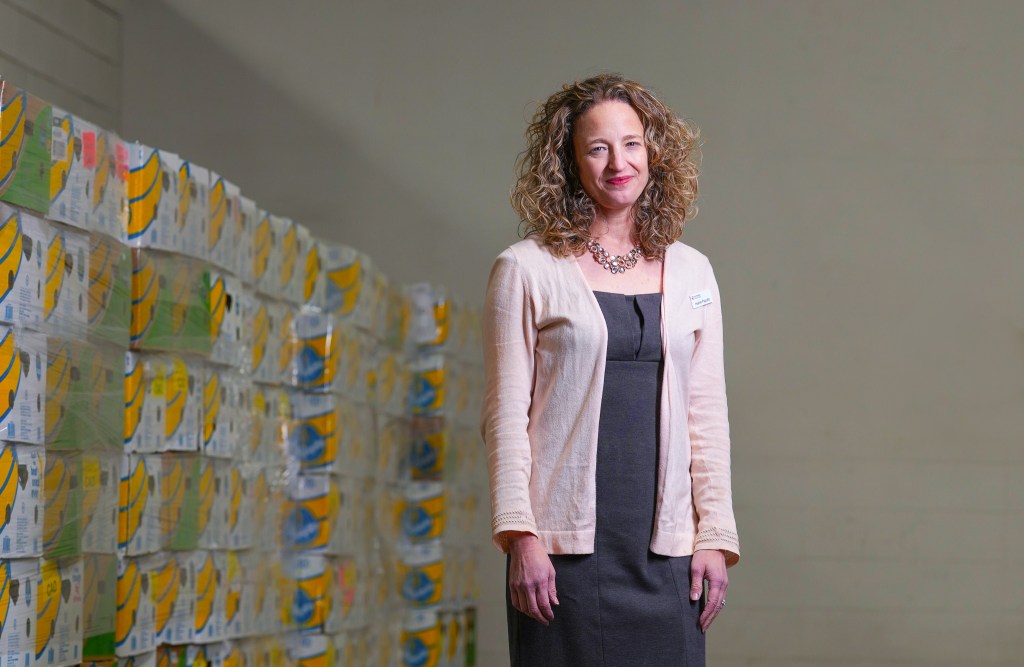
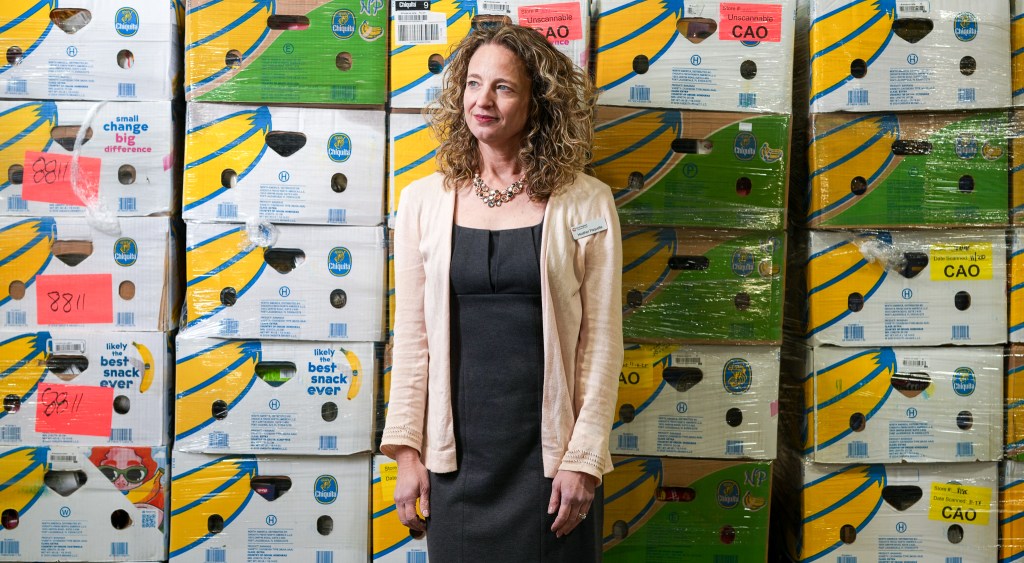
Heather Paquette, President of Good Shepherd Food Bank of Maine. Photo by Cy Cyr

By CY CYR, Contributing Writer, Brick + Tides

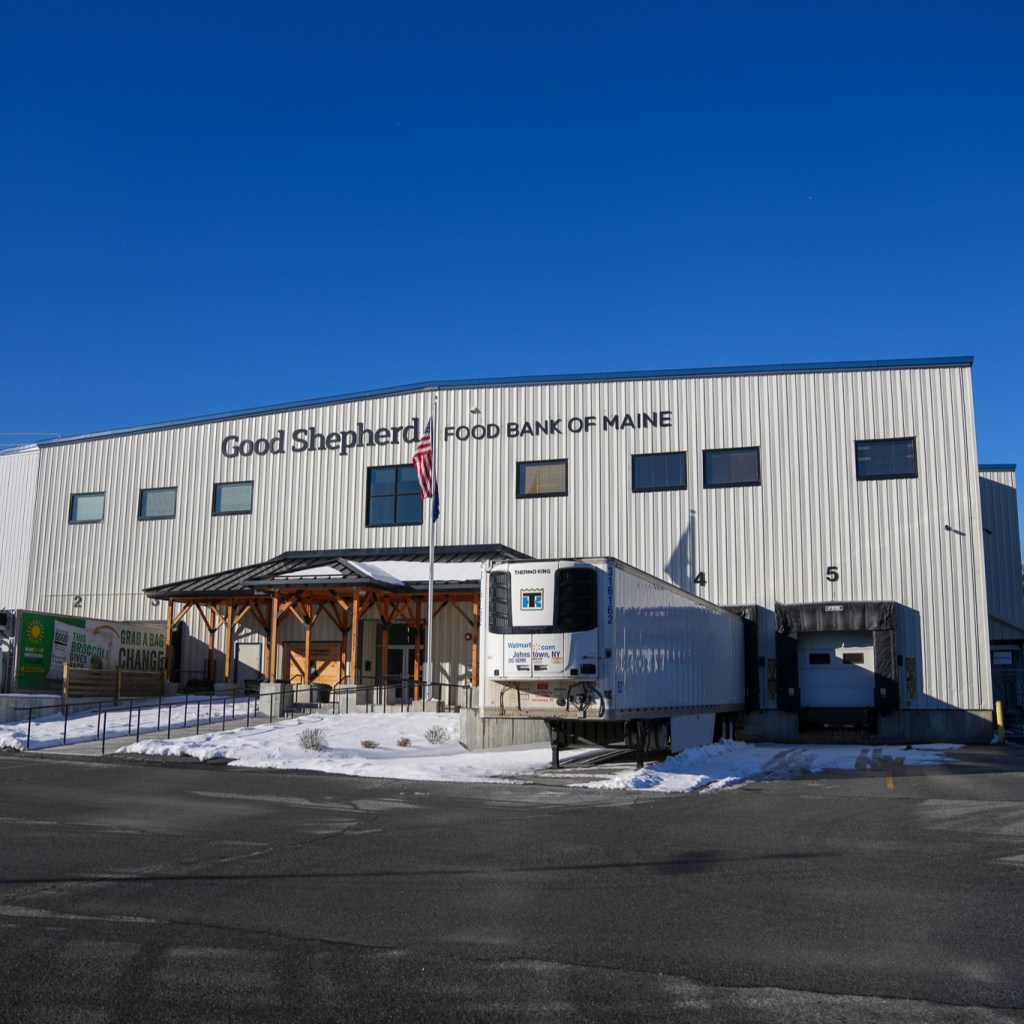
Outside the Good Shepherd Food Bank in Auburn, the morning felt unmistakably like Maine. The sun was bright, the air was cold, the wind was sharp, and snow clung to the edges of the parking lot. It was the kind of day that makes you hurry from your car to the door.

Inside, the world felt entirely different.

The warehouse moved with purpose. Volunteers sorted boxes beneath lights that cast winter light across the concrete floor. Pallets of apples, pasta, cereal, and canned vegetables rose in every direction, bound for all corners of the state.

“This is Good Shepherd Food Bank,” says President Heather Paquette. “We are the Feeding America Food Bank for the state of Maine.”

She gestures to the vast space around her.

“You are in the Auburn facility, which is about 55,000 square feet. We also have a 48,000 square foot facility in Hampden, so in total we operate about 100,000 square feet of distribution space that services 33,000 square miles.”

On a cold Maine morning, the warmth of this place, its people, and its purpose feels even larger.

Good Shepherd Food Bank of Maine in Auburn, Maine.

One statewide food bank with rising need

Good Shepherd Food Bank is Maine’s only Feeding America affiliate, which is unusual.

“Every state in the nation has at least one Feeding America food bank,” Heather says. “There is not one food secure state in the United States. Maine is one of only a handful of states that has one Feeding America food bank that serves the entire state. We see that as an incredible responsibility and privilege.”

The numbers weigh heavily.

“When I took this job, Maine was at 11% percent food insecurity. We are currently at 13.8% percent and growing,” she says. “191,000 people in Maine are experiencing food insecurity. Within that number are 55,000 children.”

Good Shepherd receives USDA food, donated food from retailers, purchased food, and fresh produce from Maine farms through the Mainers Feeding Mainers program.

The food security ecosystem

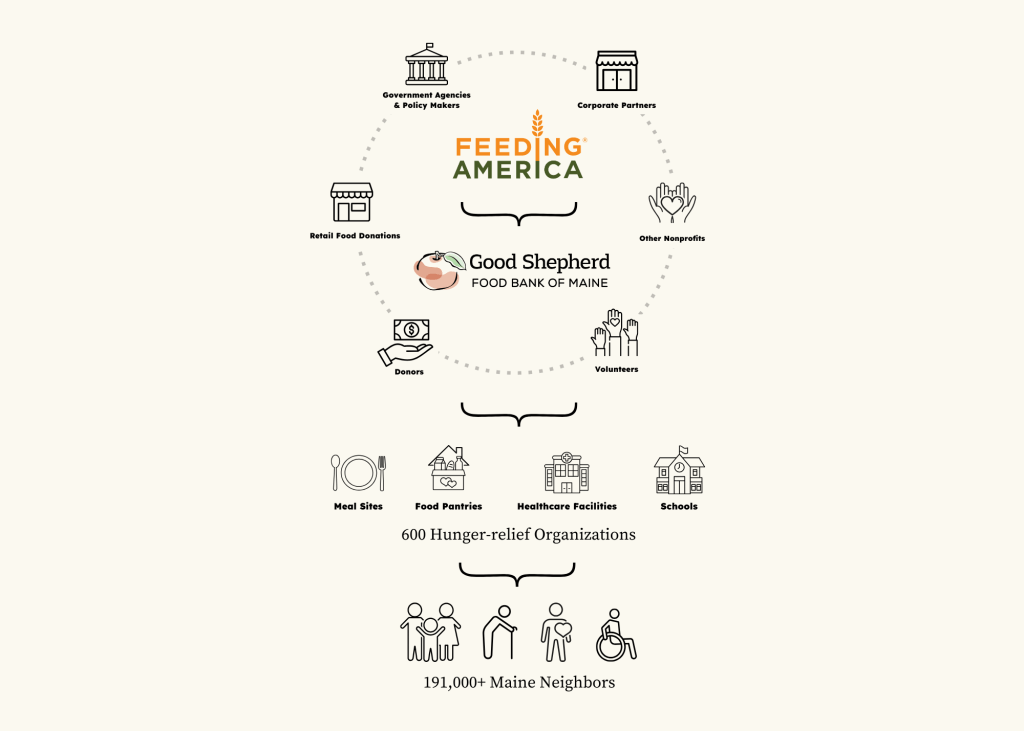
Good Shepherd Food Bank Ecosystem


Early in her role, Heather began describing their work as a food security ecosystem.

“We provide food and support to more than 600 partners, who then provide direct service to the 191,000 neighbors experiencing food insecurity. That is the straight up and down part of our model,” she explains.

“But everything surrounding that line is just as important. Lawmakers, the business community, 22,000 donors, 1200 volunteers, other nonprofits, and our retail partners all affect the system.”

Retail pickup is especially significant. “Half of our distributed food comes directly from grocery retailers,” she says. “There are 215 pantries that pick up from 150 retailers, and that schedule operates every day of the year.”

The system works, but it is fragile. “When one part shifts, we must rely more heavily on the other parts,” she says.

This year brought a major shift.

A sudden crisis in SNAP

On October 21 (2026), Good Shepherd Food Bank received word that if a federal government shutdown continued, SNAP benefits scheduled for November 10th would not be funded.

“It was quite a crisis,” Heather says. “People who were food secure because they received SNAP were suddenly at risk of losing the ability to buy food.”

Agencies across the state felt the impact almost immediately.

“We heard from partners that lines were thirty to fifty percent longer overnight,” she says. “There were dozens of first time enrollments at food pantries. Our partners were looking to us to do more, and we needed to rise to that challenge.”

Meanwhile, federal food and federal funding had already been reduced.

“We receive less so we do less is not an acceptable answer,” she says. “We have agencies and people counting on us.”

The team increased its pace instantly.

When Maine stepped forward

Media attention intensified. Heather completed more than thirty interviews in a short period. “The media is very good to us,” she says. “They help us tell our story so people can understand what is happening and stand with us.”

Then came a call she will never forget.

“It was a first time donor who gave two hundred thousand dollars and wished to remain anonymous,” Heather recalls. “She said she could not sit back and do nothing.”

Longtime partners also responded.

Stephen and Tabitha King Foundation; Maine Marathon.; The John T. Gorman Foundation.; Governor Janet Mills.; Maine Community Foundation.; Hannaford; TD Bank.; Bank of America. and the Maine Credit Union League.

All offered meaningful support.

However, Heather stresses perspective.

“After the governor’s contribution and the foundation gift, we distributed the funds to our 600 partner agencies,” she says. “Everyone received $1000 dollars. Biddeford Food Pantry, for example, spends about $190,000 dollars a year on purchased products. They were grateful, but the need is much larger.”

Still, every gift mattered. And then one gift changed everything.

The Onions and the gift of sunlight

Years ago, Susan and Fritz Onion, yes – that’s their last name, funded solar panels on the Auburn and Hampden facilities, saving Good Shepherd Food Bank about $200,000 thousand dollars annually. The plan was for the food bank to eventually purchase the panels from the Onions.

“We had the money set aside, but then we lost $1.2M dollars in federal funding and half of our food distribution. I was not comfortable writing that check,” Heather says.

During a meeting on October 22nd, the Onions surprised her. “Fritz said, ‘We have decided to donate the solar panels to the food bank,’ which is essentially an $800,000 dollar gift, plus $200,000 dollars in annual savings,” she says. “I was moved to tears. None of us knew that was coming.”

The panels now generate about 65% of the energy used in both facilities. “It was a beautiful sign of partnership and an enormous financial relief,” she says.

Small donations add up

During the SNAP crisis, donations surged.

“We saw about 900 new donors between late October and mid November,” she says. “We might normally see a couple hundred during that period. People really stepped up.”

Many gifts were small.

“We operate with 22,000 donors. Half give less than one thousand dollars,” Heather says. “We rely on generous Mainers who give what they can.”

Your $5 or $100 donation is not small. It truly matters. It is part of the lifeblood of the ecosystem.

A Biddeford upbringing and a path she never expected

Heather’s work ethic traces back to her childhood.

“I am a proud Biddeford Tiger alum,” she says. “Biddeford is a mill town at heart. There is a sense of pride and work ethic that comes from that.”

After graduating from the University of Southern Maine, she spent 24 years at Hannaford and its parent company, serving in 14 roles across three states.

One of her favorite roles brought her back home.

“I got to be the assistant store manager in the Biddeford store,” she says. “I loved seeing the people I grew up with and experiencing that incredible work ethic again.”

She tells the story of a 70-year-old seafood department employee whose daughter worked at corporate.

“He was very mad at me one day because he told me I could not force him to take a break because he had too much work to do,” she says, laughing. “This is an hourly employee and breaks are paid. I had to tell him that I was going to get in trouble if he didn’t take his break.”

Later, while working for Hannaford, a blind date with “some guy from Portland” turned out to be even more familiar.

“Four sentences into a blind date, it turned out he was from Biddeford and had graduated five years prior to me,” she says about her husband Brian. They have two children, Ben and Audrey.

‘This was always meant to be’

Heather never expected to leave Hannaford – until a restructuring eliminated her team. “I had an unfortunate event that many people have in their careers, where my team was part of a reduction in force and the entire team that I was leading was cut,” she says.

Around the same time, Good Shepherd Food Bank’s previous president, Kristen Miale, announced she was stepping down.

“The same day I learned about the significant reduction in force was the same day that Kristen announced to her team that she was departing,” Heather says. “And I truly believe that it was meant to be.

This was always meant to be.”

She knows herself well enough to know she might not have applied otherwise. “I think I would have seen that announcement in the paper and been like, drooling, like I would love to have that job, but I’m pretty sure I would not have been brave enough to actually put myself in a job search for it,” she says. “So I think the universe stepped in, and I’m grateful every day.”

The search took nine months and spanned the country.

“It was a nationwide search. There were several hundred candidates,” she says. “I’m really grateful to the selection committee.”

In the truck and at the pantry

Heather immerses herself in every part of the work.

She spent one memorable day riding with Sandy Swett of the Harrison Food Bank. “It was a twelve-hour day of lifting banana boxes full of frozen meat,” she says. “It was the hardest physical work I have ever done. Sandy is 71 and never slowed down.” At the end of the day, Sandy went to a bar to watch her husband play guitar and catered a wedding the next day. Heather, meanwhile? “I didn’t move off my couch,” she says. “My friends were texting me to go meet them. It was 8:00pm. I had my pajamas on. I just got my butt totally kicked. It was so humbling.”

________________

At a pantry during the SNAP crisis, she met a woman named Jasmine. “She arrived with a binder, ready to justify why she should be allowed to get food,” Heather says. “The pantry director told her, ‘You do not need the binder. Please fill your bag. That is why we are here.’”

__________________

Another man refused a ten dollar gift card to Walmart. “He said, ‘I have everything I need. I have this place where I can get food,’” she recalls. “It was incredibly moving.”

Her first pantry visit revealed a heartbreaking truth.

“I watched one hundred people line up for seventy spots,” she says. “Those who received boxes shared items with those who did not.”

“The work is tough, it’s emotionally tough,” Heather says. “I often shake my head thinking about the things that stressed me out in corporate America that very much do not matter in the real world. “

“That is when it hit me,” she says quietly. “This work is gratitude and service.”

Looking ahead

Good Shepherd had finalized a strategic plan before the SNAP crisis. It focuses on improving food distribution while addressing root causes of hunger and reducing stigma.

“My leadership purpose is always ‘press forward and always give back,’” Heather says.

The crisis made the mission more urgent, but also more visible.

“We have had a powerful spotlight these past months,” she says. “People who never knew our story now know it. That gives us hope.”

What Mainers can do — starting today

When asked what people can do to help, Heather doesn’t hesitate.

“The number one thing people can do for us is be our ally,” she says. “Be able to tell our story. This is who Good Shepherd Food Bank is. There’s 600 partners throughout the state and a 13.8% and growing population with food insecurity. These are people who you see at stores. These are people you go to church with. These are people whose children go to school with your children.”

“If you think you don’t know somebody who’s experiencing food insecurity, you do,” she adds. “So be an ally to that.”

Part of being an ally is practical:

“Go on to www.feedingmaine.org. There’s a button where you can donate. Every dollar you give the food bank, we can do really great things with,” she says.

“There’s also a button that says ‘Find Food,’ and you can type in ‘04005’, for example, and you’ll see Youth Full Maine, which is in the Biddeford High School parking lot, the Biddeford Food Pantry, and a number of different food pantries around the area. Reach out directly to ask them, what specifically do you need?”

“Some need volunteers, others are being overwhelmed with volunteers right now, which is a good problem to have. So they need food, and everyone needs money. Ask the question about what people need and give generously.”

In a state where one food bank shoulders the responsibility for all 30,000 square miles, Heather brings Biddeford grit, Hannaford know-how, and a simple conviction that “we receive less so we do less is not an acceptable answer.”

Thousands of Mainers – from anonymous donors quietly wiring $200,000 to neighbors giving $5 online – and everyting in between – are standing with her.

And somewhere in Auburn and Hampden, under solar panels given by a family named Onion, forklifts are moving, volunteers are packing, and boxes are headed out to 600 partners, so that another neighbor, on another hard day, can hear four simple words:

“Please fill your bag.”

Editor’s Note: Click to donate to Good Shepherd Food Bank.

This interview — originally published at Brick + Tides — was conducted on December 8, 2025, in Auburn, Maine.

_______________________

ABOUT THE AUTHOR: Cy Cyr www.cycyr.com) grew up in Biddeford and returned after 25 years away. He started BrickTides.com as a way to reconnect with the community that shaped him, using photography and longform storytelling to document the people shaping southern Maine today.

BRICK+TIDES is a weekly digital magazine based in York County, Maine. We share positive and inspiring stories about local businesses, people, and places that make Southern Maine special. If you’d like to read our free weekly email, we’d love for you to subscribe!

Talkin’ Biddeford Politics with Randy Forcier

Once again, I had a blast as a guest on the Randy Forcier Podcast.

We talked about the upcoming municipal elections, my predictions on the various races and voter turnout.

Randy is a Biddeford native and a former member of the Biddeford School Committee. You can find his podcast on several platforms, including YouTube, Spotify and Facebook.

___________________

UPDATE | Biddeford’s 2025 Election Results

City Council President Liam LaFountain edged out one-term incumbent Marty Grohman in a three-way race that also included former city councilor Norman Belanger.

In the three-way race, LaFountain picked up 2,626 votes (42 percent) over Grohman’s 2,414 votes (38 percent) and Belanger’s 1,273 votes (20) percent.

Find all the official results from the Biddeford City Clerk’s Office here.

________________

NOTE | You can see my previous interview with Randy — where we talked about my 2024 Top 20 local politicians and policy maker list — at the link below.

_______________________

UPDATE | Biddeford’s 2025 Election Results

City Council President Liam LaFountain edged out one-term incumbent Marty Grohman in a three-way race that also included former city councilor Norman Belanger.

In the three-way race, LaFountain picked up 2,626 votes (42 percent) over Grohman’s 2,414 votes (38 percent) and Belanger’s 1,273 votes (20) percent.

Find all the official results from the Biddeford City Clerk’s Office here.

FEATURE: Not Your Father’s Library

The acting director of Biddeford’s McArthur Library talks about a never-ending evolution of services and some of the challenges facing downtown libraries

Even to the casual observer, it becomes quickly evident that once you walk through the front door of Biddeford’s McArthur Library – – you are no longer in your father’s library.

Gone are the days of strident, middle-aged ladies admonishing you for the volume of your voice or the mounting late fees on your overdue books.

Today’s libraries have evolved and are working to keep pace with both technology and a changing community. Nowhere is that more evident than inside the McArthur Library.

Nicole Clark

Originally housed in the “City Building” (City Hall), a devastating fire in 1894 gutted the building and forced the library’s trustees to search for a ‘stand-alone’ location. The library is today housed in the former Pavilion Church on Main Street.

Over the years, the library has been expanded and renovated and continues to be a hub of activity for people of all ages in the downtown area.

Once again, the McArthur Library is facing another transition.

Earlier this year, long-time director Jeff Cabral accepted a position at another library in New Hampshire. While the library’s trustees are in the middle of a search for a new director, Nicole Clark – the Adult Services supervisor – has been serving as a temporary director.

Clark, 31, is a native of Kittery and attended the University of Maine Farmington where she earned a degree in teaching. She taught high school English for a little more than four years but says she became “burned out from teaching” and took a job in the Goodall Library in Sanford before making her way to Biddeford.

We caught up with Clark recently to ask her how the library is changing and adapting and about some of the challenges facing today’s board of trustees.

Why did you switch from teaching high school English and theater to working in a library?

“Teaching was a rewarding career, and I loved working with my students. The changes in education recently, and the expectations put on teachers and just the lack of support that teachers have; I just got burned out. I loved it, but I could tell that I was not myself. 

“Working in a library was just a much better fit for me. I fell in love with it. You’re not teaching to a test or facing mounting standards and regulations. I always loved books and helping people. You get to connect people with things that they enjoy, whether it’s literature or a fun program or helping with a bit of research.”

Have you put your hat in the ring to become the library’s next director?

“It’s not something that I was originally considering at all. I like being a librarian, I like connecting with the public, I like the front-facing nature of it. Being a director is oftentimes more the big picture, the behind-the-scenes stuff: administrative tasks, dealing with the stakeholders, the politics and the budget.

“I feel a little back and forth about it because I think this library deserves someone who is passionate about those things. If for some reason, somebody doesn’t come forth who is passionate about all those things and serving the community . . . it just depends on what is best for the library. I would very happy, either way.”

What do you think are some things that the public should know about today’s library?

The library is one of the last places
in the country where you can exist
without the expectation of spending money

— Nicole Clark

“I love that question. In this day and age, the library is not just a repository for books anymore. The library has evolved. Yes, we still have many, many books that we love to connect our patrons with, but we also have a slew of programming for all ages. From author events to children’s story time that connects them with animals or music, to technology classes for seniors.

“This is a place where people come to socialize, to connect with other people; to learn something or to feel a sense of warmth and joy and not have to stress about having to spend money to get that.

“The library is one of the last places in the country where you can exist without the expectation of spending money. The reason we provide all of our services for free is to provide access. That’s one of the biggest things about the library.

“We want people to access information, entertainment; to access everything from WiFi connectivity to a social coffee hour for seniors so that there’s someone to chat with on a Thursday morning, and you don’t have to worry about spending money to do that.”

We all know that you can check out books from the library, but what are some of the other things you can check out for free?

“People may know about our expanding list of DVDs, but we also have a library of things – it’s a recreation collection. People can check out things like fishing poles or a croquet set if you have people over for a barbecue.

“People can check out things that they may not have the money to buy. For example, we check out a telescope so that kids who might be learning about the moon and the stars have access to the resources they need. That can be an expensive item that some parents may not be able to afford.

“We have snowshoes and sleds available in the winter, we have portable DVD players or even a Ukulele.

As libraries evolve, how are you keeping pace with instant, on-demand information resources such as Google or Wikipedia?

“You can ask Google anything, but you can’t necessarily be sure that the information is accurate, but a professional librarian can help you look at information sources that are trustworthy and cross-reference.

“On the other hand, we are embracing technology, providing people with a quiet space to do their own research. We offer free WiFi throughout the building, and we also provide free phone chargers and access to public computers.

“We provide free access to things like Ancestry.com without the paywall you would have to pay for at home.”

Recently, there has been some negative chatter on social media about unhoused persons ‘loitering’ at the library.

“A public library is a library for everybody. We are here to provide safe, warm, welcoming and equitable access for everyone, regardless of their socio-economic status, age or anything to do with their identity.

“We do have a significant population of people who are unhoused in the downtown area, and the library being one of the places where they are not expected to spend money, and where they can be warm, safe and charge their devices and take a break from some of their struggles.

“We are definitely an open-door to them and to those who are not going through that.  The majority of our unhoused visitors are just lovely human beings. We love getting to know them and learning about the things that interest them.

“As with any population, there are some folks who have challenges and bring those challenges into the library. We do have a security officer who is just a wonderful human being. He gets to know just about everybody who comes into the library.

On the issue of unhoused people, the library has an upcoming event regarding the issues of homelessness in Maine.

“Yes, we’re looking forward to the free Biddeford screening of a documentary that showcases stories from Maine with a message that there is hope to ending the suffering of homelessness.

“After the film, we will be hosting a panel discussion with from local folks such as Jake Hammer from the city of Biddeford’s General Assistance office and Vassie Fowler from Seeds of Hope.  That will be taking place on May 29th at 6 p.m.

You have a new program starting soon about downtown.

“Yes! The theme of our summer reading program this year is “Summer on Main Street.” We will be working with different businesses here downtown. Especially amidst the construction and detours to encourage foot traffic to all businesses downtown.

“We’ll be offering raffles, gift cards and lots of fun ways for people to connect with downtown and all the businesses here.”

Never miss another update! Subscribe for free today!

Richard Rhames | Dirt farmer pundit

Note: This is an unedited interview that contains coarse language, which some readers may find offensive.

By RANDY SEAVER | Editor

Although he wears many hats, Richard Rhames of Biddeford could probably best be described with just three words: authentic, passionate and persistent.

Rhames, 78, is a well-known commodity at City Hall. He is an outspoken member of the public, a former city councilor and a tireless member of the both the city’s Conservation Commission and Cable Television Committee.

Richard Rhames | The proverbial fly in the ointment to many of Biddeford’s well-heeled political and business class interests. And he’s not backing down anytime soon (Seaver photo)

_______________________

Over the last four decades, Rhames has developed a reputation as someone who means what he says and says what he means. He rarely pulls punches when criticizing local leaders and their policies; and he is always willing to fight even when he knows the odds are insurmountably stacked against him.

Today, Richard and wife Pat own and operate Shady Brook Farm on outer West Street. That 80-acre farm has been in Rhames’ family for three generations, and the land represents one of the last family-owned farms in the area.

Rhames, who serves as president of the Saco Valley Land Trust, laments the loss of small farms, but keeps his hands firmly on the plow in a time when farming has pretty much become a corporate enterprise.

“If farming was easy, everyone would do it,” he said with a wry grin. “Let me assure you, nothing about farming is easy.”

To the casual observer, it seems that Rhames is always willing to do things the hard way. He dismisses the notion of going along to get along.

Sticking to his principles and beliefs has cost Richard some friends and his seat at the table of local power, where he was widely considered a thorn-in-the side of the Chamber of Commerce types.

Richard was an at-large member of the Biddeford City Council when the September 11 terrorist attacks occurred. Within days, the council had decided to place miniature American flags along the council dais. There was one flag in front of each councilor.

At the beginning of the next council meeting, Rhames used his arm to move the flag to his side as he was spreading out paperwork. A fellow city councilor expressed outrage, and a reporter from the Journal Tribune wrote that Rhames had “shoved the flag away.”

The public was largely unforgiving. It was a time of hyper-patriotism and there was little tolerance for anything deemed to be “un-American.”

Rhames had already been long criticized for his questioning of U.S. policies in the Middle East, including Iraq. He was unapologetic. Just a few weeks later, Biddeford voters showed him the door.

“I never shoved the flag,” he said. “But the damage was done. The political class was not happy with me, and they gladly grabbed onto a piece of red meat.”

Rhames never stopped sharing his political views. He wrote a regular column in both the Journal Tribune and the Biddeford-Saco Courier. Much of his written work focused on labor issues, workers’ rights and conservation issues.

He is a long-time advocate for single-payer healthcare and says if the city is serious about the issue of affordable housing, the best weapon to bring to that fight is municipally-mandated rent control.

He is also a fairly well-known musician, playing rhythm guitar with two different bands throughout the area.

What got you involved in local government?

“It was the airport. Back in the ‘70s, they started pushing a plan to build a cross-wind runway. They intended to buy the George Fogg property, which was between the paved part of Granite Street Extension and the town line. That’s always been the wet dream – – the cross-wind runway.

“I started going to Planning Board meetings and council meetings. I was probably the only guy in town who had actually read the master plan.  I mean, who are we kidding? Master plan? Fuck that.  It was supposed to be a done deal. The powerful people, the people with connections; it was what they wanted.

“Because Mayor [Babe] Dutremble was pissed that some of his political friends had been moving forward behind his back, he shut it down all by himself. It was in the papers, the York County Coast Star and the Journal.

“Then about 10 years later, in the mid-1980s, it came back again, with a vengeance. The new plan was even more grandiose. It would have Biddeford become a reliever for the Portland Jetport. We were going to get the freight shipments; it would have included 60,000-pound aircraft. They dream big, here in Biddeford. The FAA loved it, you know? And they thought they had it.

I mean, who are we kidding? Master plan? Fuck that.  It was supposed to be a done deal. The powerful people, the people with connections; it was what they wanted.

–Richard Rhames

“We fought it. They wanted to change the zone to Industrial. That’s back when wetlands were just dismissed as swamps. We got some other people riled up and involved, and at one of our first neighborhood meetings we came up with a name at the supper table: NOISE (Neighbors Organized In Stopping Expansion).”

You have often complained about the fact that there is so little public participation in city meetings.

“In order to know what’s going on, you got to be there all the fucking time. And you’ve got to have no life, which is ideal for me. (Laughs)

But it’s not just local issues that get you fired up.

“Yeah, well you know. If I’m pissed about something, I’m going to stand up and say something. I don’t know any other way to be. I have this bad attitude, right?

“When I was younger, I could have gone back to teaching (public school). I was no longer 1A. I didn’t have to fight the draft anymore. When I grew up, I remember watching television and all the incessant propaganda. The whole mantra: the Russians are coming; the Russians are coming. The constant beating of the drum. The propaganda. The free world.

“I grew up in the ‘60s. I mean we were all drinking from the same propaganda trough, but it was the draft that literally forced a lot of young people to start recognizing what was happening, even though I went to a little white-bread Midwest college.

“I was as unquestioning as anyone else back then, until all this shit started happening. We had access to libraries and learning opportunities. We did this bus caravan thing. We went to Midland, Michigan, the home of Dow Chemical.

“I grew up in the ‘60s. I mean we were all drinking from the same propaganda trough, but it was the draft that literally forced a lot of young people to start recognizing what was happening”

— Richard Rhames

“We were all white bread kids; nobody had long hair; we were wearing suits at the march and the locals hated us because we had a rally in the park (Laughs).

“But we were earnest, and we had been looking into this a little bit. Most of us had some idea about the history of southeast Asia; how we took over for France in Vietnam. There was a history there that the newspapers never reported, but we came to understand that it was really fucked up; and why would anybody want to die for that?

“But to openly resist meant costs. Most of us were banking on what we were taught since elementary school: that we had some kind of career waiting for us in regular society.”

Do you ever get tired of fighting the good fight?

“I’m pissed, and I have been pissed for a long time. I don’t find that hope is terribly motivating. You gotta be pissed. It wasn’t right. It wasn’t right what we did on the grand scale.

“Even today, as much as the whole thing in Palestine is wrong, the Israelis, the Zionists, are pikers compared to the United States of America. The body count that we have rung up during my lifetime is really fucking impressive.

“Nobody talks about it, but if you want somebody killed, call us. We’ll either provide you with the weapons; better yet, we’ll do it ourselves. We’re really good at that. Spending a trillion dollars a year on the military? That’s easy.

“But if you speak up, they come after you. It’s dangerous, Randy. Why did they come after me the way they did after 9/11? Why have they come after me, including you, . . . why was I such a target? You know? This unassuming clodhopper with the big words and all that shit, you know? Why was I the target?

“Because I was willing to stand up and say this shit.”

What do you think about all the changes as Biddeford becomes a destination community?

“We were last in line. We had the incinerator [MERC]. They stopped pulping in Westbrook and that city began to gentrify almost immediately, and Westbrook isn’t placed nearly as well as we are. Against all the political odds . . . and the only reason that we got rid of the incinerator is because they wanted to leave . . . they [Casella Waste Systems] were ready to go.

“It always kills me, I guess it shouldn’t — when Alan [Casavant] expresses surprise, disbelieving; and talks about how quickly the shift started, how much things changed once we got rid of MERC. It would have happened anyway, but you had this whole Heart of Biddeford gentrifying, national advertising campaign. The whitewashing of Biddeford culture.

“We created a myth of what Biddeford is in order to entice new people to come here and exploit us, which they are doing.

“But we haven’t learned. The political class is still bending over backwards to subsidize private development.

“. . . you had this whole Heart of Biddeford gentrifying, national advertising campaign. The whitewashing of Biddeford culture.”

— Richard Rhames

“I keep telling them: Isn’t it time to pump the brakes a little? You don’t have to beg people to come here anymore. There’s no incinerator anymore. We’ve got all this ocean frontage, river frontage and all these old buildings from when Biddeford was the Detroit of New England.”

You are one of the most strident and vocal supporters of public access community television, even as the city slides further away from televised meetings to online forums.

“When we started with public access, there was some good stuff on the channel, but the political class was always uncomfortable. It frightened them because they couldn’t control the message.

“We used media for public education, to pull back the curtain and give information that you really couldn’t find anywhere else. It was good stuff, and I was never home.

“We were doing advocacy for ordinary people. You don’t generally find that on the airwaves. Who wants to do research to make a point? T.V. is something done to you now.”

Any thoughts on running for office again?

(Sighs) “I’m too old. My time is over. I understand how the world works. I’m not the one. I’m just not the one.”

EDITOR’S NOTE | This interview I conducted and wrote was originally published in Saco Bay News on May 14, 2024. This is the unedited version of that story.

_____________

ABOUT THE AUTHOR | Randy Seaver is the editor and founder of the Biddeford Gazette. He has been covering Biddeford news and politics for nearly three decades. He may be reached by email: randy@randyseaver.com

Never miss an update! Subscribe for free today

THE BIDDEFORD GAZETTE | A Legacy of Trusted, Independent Journalism

Our editorial standards and policies: Biddeford Gazette | Standards & Policies

© 2026 Biddeford Gazette, Inc. All Rights Reserved