Doug Sanford | A preacher’s son, developer

For nearly 50 years, Biddeford’s most iconic ‘bootstrap developer” has demonstrated a deep love for the city.

By RANDY SEAVER | Editor

When looking back over the last 50 years of Biddeford’s history, there is no question that Doug Sanford played an extraordinarily pivotal and significant role in resurrecting a community that was brimming with potential but mired in despair.

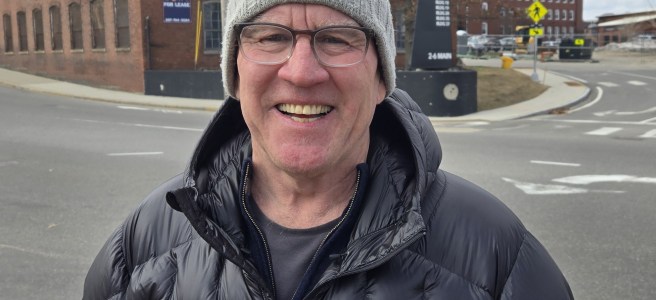
WHERE HE MADE HIS MARK | Doug Sanford stands near the entrance of the North Dam Mill complex, part of the former Biddeford Textile Company that now offers luxury, riverfront apartments and scores of small, locally owned businesses. (Seaver photo)

_____________

Sanford, 68, could easily be described as the walking, talking definition of a bootstrap real estate developer. His projects and fingerprints can be found throughout Biddeford, most notably his renovation and revitalization of several vacant downtown mill buildings.

A few critics – generally those who offer public commentary from the sidelines – routinely dismiss Sanford’s numerous contributions to Biddeford – painting a picture of a “wealthy real estate developer from away.”

That misinformed narrative hardly holds water.

Although Sanford has been able to successfully capitalize on many of his investments, he first arrived in Biddeford more than 45 years ago – fueled only by an excessive intake of caffeine, a meager savings account and an instant love and admiration for the city of Biddeford.

“Doug has this mix of tenacity and creativity that really made the mill redevelopment possible,” said Delilah Poupore, executive director of the Heart of Biddeford, a nonprofit organization dedicated to the revitalization of downtown Biddeford.

“He saw something in Biddeford when a lot of people didn’t, and then just kept finding ways to make it work, tenant by tenant,” Poupore added. “He’s always been willing to push a little further than what people expect, and I suppose that can open you up to criticism; but it’s also what got Biddeford on the map.”

Poupore credits Sanford as the “spark” that led to the kind of walkable, livable downtown that her organization is continually working to promote and develop.

“From the Heart of Biddeford perspective, Doug and [his wife] Lauren have been thoughtful partners in the revitalization of the downtown and in supporting our organization in ways that have truly mattered.”

Former Biddeford Mayor Alan Casavant ran his first mayoral campaign in 2011 on a pledge to continue expanding on the foundational work of former Mayor Wallace Nutting and others who saw lots of potential in the city’s downtown area, despite the presence of a municipal trash incinerator that was located only 900 yards away from City Hall.

Casavant, a former history teacher at Biddeford High School, said he often taught his students about the historical impacts of industrialist John Rockerfeller and his ability to “see down the road and around the corner.”

“Doug Sanford had the same knack for seeing things that other people – for a variety of reasons – just could not see,” Casavant recalled.

“His reputation as a true visionary for Biddeford will certainly stand the test of time,” Casavant added. “He saw those shuttered mills as much more than just empty real estate. He saw the real potential, and he risked a lot to bring that vision to reality.”

Former newspaper publisher David Flood – another early believer in downtown Biddeford’s potential — described Sanford as a man of vision and hard work in his own 2015 blog post about the real estate developer who helped chart a new course for the city | Doug Sanford has been investing in Biddeford since the early 1980s.

________________

“He’s always been willing to push a little further than what people expect, and I suppose that can open you up to criticism; but it’s also what got Biddeford on the map.”

— Delilah Poupore, Heart of Biddeford

Humble beginnings and life lessons | A preacher’s son

Sanford was born as the youngest son of a modest church minister in central, rural New Hampshire. The family — including four other children and Sanford’s mother — had limited income and they relied on the generosity of the church, living in an adjacent parsonage building.

When Sanford was still quite young, he worked alongside his older brothers and his father, helping to build the family’s very first home in Auburn, New Hampshire, a small community located roughly 12 miles east of Manchester.

“You know, I do remember going to the town dump after dark and helping my father and brother load abandoned timbers that we used to build that house,” he laughed during a recent interview with the Gazette.

Sanford speaks fondly of his father and the lessons that he taught his children during one of the most socially turbulent periods of American history.

“The Vietnam War was consuming discussions everywhere,” Sanford recalled. “And then you had the assassinations of both Bobby Kennedy and Dr. Martin Luther King.

“My father was a steadying force during those difficult times. He offered sage wisdom for both his congregation and us kids.”

Sanford described his father as a “social justice leader,” a man who was proud of his role in coordinating a visit of several other New Hampshire ministers to Dr. King’s funeral.

“I learned a lot from my father,” Sanford recalled. “He was such a kind and decent man, always leading with his heart. Always willing to help those around him.”

Sanford and his wife, Lauren, were able to buy a 250-year-old, run-down house with 40 acres of land (but no mule) in the small, pastoral town of Shapleigh, Maine.

“They were offering owner financing, and that was a good thing because we had no [expletive] money,” he laughed. “The funniest part of that story is that we discovered – after a survey – that we actually had 120 acres.”

Sanford was now supporting his own young family by working in construction.

“We called that place the Sanford Family Project,” Sanford recalled with a chuckle. “When I say we had no money, I mean it. We had to come up with $4,000 cash for the down payment. I literally had quarters stacked on the table.”

Doug and Lauren raised three children, Cas, a 38-year-old attorney; Max, a 36-year-old veterinarian; and Jordan, a 33-year-old private equity manager.

“I call my kids a lawyer, a doctor and an Indian chief,” he laughed.

But today, Sanford’s top priority is spending time with his four grandchildren.

“I am very proud of my kids,” he said. “When I look back, I know –without hesitation – that your family is everything. Without them, I’m nothing.”

Now somewhat retired, Doug and Lauren enjoy time with their family on what was once a dairy farm in Waterford, a small community located in western Maine.

Welcome to Biddeford | A dicey proposition

Sanford first arrived in Biddeford in 1981. He didn’t have much money, but he had earned a decent credit score and a favorable commercial reputation from investments he made in a few small residential projects throughout New Hampshire.

The first property that caught Sanford’s eye in Biddeford was a large building owned by Herve and Romeo Binette on the corner of South and Elm streets.

“It was in tough shape, but I thought it had good bones,” Sanford said. “The very best part was that it had a ‘For Sale’ sign out front,” he laughed.

It was another owner-financed opportunity, and once again Sanford had to scramble and push all his chips to the center of the table to make the purchase work.

STILL WORKING THE PHONE | Doug Sanford takes a quick phone call during our interview at Time & Tides on Main Street in Biddeford (Photo by Randy Seaver)

_______________

A little old lady who played piano

The only tenant that came with the building was an older woman who had actually been born and raised in the very same apartment on the building’s second-floor.

“She had one of those old Kerosene stoves that was also the unit’s heating source,” he recalled, rolling his eyes. “That stove scared the [expletive] out of me. I thought I was going to lose my entire investment in some terrible fire.”

According to Sanford, his new elderly tenant would often visit area nursing homes and play piano to entertain convalescent patients.

“You’re not going to believe this,” Sanford says, whispering and leaning over the table at the Time & Tides coffee shop on Main Street. “She only paid $25 per month in rent.”

“What the hell was I supposed to do?” he laughed, throwing his arms up in the air. “You think I’m going to evict a sweet little old lady who plays piano for senior citizens? Honest to God, she was literally born in that apartment. Talk about a public relations disaster.”

[At this point, we had to momentarily pause the interview because both Sanford and I were laughing so hard that it was difficult to speak.]

_______________

She was only paying $25 per month in rent. You think I’m going to evict a sweet little old lady who plays piano for senior citizens? Honest to God, she was literally born in that apartment. Talk about a public relations disaster.”

— Doug Sanford

A passion for Biddeford | Despite the odds

Sanford’s legendary piece-by-piece approach to revitalizing Biddeford’s downtown core was anything but easy.

“The 1980s were a really difficult and challenging time for Biddeford,” Sanford recalled. “A lot of people were giving up hope about the city’s future.”

Even today, many of Biddeford’s older residents often reminisce about the heyday of downtown shopping on Main Street in the 1940s and 1950s, when retailers like Woolworth’s, Butler’s and Youland’s jewelry store catered to a growing population of hardworking and thrifty millworkers.

But as the popularity of suburban shopping malls – such as the Maine Mall in South Portland –continued to rise, Biddeford’s downtown retailers experienced declining revenues.

More heartbreaking was the hard reality that Biddeford’s once thriving downtown textile mills were now winding down, unable to keep pace with foreign imports and increasing government regulations.

Those mills were the central and driving force of Biddeford’s economy right up until the last remaining were laid off and the doors were permanently closed.

City leaders in the 1980s found themselves engulfed in a myriad of public policy challenges.

The textile mills – the city’s largest employer and taxpayer – were winding down and headed toward extinction.

New consumer shopping trends created a ripple-effect of bad news in the downtown area. Once thriving shops were now boarded up with “For Lease” signs plastered on plywood meant to deter vandals.

On top of all that, the mayor and city council were facing increasing pressure from state regulators about the municipal landfill that was located on the Andrews Road.

In retrospect, the city made the horrendous decision to allow the development of a trash-to-energy incinerator smack dab in the middle of a dying and neglected downtown.

“But who can really blame them?” asked one Biddeford resident, speaking on the condition of anonymity. “They were sold a bill of goods with all sorts of promises and guarantees. Hindsight is always 20-20.”

Biddeford embraced the MERC incinerator as a way to maybe help the struggling mills by offering ventilation steam for industrial heating capacity. MERC was going to be the city’s biggest taxpayer. They were going to create nearly 100 good-paying, union jobs.

The bad part? MERC became a regional trash incinerator, accepting municipal solid waste (MSW) from more than 23 other communities throughout Maine and New Hampshire.

The unending stench of burning trash – combined with frequent explosions created by improperly disposed propane tanks – set Biddeford on a collision course toward failure.

City politics descended into chaos. There was plenty of finger-pointing and even accusations of “good-old boys” selling their souls, hinting at corruption that was never proven.

From the outside, Biddeford looked like a war zone, a dysfunctional city unable to get out of its own way.

But Doug Sanford saw things differently.

A new path forward for Biddeford

“Yup, there were people who questioned my sanity,” Sanford laughed. “But I just couldn’t look away from the potential. I believed in the city of Biddeford even when so many leaders had stopped believing in Biddeford.”

Sanford started small and carefully. A building here and a building there, all the while developing solid working relationships with local and state officials.

He also forged relationships with community partners, including donations to nonprofit organizations throughout the city.

The legend is true: Sanford was eventually able to purchase the abandoned 380,000 square-foot North Dam mill complex – former home of the Biddeford Textile Company — for $1 per square-foot. But he was taking a huge personal risk.

“It was all on the line,” he recalled. “You know what they say? Go big or go home.”

Sanford had to rely on his own assets because commercial lenders had serious concerns about potential liability issues, especially because Sanford was preparing to renovate 150-year-old brick buildings along the shore of the Saco River.

“The banking guys looked at it as a liability, not an asset,” he said. “But I just decided to move forward.”

 That was not Sanford’s last major investment in Biddeford.

It was all on the line. You know what they say? Go big or go home.”

When the Pepperell Mill closed a few years later, Sanford purchased that property, too. “The two mills shared the resources of a steam plant,” he explained.

Other – better financed — real estate developers also wanted that property. Even city leaders doubted Sanford’s ability to pull off such a large and complex investment.

Sanford – sometimes forced to fight tooth and nail with other developers and certain city officials — persisted and won.

He converted that former mill complex as a business incubator for several emerging local businesses such as Hyperlite and Angelrox.

Portland Pie Company later decided to offer a location in that building.

“The pieces fell together nicely,” Sanford said. “It was a big risk for me – and for the city of Biddeford. I’m glad it worked out.”

Never miss an update | Subscribe for free today!

_______________

THE BIDDEFORD GAZETTE | Biddeford’s Trusted, Professional News Source

Our editorial standards and policies: Biddeford Gazette | Standards & Policies

© 2026 Biddeford Gazette, Inc. All Rights Reserved

Tough Guys Don’t Dance

This is the first installment of the five-part ‘Biddeford After Dark” series that was originally published in 2001 by the Biddeford-Saco-OOB Courier

By RANDY SEAVER, Editor

[Oct. 2001] A heavy and ominous fog — the precursor of a cold and damp weekend — rolled westward over Biddeford early on Friday evening, and it remained like a blanket over the city for at least the next 48 hours.

Halfway through the weekend, near midnight on Saturday, that fog seemed to be the perfect backdrop for a lone reporter wandering the city’s streets. A reporter looking for stories — the tales of the weary and the songs of those who make the darkness their kingdom.

I didn’t have to travel far.

The fluorescent, unearthly glow of the 7-Eleven sign cuts through the late night fog and mist like so many shards of shrapnel. The wail of a police siren can be heard in the distance and the downtown bars are packed and rocking.

The late-night bargains are being struck over shots of tequila, and the lonely hearts are growing more and more desperate with each passing minute.

Welcome to Biddeford after dark.

The 7-11 convenience store located at the intersection of Alfred and Jefferson streets continues today to serve as the epicenter of Biddeford’s late-night activity. (Seaver photo)

A cut-rate Statue of Liberty

Perhaps by default, the 7-Eleven store, at the corner of Alfred and Jefferson streets, has become the de-facto epicenter of night life in downtown Biddeford.

It’s not hard to blend in, but my notebook and pen make me a curious commodity in a parking lot full of late-night activity. The store’s neon signs and its bright interior lighting serve collectively as a beacon for both the downtrodden and those who have nowhere else to go at this hour. It is almost akin to a cut-rate Statue of Liberty: send me your intoxicated, your restless and your lonely.

The store and its parking lot become a social scene unto themselves as wannabe gangsters, mostly teenagers, strut in and out of the store, buying Marlboros and Mountain Dew. After waiting in line for up to five minutes, many of those same customers leave the cash register only to sit in their vehicles or loiter near the store’s front door for as much as 30 more minutes.

___________________

Send me your intoxicated, your restless and your lonely.

__________________

Many of those wandering in the front door know each other, and they greet one another as if they were victims of watching way too much MTV. Suddenly, this portion of southern Maine (the way life should be) resembles an imagined life in “the hood” or some dilapidated barrio.

“Yo, G-man, what up?,” hollers a young man to an acquaintance as he jumps out of a shiny SUV. Inside that Jeep Grand Cherokee, the man’s girlfriend, obviously intoxicated, mascara dripping from her eyelids, fumbles with the stereo. The throbbing pulse of rap music fills the lot and the Jeep seems to pulsate to the beat of a song that, from only a few feet away, seems indistinguishable.

Somehow, this music seems to comfort the young woman in the Jeep. She tosses her head back and closes her eyes, silently mouthing the lyrics of a Tupac Shakur song.

There is an undercurrent of violence and uncertainty hanging in the air, lending an ironic balance to the comforting quiet of the rolling fog.

Tough guys don’t dance

Across the street, in front of the Mahaney building, I approach two young men who are wearing oversized jackets and gold necklaces.

“What’s going on?” I inquire, trying to sound hip.

The men stop and look at me, puzzled by my presence and my notebook. Paper makes these tough guys nervous.

“Why do you want to know?” the shorter man asks.

“I’m doing a series of articles about Biddeford after dark,” I respond.

“Oh yeah,” the taller man says. “Make it a love story and kiss my ass.”

I keep pressing, firing off questions and promising anonymity for honest responses.

They seem to think that I am a cop. Each of them shifts from foot to foot, making hand gestures as if to proclaim that they are not intimidated. “I’ll tell you about Biddeford after dark,” the shorter man says. “Biddeford sucks.”

“Why?” I ask.

“. . . ‘cause it just does,” he responds, carefully watching me write down his response. “Hey, do you believe this [expletive]? He’s writing down what I’m saying,” the short man tells his friend. “I’m gonna be in the newspaper. I’m gonna be famous.”

The taller man is making his way toward the ‘50s Pub on Franklin Street. He wants nothing more to do with me or my five-part series.

A few moments later, I come across another man walking along Alfred Street.

Patrick, 24, is clean-cut, wearing faded blue jeans and a maroon pull-over sweatshirt. He pauses to answer my questions, carefully contemplating his responses.

“Why does Biddeford suck,” he asks, rhetorically. “Well, they put a garbage dump [MERC] right in the middle of town. Who would think to put a waste facility right in the middle of the city?”

“Why aren’t there other businesses open late at night?” I ask.

“The downtown is lousy to look at,” he replies. “and there’s not enough parking.”

The downtown parking lots are virtually empty.

There is no question that the downtown presence of the MERC waste-to-energy incinerator stunted Biddeford’s growth for more than three decades

Twenty-four, seven—

Back at the 7-Eleven, Karen stands outside the front door, smoking a cigarette.

Karen, 30, has just returned to full-time work after a six-month hiatus. She is a third-shift clerk who says the late-night hours seem to match her sleeping habits.

“I’d rather work second shift,” she says. “But this shift is still better than first shift. I can’t get up in the mornings.”

Stewart previously worked at the store, and she gives an air of being nonchalant when talking about the things she sees while most of the city sleeps. She tells of a homeless man who waits each night for her to throw the old donuts in the garbage dumpster. She sees college students with fake ID cards and high school kids stumbling into the store, drunk or stoned.

“All of the weirdos come here because we’re the only place open,” Stewart explains between puffs of her cigarette. “Last Thursday night, we must have had 20 people waiting in line.”

What do they buy?

“Hot dogs, sandwiches and cigarettes,” Stewart says. “Once the ‘50s [Pub] closes, they all wander over here ‘cause they got the munchies.”

As for the late-night beer runs, just moments before 1 a.m., Stewart confirms what we already suspected. The store becomes a madhouse of activity.

“We lock the beer coolers at 12:45,” she explains. “That way, people who are just wandering around in the store can’t buy alcohol after one.”

Life During Wartime

Inside the store, roughly a dozen people wander aimlessly through the narrow aisles, browsing the selection of potato chips, pastries and the six hot dogs at the bottom of a steamer.

The store is brightly lit, and a bag of garbage has spilled into one of the aisles. The coffee pots are full, and Stewart rings up each customer, many of whom toss crumpled dollar bills at her from across the counter.

The song playing on the store’s radio seems fitting. The Talking Heads’ “Life During Wartime”: I got some groceries — some peanut butter — to last a couple of days — but I ain’t got no speakers, ain’t got no headphones, ain’t got no records to play. . . I sleep in the daytime, work in the nighttime . . . this ain’t no party, this ain’t no disco — this ain’t no foolin’ around.

Outside, a teenager from Thornton Academy makes a deal in the parking lot. Within moments, a young man emerges from the store with a six-pack of Budweiser beer. A quick, bleary-eyed handshake later, and the student takes the beer and returns to the car where his friends wait.

Romeo and Juliet

On the edge of the parking lot, just beyond where the police cruisers roll past on Jefferson Street, a young couple is in the middle of a hushed conversation. I dub them Romeo and Juliet.

Romeo is nervous, and Juliet bravely walks alone across the parking lot. She is all of 15 and wearing braces. She buys Romeo a Mountain Dew and walks back to greet him across the street.

Romeo is wearing a baseball cap in reverse. I approach these kids.

What are you doing out this late?

“I fell asleep at my boyfriend’s house,” she explains. “My watch broke.”

“Yeah,” Romeo chimes in. “We’re cousins.”

I’m not buying what Romeo is selling tonight.

“No, we really are,” Juliet insists.

Where are your parents?

“Ain’t got no parents,” Romeo pronounces, growing more cocky with each passing second. “I live in hotels and work on a paving crew.”

Juliet thinks her father might be inside the ‘50s Pub, and she peers through the bar’s tinted windows to confirm her suspicions.

“He’s going to be pissed if he finds out I’m not home,” Juliet says of her father.

Why don’t you go home?

“Because he might be there,” she responds.

What about your mother?

“Don’t have one,” she shrugs.

Inside the bar, a cocktail waitress weaves through the sweaty crowd and a doorman stands his post near the door, keeping a careful eye on the crowded dance floor. I look for Juliet’s dad, but he’s nowhere to be found.

Juliet is in trouble, I surmise. And then, I walk home — past the closed pawn shops, nail polish parlors and restaurants. I can’t stop thinking about Juliet and her uncertain future.

This is Biddeford After Dark. Sleep well.

______________

Randy Seaver is the editor and founder of the Biddeford Gazette. He may be reached by email: randy@randyseaver.com

c.) 2026 All Rights Reserved

Never miss another update! Subscribe for free today!

Developer secures funding for environmental remediation near former MERC site

A public hearing about the project remediation will be held Dec. 18

Contributed Story; Legal Notice

Fathom Companies — a development firm that will be building a mixed-use and housing project near the intersection of Lincoln and Pearl streets in Biddeford — has received a U.S. Environmental Protection Agency (EPA) Brownfields Revolving Loan Fund (RLF) grant to be used for environmental remediation.

The funds are administered by the Southern Maine Planning & Development Commission (SMPDC). and will be used to support the remediation and redevelopment of Lot 3, a subdivided portion of the former Maine Energy Recovery Corporation (MERC) site located at 3 Lincoln Street, Biddeford.

Site of the Fathom Properties proposed housing/mixed-use development (Seaver Photo)

According to a required Legal Notice filed with the Biddeford Gazette, the funding will support cleanup activities on this historically industrial parcel, which previously housed a waste incineration facility.

Proposed remedial actions include soil excavation, installation of engineered cap-and-cover systems, and related environmental protection measures. These actions are necessary to support the redevelopment of the site for residential units and mixed-use buildings and common spaces featuring a restaurant.

A Community Involvement Plan (CIP) and Analysis of Brownfield Cleanup Alternatives (ABCA) plan have been prepared. The CIP, ABCA, and additional environmental documents are available for public review through SMPDC, Raegan Young, 110 Main Street, Suite 1400, Saco, Maine. Electronic and printed reports can be provided upon request by contacting ryoung@smpdc.org or 207-746-3376. Documents can also be found on Maine DEP’s Online Remediation Sites portal (https://www.maine.gov/dep/maps-data/data.html) by searching for site number REM02179.

Public comments will be received over a 30-day comment period from December 11, 2025 until January 10, 2026.

A public meeting will be held at 6 pm on Thursday, December 18, at Richard Martin Community Center, 189 Alfred Street, Biddeford— First Floor, Room 8, to inform the public of the proposed cleanup plan and to receive public comments.

During this public meeting, project representatives will discuss the funding mechanisms, project requirements, and recommended cleanup strategies for the site.

For more information please contact:

Robyn Payne (Fathom Project Manager) at rpayne@fathomcompanies.com

Raegan Young (SMPDC) at ryoung@smpdc.org

or Kris Plante (Qualified Environmental Professional) at Krisp@stgermain.com

To see all Legal Notices filed with the Gazette, go here

_____________

Never miss another update! Subscribe for free today!

Council pauses on major development project
Several members of the Biddeford City Council expressed significant and pointed concerns during Tuesday’s council meeting about a proposed affordable housing project near the corner of Lincoln and Pearl streets.

Westbrook Development Corp. is hoping to construct approximately 90 units of affordable housing for residents over the age of 55. The developers say the monthly rent would range between $1,100 and $1,300, including all utilities.

Mayor Marty Grohman described the two-phase project as a “large and complex” deal that will finally culminate the end of an era when that site was the home of the MERC waste incinerator, which was closed in 2012.

Another proposed development project that would offer market-rate apartments, retail and other commercial spaces is being proposed in the same area. The two projects would essentially wrap around the Pearl Street parking garage.

Tyler Norod of Westbrook Development Corporation addresses the Biddeford City Council Tuesday about his company’s hopes to build an affordable housing complex adjacent to the city’s Pearl Street parking garage. (Seaver photo)

The developer is proposing to give the city roughly $680,000 to secure needed parking spaces in the parking garage and is required to make an $840,000 contribution to help fund sewer upgrades throughout the city,

George Gervais, the city’s economic development director, told the council that the project would bring more than $30 million in direct and indirect benefits to the city, including a $200,000 contribution to the city’s Affordable Housing Trust fund.

Despite those benefits, several councilors said they are not yet ready to pull the trigger.

Because the city currently owns the 1.6-acre parcel, councilors expressed concerns about parking, the project’s timing and what might happen if the project falls through.

Tyler Norod of Westbrook Development told the council that his company is facing a tight timeline because they are hoping to secure project funding from the Maine State Housing Authority (MSHA) in order to make the project viable.

“I hate to have a gun held to my head,” said Councilor Marc Lessard. “That type of approach never leaves us in a good position.”

Though Lessard said he supports the need for more affordable housing, he says taxpayers expected the city to replace the former MERC site with commercial development that would create jobs and tax revenue.

Lessard said the city “cannot afford any more credit enhancement agreements. “We need to be more focused on generating more money on the tax rolls to ease pressure on taxpayers,” he said.

Councilor Norman Belanger, however, said the development landscape has changed significantly since MERC was closed 13 years ago.

“This project would be a tremendous win
for the city. There’s so much benefit if
this passes, and so much to lose if it fails.”

George Gervais, economic development director

“We had a plan and a vision for that space,” Belanger said. “But then COVID hit, and the world as we know it changed.”

Belanger expressed frustration about a mixed message coming from the city council, saying he feels bad for city staff who put a lot of time and effort in bringing projects forward.

“This council is acting in a schizophrenic manner,” Belanger said. “We say we want affordable housing here, but not there. We’re sending a mixed message.”

Councilor Doris Ortiz said she supports the development of more affordable housing, but also expressed some concerns about the proposal. “The parking garage has been a thorn in the city’s side for a very long time,” she said. “Overall, I think it’s a good project, but there is a lot to work through. It’s not an easy lift for us.”

Citing the need for more information, the council voted 8-1 to table the proposal until the next council meeting on June 17.

The site where Westbrook Development Corp. wants to build 90 units of affordable housing for residents over the age of 55. (Seaver photo)

Following the meeting, Norod said he appreciated the council’s diligence and its commitment to develop more affordable housing.

“We feel as if we are partners with the city,” Norod said. “It’s clear that the council really wants more affordable housing. We have some homework to do before the next meeting, but we are happy to do it.”

For his part, Gervais said he was feeling a bit disappointed about the delay, pointing out that he and other city staffers have been working on this project for more than a year. He also said he has repeatedly offered to meet with individual councilors to answer any questions about the proposal.

“This project would be a tremendous win for the city,” Gervais said. “There’s so much benefit if this passes. and so much to lose if it fails.”

RELATED: Click here to view or download the project’s executive summary:

Randy Seaver is the editor and founder of the Biddeford Gazette. He may be contacted by email: randy@randyseaver.com

Never miss another update! Subscribe for free today!

Richard Rhames | Dirt farmer pundit

Note: This is an unedited interview that contains coarse language, which some readers may find offensive.

By RANDY SEAVER | Editor

Although he wears many hats, Richard Rhames of Biddeford could probably best be described with just three words: authentic, passionate and persistent.

Rhames, 78, is a well-known commodity at City Hall. He is an outspoken member of the public, a former city councilor and a tireless member of the both the city’s Conservation Commission and Cable Television Committee.

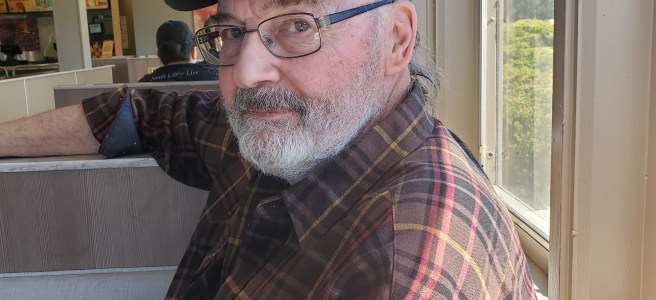
Richard Rhames | The proverbial fly in the ointment to many of Biddeford’s well-heeled political and business class interests. And he’s not backing down anytime soon (Seaver photo)

_______________________

Over the last four decades, Rhames has developed a reputation as someone who means what he says and says what he means. He rarely pulls punches when criticizing local leaders and their policies; and he is always willing to fight even when he knows the odds are insurmountably stacked against him.

Today, Richard and wife Pat own and operate Shady Brook Farm on outer West Street. That 80-acre farm has been in Rhames’ family for three generations, and the land represents one of the last family-owned farms in the area.

Rhames, who serves as president of the Saco Valley Land Trust, laments the loss of small farms, but keeps his hands firmly on the plow in a time when farming has pretty much become a corporate enterprise.

“If farming was easy, everyone would do it,” he said with a wry grin. “Let me assure you, nothing about farming is easy.”

To the casual observer, it seems that Rhames is always willing to do things the hard way. He dismisses the notion of going along to get along.

Sticking to his principles and beliefs has cost Richard some friends and his seat at the table of local power, where he was widely considered a thorn-in-the side of the Chamber of Commerce types.

Richard was an at-large member of the Biddeford City Council when the September 11 terrorist attacks occurred. Within days, the council had decided to place miniature American flags along the council dais. There was one flag in front of each councilor.

At the beginning of the next council meeting, Rhames used his arm to move the flag to his side as he was spreading out paperwork. A fellow city councilor expressed outrage, and a reporter from the Journal Tribune wrote that Rhames had “shoved the flag away.”

The public was largely unforgiving. It was a time of hyper-patriotism and there was little tolerance for anything deemed to be “un-American.”

Rhames had already been long criticized for his questioning of U.S. policies in the Middle East, including Iraq. He was unapologetic. Just a few weeks later, Biddeford voters showed him the door.

“I never shoved the flag,” he said. “But the damage was done. The political class was not happy with me, and they gladly grabbed onto a piece of red meat.”

Rhames never stopped sharing his political views. He wrote a regular column in both the Journal Tribune and the Biddeford-Saco Courier. Much of his written work focused on labor issues, workers’ rights and conservation issues.

He is a long-time advocate for single-payer healthcare and says if the city is serious about the issue of affordable housing, the best weapon to bring to that fight is municipally-mandated rent control.

He is also a fairly well-known musician, playing rhythm guitar with two different bands throughout the area.

What got you involved in local government?

“It was the airport. Back in the ‘70s, they started pushing a plan to build a cross-wind runway. They intended to buy the George Fogg property, which was between the paved part of Granite Street Extension and the town line. That’s always been the wet dream – – the cross-wind runway.

“I started going to Planning Board meetings and council meetings. I was probably the only guy in town who had actually read the master plan.  I mean, who are we kidding? Master plan? Fuck that.  It was supposed to be a done deal. The powerful people, the people with connections; it was what they wanted.

“Because Mayor [Babe] Dutremble was pissed that some of his political friends had been moving forward behind his back, he shut it down all by himself. It was in the papers, the York County Coast Star and the Journal.

“Then about 10 years later, in the mid-1980s, it came back again, with a vengeance. The new plan was even more grandiose. It would have Biddeford become a reliever for the Portland Jetport. We were going to get the freight shipments; it would have included 60,000-pound aircraft. They dream big, here in Biddeford. The FAA loved it, you know? And they thought they had it.

I mean, who are we kidding? Master plan? Fuck that.  It was supposed to be a done deal. The powerful people, the people with connections; it was what they wanted.

–Richard Rhames

“We fought it. They wanted to change the zone to Industrial. That’s back when wetlands were just dismissed as swamps. We got some other people riled up and involved, and at one of our first neighborhood meetings we came up with a name at the supper table: NOISE (Neighbors Organized In Stopping Expansion).”

You have often complained about the fact that there is so little public participation in city meetings.

“In order to know what’s going on, you got to be there all the fucking time. And you’ve got to have no life, which is ideal for me. (Laughs)

But it’s not just local issues that get you fired up.

“Yeah, well you know. If I’m pissed about something, I’m going to stand up and say something. I don’t know any other way to be. I have this bad attitude, right?

“When I was younger, I could have gone back to teaching (public school). I was no longer 1A. I didn’t have to fight the draft anymore. When I grew up, I remember watching television and all the incessant propaganda. The whole mantra: the Russians are coming; the Russians are coming. The constant beating of the drum. The propaganda. The free world.

“I grew up in the ‘60s. I mean we were all drinking from the same propaganda trough, but it was the draft that literally forced a lot of young people to start recognizing what was happening, even though I went to a little white-bread Midwest college.

“I was as unquestioning as anyone else back then, until all this shit started happening. We had access to libraries and learning opportunities. We did this bus caravan thing. We went to Midland, Michigan, the home of Dow Chemical.

“I grew up in the ‘60s. I mean we were all drinking from the same propaganda trough, but it was the draft that literally forced a lot of young people to start recognizing what was happening”

— Richard Rhames

“We were all white bread kids; nobody had long hair; we were wearing suits at the march and the locals hated us because we had a rally in the park (Laughs).

“But we were earnest, and we had been looking into this a little bit. Most of us had some idea about the history of southeast Asia; how we took over for France in Vietnam. There was a history there that the newspapers never reported, but we came to understand that it was really fucked up; and why would anybody want to die for that?

“But to openly resist meant costs. Most of us were banking on what we were taught since elementary school: that we had some kind of career waiting for us in regular society.”

Do you ever get tired of fighting the good fight?

“I’m pissed, and I have been pissed for a long time. I don’t find that hope is terribly motivating. You gotta be pissed. It wasn’t right. It wasn’t right what we did on the grand scale.

“Even today, as much as the whole thing in Palestine is wrong, the Israelis, the Zionists, are pikers compared to the United States of America. The body count that we have rung up during my lifetime is really fucking impressive.

“Nobody talks about it, but if you want somebody killed, call us. We’ll either provide you with the weapons; better yet, we’ll do it ourselves. We’re really good at that. Spending a trillion dollars a year on the military? That’s easy.

“But if you speak up, they come after you. It’s dangerous, Randy. Why did they come after me the way they did after 9/11? Why have they come after me, including you, . . . why was I such a target? You know? This unassuming clodhopper with the big words and all that shit, you know? Why was I the target?

“Because I was willing to stand up and say this shit.”

What do you think about all the changes as Biddeford becomes a destination community?

“We were last in line. We had the incinerator [MERC]. They stopped pulping in Westbrook and that city began to gentrify almost immediately, and Westbrook isn’t placed nearly as well as we are. Against all the political odds . . . and the only reason that we got rid of the incinerator is because they wanted to leave . . . they [Casella Waste Systems] were ready to go.

“It always kills me, I guess it shouldn’t — when Alan [Casavant] expresses surprise, disbelieving; and talks about how quickly the shift started, how much things changed once we got rid of MERC. It would have happened anyway, but you had this whole Heart of Biddeford gentrifying, national advertising campaign. The whitewashing of Biddeford culture.

“We created a myth of what Biddeford is in order to entice new people to come here and exploit us, which they are doing.

“But we haven’t learned. The political class is still bending over backwards to subsidize private development.

“. . . you had this whole Heart of Biddeford gentrifying, national advertising campaign. The whitewashing of Biddeford culture.”

— Richard Rhames

“I keep telling them: Isn’t it time to pump the brakes a little? You don’t have to beg people to come here anymore. There’s no incinerator anymore. We’ve got all this ocean frontage, river frontage and all these old buildings from when Biddeford was the Detroit of New England.”

You are one of the most strident and vocal supporters of public access community television, even as the city slides further away from televised meetings to online forums.

“When we started with public access, there was some good stuff on the channel, but the political class was always uncomfortable. It frightened them because they couldn’t control the message.

“We used media for public education, to pull back the curtain and give information that you really couldn’t find anywhere else. It was good stuff, and I was never home.

“We were doing advocacy for ordinary people. You don’t generally find that on the airwaves. Who wants to do research to make a point? T.V. is something done to you now.”

Any thoughts on running for office again?

(Sighs) “I’m too old. My time is over. I understand how the world works. I’m not the one. I’m just not the one.”

EDITOR’S NOTE | This interview I conducted and wrote was originally published in Saco Bay News on May 14, 2024. This is the unedited version of that story.

_____________

ABOUT THE AUTHOR | Randy Seaver is the editor and founder of the Biddeford Gazette. He has been covering Biddeford news and politics for nearly three decades. He may be reached by email: randy@randyseaver.com

Never miss an update! Subscribe for free today

THE BIDDEFORD GAZETTE | A Legacy of Trusted, Independent Journalism

Our editorial standards and policies: Biddeford Gazette | Standards & Policies

© 2026 Biddeford Gazette, Inc. All Rights Reserved