
The question is not whether education matters. Of course it does. The question is whether every new program, every added position and every expansion must happen this year while taxpayers are already struggling.
By TAMMY BELANGER | Gazette Columnist
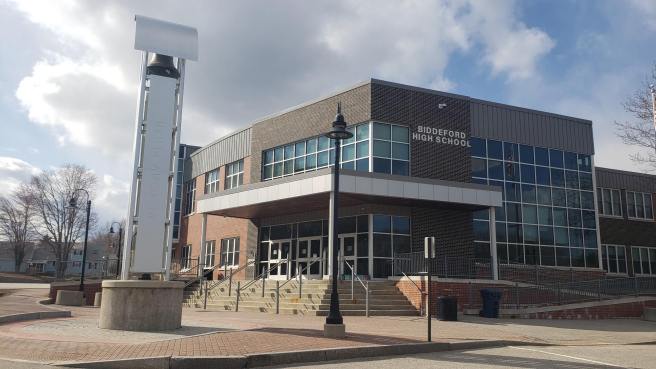
Biddeford taxpayers are once again being asked to absorb a significant increase in the school budget.
The proposed Fiscal Year 2027 school budget is $53.2 million, an increase of approximately $3.4 million over FY26. That follows last year’s increase of 5.39 percent, meaning residents are being asked to carry back-to-back school budget increases while many household budgets are already stretched thin.
This increase also comes on top of an already rising municipal budget. Taxpayers are not evaluating the school budget in isolation. Residents are simultaneously absorbing increases in the city’s side of the budget, including rising operational costs, staffing expenses, infrastructure obligations, public safety costs and other municipal spending.
While each department may be able to justify its increases individually, taxpayers ultimately receive a single combined tax bill. For many residents, the issue is no longer whether one particular increase is reasonable. The issue is the cumulative financial burden.
The largest increases in the school budget are not small extras. They are built into the structure of the budget. Salary and step increases account for about $1.5 million. Health insurance adds another $600,000. Payroll taxes add about $150,000. New positions and expanded programming add about $755,000.
Many taxpayers may not understand what a “step increase” actually is. In school systems, employees are often paid on a salary schedule based on years of experience and education level.
Each year, an employee who moves up a “step” on that pay scale automatically receives a raise according to the union contract. That means payroll costs increase every year, even if no new employees are hired. Supporters argue that step increases reward experience and helps retain educators. Critics argue that they create automatic spending growth regardless of economic conditions or taxpayers’ ability to pay.
New programs should concern taxpayers. Once new positions and programs are added, they usually become permanent expenses. Salaries, benefits, retirement costs, insurance, and future contract increases continue year after year.
What begins as a one-year budget increase becomes a long-term obligation.
The district points to real challenges: more English Language Learners, more students with IEPs, poverty, and growing vocational demand. These are serious needs. But serious needs do not remove the responsibility to prioritize.
The question is not whether education matters. Of course it does. The question is whether every new program, every added position, and every expansion must happen this year, at this cost, while taxpayers are already struggling.
Possible areas for reduction should include delaying or phasing in new positions, postponing new programs that are not legally required, reviewing administrative and support staffing, freezing nonessential spending, reducing discretionary supplies and contracted services, and requiring every department to justify increases line by line.
Vocational programs may be valuable, but expansion should be balanced against affordability. Intervention positions may be helpful, but the district should first show measurable results from existing programs before adding more.
Biddeford also needs to ask harder questions about outcomes. Throwing more money at the school budget does not automatically mean better results.
“Biddeford also needs to ask harder
questions about outcomes.
Throwing more money at the school
budget does not automatically
mean better results.”
Taxpayers deserve to know what measurable improvements they are getting for each new dollar: better test scores, improved attendance, stronger graduation outcomes, fewer students needing remediation or clearer career readiness.
The downside of this budget increase is simple: it adds pressure to property taxes, makes Biddeford less affordable, and asks residents to fund expansion at a time when many are cutting back in their own homes.
Families are paying more for food, insurance, utilities, housing, and basic necessities. Many taxpayers do not have the option of increasing their income by 6 or 7 percent every year. They are forced to make choices. The school department and the city should be expected to do the same.
Supporting education and questioning spending are not opposites.
A responsible community can value students while also protecting taxpayers. Before approving another major increase, Biddeford residents should ask what can be delayed, what can be reduced, what can be done more efficiently and whether this budget reflects needs or wants.
The burden should not automatically fall on taxpayers. The budget should be sharpened before it is approved.
_____

ABOUT THE AUTHOR | Tammy Belanger is a regular columnist for the Biddeford Gazette, covering City Hall and other public policy issues impacting the city. She is a longtime Biddeford resident, small business owner, photographer and dog lover.
“I am a wife and a mother of three adults who were raised here. I care deeply about our community, and the people who live here,” she says.
_____
NOTE | The views expressed in this article are solely those of the author and do not necessarily reflect those of the Biddeford Gazette, its editor, affiliates or sponsors. We encourage robust and diverse community conversations on topics related to the city of Biddeford. For information about how to submit your own column, please CONTACT US
READER COMMENTS
DENNIS GOSSELIN | There is a major difference between the generation of today versus the generation of our parents and grandparents, referring to the “Greatest Generation.” They accepted and learned to live with sacrifices. This generation has become too accustomed to living wants rather than needs.
Those who are trying to get by with just Social Security are expected to manage with increases less than 3 percent but yet our politicians and school administrators ask for well over 5 percent each and every year. Do the right thing, start making the sacrifices and skip the wants.
YOUR THOUGHTS?


_____
If you enjoyed this story, please consider supporting local, independent journalism by making a donation to the Biddeford Gazette, a community-driven, non-profit news organization fueled by decades of professional experience | Click Here to Donate Thank you!
STAY CONNECTED | SUBSCRIBE FOR FREE TODAY
_____
THE BIDDEFORD GAZETTE

“Keeping You Connected to Biddeford”
Editorial Standards & Policies
© 2026 Biddeford Gazette, Inc. All Rights Reserved
 BIDDEFORD GAZETTE