
By CY CYR, Contributing Writer, Brick + Tides
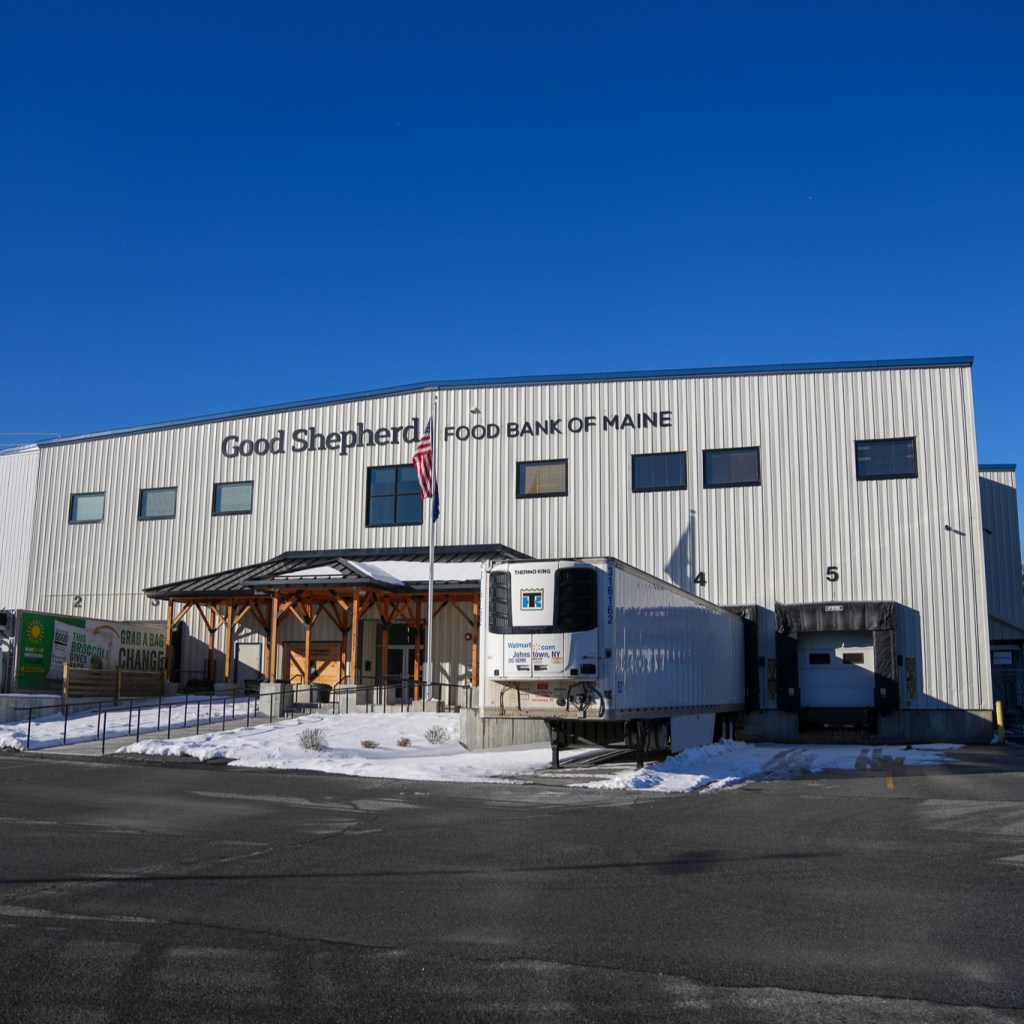
Outside the Good Shepherd Food Bank in Auburn, the morning felt unmistakably like Maine. The sun was bright, the air was cold, the wind was sharp, and snow clung to the edges of the parking lot. It was the kind of day that makes you hurry from your car to the door.
Inside, the world felt entirely different.
The warehouse moved with purpose. Volunteers sorted boxes beneath lights that cast winter light across the concrete floor. Pallets of apples, pasta, cereal, and canned vegetables rose in every direction, bound for all corners of the state.
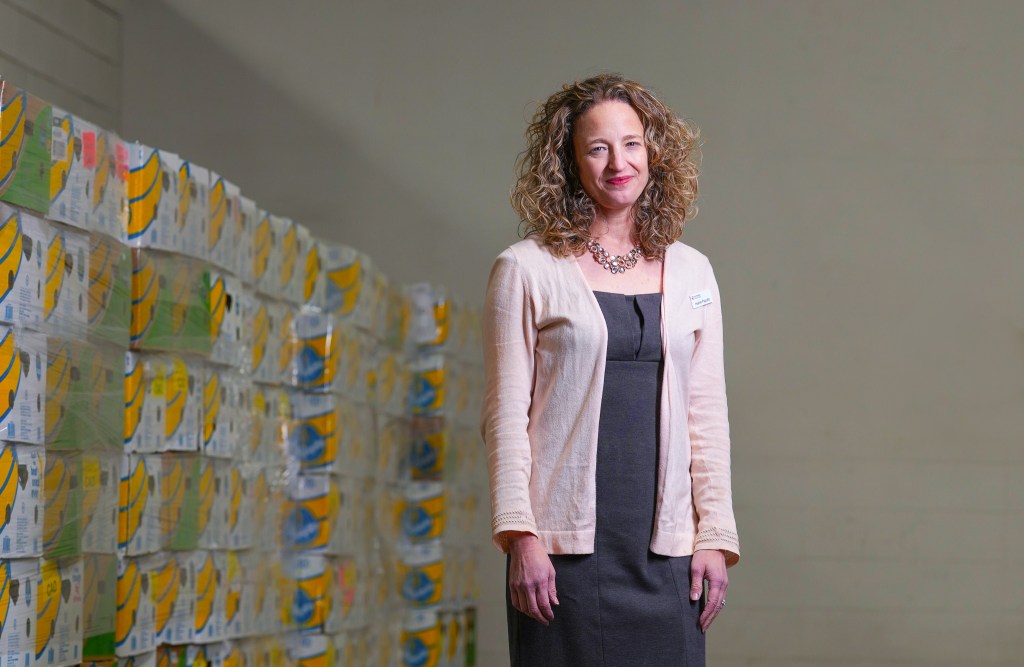
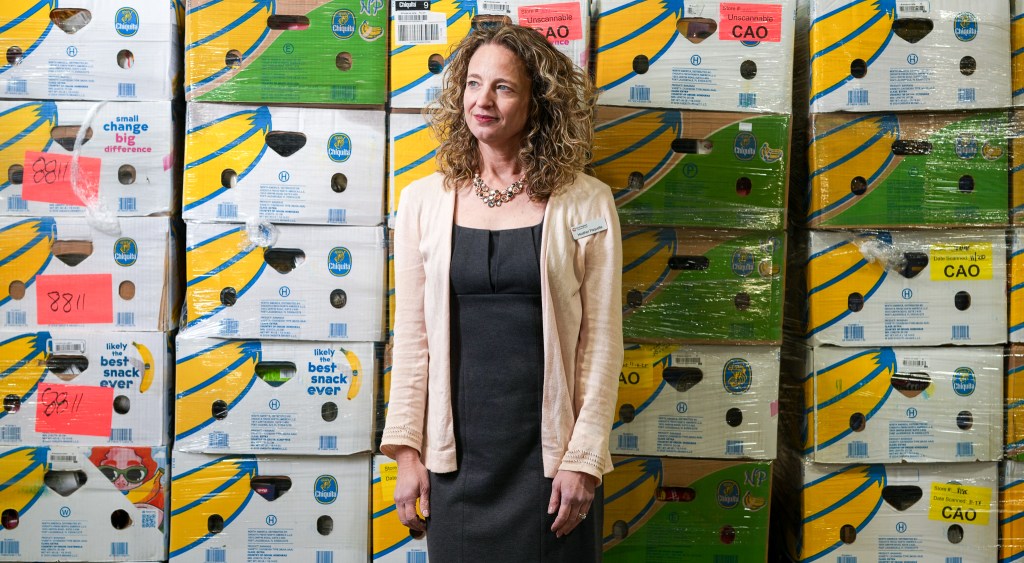
“This is Good Shepherd Food Bank,” says President Heather Paquette. “We are the Feeding America Food Bank for the state of Maine.”
She gestures to the vast space around her.
“You are in the Auburn facility, which is about 55,000 square feet. We also have a 48,000 square foot facility in Hampden, so in total we operate about 100,000 square feet of distribution space that services 33,000 square miles.”
On a cold Maine morning, the warmth of this place, its people, and its purpose feels even larger.
One statewide food bank with rising need
Good Shepherd Food Bank is Maine’s only Feeding America affiliate, which is unusual.
“Every state in the nation has at least one Feeding America food bank,” Heather says. “There is not one food secure state in the United States. Maine is one of only a handful of states that has one Feeding America food bank that serves the entire state. We see that as an incredible responsibility and privilege.”
The numbers weigh heavily.
“When I took this job, Maine was at 11% percent food insecurity. We are currently at 13.8% percent and growing,” she says. “191,000 people in Maine are experiencing food insecurity. Within that number are 55,000 children.”
Good Shepherd receives USDA food, donated food from retailers, purchased food, and fresh produce from Maine farms through the Mainers Feeding Mainers program.
The food security ecosystem
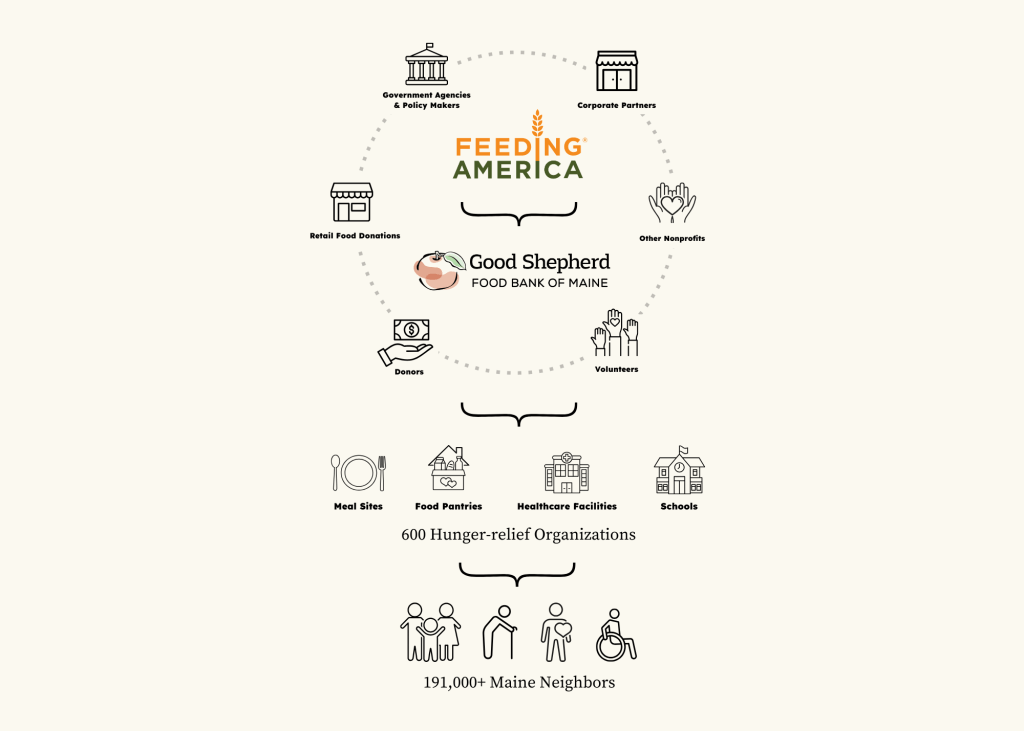
Early in her role, Heather began describing their work as a food security ecosystem.
“We provide food and support to more than 600 partners, who then provide direct service to the 191,000 neighbors experiencing food insecurity. That is the straight up and down part of our model,” she explains.
“But everything surrounding that line is just as important. Lawmakers, the business community, 22,000 donors, 1200 volunteers, other nonprofits, and our retail partners all affect the system.”
Retail pickup is especially significant. “Half of our distributed food comes directly from grocery retailers,” she says. “There are 215 pantries that pick up from 150 retailers, and that schedule operates every day of the year.”
The system works, but it is fragile. “When one part shifts, we must rely more heavily on the other parts,” she says.
This year brought a major shift.
A sudden crisis in SNAP
On October 21 (2026), Good Shepherd Food Bank received word that if a federal government shutdown continued, SNAP benefits scheduled for November 10th would not be funded.
“It was quite a crisis,” Heather says. “People who were food secure because they received SNAP were suddenly at risk of losing the ability to buy food.”
Agencies across the state felt the impact almost immediately.
“We heard from partners that lines were thirty to fifty percent longer overnight,” she says. “There were dozens of first time enrollments at food pantries. Our partners were looking to us to do more, and we needed to rise to that challenge.”
Meanwhile, federal food and federal funding had already been reduced.
“We receive less so we do less is not an acceptable answer,” she says. “We have agencies and people counting on us.”
The team increased its pace instantly.
When Maine stepped forward
Media attention intensified. Heather completed more than thirty interviews in a short period. “The media is very good to us,” she says. “They help us tell our story so people can understand what is happening and stand with us.”
Then came a call she will never forget.
“It was a first time donor who gave two hundred thousand dollars and wished to remain anonymous,” Heather recalls. “She said she could not sit back and do nothing.”
Longtime partners also responded.
Stephen and Tabitha King Foundation; Maine Marathon.; The John T. Gorman Foundation.; Governor Janet Mills.; Maine Community Foundation.; Hannaford; TD Bank.; Bank of America. and the Maine Credit Union League.
All offered meaningful support.
However, Heather stresses perspective.
“After the governor’s contribution and the foundation gift, we distributed the funds to our 600 partner agencies,” she says. “Everyone received $1000 dollars. Biddeford Food Pantry, for example, spends about $190,000 dollars a year on purchased products. They were grateful, but the need is much larger.”
Still, every gift mattered. And then one gift changed everything.
The Onions and the gift of sunlight
Years ago, Susan and Fritz Onion, yes – that’s their last name, funded solar panels on the Auburn and Hampden facilities, saving Good Shepherd Food Bank about $200,000 thousand dollars annually. The plan was for the food bank to eventually purchase the panels from the Onions.
“We had the money set aside, but then we lost $1.2M dollars in federal funding and half of our food distribution. I was not comfortable writing that check,” Heather says.
During a meeting on October 22nd, the Onions surprised her. “Fritz said, ‘We have decided to donate the solar panels to the food bank,’ which is essentially an $800,000 dollar gift, plus $200,000 dollars in annual savings,” she says. “I was moved to tears. None of us knew that was coming.”
The panels now generate about 65% of the energy used in both facilities. “It was a beautiful sign of partnership and an enormous financial relief,” she says.
Small donations add up
During the SNAP crisis, donations surged.
“We saw about 900 new donors between late October and mid November,” she says. “We might normally see a couple hundred during that period. People really stepped up.”
Many gifts were small.
“We operate with 22,000 donors. Half give less than one thousand dollars,” Heather says. “We rely on generous Mainers who give what they can.”
Your $5 or $100 donation is not small. It truly matters. It is part of the lifeblood of the ecosystem.
A Biddeford upbringing and a path she never expected
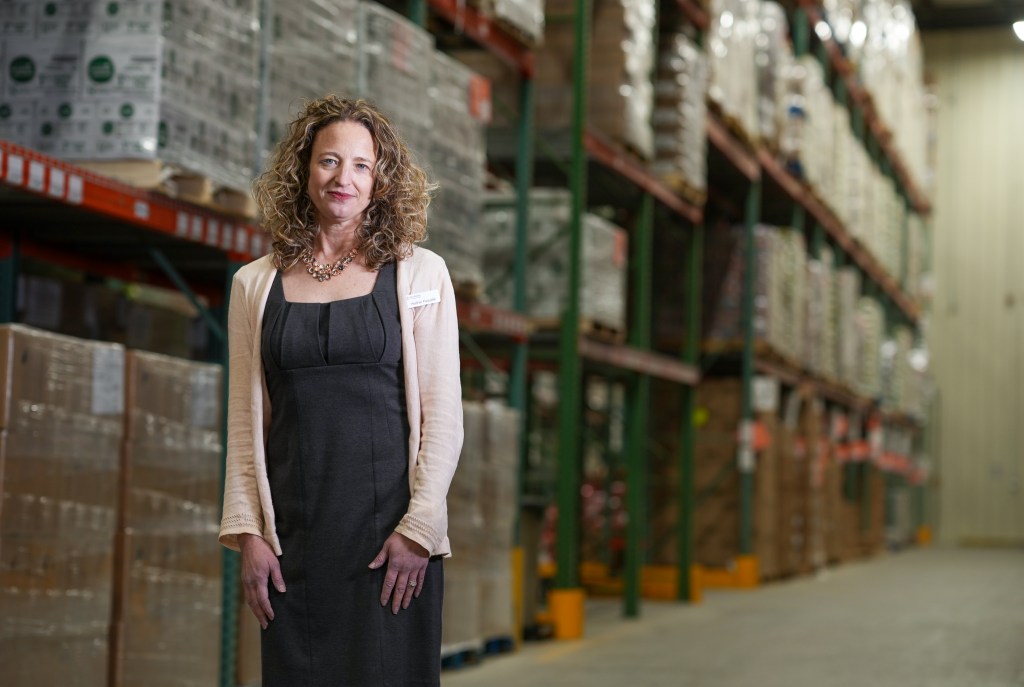
Heather’s work ethic traces back to her childhood.
“I am a proud Biddeford Tiger alum,” she says. “Biddeford is a mill town at heart. There is a sense of pride and work ethic that comes from that.”
After graduating from the University of Southern Maine, she spent 24 years at Hannaford and its parent company, serving in 14 roles across three states.
One of her favorite roles brought her back home.
“I got to be the assistant store manager in the Biddeford store,” she says. “I loved seeing the people I grew up with and experiencing that incredible work ethic again.”
She tells the story of a 70-year-old seafood department employee whose daughter worked at corporate.
“He was very mad at me one day because he told me I could not force him to take a break because he had too much work to do,” she says, laughing. “This is an hourly employee and breaks are paid. I had to tell him that I was going to get in trouble if he didn’t take his break.”
Later, while working for Hannaford, a blind date with “some guy from Portland” turned out to be even more familiar.
“Four sentences into a blind date, it turned out he was from Biddeford and had graduated five years prior to me,” she says about her husband Brian. They have two children, Ben and Audrey.
‘This was always meant to be’
Heather never expected to leave Hannaford – until a restructuring eliminated her team. “I had an unfortunate event that many people have in their careers, where my team was part of a reduction in force and the entire team that I was leading was cut,” she says.
Around the same time, Good Shepherd Food Bank’s previous president, Kristen Miale, announced she was stepping down.
“The same day I learned about the significant reduction in force was the same day that Kristen announced to her team that she was departing,” Heather says. “And I truly believe that it was meant to be.
This was always meant to be.”
She knows herself well enough to know she might not have applied otherwise. “I think I would have seen that announcement in the paper and been like, drooling, like I would love to have that job, but I’m pretty sure I would not have been brave enough to actually put myself in a job search for it,” she says. “So I think the universe stepped in, and I’m grateful every day.”
The search took nine months and spanned the country.
“It was a nationwide search. There were several hundred candidates,” she says. “I’m really grateful to the selection committee.”
In the truck and at the pantry
Heather immerses herself in every part of the work.
She spent one memorable day riding with Sandy Swett of the Harrison Food Bank. “It was a twelve-hour day of lifting banana boxes full of frozen meat,” she says. “It was the hardest physical work I have ever done. Sandy is 71 and never slowed down.” At the end of the day, Sandy went to a bar to watch her husband play guitar and catered a wedding the next day. Heather, meanwhile? “I didn’t move off my couch,” she says. “My friends were texting me to go meet them. It was 8:00pm. I had my pajamas on. I just got my butt totally kicked. It was so humbling.”
________________
At a pantry during the SNAP crisis, she met a woman named Jasmine. “She arrived with a binder, ready to justify why she should be allowed to get food,” Heather says. “The pantry director told her, ‘You do not need the binder. Please fill your bag. That is why we are here.’”
__________________
Another man refused a ten dollar gift card to Walmart. “He said, ‘I have everything I need. I have this place where I can get food,’” she recalls. “It was incredibly moving.”
Her first pantry visit revealed a heartbreaking truth.
“I watched one hundred people line up for seventy spots,” she says. “Those who received boxes shared items with those who did not.”
“The work is tough, it’s emotionally tough,” Heather says. “I often shake my head thinking about the things that stressed me out in corporate America that very much do not matter in the real world. “
“That is when it hit me,” she says quietly. “This work is gratitude and service.”
Looking ahead
Good Shepherd had finalized a strategic plan before the SNAP crisis. It focuses on improving food distribution while addressing root causes of hunger and reducing stigma.
“My leadership purpose is always ‘press forward and always give back,’” Heather says.
The crisis made the mission more urgent, but also more visible.
“We have had a powerful spotlight these past months,” she says. “People who never knew our story now know it. That gives us hope.”
What Mainers can do — starting today
When asked what people can do to help, Heather doesn’t hesitate.
“The number one thing people can do for us is be our ally,” she says. “Be able to tell our story. This is who Good Shepherd Food Bank is. There’s 600 partners throughout the state and a 13.8% and growing population with food insecurity. These are people who you see at stores. These are people you go to church with. These are people whose children go to school with your children.”
“If you think you don’t know somebody who’s experiencing food insecurity, you do,” she adds. “So be an ally to that.”
Part of being an ally is practical:
“Go on to www.feedingmaine.org. There’s a button where you can donate. Every dollar you give the food bank, we can do really great things with,” she says.
“There’s also a button that says ‘Find Food,’ and you can type in ‘04005’, for example, and you’ll see Youth Full Maine, which is in the Biddeford High School parking lot, the Biddeford Food Pantry, and a number of different food pantries around the area. Reach out directly to ask them, what specifically do you need?”
“Some need volunteers, others are being overwhelmed with volunteers right now, which is a good problem to have. So they need food, and everyone needs money. Ask the question about what people need and give generously.”
In a state where one food bank shoulders the responsibility for all 30,000 square miles, Heather brings Biddeford grit, Hannaford know-how, and a simple conviction that “we receive less so we do less is not an acceptable answer.”
Thousands of Mainers – from anonymous donors quietly wiring $200,000 to neighbors giving $5 online – and everyting in between – are standing with her.
And somewhere in Auburn and Hampden, under solar panels given by a family named Onion, forklifts are moving, volunteers are packing, and boxes are headed out to 600 partners, so that another neighbor, on another hard day, can hear four simple words:
“Please fill your bag.”
Editor’s Note: Click to donate to Good Shepherd Food Bank.
This interview — originally published at Brick + Tides — was conducted on December 8, 2025, in Auburn, Maine.
_______________________
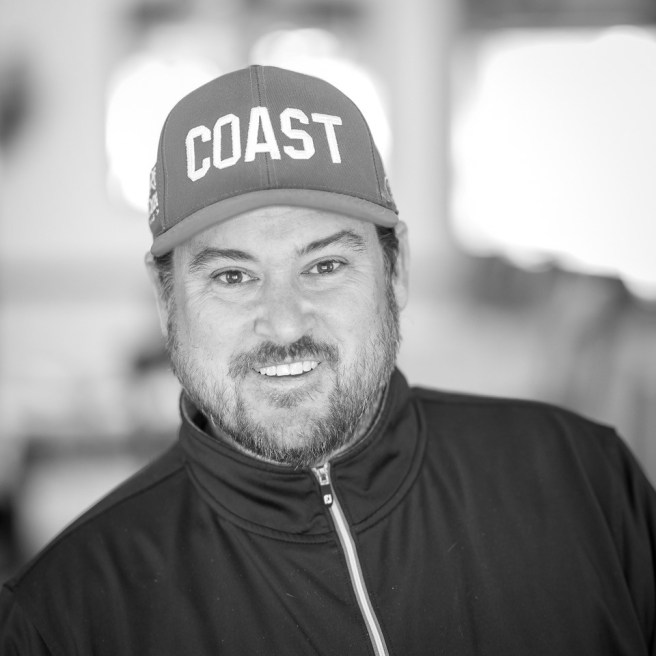
ABOUT THE AUTHOR: Cy Cyr www.cycyr.com) grew up in Biddeford and returned after 25 years away. He started BrickTides.com as a way to reconnect with the community that shaped him, using photography and longform storytelling to document the people shaping southern Maine today.
BRICK+TIDES is a weekly digital magazine based in York County, Maine. We share positive and inspiring stories about local businesses, people, and places that make Southern Maine special. If you’d like to read our free weekly email, we’d love for you to subscribe!
 BIDDEFORD GAZETTE