OPINION: Life During Wartime, when reporters compete

When journalists compete, readers win | Good news for people in Biddeford

Whether you’re buying a new car or just picking up the week’s groceries, you are always better off when you have choices and competition in the marketplace.

It’s no different when it comes to the highly competitive world of journalism. Having choices about where you get your local news ensures that you are well-informed and up to date about what is happening in your community.

Most journalists I know – me included – would rather have “exclusive rights” when it comes to local news reporting. We’re doing just fine. There’s no need for competition. Thank you very much.

But if there is only one dominant media outlet in any market – large or small –news consumers suffer.

Competition keeps journalists on their toes, hungry to find new and more detailed information. Competition also serves the public as an appropriate ‘check and balance’ on each reporter and every media outlet.

Bias and inaccuracy are exposed when multiple journalists cover the same beat.

The idea – and the importance – of “getting the scoop” is a well-known mantra, that even those outside the realm of the so-called Fourth Estate understand and appreciate.

But getting the scoop should be much more focused on getting the story right rather than getting the story first.

So, how does all of this impact local news consumers in Biddeford?

What’s the buzz? Media competition in Biddeford

The local news landscape in the Biddeford area has changed dramatically over the last 30 years.

I have written about this subject ad-nauseam on my personal blog, Lessons in Mediocrity.

I grew up here, and when I returned to Biddeford in the mid-1990s, there were three newspapers regularly covering City Hall, local politics, news and events.

The Portland Press Herald – Maine’s largest daily newspaper – had a fully-staffed regional bureau on Main Street. The legendary and award-winning Journal Tribune – an afternoon daily – was then “the paper of record.”

At the same time, the weekly Biddeford-Saco-OOB Courier – a locally-owned publication — was keeping the big boys on their toes, filling the gaps and providing (during my tenure as editor) a somewhat manic approach to covering City Hall.

What happened?

For all intents and purposes, it was like a slow-acting bomb was triggered. There were a lot of things at play, most notably corporate restructuring of local media and big changes in how consumers accessed their news and information.

Welcome to the internet and social media.

Suddenly, everyone was a reporter. The Fourth Estate was being overrun by a mob of discontented citizens who no longer trusted the media or valued its self-described role as guardians of local news and information.

The Journal Tribune – after more than a century of providing local news in Biddeford – permanently closed its doors in October 2019. The Press Herald closed its regional bureau; and the Courier was sold and then – just last year – ceased publishing its print edition and was folded into an electronic newsletter distributed by the Press Herald.

Rising from the ashes

It may have happened slowly, but over time folks in the Biddeford area realized that they were living in a vacuum of local news coverage. The local newspapers were always taken for granted.

Many of us didn’t recognize how lucky we were to have three independent, professional publications covering Biddeford news.

Not surprisingly, it was a local journalist who took the very first step in filling the news vacuum in Biddeford.

Liz Gotthelf, a former Journal Tribune reporter, launched Saco Bay News – a digital publication – only months after her employer sent her and her co-workers packing in 2020.

Liz Gotthelf (Saco Bay News photo)

It likely would have been easier for Liz to find a job at another newspaper or go into the much more lucrative field of public relations. But with tenacity and grit, she almost single-handedly built a trusted, local media source.

Saco Bay News does an excellent job of covering local news, but since Liz is basically running it as a one-person show, she is stretched thin and challenged by simultaneously covering three communities: Biddeford, Saco and Old Orchard Beach.

Another fighter enters the ring

Almost two years ago, I found myself increasingly frustrated about some local issues, including Biddeford’s brash and rather obnoxious former city manager and a lack of coverage about a controversial project put forth by the University of New England.

In November of 2024, I tentatively launched the Biddeford Gazette as a special section on my blog. Two months later – following my wife’s suggestion – I formally launched the Gazette as a stand-alone publication.

Biddeford is the largest community in York County, and the eighth-largest city in Maine. I thought the city deserved its own news source.

I doubt that Liz – a good friend and former co-worker – was very happy about a new competitor, but readers almost immediately embraced the Gazette because of its commitment to be a Biddeford-only publication.

There’s an old saying: “Write what you know.”

Well, I know Biddeford. My family’s roots here go back generations. I was raised on the third-floor of a Quimby Street triple decker and received First Communion at St. Mary’s.

Heck, I even had a paper route delivering the Journal Tribune in the 1970s.

As a professional journalist, I have been covering the city of Biddeford for nearly 30 years. Thus, I have a somewhat unfair advantage over Liz and various reporters from the Press Herald. I know this city and its people, and they know me.

The media landscape continues to change

Today, any person with a smartphone and an internet connection can set themselves up as a journalist or as “a community reporter.”

That’s a good thing, and that’s a bad thing. Allow me to explain.

Last year, during a small, community symposium about local media issues that was hosted by The Maine Monitor at the McArthur Library, several folks raised concerns about how to “separate the wheat from the chaff.”

In an age of rampant internet communication, how are consumers supposed to discern and distinguish the news being fed to them, asked Susan Gold, a veteran journalist who once worked at the Journal Tribune.

Sadly, there is no easy answer to that question.

As I said at the top, increased competition among the media is good for you, but you have to be careful.

A few months ago, another digital media outlet emerged in Biddeford.

The Biddeford Buzz was launched last summer by Josh Wolfe, a man who was reportedly less than satisfied with the area’s existing news coverage, especially the Gazette.

The Biddeford Buzz may not be my cup of tea. Josh has had no editorial training or professional news experience prior to launching his own publication. For example, the Buzz recently published a story about a political candidate simply by “copying and pasting” something the candidate wrote on Facebook. She called me to complain. “He [Wolfe] never even called me,” she said.

But what Mr. Wolfe may lack in experience, he more than compensates with enthusiasm and a dogged desire to keep other reporters on their own toes.

Unlike many other reporters, Wolfe has become a regular fixture at Biddeford City Council meetings. He has a near perfect attendance record, always sitting up front and eager to cover even rather benign city issues.

Furthermore, — and perhaps most importantly — the Biddeford Buzz gives its readers and others another platform to share their own news and opinions about the city of Biddeford. That’s very important, especially for people who have a rather dim view of the Gazette or other local publications.

More choices often lead to better outcomes, and at least Biddeford consumers are no longer living in a news vacuum

CORRECTION: The original article contained an error. The Journal Tribune closed in October 2019, not in 2020. The story has been updated, and we apologize for the error.

____________
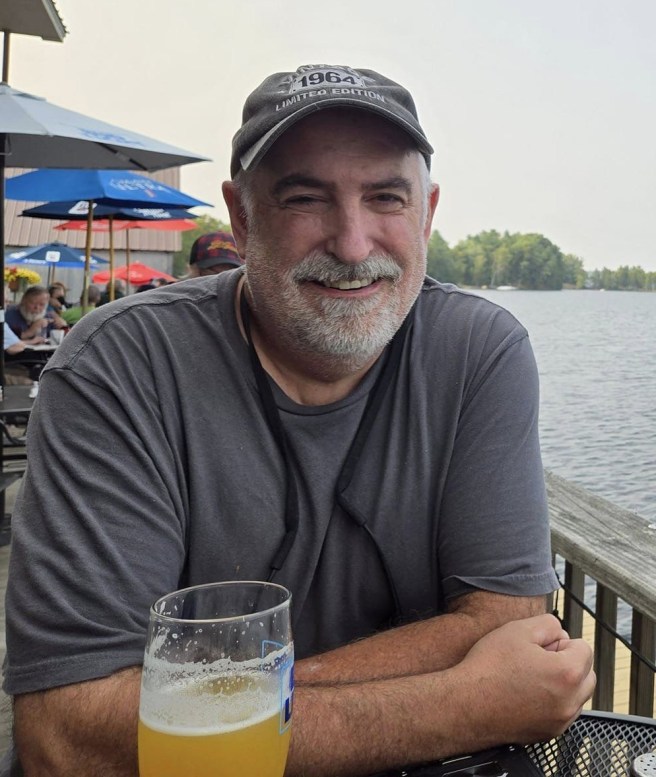
ABOUT THE AUTHOR: Randy Seaver is the editor and founder of the Biddeford Gazette. He is a veteran journalist and regularly blogs about media issues at Lessons In Mediocrity | Outlaw Journalist. He may be contacted at randy@randyseaver.com

Never miss an update! Subscribe for free today!

______________________

Our editorial standards and policies: Biddeford Gazette | Standards & Policies

© 2026 Biddeford Gazette, Inc. All Rights Reserved

NEWSLETTER: ‘Looking for a place to happen’

New partnerships, expanding technology will help the Gazette stay connected to you

I don’t believe this could have been a better week for the Biddeford Gazette.

I am especially excited about several new partnerships that will allow us to give you more news and information about your community.

Earlier this week, I was invited to a meeting at the University of New England, where I enjoyed a really nice lunch with Michael Cripps, a professor and director of UNE’s School of Arts and Humanities and the College of Arts and Sciences.

Dr. Cripps and I had a fascinating and free-wheeling conversation about the state of today’s media landscape and some of the challenges he faces in working to provide his students with real life experiences to support their education outside of the traditional classroom.

Bottom line: Dr. Cripps and I began laying the groundwork of a partnership that will allow his students who are pursuing careers in journalism and communications to work as interns with the Biddeford Gazette.

It has the potential to be a dynamic relationship, one that will allow us an opportunity to expand our coverage and learn the valuable perspective of students attending classes in Biddeford.

But wait, that’s not all . . .

Cy Cyr of Biddeford (Courtesy photo)

If you don’t know Cy Cyr of Biddeford, you’re really missing out. A Biddeford native, Cy recently launched Brick + Tides, a digital magazine that features his photography and some very compelling document-style storytelling about the people shaping southern Maine today.

I am a huge fan of Cy’s work, and I am ecstatic that he and I will be working together to promote and share his work on the Biddeford Gazette’s site.

We’ll be posting our first story from Brick + Tides on Monday in which Cy does an in-depth interview with Heather Paquette, another Biddeford native who is the president of Good Shepherd Food Bank of Maine.

But wait, there’s more . . .

As you can see from a story we posted yesterday, the Biddeford Gazette is continuing its ongoing media partnership with The Maine Monitor, a nonpartisan, independent publication of the Maine Center for Public Interest Reporting.

The Maine Monitor – another digital only publication — has earned an outstanding reputation across the state, providing readers with in-depth, comprehensive reporting on the issues that affect Maine people on a daily basis.

Our partnership with The Maine Monitor is especially valuable as we approach the upcoming election season in which Maine voters will choose a new governor, a U.S. senator, Congressional representatives, not to mention numerous state legislative and county races.

The party primaries are now less than 90 days away. We look forward to sharing more stories from The Maine Monitor in the days and weeks ahead,

A busy week in our own newsroom.

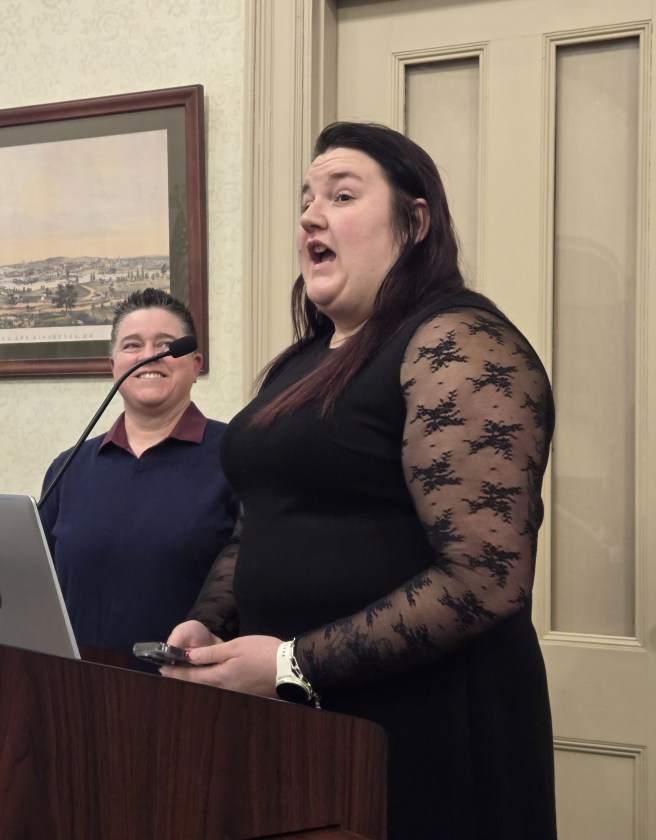
Neva and Samanntha Lance speak in favor of funding for the city’s skatepark during Tuesday’s Biddeford City Council meeting (Seaver photo)

As a reporter, I had a new experience this week.

A local politician voluntarily told me that he was partly to blame for some financial issues that are now plaguing the city of Biddeford.

I don’t recall ever hearing a politician accept responsibility for a problem. Gotta say, it was refreshing to hear City Councilor Marc Lessard talk about his own role in a mess the city is still working through. “You can spread the blame like peanut butter,” Lessard told me. We thought that quote made a perfect headline.

On Thursday, I was the only reporter in attendance during the first meeting of the revised Institutional Zone Review Committee.

Hopefully, other reporters were watching the meeting remotely on-line. It’s convenient for me to be the only reporter in the room, but it’s bad for you, as I explain in this week’s upcoming editorial: Life During Wartime.

We covered several other stories this week. UNE is considering extending a natural gas line from downtown to its Biddeford campus; and several residents spoke in favor of reopening the city’s skatepark during Tuesday’s council meeting.

Video killed the radio star

On a final note, we began experimenting this week with using video and other technology to expand our news and commentary. It’s in a very rudimentary, early stage and well-beyond my experience as a print journalist, but it is fun and somewhat exciting.

The move was inspired by my conversation with Dr. Cripps this week. For younger news consumers, it’s all about video. You can find that video in our new section: Video Commentary & Reporting.

A close friend of mine – a media expert – tried to be as supportive as possible.

“You know,” he said. “You could always do a second take.”

And that, my friends, is the beauty of being a digital publication.

________________

ABOUT THE AUTHOR: Randy Seaver is the editor and founder of the Biddeford Gazette. He is a Biddeford native who has been covering Biddeford news and politics for nearly three decades. He may be reached by email: randy@randyseaver.com

____________

THE BIDDEFORD GAZETTE | A Legacy of Trusted, Independent Journalism

Our editorial standards and policies: Biddeford Gazette | Standards & Policies

© 2026 Biddeford Gazette, Inc. All Rights Reserved
Never miss an update! Subscribe for free today!

Republicans are using fraud scandals against Democrats in key races

By TORRIE HERRINGTON, NOTUS for The Maine Monitor

Republicans are trying their best to tie Democrats to fraud this election cycle.

President Donald Trump has spent months hammering Minnesota for its handling of a welfare scheme. The Republican National Committee has referred to Maine’s governor, who is now running for Senate, as “Fraudulent Janet Mills.”

And the National Republican Congressional Committee has singled out multiple candidates who they say failed to stop fraud on their home turf.

The National Republican Congressional Committee criticized Maine House (CD 2) candidate Matt Dunlap for his work as a state auditor. (Photo by Robert F. Bukaty of the Associated Press)

“Billions of dollars intended for families and communities in need have been diverted to benefit fraudsters,” NRCC spokesman Mike Marinella said in a statement. “Working families are furious, and Democrats can’t run on ‘anti-corruption’ while their own states are ground zero for massive fraud.”

Both parties are seeking to mix other alleged malfeasance into their affordability messaging. Democrats are emphasizing anti-corruption policies and the Epstein files scandal, saying their opponents are protecting elites over ordinary Americans.

Republicans are countering that Democrats have looked the other way on fraud, allowing people to take benefits meant to go to the people who need them.

Republican strategist Matthew Bartlett, who served as a political appointee in the first Trump administration and is co-founder of Darby Field Advisors, said fraud is on voters’ minds right now, particularly after the federal government sent large amounts of money out via the states.

“Very legitimate questions about ‘where did all this money go?’ exist,” Bartlett said. “Very sadly, I think there are instances of waste, fraud and abuse. So that is in the public interest, that is a legitimate question if you’re an elected official.”

However, he said, “Is this the top priority of the American voting public right now? No.”

Emily Cain, former Maine state senator and executive director of EMILYs List, agreed that fraud is important to root out but not at the top of voters’ minds.

“If someone is breaking the law or taking advantage of a system they should be held accountable. That is just true. But is fraud the thing that people are thinking about when they’re going to the grocery store this week? No, it’s not,” Cain said. “Republicans are feeding them a narrative of fraud because they don’t have anything else to campaign on right now.”

Democrats largely argue that the ties between them and alleged fraud perpetuated by outside actors is tenuous, such as pinning alleged health care fraud on a candidate for supporting a health care policy.

In Maine, there is a potential fraud scandal underway. The state paused payments to Gateway Community Services, which overbilled MaineCare, the state’s Medicaid program, for interpretation services by more than $1 million, according to an audit by the Department of Health and Human Services. Gateway denies the allegations of fraud.

The NRCC is targeting state auditor Matt Dunlap, who is running for Maine’s 2nd Congressional District, by claiming he failed in his role and should have included Gateway as part of his audit that included Maine Department of Health and Human Services.

In a statement in response to the allegations, Dunlap campaign manager Harry Burke said, “The work of the Auditor of Maine is confidential. Period. Matt will not comment on any audit that may or may not be conducted. The audit work will speak for itself.”

In a conversation about general audit practices, Dunlap explained that his job as state auditor is to audit the major agencies, such as the Maine Department of Health and Human Services, and not the smaller nonprofits or programs which get their funding from the major agencies.

For example, in the 2024 audit report, there are recommendations for the state DHHS on how to better operate, but none of the smaller organizations it works with are listed in the audit; that is something DHHS audits internally.

“The purpose of an audit is to improve an organization. We’re not trying to play gotcha, we’re trying to help these agencies be better,” Dunlap said. “If business is the language, auditing is a spellcheck.”

Republicans also singled out one of Dunlap’s Democratic opponents, state Sen. Joe Baldacci, saying he was tied to the potential fraud. Baldacci voted in favor of expanding MaineCare.

“Anyone who defrauds MaineCare should be prosecuted to the fullest extent of the law. Period,” Baldacci said, adding that he has long been a champion for affordable health care.

The Republican National Committee has targeted Senate candidate Gov. Janet Mills, connecting her to fraud in multiple statements pointing to Medicaid overbilling and refusing to turn over SNAP data to the federal government.

Mills accused the Trump administration of using fraud as an excuse to attack Maine with Immigration and Customs Enforcement.

“This is part of President Trump’s malicious playbook of using his administration’s power to punish anyone who dares to stand up to him or who disagrees with him,” Mills said in the Feb. 9 statement. “That is why as governor, my Administration has implemented new and unprecedented licensing requirements for Medicaid providers, prioritized audits, and worked directly with State and Federal authorities to hold accountable individuals who attempt to defraud our state.”

The push goes beyond Maine.

The NRCC accused Democratic Rep. Dave Min in California’s 47th Congressional District of trying to cover up fraud because he dismissed the administration’s investigation into Minnesota as “partisan and racist” during a House Oversight Committee hearing.

The Min campaign pointed out that the lawmaker started out his remarks in the hearing by calling what happened in Minnesota “ fraud of the worst kind” and calling for “aggressive enforcement and accountability when it comes to taxpayer dollars and their disbursement.”

Min called the hearing “partisan and racist” because “we have not had other hearings when it comes to fraud that takes place in Republican-led states. We have not had hearings in this committee as far as I am aware or on any other committee this year as long as I’ve been in Congress that go after those who are not Somali-American.”

The NRCC said that Min should be more concerned about fraud at home in California.

“I started my career as an SEC enforcement attorney, where I cracked down on corporate greed and fraud. As a member of the Oversight Committee, I will always fight for accountability with your taxpayer dollars, weeding out fraud wherever it is discovered,” Min said in a statement to NOTUS.

In New York, then-Republican candidate for attorney general Khurram Dara called for an investigation into New York’s Consumer Directed Personal Assistance Program — with a dig at Democratic Gov. Kathy Hochul.

“In Minnesota, a fraud measured in the hundreds of millions triggered indictments, federal coordination, and asset seizures,” Dara, who dropped out of the race last week. “In New York, a program with more than $10 billion a year flowing through it was allowed to operate for years with virtually no enforcement. The scale here is far larger, yet the response was far weaker.”

A spokesperson for Hochul called the claim “old news.”

“Governor Hochul already put an end to waste, fraud and abuse in CDPAP by cutting out hundreds of middlemen over a year ago — and it’s already saving over $1 billion for New York taxpayers,” the spokesperson said.

________________

ABOUT THE AUTHOR: Torrie Herrington covers the Maine and Vermont congressional delegations for NOTUS, in partnership with The Maine Monitor and VT Digger. Torrie grew up in Arkansas and graduated from the University of Central Arkansas with a bachelor’s degree in journalism and public relations. At UCA, she was editor in chief of the student newspaper, The Echo, where she reported on local political races, a professor accused of misconduct, campus events and more. She has also interned at the Log Cabin Democrat, where she covered community events and nonprofits. You can contact her at TorrieHerrington@notus.com

NOTE: This story was produced as part of a partnership between NOTUS, a publication from the nonprofit, nonpartisan Allbritton Journalism Institute and The Maine Monitor, a nonpartisan, nonprofit news organization covering the state of Maine.

Should Mainers be concerned by shark sightings?

By JULIA TILTON, Maine Monitor

John Chisholm has been interested in sharks as long as he can remember. Growing up in Plymouth, Mass. in the 1970s, he spent a lot of time searching for great whites on his dad’s commercial fishing boat. 

An adjunct scientist at the New England Aquarium’s Anderson Cabot Center for Ocean Life, Chisholm wasn’t the first in his family to take an interest in great white sharks. In 1921, Chisholm’s great-great grandfather caught white sharks on Prince Edward Island in mackerel nets while working as a lighthouse keeper.

Chisholm spent summers on Prince Edward Island as a kid and heard that story from his grandparents. Now, he says there’s scientific evidence, including fossil shark teeth, that white sharks have long been swimming in northern waters.

A great white shark swims off the coast of Cape Cod in 2021. Photo courtesy Kyle Oliveira.

“White sharks have always been here. They predate colonization by Europeans,” said Chisholm. “So it’s kind of frustrating when you see people saying they’re now moving into Canadian waters. They’ve always been in Canadian waters. They’ve always been in Maine waters.”

The presence of sharks are an indicator of an ecosystem’s good health, according to shark biologist Kyle Oliveira, a Ph.D. candidate at the University of Maine and Bigelow Laboratory for Ocean Sciences. Between the late 1800s and mid 1900s, the white shark population took a hit due to overfishing, meaning there were less recorded sightings of white sharks along the East Coast.

Thanks to protection measures like the Shark Finning Prohibition Act of 2000 and Shark Conservation Act of 2010, which make it illegal to remove shark fins from sharks at sea and promote sustainable shark management, those who track white sharks are beginning to see the populations recover. 

As with any predator, sharks will tend to go where the food is. That could be one factor driving the sightings reported in Casco Bay in July. Both Chisholm and Oliveira pointed to a high concentration of striped bass in the Gulf of Maine, which is a source of prey for sharks. 

“Everybody thinks the sharks are here for seals,” Chisholm said. While catching a seal is a “metabolic windfall” full of the lipid-rich nutrients adult sharks need, the predators have plenty of other food sources, too. Juvenile and sub-adult sharks tend to feed on schools of fish, according to Oliveira, who said recent research has found younger sharks are often the ones visiting Maine.

When it comes to finding food, Oliveira said convenience is key. “White sharks are really lazy animals, and they try and get whatever meal is gonna be easiest for them to catch,” Oliveira said. One favorite is a floating whale carcass because it provides easy access for sharks to chomp off pieces of blubber, another source of lipids. 

Independent of shark population numbers, technology may be another driver of reported white shark sightings. When Chisholm started tracking white sharks in the Atlantic in the late 1970s, he’d hear about sightings second or third hand. He’d spend weeks, months, or occasionally years tracking down witnesses to interview them about what they thought they saw, being careful not to ask leading questions that would sway the answers one way or another. 

“White sharks are really lazy animals,
and they try and get whatever meal
is gonna be easiest for them to catch,”

— Kyle Oliveira

“In 1985 I might have only had three sightings for that year. That doesn’t mean there were only three white sharks. It just means I tracked down three people that saw them,” Chisholm said. 

Nowadays, Chisholm opens up social media to track sightings across videos and photos posted to Instagram and X. Many of those sightings turn out to be basking sharks rather than white sharks, but the information contributes to data on multiple shark species and their behavior throughout New England.  

Through his role at the New England Aquarium, Chisholm is also responsible for verifying shark sightings reported on the Sharktivity app. The app is a form of citizen science, allowing witnesses to contribute to a growing database that helps inform work done by researchers across the region.

As of July 31 this year, there have been 15 confirmed sightings of white sharks off of Maine’s coast, with one sighting reported as far north as Camden.

In addition to reporting shark sightings on the app, Chisholm recommended that those who spot a shark contact their local harbor masters with the location and time of the sighting. 

Doing so can help spread awareness and reduce paranoia. One rule of thumb is to avoid swimming with the bait, Chisholm said. Beyond that, Oliveira encouraged beachgoers to remember that the ocean is home for sharks.

“It’s a sign of a healthy, productive ecosystem, so having white sharks around is a really good thing,” Oliveira said.

As the climate changes, researchers like Oliveira are working to understand how white sharks will be affected. Sea surface temperatures in the Gulf of Maine are warming faster than 99 percent of the global ocean as a result of climate change, yet sharks can regulate their internal body temperature and find suitable habitat in waters ranging from 37-89 degrees Fahrenheit.

What’s unclear, Oliveira said, is how lower levels of the food chain will fare under changing conditions. Impacts there could eventually work their way up to white sharks at the top.

Note: This story was originally published by The Maine Monitor, a nonprofit and nonpartisan news organization. To get regular coverage from The Monitor, sign up for a free Monitor newsletter here.

_______________

ABOUT THE REPORTER: Julia Tilton is a freelance reporter covering climate and the environment, contributing to The Maine Monitor and The Daily Yonder. At the latter, she co-hosts the Keep it Rural podcast, a biweekly podcast that digs into the nuance of the latest science and politics news impacting rural America.

Julia previously worked on NASA’s Curious Universe podcast and her reporting has been featured in news outlets from Nashville to Mexico. She grew up in southern New Hampshire and is partial to the mountains and forests of the Northeast.

Contact Julia via email: juliatilton@gmail.com

Residents share concerns about local news

Roughly a dozen people gathered Tuesday at the McArthur Library in Biddeford to discuss local journalism and a rapidly changing media landscape.

The event was part of a statewide listening tour coordinated by The Maine Monitor, an online publication of the Maine Center for Public Interest Reporting, and intended to collect public feedback about how people perceive and access local news.

The July 29 event in Biddeford was co-sponsored by Saco Bay News, an online digital news outlet founded by former Journal Tribune reporter Liz Gotthelf in 2020.

“We’re here tonight to listen to you,” said Micaela Schweitzer-Bluhm, executive director of the Maine Center for Public Interest Reporting. “We want to know what matters to you when you access news about your community. How do you get your news, and what are the essential things you look for from local media?”

Biddeford Mayor Marty Grohman and Saco Mayor Jodi MacPhail attended the workshop meeting.

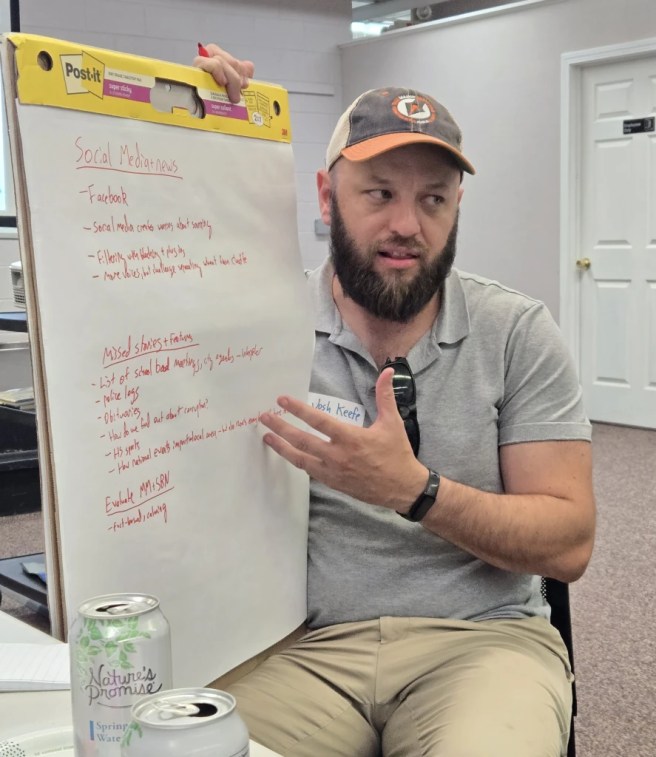
Josh Keefe, a government accountability reporter with the Maine Monitor, shares highlights of a break-out group discussion about local journalism during Tuesday’s event at the McArthur Library. (Seaver photo)

“One of the things I hear all the time from my constituents is that they often don’t know about things happening in the city because they don’t know where to find the information,” MacPhail said.

During his remarks, Grohman touched upon a common theme that was shared by many of the attendees: a lack of a daily print newspaper.

“I’m constantly looking for credible news,” Grohman said. “With so many different things online, it can be difficult to find credible news.”

Those attending the meeting were largely over the age of 50 and many of them reported having a hard time getting news that is both locally relevant and comprehensive.

Susan Gold of Saco is a former reporter and editor who worked many years at the Journal Tribune, the former daily newspaper that served northern York County for more than a century.

“It’s great that local governments are doing more to share news about what is happening in the community, but we also need an unbiased person to explain what is actually happening, and we need to be able to trust the accuracy of those reports,” Gold said.

According to Schweitzer-Bluhm, rural communities across Maine are being hit especially hard by a changing media landscape that has seen newsrooms shrink and local coverage evaporate.

“The heyday of print journalism gave readers coverage of town government but also issues that bind the community, whether it’s high school sports, obituaries or public notices about meetings and events,” she explained.

In just the last decade, the Biddeford-Saco area has seen a seismic change in how local news is gathered and shared.

The Portland Press Herald once maintained a local bureau on Main Street in Biddeford that housed operations for reporters, photographers and editors who covered news and events throughout Northern York County.

In 2020, the Journal Tribune, an afternoon daily newspaper based in Biddeford, ceased publication. And the weekly Biddeford-Saco Courier, which was locally owned and operated, was sold to a media conglomerate and ceased print publication earlier this year.

Those changes have many residents wondering where to turn when it comes to finding credible and accurate local news.

Several people said social media sites such as Facebook are filling some of the void when it comes to news and information, but also said social media has many pitfalls, including questionable accuracy and fairness.

“You have people attempting to report news who have no editorial oversight or training,” one woman said.

Ted Sirois of Saco said he misses the opportunity to write letters to the editor and finds himself concerned about bias in news reporting.

Today the Biddeford Saco area is served by three digital news platforms. Saco Bay News is an independent online-only publication that covers the communities of Biddeford, Saco and Old Orchard Beach.

The Biddeford Gazette, started in January this year, is another independent, online-only publication that provides hyper-local coverage of Biddeford news and events.

The Courier is now delivered as an electronic, weekly newsletter that also covers Northern York County.

The Portland Press Herald, Maine’s largest daily newspaper, today rarely covers day-to-day, local news in the Biddeford-Saco area.

“It’s certainly not like the old days,” bemoaned former Biddeford City Councilor Patricia Boston. “I miss the days of print newspapers, but I do my best to follow news in both the Gazette and Saco Bay News. It’s important for people to know what is happening in their community.”

_____________

Randy Seaver is the editor and founder of the Biddeford Gazette. He may be contacted by email: randy@randyseaver.com

NEVER MISS ANOTHER UPDATE! Subscribe for free today!