ALFRED — A couple of classes of the Citizens Police Academy conducted by York County Sheriff’s Office this winter included law and the US Constitution. It was part of the nine-week program that saw students learn everything from how to conduct a traffic stop to the role of police dogs – typically called K9s – to crime scene processing and use of force.
Among the 16 graduates of the program were Bob Dyer and Matt Ryan. Both had been members of the inaugural academy in 2025 and enjoyed it so much they signed up for 2026.
“It’s a good way for the community to see what’s going on behind the scenes,” said Ryan, who said he is interested in a career in law enforcement.
PROUD GRADS | Academy grad: After 27 hours of instruction and a ride along with a deputy, 16 members of the YCSO Citizen Police Academy graduated March 6. The evening classes encompassed an array of topics, from crime scene investigation to the special response team, K9 handling, dispatching, jail operations and much more. The academy is held each January and February. (Tammy Wells Photo)
Dyer said he found the first academy so interesting he was eager to sign up for the second. “I was amazed at the amount of time they spent on law and the Constitution,” said Dyer. And then came mock traffic stops, conducted in the drill hall of the York County Regional Training Center. “At night it was really dark,” said Dyer, with the vast drill hall simulating what it is like outside on a moonless night. “That was a whole new scenario.”
Program administrator Deputy Matt Cummer said the class of 16 was a diverse group that included retirees, lawyers, healthcare workers and others who took time out of their busy weeks to attend.
The graduates were recognized on March 6, at the sheriff’s office annual awards ceremony.
“I liken the citizen police academy to the Wizard of Oz movie – we give people a glimpse of what goes on behind the curtain,” said York County Sheriff William L. King “The citizen academy is not only interesting to the participants, but gives them a true appreciation of the challenges of policing in a rural environment.”
Katarina Champlin works in a hospital emergency department and married into a police family.
“I wanted to see the aspects of what they do,” said Champlin, who said crime scene processing and investigations were her favorite parts of the program.
“I’ve always been intrigued,” said Anthony Legueux. “It was interesting.”
Topics for the free program includedpolice patrol operations and tactics, communications, fingerprinting, jail operations, crime scene processing, political implications, investigations, community policing, constitutional law, use of force, K9 utilization, and special response team operations. In all, it was a 27-hour program plus a required ride-along. Those applying agree to a background check.
FAVOITE PART OF THE CLASS | K9: A popular topic at the YCSO Citizen Police Academy is the use of K9s in all manner of investigations. Here, Deputy Cody Frazier and K9 Rebel take a turn around the drill hall. (Courtesy Photo)
“Everyone is interested in the K-9 part because dogs are cool, but I think students got the most out of the use of force class, reviewing case law on the subject and (now) understand how law-enforcement officers are judged when using force – it can be eye-opening,” said Cummer.
Graduates included Ilene Kanoff, John Burrows, Karen Furrow, Roycean Weyand, Katarina Champlin, Danny brown, Anthony Lagueux, Andrew Lehmann, Elaine Guillemette, Thomas Collins, Matt Ryan, Robert Dyer, Joshia Jacques, Henry Monday, Tyler Smith and Sarah Newick.
Dyer said the academy was time well spent.
“This is in a class by itself,” he said.
__________________________
ABOUT THE AUTHOR | Tammy Wells is a media specialist with York County government. You may reach her at tlwells@yorkcountymaine.gov
Never miss an update! Subscribe for free today!
________________________
THE BIDDEFORD GAZETTE | A Legacy of Trusted, Independent Journalism
Over the past decade, Biddeford’s property taxes have steadily climbed. In 2013 the city’s total tax rate was $16.54 per $1,000 of valuation. By 2022 it had reached $18.23, with several years above $19 and even $20 along the way.
That may not sound dramatic at first glance, but it represents roughly a 10 percent increase in the tax rate over ten years—and that figure doesn’t include the dramatic rise in property valuations that has pushed many homeowners’ actual tax bills much higher.
At the same time, many Biddeford residents are facing the same reality as everyone else: inflation, rising insurance costs, and household budgets that do not grow automatically each year.
That is why this moment—when the next Biddeford Charter Commission is being considered—is the right time to discuss a structural reform: tying property-tax increases to inflation.
Across the country, municipalities are experimenting with tax caps or inflation-indexed limits to ensure government grows at roughly the same pace as the economy that supports it. The principle is simple. If inflation is 3 percent, the default growth of government should not exceed 3 percent unless voters explicitly approve it.
Such a rule does not prevent the city from funding important priorities. If voters want expanded services, new schools, or large infrastructure projects, they can approve overrides at the ballot box. But it does create an important discipline: government must justify spending increases rather than assuming taxpayers will absorb them.
An inflation-linked property-tax cap would also force difficult—but healthy—budget conversations. When revenue growth is limited, cities must prioritize core services, reduce waste, and rethink programs that may no longer be essential. In other words, government must make the same choices that Biddeford families make every day.
“. . . growth should not automatically translate into ever-rising tax burdens for the people who built this community. . .”
Biddeford is in a period of remarkable growth. Downtown investment has surged, property values have increased, and new residents are discovering the city’s character and potential. But growth should not automatically translate into ever-rising tax burdens for the people who built this community long before the boom.
The upcoming Charter Commission presents a rare opportunity to place long-term guardrails on municipal finance. A charter provision tying property-tax increases to inflation—unless voters approve otherwise—would create predictability for homeowners, discipline for city government, and transparency for taxpayers.
Biddeford’s future is bright. The question now is whether the city will adopt policies that ensure prosperity growth does not come at the expense of affordability. The next Charter Commission should seize this moment and put a sensible inflation-based tax limit before the voters.
NOTE: The Biddeford Gazette strongly encourages reader feedback and public commentary regarding our coverage and issues directly related to the city of Biddeford. To submit a letter to the editor or guest column, please contact us at biddefordgazette@gmail.com
Never miss an update! Subscribe to the Gazette for free today!
THE BIDDEFORD GAZETTE |A Legacy of Trusted, Independent Journalism
Maine’s manufactured‑home communities are facing pressures that many towns and cities can no longer afford to ignore. When municipalities choose not to adopt basic resident‑protection measures—such as rent‑stabilization ordinances or guardrails on pass‑through utility charges—the consequences fall directly onto residents and, ultimately, onto local taxpayers.
Across the state, residents are experiencing steep, repeated increases in lot rents and fees with no protections in place. These are not luxury communities; they are some of the last remaining sources of naturally affordable housing in Maine. When costs rise faster than wages or fixed incomes, families are pushed into impossible choices month after month.
A manufactured home at Blue Haven in Saco (Photo ReMax Realty)
Without local action, towns should expect to see more residents advocating publicly for relief and more households turning to General Assistance simply because their money no longer goes as far as it used to. This is not speculation—it is a predictable outcome of inaction.
We all understand that mobile home parks are a business, and businesses make money. But when the profits generated from Maine residents do not stay in Maine, that becomes a direct problem for our communities.
If these equity firms were locally owned—if the revenue from lot rents circulated back into our local economy, our infrastructure, and our tax base—this conversation would look very different. Instead, we are watching the opposite happen.
Take Saco as a clear example.
Blue Haven Mobile Home Park’s majority ownership is held by the BRT Charitable Foundation, a California‑based nonprofit with tax‑exempt status. They do not pay state or federal taxes, and their reported donations and contributions are made entirely in California. Nothing we have seen indicates that any portion of the profits generated from Saco residents are being reinvested here in Maine.
When out‑of‑state equity firms extract revenue from Maine communities without reinvesting in local infrastructure, services, or the residents who generate that revenue, the burden shifts directly onto municipalities.
Local taxpayers end up subsidizing the gaps—whether through increased General Assistance requests, strained social services, or the long‑term costs of deferred infrastructure maintenance inside these parks.
Nothing we have seen indicates that any portion of the profits generated from Saco residents are being reinvested here in Maine
This is not just a housing issue. It is an economic leakage issue, a municipal budget issue, and a community stability issue. Maine towns and cities have a choice: put reasonable protections in place now or continue absorbing the financial and social consequences later.
Residents are already feeling the strain. Without action, municipalities will feel it next.
NOTE: The Biddeford Gazette strongly encourages reader feedback and public commentary regarding our coverage and issues directly related to the city of Biddeford. To submit a letter to the editor or guest column, please contact us at biddefordgazette@gmail.com
Never miss an update! Subscribe today!
_____________________
THE BIDDEFORD GAZETTE | A Legacy of Trusted, Independent Journalism
BIDDEFORD, Maine – The Biddeford High School (BHS) Drama Club is proud to announce its upcoming production of Mean Girls: High School Version, a bold, high-energy musical that brings humor, heart, and sharp social commentary to the stage. Show times are Thursday, March 19, 2026, at 7:30 p.m., Friday, March 20, 2026, at 7:30 p.m., and Saturday, March 21, 2026, at 2:00 p.m. and 7:30 p.m. in the Biddeford Middle School Performing Arts Center.
Based closely on the original hit film Mean Girls, this stage adaptation stays true to the spirit and storyline audiences know and love while being thoughtfully tailored for student performers. Rated PG-13, the high school version makes the story more appropriate for teen and family audiences without losing its signature wit and authenticity.
“At its core, Mean Girls is about identity, belonging, and the courage to be yourself,” said Ellie Joseph, head of Vocal and Theatre Arts at Biddeford High School. “Our students have embraced both the humor and the heart of this story. They’ve grown tremendously — not just as performers, but as collaborators and leaders. Watching them support one another, take creative risks, and bring these characters to life has been incredibly rewarding. This production showcases their talent, resilience, and the powerful sense of community we build through the performing arts.”
At Biddeford High School, the performing arts program is committed to creating meaningful theatrical experiences that both challenge and inspire students. This production offers opportunities for growth not only in performance, but also in collaboration, confidence, and storytelling — skills that extend well beyond the stage.
Community members are invited to attend and celebrate the incredible hard work of the cast and crew. The shows are general admission with tickets sold at the door for $10 for adults and $5 for students. Audiences can expect a show that is bold, funny, and full of heart — and a powerful reminder of the importance of kindness, identity, and finding your voice.
On Monday, March 2 at 6 p.m., the Institutional Zone Review Committee will hold its first public hearing at City Hall. The meeting begins the public input phase of a broader review of how Biddeford regulates institutional development.
For many residents, the term “Institutional Zone” may not be familiar. In practical terms, it is the zoning framework that governs development at the University of New England’s Biddeford campus.
UNE’s campus sits largely within an area that, under typical zoning rules, is generally limited to single-family houses.
In 2001, the city created a dedicated zoning district to allow the university to build and grow in ways that no other entity could within that setting. The ordinance established a structured process requiring a comprehensive Institutional Master Plan, a document outlining anticipated growth over five to ten years and analyzing impacts on traffic, parking, infrastructure, municipal services, and campus design standards.
Biddeford Mayor Liam LaFountain, City of Biddeford photo
The University of New England has long been an important part of Biddeford’s civic and economic fabric. It is one of the city’s largest employers and contributes to the local economy, research activity and cultural life.
Students, faculty, and staff are neighbors and active participants in Biddeford. The relationship between Biddeford and UNE has evolved over time, shaped by growth on both sides.
The City’s zoning has long provided a clear pathway for institutional growth. However, the Institutional Zone ordinance has not been comprehensively updated in nearly 25 years. As both the university and the city have evolved, it is reasonable to review whether that framework remains aligned with current conditions and future expectations.
In recent years, several development projects within the Institutional Zone have generated strong reactions. Often, disagreements have centered less on whether development should occur and more on how clearly the ordinance defines what is permitted, how impacts are evaluated, and how decisions are made. When expectations among the university, the city, and residents are not fully aligned, even well-intended projects can become contentious.
That context, in part, led the city council to establish the Institutional Zone Review Committee at the beginning of this council term.
The committee serves in an advisory capacity. It does not approve projects, determine property sales, or make final legislative decisions. Its responsibility is to review the ordinance, gather public input, and recommend whether revisions are warranted. Any proposed changes will proceed through the standard public legislative process before the Planning Board and City Council.
Formed through the regular public appointment process, the committee operates in open session under Maine’s Freedom of Access laws. All members are Biddeford residents. The membership includes two city councilors, the president of the University of New England, the president of the Hills Beach Neighborhood Association, a facilities manager who previously worked for UNE and is a UNE graduate, and a local real estate professional. Together, they reflect a range of civic, professional, and neighborhood perspectives within the city.
Meetings are open to the public, materials are posted online, and the process is structured to ensure transparency, accountability, and broad participation before any ordinance changes are considered.
________________
The process is structured to ensure transparency, accountability,
and broad participation before any ordinance changes are considered.
As part of this review, the City Council adopted a temporary six-month moratorium on new institutional development and university uses. The pause is not directed at any single proposal and does not prohibit the purchase or sale of property within the Institutional Zone, nor does it prevent any property owner, including the University of New England, from entering into a real estate transaction.
It applies only to new development activity or changes of use during the review period, allowing the city to evaluate and, if necessary, update the ordinance before additional projects proceed under standards that may soon change.
Zoning ordinances shape municipalities for decades, influencing infrastructure investments, traffic patterns, public safety demands and neighborhood character.
Recent institutional projects have underscored the need for clearer expectations and a more consistent and transparent framework. As public interest has grown, so too has the expectation that development decisions be predictable and participatory. Reviewing the ordinance openly and deliberately is a responsible step toward that goal.
Public comment from Biddeford residents on March 2 and in the months ahead will help inform this work and strengthen the final recommendations. The objective is a regulatory framework that provides clarity, consistency, and confidence as institutional growth continues in Biddeford.
_________________
ABOUT THE AUTHOR: Liam LaFountain is serving his first term as Mayor of Biddeford and previously served two terms on the Biddeford City Council. He welcomes questions, comments, and ideas and can be contacted directly at liam.lafountain@biddefordmaine.org. The views and opinions herein are solely those of the author.
Never miss another update! Subscribe for free today!
THE BIDDEFORD GAZETTE | A Legacy of Trusted, Independent Journalism
City is on the right track in its thoughtful, measured review of UNE development plans
I read the recent letter regarding the University of New England review committee with concern, but also with a sense that the issue deserves a more balanced perspective.
It is important to remember that residency alone does not disqualify someone from serving fairly or objectively. Hills Beach residents are citizens of Biddeford, just as much as anyone living downtown, in the mills district, or elsewhere in the city. Suggesting that they are inherently incapable of acting in the broader public interest risks dividing our community rather than strengthening it.
The committee’s role is to review plans and gather input — including through a public hearing — not to act as “plaintiffs” or to obstruct progress. The public hearing itself is evidence of a transparent process that invites participation from the entire community.
The University of New England is indeed an asset to Biddeford. Its educational, economic, and cultural contributions are significant. At the same time, thoughtful review of development proposals is not the same as impeding progress. Responsible growth benefits from careful consideration of environmental impact, neighborhood character, traffic, infrastructure, and long-term planning. That is not obstruction — that is governance.
________________
“Thoughtful review of development proposals
is not the same as impeding progress.”
________________
If residents are concerned about representation, the solution is engagement. Attend the hearing. Submit comments. Volunteer for boards and committees. Run for office. Democracy functions best when more voices participate — not when we question the legitimacy of neighbors simply because of where they live.
Biddeford is stronger when we work together — university community, beach residents, mill district entrepreneurs, and long-time families alike. Let’s focus on collaboration rather than division.
Mark Poirier,Biddeford
NOTE: The Biddeford Gazette strongly encourages reader feedback and public commentary regarding our coverage and issues directly related to the city of Biddeford. To submit a letter to the editor or guest column, please contact us at biddefordgazette@gmail.com
Never miss an update! Subscribe for free today!
THE BIDDEFORD GAZETTE | A Legacy of Trusted, Independent Journalism
David Kurtz takes in a deep breath – pauses – and looks away, toward the coffee shop’s window before answering one of our questions during an informal and candid interview.
Kurtz, 39, is one of the three new Biddeford city councilors who were each first elected to office in November.
Despite the relaxed setting on a Tuesday afternoon at the Time & Tides coffee shop on Main Street, Kurtz approaches our questions with the same style of deliberative and thoughtful responses that are becoming his public trademark.
He is a serious man but is also equally funny and somewhat self-deprecating.
Biddeford City Councilor David Kurtz (Seaver photo)
Our hour-long conversation is free-wheeling. At times the mood is light and jovial. But Kurtz also doesn’t pull any punches when talking about growing up as “a geek” with divorced parents in southern Maine.
And he is as serious as a heart attack when discussing some of the issues now facing the city of Biddeford.
“There is absolutely no question,” he said. “We need to do better, but I also think we’re on the right track.”
Kurtz’s childhood was much less than anything that could be described as idyllic. His father struggled with a drug addiction. His mother did her best to raise her son alone on a meager income.
Despite those somewhat gritty circumstances, Kurtz heaped praise on both of his parents.
“They both loved and supported me unconditionally,” he recalled. “They were doing the best that they could do. Yes, my father had a substance use disorder, but he read to me every night when I visited him on weekends or vacation days.”
Here are three things everyone should know about David Kurtz.
First, he wore open-toed sandals to the interview, despite piles of frozen snow on the sidewalks and mid-February freezing temperatures.
A few hours later, he was dressed in a jacket and necktie for a meeting with his constituents at City Hall to discuss priorities for the city’s recreational assets. No sandals. Polished shoes.
Secondly, Kurtz worked in a liquor store when he was just 17 years old. “I looked more like 39 back then, than I do today,” he laughed.
Finally, Kurtz is often accompanied by his mother, Cynthia, during public events, including last week’s ward meeting and while enjoying the city’s annual downtown Winterfest celebration.
Sometimes people need to be willing to grab a shovel and help pick up some shit.”
In his very first bid for public office, Kurtz was unopposed in his quest for the council’s Ward Five seat.
Kurtz received 553 votes – a little less than 73 percent of the total ballots cast in that council race. According to the city clerk’s office, 211 voters in Ward Five left that particular ballot choice blank.
Ward Five – previously represented by Neva Lance, Julian Schlaver, Victoria Foley and Amy Clearwater – includes the city’s downtown area and a sprawling collection of repurposed former mill buildings.
While Biddeford is, in fact, Maine’s youngest city (35.6 median age), Ward Five is also arguably the most diverse, youngest and politically progressive of Biddeford’s seven voting wards.
Kurtz is a corporate lawyer. He graduated from the University of Southern Maine’s Law School in 2016.
Today, Kurtz is employed as a corporate lawyer for Robert S. Gitmeid & Associates, a New York-based firm with offices in all 50 states. Kurtz runs the firm’s Maine and Vermont offices.
Kurtz “shares a bed and custody of two cats” with his girlfriend, Dani, a veterinarian. The couple lives in a newly constructed residential building on Upper Falls Road (formerly Gooch Street).
Meet the new guy
Kurtz takes a sip from his coffee as we begin the Q & A portion of our meeting.
“Okay, I’m ready,” he laughed. “Let me have it.”
You double-majored in economics and bio chemistry at Hampshire College. Bio chemistry?
“All my friends were pre-med. I couldn’t keep up with their conversations, so I decided to try a new tact.” (Laughs)
How and why did you get involved in city politics?
“I served on the Recycling & Waste Management Commission. I found it fascinating. I got to work closely with [Public Works Director] Jeff Demers. Man, that guy knows a lot.”
“On that committee, I worked alongside [city councilors] Brad Cote, Jake Pierson and Abigail Woods and with Liam [LaFountain] before he became mayor.”
You’re not a Biddeford native.
“No. Almost, but not quite.” (Laughs) “I wasn’t born here, and I’m a bit self-conscious about that. I am from Maine, if that helps. (Laughs). My dad lived in Biddeford. My mom lived in Kennebunk. I commuted between the two communities during my childhood.”
You say you grew up in a financially challenged household, yet you ended up at Waynflete, a prestigious private high school. How did that happen? Good grades?
“Exactly. I was as shocked as anyone that I got in.”
Serving on the city council is often a thankless and tedious endeavor. Did you think it through before taking out nomination papers?
“Oh sure. I talked with [former Mayor] Marty Grohman and Norm [Belanger] and Liam – the three guys running for mayor. They didn’t try to talk me out of it.”
What motivated you to run?
“I saw where the city was heading, and I had my own concerns, I’m of the belief that sometimes people need to be willing to grab a shovel and help pick up some shit.”
What are your current committee assignments?
“I serve on the Policy Committee, the Citizens Advisory Committee and the Diversity, Equity and Inclusion Committee. I also serve as the city council liaison on both the Biddeford Housing Authority and the Heart of Biddeford.”
You’re keeping busy.
“Pretty much. I also have a pretty time-consuming job. Dani and I are planning a vacation in 2028.” (Laughs)
You seem to be a good fit for this particular ward.
“Well. Thank you for that, kind sir. I feel at home in this ward. Many of my constituents are just like me – – relatively new arrivals in the city. I want to make sure their voices are heard.”
Future political plans?
“Nope. This is the end of the line for me.”
Your father read to you nightly. What books?
“Rudyard Kipling, Robert Heinlen, Issac Asimov – all the good Jewish writers.” (Laughs)
Hobbies? Background?
“I’m a big fan of long-distance hiking. I was actually a ‘ridge runner’ with the Appalachian Mountain Club.”
Is gentrification a concern for Biddeford?
“I think so, and I’m part of the issue. Higher-income, newer professional resident. We have to work through it without denying the challenges.”
You describe yourself as a “political leftie.” What’s your mission statement as a city councilor?
“I want the lowest taxes possible without cutting essential services.”
Note:The Biddeford Gazette will be conducting similar interviews with the other eight members of the city council over the next few weeks.
____________________
ABOUT THE AUTHOR | Randy Seaver is the editor and founder of the Biddeford Gazette. He has been covering Biddeford news and politics for nearly three decades. He may be reached by email: randy@randyseaver.com
Never miss an update! Subscribe for free today!
THE BIDDEFORD GAZETTE | A Legacy of Trusted, Independent Journalism
Biddeford Mayor Liam LaFountain ran his campaign last year on a platform dedicated to restoring accountability and increasing transparency at City Hall.
Those were good messages, and the voters agreed with LaFountain, giving him the edge over the incumbent former mayor.
LaFountain pledged to hit the ground running, and he’s already made good on those campaign promises.
As an example, LaFountain – with unanimous support from the city council – was able to revive a new committee to review ongoing development at the University of New England.
LaFountain has also steadily pushed for transparency on issues ranging from the city’s overdue financial audits to how city spending is handled; and how major development projects are reviewed by city staff.
We applaud LaFountain’s commitment to transparency and accountability, but we would caution the new mayor to carefully consider and weigh a proposed change to how the city handles its legal matters.
Shortly after his inauguration in December, LaFountain proposed an idea to do away with having an outside, private attorney represent Biddeford as its city solicitor.
While the council supported renewing City Attorney Harry B. Center’s contract for only six more months, it’s unclear whether a potential change would ultimately be supported by every member of the council, when push comes to shove.
Harry B. Center, a native son, has served the city of Biddeford for many years, first appointed by former mayor Roger Normand in 1992 (Courtesy photo)
Regardless of how the council feels about ditching Center and instead hiring an in-house, full-time city attorney, we think such a move would be a mistake.
The basis of our opinion is founded upon three basic points: experience, local knowledge and financial costs to the taxpayers.
EXPERIENCE:
Center began serving Biddeford as its city solicitor more than 30 years ago, first appointed to the job by former mayor Roger Normand in 1992.
Since that time, Center has served as city solicitor under five different mayors, including James Grattelo, Donna Dion, Alan Casavant, Marty Grohman and now Liam LaFountain.
Although Center resigned his position in 2004 to pursue a new job in the private sector, he returned after being appointed by Casavant to replace Keith Jacques upon his retirement as city solicitor in 2022.
Over the last three decades, Center has served as the city’s chief legal counsel on a wide range of issues – including controversial matters related to the former Maine Energy trash incinerator and widespread citizen concerns about a controversial research pier being proposed by the University of New England.
Simply put, Mr. Center’s institutional knowledge cannot be matched.
LOCAL KNOWLEDGE:
Center is much more than just another department head or city employee. His roots in the community go back for generations.
He was born and raised in Biddeford. He attended St. Mary’s parochial school and then graduated from Biddeford High School in 1980.
If Biddeford needs representation on issues involving far-reaching implications for the city’s future, we think it makes sense to have an attorney who truly understands the community he is fighting for and representing.
Mr. Center is not only a highly qualified attorney and a partner in a Biddeford-based firm, he also understands the city’s history, its culture and its people.
Mr. Center’s blood runs black and orange, and that should count for something.
Although we have sometimes found ourselves in disagreement with some of Center’s opinions, we also feel strongly that he has consistently represented the city with passion, dedication and a deep commitment to the highest standards of his profession.
_________________
Mr. Center’s blood runs
black and orange; and
that should count for something.
_________________
FINANCIAL CONSIDERATIONS:
Finally – although we recognize and appreciate some calls for a new approach and a breath of fresh air, we should all consider the financial implications of hiring an in-house attorney to serve as the city solicitor.
Currently, Center bills the city at an hourly rate of $255 per hour, a fraction of what most attorneys with his experience and credentials charge in the Portland metropolitan area.
The city’s primary financial advantage – in addition to Mr. Center’s deeply discounted fee — is the fact that he is not a full-time employee. Mr. Center receives no benefits from the city, unlike full-time department heads.
Center’s firm is headquartered on Main Street, almost directly across the street from City Hall’s main entrance. For all intents and purposes, he’s practically already ‘in-house’ counsel for the city.
Could the city hire a new attorney for less than what Center is charging? We strongly doubt that possibility, especially if the city wants someone with experience.
Moreover, creating yet another administrative position comes with all sorts of other somewhat hidden considerations, including office space, equipment and support staff, not to mention personnel benefits, including vacation and retirement benefits.
In summary, Harry Center has served the city of Biddeford with distinction and honor for many years. In our opinion, there is no compelling reason to throw away that experience and commitment on the gamble of a new approach.
That’s our opinion, and we welcome yours. You may submit either a guest column of the same length or a letter to the editor by contacting us at biddefordgazette@gmail.com.
_________________
Never miss another update! Subscribe for free today!
THE BIDDEFORD GAZETTE | A Legacy of Trusted, Independent Journalism
In the very crowded race to become Maine’s next governor, former State Sen. Rick Bennett is hoping to stand out as an Independent candidate who is ready to tackle tough issues with a common-sense approach and a commitment to people rather than any political party.
Bennett, 62, brought his campaign to Biddeford on Saturday, at the height of the city’s annual WinterFest celebration.
Rick Bennett — one of five Independent candidates hoping to become Maine’s next governor — visited Biddeford and said the state’s leaders need to stop bickering and worrying about political affiliation. “The system is broken,” he said. “We need to focus on solutions.” (Seaver photo)
So far – according to the Maine Secretary of State’s office – there are seven declared Democratic candidates hoping to win the June primary and 10 Republicans running for their party’s nomination.
Bennett is one of five independents who are hoping to gain support and build a coalition from both sides of the political aisle.
Bennett is the most well-known of the five Independent candidates and leads that field in fundraising, raising nearly $530,000 for his campaign so far. His closest challenger, State Rep. Ed Crockett of Portland, has raised just shy of $10,000 for his campaign.
A former president of the Maine Senate, Bennett has a long history of public service that dates back to the early 1980s. As a teenager, he volunteered on various political campaigns and participated in the YMCA’s Model Legislature program, in which young people attend a three-day conference to learn about how the Legislature works and how ideas become state laws.
Bennett was elected to the Maine House of Representatives, representing the town of Norway in 1990 and was unopposed for a second term.
He didn’t wait long to jump onto the national scene. In 1994, he became the Republican nominee for Congress in Maine’s second district, narrowly losing the general election to John Baldacci, 46-41 percent with two other candidates in the race.
In 1996, Bennett was elected to the Maine State Senate where he later became senate president.
Described as a successful business innovator, Bennett served as chair of Maine’s Republican Party from 2013 to 2017.
Today, he says, Maine needs political leaders who are not focused on political affiliation.
His campaign website paints a picture of a man with a long history of reaching across the political aisle to achieve legislative goals in environmental leadership, consumer protection and campaign finance reform.
Bennett co-sponsored several laws targeting toxic PFAS “forever chemicals” and reforming Maine’s solid waste and recycling practices. He was an outspoken opponent of the “CMP Corridor” project and sought to end foreign ownership of Maine’s electric utilities. He also sponsored legislation to end “predatory practices” by payday lenders.
The candidate enjoys Winterfest
We met with Bennett and his wife, Karen, at the home of Biddeford resident Jason Briggs, a well-known community volunteer and local Republican leader.
While touring the Makers Market, Bennett couldn’t resist picking up some treats from Tabarek Alabbooti from Amira Cuisine in Biddeford. (Seaver photo)
Briggs described Bennett as “the real deal,” pointing out that they have known each other for nearly 40 years.
When asked why he is not running as a Republican, Bennett didn’t hesitate with his response. “Our government is broken, and political parties are a big part of the problem,” he said.
Bennett said partisan politics are becoming increasingly divisive in Maine, a rural state that is well-known for its hard-working, down-to-earth populace.
“Both parties have become very strident, focusing more on partisan bickering than the needs of Maine people,” Bennett said.
____________________
“Our government is broken,
and political parties are
a big part of the problem.”
— Rick Bennett
_____________________
When asked what he believes are the top issues facing Maine residents, Bennett pointed to skyrocketing and “outrageous” energy costs, underperforming public schools and a statewide housing crisis.
“These are issues that need and deserve a collaborative approach,” Bennett said. “We’re a small state. We know each other and take care of our neighbors. We need to find a better way forward.”
Bennett – who shared the Maine Senate President’s office with Democrat Mike Michaud when the senate was briefly evenly split – said today too many legislators are afraid to pick up the phone and talk to their peers on the other side of the aisle.
“We cannot afford to see bipartisanship as a weakness,” Bennett said. “The people of Maine have real needs, and they deserve a better approach.”
Bennett received a warm response as he toured Biddeford’s downtown area during the WinterFest celebration.
He spoke briefly with both Mayor Liam LaFountain and City Councilor Jake Pierson, telling them “we’re all in this together” and that local leaders play an important role in Maine’s future.
Rick Bennett (right) shares a laugh with Biddeford Mayor Liam LaFountain during Saturday’s Winterfest celebration in downtown Biddeford. Both men agreed that city and state governments need to be “solutions-focused.” (Seaver photo)
Bennett said he was “blown away” by the revitalization of the city’s downtown area, including the business incubator concept being used in the city’s former textile mill buildings.
“What’s happening here is really exciting,” Bennett said while touring the Makers Market event in the former Pepperell Mill building.
But Bennett wasn’t the only gubernatorial candidate visiting Biddeford on Saturday. Democrat Dr. Nirav Shah was also touring the Pepperell Mill building on Saturday.
“I think we can both agree that this is a pretty awesome community event,” Bennett told Shah.
“You are absolutely correct about that,” Shah replied with a big smile.
If elected as governor, Bennett said one of his first moves will be to convene a weekly “Legislative Leadership” dinner meeting with legislative leaders from both parties.
“We need to break bread together, and work together to develop meaningful solutions,” Bennett said. “That’s what people want us to do. That’s the Maine tradition.”
_______________________
Randy Seaver is the editor and founder of the Biddeford Gazette. He may be reached by email: randy@randyseaver.com
You may view and learn more about our editorial standards and policies here:
Brian Pellerin — deputy chief of the Cumberland County Sheriff’s office — recently announced that he is running for York County Sheriff in the November 2026 election.
“I am running as a principled independent candidate, committed to professional, nonpartisan leadership in public safety,” Pellerin wrote in a press release that was sent to several media outlets in southern Maine.
Brian Pellerin, IndependentBill King, Incumbent
The York County Sheriff’s Office operates the York County Jail and provides law enforcement to 14 rural towns without police departments. The Sheriff’s Office also provides contract deputies to several municipalities within the county and maintains a civil process division.
According to the Maine Secretary of State’s office, incumbent Sheriff William King – a Democrat –will be seeking a fourth, four-year term. First elected sheriff in 2014, King – a Saco resident — began working at the Sheriff’s Office in 2010.
King did not return the Gazette’s request for comment on Monday.
For his part, Pellerin says he is running as an independent candidate because the sheriff’s office “must remain above partisan politics.”
As of Monday, no Republican candidate has yet filed the required candidacy paperwork for the York County sheriff’s position.
Pellerin says the job requires accountability, transparency and a clear focus on putting people over politics.
“I have more than 30 years of law enforcement experience at the local, county, state, and federal levels,” Pellerin wrote in his press release. “I currently serve as Chief Deputy of the Cumberland County Sheriff’s Office, a nationally accredited agency serving more than 300,000 residents.”
Pellerin – a Saco native – today lives in Dayton, where he has resided for more than 20 years and served as a community volunteer, coach and civic leader.
Pellerin previously spent more than two decades as a federal special agent with the U.S. Secret Service and the U.S. Department of Health & Human Services Office of Inspector General, conducting complex investigations and protective operations both domestically and internationally, according to his press release.
“The Sheriff’s Office exists for no other reason than to serve and protect the people of York County,” Pellerin said. “In the coming weeks and months ahead, I look forward to earning the trust of voters and building a Sheriff’s Office that sets the standards for professionalism, accountability and service.”
_________________
Randy Seaver is the editor and founder of the Biddeford Gazette. He may be reached by email: randy@randyseaver.com
c.) 2026 All Rights Reserved Biddeford Gazette, Inc.
Over just the last few years, online gambling has exploded in popularity all over the country and its impacts are being felt here in Maine — on several different fronts.
That gambling explosion – especially the rise in online sports/fantasy wagering – has also caused some problems, most notably a sharp increase in gambling addiction.
In response, State Rep. Marc Malon (D-Biddeford) has introduced a bill to provide additional safeguards for Mainers struggling with gambling addiction. LD 2080, Malon says, is designed to prohibit the use of credit cards in online sports betting.
State Rep. Marc Malon (D-Biddeford) testifies before the Legislature’s Veterans and Legal Affairs Committee. Committee about his bill to prohibit the use of credit cards for online sports betting (Contributed photo)
Although at first glance, it may seem that his proposed legislation is just another example of government overreach into private affairs or the expansion of a so-called “nanny state,” Malon points out that several large, national gambling sites already prohibit the use of credit cards for online sports betting.
In fact, DraftKings – one of the nation’s largest online fantasy sports and sportsbook betting sites – decided last year to discontinue allowing its players to use their credit cards for online wagers.
“You can rack up a lot of debt real fast by using your credit card,” Malon said. “That’s especially true in the highly addictive realm of online gaming.”
Malon also points out that current state law prohibits the use of credit cards at casino slot machines.
During an interview last week with the Gazette, Malon said he struggled when Gov. Janet Mills did not veto an internet gaming bill. “That was one of the hardest decisions I had to make as a state legislator,” he said.
According to the National Institutes for Health (NIH), online gambling addiction is a growing problem in the United States.
In Maine, more people are calling the Maine Problem Gambling Hotline since the state legalized online sports betting over a year ago, according to a Feb. 7, 2025 story by Madi Smith of Maine Public.
In 2018, a Supreme Court ruling struck down a federal sports betting ban, and gambling skyrocketed in subsequent years. Today, roughly 22 percent of Americans—and 48 percent of men ages 18–49—report having at least one online sportsbook account, according to the Siena Research Institute.
As of December 2025, 31 states, plus Washington, D.C., allow for some form of online sports betting, according to Hopkins Bloomberg Health Magazine.
“Legal and regulated gaming creates jobs and provides significant revenue to our state,” said Malon. “But as the popularity of sports wagering grows and as iGaming comes online, the Legislature must prioritize measures that balance sports betting’s economic benefits with modest guardrails to protect Mainers from addiction and falling into debt. This bill strikes that balance.”
Malon cited research which shows that enabling credit card payments for online betting and sports gambling contributes to higher wagering amounts, increased rate of compulsive gambling and greater financial consequences, as people can more easily accumulate debt.
There are currently seven states, including Maine’s neighbors of New Hampshire and Massachusetts, that already have this prohibition in place, Malon said.
In related news, the owners of Oxford Casino — one of Maine’s two casinos – told WGME-TV earlier this week that they will be suing the state over a new law that allows Maine’s four federally recognized tribes to offer iGaming.
Oxford Casino calls that an “unlawful monopoly” and says it’s “discrimination” based on “race.”
The lawsuit says internet gaming could take away from its revenue, causing “substantial job losses and hundreds of millions of dollars in lost economic output.”
____________
Randy Seaver is the editor and founder of the Biddeford Gazette. He may be reached by email: randy@randyseaver.com
c.) 2026 All Rights Reserved
Never miss another update! Subscribe for free today!
Local author Susan Graham discusses her book that recounts devastating damageto Fortunes Rocks and other Biddeford neighborhoods
By RANDY SEAVER,Editor
It would become the largest natural disaster in Maine’s history, and it destroyed dozens of homes in many of Biddeford’s coastal neighborhoods.
Overall, the “Great Fire of 1947” caused more than $30 million in damages (roughly $438 million in today’s dollars) destroying entire towns and leaving more than 2,500 Maine people homeless.
Though the fires caused considerable damage in several communities, including Bar Harbor, York County was especially hard hit.
“It was devastating for so many families, especially in Fortunes Rocks,” says local author Susan Graham.
Graham recently published “Lost Fortunes Rocks: A Maine Summer Colony and the Fire of 1947,” a detailed account of how the devastating fires impacted the city of Biddeford, including its major employers and local government.
Local author Susan Graham holds a copy of her latest book, which offers detailed information about the “Great Fires of 1947” and how they destroyed entire neighborhoods and impacted Biddeford. (Seaver photo)
Graham’s book offers more than 180 pages of historical photos and meticulously researched information about the fire’s impact on local families, including her own parents who had moved to Biddeford from Kennebunkport just before the fire.
“It was a labor of love,” Graham said during a recent interview about her book at the Lincoln Hotel in Biddeford. “I just found it fascinating, and I had this personal connection to the fire because of where my family lived at the time.”
Much of Graham’s research was conducted at the McArthur Library in Biddeford during the COVID pandemic.
“The library was a treasure trove of information,” she recalled. “They are such a wonderful resource for the community.”
Graham said it seemed – at the time – that all of York County was on fire. In fact, the fire caused extensive damage in the western parts of the county, including the small towns of Newfield and Parsonsfield – but its most devastating impact in York County happened along the shoreline from Kennebunkport to Biddeford Pool, including the resort villages of Goose Rocks Beach, Granite Point and Fortunes Rocks.
According to Graham, the weather conditions that fueled the fire were quite similar to last year’s drought conditions in southern Maine.
“The summer of 1947 was exceptionally dry,” Graham explained. “It made heavily wooded rural areas into a virtual tinderbox.”
There are many theories about what ignited the blaze that raged for nearly two weeks in mid-October. Graham and other historians say it could have been a combination of things including human activity such as a tossed cigarette or autumn brush burning.
Graham said bucket brigades worked around the clock near Fortunes Rocks Beach, but those volunteers and the city’s firefighting resources were pulled away from the coast and redirected to protecting the central part of the city.
“There were concerns that the fires would continue up Rte. 111 from Arundel and cross Five Points, threatening the city’s hospitals, “Graham said. “The city’s fathers didn’t want to risk losing both the Webber and Trull hospitals. Who could question that decision?”
___________
“The city’s fathers didn’t want to risk losing both the Webber and Trull hospitals.”
— Susan Graham
____________
Graham says the fire raged from treetop to treetop, fueled by 40 mph wind gusts. Though roughly 50 people remained in Fortunes Rocks to fight the blaze, it was not enough to prevent what she describes as devastating damage to that neighborhood.
Large local employers, including the Saco-Lowell shops, shut down production so that their employees could help the city fight the rampaging fires.
About 60 homes were destroyed in Fortunes Rocks, Graham says, pointing out that eastern portions of Biddeford were at the time a “rural bread basket” that included several farms and a major source of food for the region.
Graham says it took her almost two years to compile the research and self-publish her book.
Copies of Graham’s book – in both hardcover and paperback — are available for sale at the Brick Store Museum in Kennebunk and online at grayeaglebooks@gmail.com
____________
Randy Seaver is the editor and founder of the Biddeford Gazette. He may be reached by email: randy@randyseaver.com
c.) 2026 All Rights Reserved
Never miss another update! Subscribe for free today!
Ryan Paige grew up in Biddeford, and he has now taken the worst part of his life and turned it into a resource that has helped hundreds of people achieve sobriety all across Maine.
Paige, 43, has been sober and drug-free since 2019. Flash forward six years, and he is now running a statewide non-profit organization dedicated to helping others achieve sobriety.
“I would not be able to do this if I hadn’t gone through all the pain and my own poor decision making,” he said. “My own past, including incarcerations and all sorts of other stuff, has allowed me to build a reserve of empathy for others who are struggling.”
As part of his own recovery process, Paige started an informal support network to help those who want to pursue recovery.
Ryan Paige talks about the recovery network that he built from the ground up (Seaver photo)
At first, it was just him and his cell phone, interacting with people he met on the street. People he knew. People his friends knew.
Over time, the calls increased . . . dramatically.
“It was just word of mouth,” he said during a recent interview. “I was just staying busy, focusing on helping others, which is a big part of the recovery process.”
Before he knew it, Paige was helping people by driving them to recovery facilities between Kittery and Caribou.
“In the beginning, I was getting maybe 20 calls a month from people seeking help in their own recovery journey,” he said. “Before too long, that turned into a hundred calls a month.”
Today, Paige’s non-profit organization fields between 800 and 1,000 calls per month.
The AccessDirect Recovery Network partners with several other non-profit service providers across the state, including Opportunity Alliance, Spurwink and the Seeds of Hope Neighborhood Resource Center. Paige said.
“Our phones are open 24 hours a day, seven days a week,” he said.
“I would not be able to do this if I hadn’t gone through all the pain and my own poor decision making,”
— Ryan Paige
Paige said he would not be able to do what he is now doing without the help of his wife, Cynthia.
“She’s the business part of it,” he explained. “She does all the office stuff and so much more.”
Ryan and Cynthia were able to transform AccessDirect into a stand-alone non-profit organization. From there, Cynthia was able to apply for grant money to help keep the network running.
“I was doing everything out of my own pocket,” Ryan explained.” The expenses can add up quickly.”
Just two months ago, AccessDirect was able to secure a $500,000 grant from the Maine Recovery Council, the agency that was charged with dispersing Maine’s share of the federal opiate settlement funds provided by several pharmaceutical companies.
Ryan and Cynthia are using that money to add staff for their inbound call center, which is based in Biddeford. They are now also able to reimburse mileage expenses for their volunteer drivers.
AccessDirect has worked closely with the Biddeford Police Department and the city of Biddeford.
Paige says he has been asked to help train police officers about dealing with addicts and those struggling to achieve sobriety.
He also credits former Mayor Alan Casavant and current Mayor Marty Grohman for helping his organization grow and provide services.
In fact, Paige says City Council President Liam LaFountain was proactive in reaching out to learn how the city could support the recovery network.
Paige feels a strong connection to his hometown of Biddeford, which is why his organization is headquartered in the city.
“This is where I grew up,” he said. “These are the same streets where I was using.”
“None of this would be possible if I hadn’t lived through the darkest time of my life,” Paige said. “I was sick, desperate and hopeless. Today, I can leverage that part of my life to help others who are struggling.
According to a press release, both the Maine House of Representatives and Senate voted unanimously last week to approve a housing bill that was introduced by Speaker Ryan Fecteau (D-Biddeford).
The bill, LD 1829, is intended to make it easier to build new housing units by amending zoning requirements and providing clarity for municipalities, developers and others.
“Too often, the creation of new housing units is hampered by onerous and overly complex rules that make it too expensive, or too frustrating, for homeowners to build,” Fecteau said. “This law will cut red tape, remove government roadblocks, and empower everyday Maine people to build housing for their own families and neighbors.”
According to Fecteau, LD 1829 will reduce minimum lot sizes to no more than 5,000 square feet in designated growth areas and remove owner occupancy requirements for accessory dwelling units (ADUs) to unlock financing for construction.
Fecteau said LD 1829 will “streamline municipal review for smaller housing developments; create a one-story height bonus for qualified affordable housing and require training for municipal planning board members within 180 days of their appointment.
“This is a significant step toward addressing Maine’s housing shortage.”
__ Sen. Rick Bennett (R-Oxford)
“Building any type of housing in Maine is extremely difficult and expensive. These costs and our home shortage are not isolated to one town or region. It is structural, systemic, and statewide,” said Laura Mitchell, executive director of the Maine Affordable Housing Coalition.
“LD 1829 sets us on a better path,” Mitchell added. “Maine communities will always be able to shape their futures, but with the understanding that solving our shared housing challenge requires consistency and commitment at all levels of government.”
“This a significant step toward addressing Maine’s housing shortage,” said State Sen. Rick Bennett (R-Oxford).
Bennett said the legislation “respects local communities and strengthens individual property rights.”
“This law cuts through outdated and overly restrictive regulations that have limited the ability of Mainers to make reasonable use of their own land,” Bennett added.
“I’m proud to have supported this bipartisan legislation that will help more Maine people secure housing they can afford.”
The bill will now go to Gov. Janet Mills for her signature and final approval.
Randy Seaver is the editor and founder of the Biddeford Gazette. He may be contacted by email: randy@randyseaver.com
NEVER MISS ANOTHER UPDATE!Subscribe for free today!
I view this past week in Augusta as transitional. Committees, including my own, finished their work on bills and the bulk of the activity began moving from the committee room to the floors of each chamber.
The week began on a stressful note personally. I went to the Memorial Day ceremony at Waterhouse Field, but had to leave before it began due to a family health matter (not to worry – everyone is okay now). This same issue kept me from being able to attend session on Tuesday, making it the first session day I have missed this term.
My absence Tuesday from roll call votes is excused due to the compelling personal reasons for my absence. Still, I hate missing any vote. Fortunately, it does not appear that my vote alone would have swung the outcome on any measures on Tuesday.
State Rep. Marc Malon (D-Biddeford)
Among the measures I would have supported on Tuesday (and look forward to supporting on enactment) are two bills for active transportation and trails along defunct rail corridors.
As the Maine Sunday Telegram noted in their lead editorial today, these measures are modeled off the economic success of the Eastern Trail which runs through our community. While I am supportive of expanding rail transit where it is viable, I have not seen compelling evidence that these corridors would be viable anytime soon, and this is an excellent use for them. I am proud to support the Transportation Committee’s bipartisan work on this issue.
Though I missed session on Tuesday, things stabilized enough for me to be able to remotely attend and participate in the last full meeting of the Housing and Economic Development Committee later that day. We worked and voted on three bills dealing with very important issues.
After long, occasionally challenging conversations regarding two bills to amend the Growth Management Act, I joined a majority of the committee in supporting a compromise version of LD 1940, which makes badly needed updates to the Act to enable smarter growth principles and development where it makes sense. The compromise incorporates feedback from municipalities and their planners and gives them options rather than mandating one pathway from the state.
There was also merit to LD 1751, which proposed more modest changes and would still be a step forward, but while I wanted to support both I believe LD 1940 is the better policy and that is what I decided to throw my full support behind. These measures took us deep into the weeds of policymaking over development and how Maine can align its goals on housing, economic development, and our environment. While it was charged at times, I believe we landed in a very good place.
“Overall, the Housing and Economic Development Committee was very productive this session, and it benefited from the thoughtfulness of all of its members (from both parties).”
— Marc Malon
I also was proud to cast my vote in favor of LD 1829, sponsored by Speaker Ryan Fecteau, which makes needed updates to zoning requirements and makes the laws clearer for folks interested in creating more housing.
The Speaker worked hard with Rep. Amanda Collamore (R-Pittsfield) on a compromise which makes sense for all Maine communities while respecting their differences. The vote was unanimous, which is significant given the history of bills dealing with zoning. Building more housing remains imperative, and this bill will help.
Overall, the Housing and Economic Development Committee was very productive this session, and it benefited from the thoughtfulness of all of its members (from both parties). Perhaps it was due to the subject matter and the fact that we kept the culture wars out of the committee room, but even members whom I have sharp disagreements with on other subjects engaged in good faith discussions over the bills we worked. Not everything was unanimous of course, but we never disagreed on the underlying facts behind the policies we debated. When facts matter, good process is possible we can accomplish a great deal.
I was able to return to Augusta on Wednesday and Thursday, which were spent in the House Chamber. We voted on a number of items. These included:
– Very close votes on a measure, LD 301, to clarify the Public Utilities Commission’s authority to engage in performance-based ratemaking. Like many bills from the Energy Utilities and Technology Committee (EUT) this bill is highly technical and dense. It takes a lot of studying to understand! But these bills are very important as they deal with the vital and sensitive issues of how to best regulate utilities, protect consumers, and meet state economic development and climate goals. I believed LD 301 made sense and voted in favor.
* We voted 108-33 (making it bipartisan) to support funding for the University of Maine System, whose importance needs no explanation.
* We opposed a wholly unnecessary measure out of my other committee, Veterans and Legal Affairs (VLA), which proposed a constitutional amendment stating that only citizens can vote in our elections. We opposed this for a very good reason: it is already the case that only citizens can vote in our elections. Statute makes it crystal clear that only citizens can vote in all Maine elections, including municipal (and town ordinances cannot change that as state law supersedes them). This bill was brought forward to perpetuate a myth and spread disinformation. It failed, as it should have.
* Bills from the Inland Fisheries and Wildlife Committee (IFW) don’t normally garner a ton of attention, but three did on Thursday. On a mostly party-line vote, we approved a budget initiative from the Department to support their programs, which bolster sportsmen and our outdoor economy. This measure was strongly backed by the Sportsmen’s Alliance of Maine (SAM).
It remains unclear why there was opposition, but the few arguments I heard against it were not compelling to me.
A bipartisan majority of us rejected a bill which would allow youth hunters to hunt on Sundays. For those unaware, Sunday hunting has long been a touchy issue. It is not currently allowed, and that is not simply due to old-fashioned “blue laws.” To make a long story short, most hunting in Maine is conducted on privately-owned land as allowed by the landowner. Multiple surveys and studies have shown that both landowners and hunters alike enjoy (reasonably, in my view) having one day each week where there is a reprieve and precautions are not needed for folks enjoying the land for non-hunting purposes. If Sunday hunting were to be allowed, more landowners would post their land and prevent hunting. This would be a blow to our hunting traditions. This is why I opposed the measure.
I also voted against a measure to establish a Constitutional Right to hunt and fish in Maine. For one, I do not think it is at all necessary. Mainers enjoy broad hunting and fishing rights (as they should!) and they are not at risk. This measure is also broad and vague, which creates confusion that will surely lead to litigation. We don’t need that. It also could open the door to Sunday hunting.
I was in the minority voting in opposition, but it is unclear whether or not this measure will move forward because a constitutional amendment needs to receive a two-thirds vote on enactment and it did not receive that on Thursday (though it was close). I support our hunting and fishing traditions, and am likely to oppose any restrictions on what is currently allowed. But this measure went too far and was poorly drafted.
I also would like to note that one of my bills, LD 641 which bolsters the Housing Problem Solving Program at MaineHousing in support of homelessness diversion efforts, was unanimously enacted by the House and now goes to the Special Appropriations Table, where all bills with fiscal notes go. I am working on ways to secure the funding for this vital program which prevents people from becoming unhoused in the first place.
These next few weeks will be busy as we move through the remainder of our work. We will have some late nights and will tackle some very important and sometimes-controversial issues. I’ll keep you posted as we go.
In the meantime, let’s remember to take good care of each other, respect our neighbors, and support our community.
State Rep. Marc Malon is currently serving his second term representing a portion of Biddeford in the Maine House of Representatives. He is also the party affairs director for the Maine Democratic Party. He may be contacted at: Marc.Malon@legislature.maine.gov
The views and opinions presented here are solely those of the author, and do not necessarily reflect the views of the Biddeford Gazette or its publisher.
Never miss another update! from the Biddeford Gazette! Subscribe for free today!
Editor’s note:The following is a response that Biddeford City Council President Liam LaFountain sent to a resident who expressed concerns about this year’s municipal budget.
By Liam LaFountain
Thank you for taking the time to write and for your thoughtful engagement with this year’s city budget. Your questions about affordability, sustainability, and fiscal discipline are essential. I appreciate the opportunity to respond and provide additional context on this year’s proposed budget.
Your recognition of the value that organizations like Heart of Biddeford, McArthur Library, and our food security and cultural institutions bring to the city is deeply appreciated. These organizations stretch every dollar and are actively engaged in fundraising and collaboration. They are not resting on municipal support alone.
For example, Heart of Biddeford, to which the Budget Committee awarded $110,000 this year (a 10% increase from last year), operates on a total budget of $270,500—meaning the City’s share is approximately 41%. In return, they run 16 community events (many spanning multiple days or weeks), manage the Art of Biddeford initiative, conduct business training, and support downtown vibrancy year-round.
Biddeford City Councilor Liam LaFountain
McArthur Library, a private nonprofit that functions as Biddeford’s public library, requested $1.25 million, and the Budget Committee awarded $1 million (a 33% increase from last year). That represents 48% of its $2.081 million annual budget. With 4,825 active cardholders and 6,500 in-person visits each month from Biddeford residents, it remains one of our city’s most widely used public services.
While the library holds a $6 million endowment, it’s my understanding that they are only able to draw down 4–5% annually per the terms of Robert McArthur’s will, and those funds are restricted in their use. I recognize the City’s contribution is substantial, but so is the library’s role in our city’s physical and social infrastructure.
Particularly in times of economic strain, the library’s value as one of the few free and welcoming places to access books, the internet, programming, and essential public services becomes even more critical. Every time I reflect on its role and its municipal funding, I am reminded of both childhood memories of the library and a quote from President Franklin D. Roosevelt: “I have an unshaken conviction that democracy can never be undermined if we maintain our library resources and a national intelligence capable of utilizing them.” With reduced federal and state support for libraries, Biddeford is fortunate to have one so deeply rooted in public service. Without the McArthur Library, Biddeford would need to build, staff, and maintain a municipal library from the ground up—a much more expensive alternative.
On the question of duplication and collaboration in food services, I believe the three food-related nonprofits supported by the City provide distinct, highly targeted services and collaborate extensively:
In-A-Pinch Non-Food Pantry: The Budget Committee awarded $4,500 (18% of their total budget). 100% of funding goes to supplies and services, and there is no paid staff.
Bon Appétit Community Meal Program: the Budget Committee awarded $24,000 (40% of their budget); volunteer-run, serving 26,000 hot meals in 2024—about 92 cents per meal for the City’s contribution.
Youth Full Maine: the Budget Committee awarded $10,000 (3% of their budget), supporting food distributions at Rotary Park and downtown, and direct deliveries to school pantries and teen programs. They served over 600 Biddeford residents last year—about $16 per person served in City funds.
Altogether, the Budget Committee awarded $38,500 to these these three organization and their food security efforts this year. I wish we did not have to allocate a single dollar to these programs. But the alternative—letting people go hungry—is not one I can support.
Biddeford Community Gardens, which the Budget Committee awarded $17,871 (28% of their budget), served over 500 residents in 2024. They operate in city parks and Housing Authority properties, charge no fees (but require a work service component for beneficiaries), and provide Bon Appétit Community Meal Program and Youth Full Maine with fresh produce (another key example of their collaborations). They also collaborate with over a dozen organizations across Biddeford and help maintain and beautify portions of Biddeford parks and public spaces.
Regarding holiday lighting, the Budget Committee awarded $5,000, not $20,000. These funds allow Heart of Biddeford and La Kermesse to install battery-powered lights in areas without electric access, helping create a welcoming winter atmosphere throughout the downtown without drawing on City staff time.
On local history and cultural preservation, the Budget Committee awarded:
$7,875 to the Biddeford Cultural and Heritage Center (29% of their budget), which maintains archives and offers year-round programming.
$7,500 to the Biddeford Historical Society (33% of their budget), which maintains our area’s oldest meetinghouse (7 Meetinghouse Road) and several historic cemeteries.
$2,625 to the Biddeford Mills Museum (6% of their budget). The museum is entirely volunteer-run and has no paid staff. In 2024, the Museum logged 1,213 volunteer hours, welcomed 525 museum visitors, led 438 standard tours, 16 special tours, and provided guided educational tours to 418 students about Biddeford’s industrial history.
The Budget Committee awarded $18,000 in total to preserve and promote Biddeford’s history through these three organizations—about 78 cents per resident.
In summary: The Budget Committee received $1,974,957 in funding requests from social service and nonprofit partners and awarded$1,376,486.50—about 69.7% of what was requested. Some requests were partially funded, and others not funded at all.
These awards make up 2.9% of the City’s $47,821,494 municipal appropriation. In contrast, the largest cost drivers of the municipal budget and use of tax dollars remain Public Safety ($14,773,566) and Public Works ( $6,051,410)—with $20,824,976 budgeted this year across Police, Fire, EMS, Public Works, sanitation, and city infrastructure. The largest portion of those costs is for salaries and wages for the essential staff who protect public safety, plow and maintain roads, pick up trash, and keep the city’s systems functioning year-round.
On the education side, while the overall budget increased by 5.84%, 4.18% of that growth comes from the School Department. The City’s portion rose 1.44%, and County expenses increased 0.22%. Education costs are rising due to higher wages for teachers and support staff, increased needs for student services, and a sharp reduction in state funding.
With 60% of students economically disadvantaged and 21% qualifying for special education, the state covers just 37% of Biddeford’s total school budget—leaving 63% to local taxpayers. At the same time, Biddeford educates students at a cost of $15,273 per pupil, below the state average of $17,028 and significantly less than South Portland ($19,592) and Saco ($17,347).
That efficiency also means we are investing less per student than many of our peers—not necessarily a point of pride, but a reflection of the financial constraints the School Committee and City Council must navigate. While local taxpayers may experience some relief from lower education spending per student compared to the state average and our peers, the consequences are borne by our students and educators through reduced resources and increased strain. These students are not only learners today—they are the future leaders, workers, and contributors to the strength of this city tomorrow.
Through more than 10 public meetings, several other councilors and I proposed dozens of amendments to the budget to improve efficiency and reduce the tax commitment.
I’d be remiss if I did not also mention that over the past nine weeks, through more than 10 public meetings, several other councilors and I proposed dozens of amendments to the budget to improve efficiency and reduce the tax commitment. Some succeeded—such as reducing expenses for conferences and training, dues and memberships, user licenses, advertising, and cutting a transfer that subsidized the mooring program. Others, like adjusting development-related fees, were partially successful.
Efforts to raise dispatch service fees charged to other municipalities did not gain traction. I also advocated for increased funding for municipal building maintenance and capital investments—a line item that decreased this year despite growing need—but that, too, was not adopted. Unfortunately, the consequence of underfunding this area is often deferred maintenance that becomes more expensive to address later and can disrupt basic services if not resolved in time.
These were difficult calls. None of us entered this process expecting it to be easy. But every amendment offered reflected an attempt to balance long-term responsibility with today’s fiscal realities.
I understand the concern that the continued growth of the city budget is not sustainable for many Biddeford residents. That is why I believe it is critical that both City government and the organizations we support continue to ask tough questions, pursue efficiencies, and seek out alternative funding sources. This year’s process included many of those conversations.
While the final outcome is not perfect, it reflects real attempts to prioritize essential services while holding the line where we could. The choices ahead will continue to be difficult, and the pressure to do more with less is real. But I believe that preserving affordability and maintaining the services that support our city’s well-being are not mutually exclusive goals—both are part of what it means to meet these fiscal challenges head-on.
In closing, thank you again for raising these questions and for participating in this process. Thoughtful public input like yours plays a meaningful role in shaping how our city is governed and funded. I hope the information I’ve shared helps clarify how and why certain allocations were made, even if not everyone agrees with every outcome. I don’t agree with every allocation in this budget either.
I apologize for the length of this reply—it is difficult to capture two months of Budget Committee work, and the many hours of staff time that went into crafting this document. This year’s budget, like everyone I’ve been part of, is imperfect, but it reflects an earnest effort to balance what we value with what we can realistically sustain.
Thank you again for writing. Please reach out at any time.
__________________
NOTE: If you would like to submit a column to the Biddeford Gazette, please contact us
Never miss another update! Subscribe for free today!
During a sometimes terse and heated meeting, Biddeford Mayor Marty Grohman defended the way the city has acted during the review of a controversial pier that the University of New England wants to construct on the Saco River.
The nearly hour-long meeting was held at the request of John Schafer, the former chair of the Biddeford Harbor Commission and a Hills Beach resident who has been outspoken about the need for transparency during the review process.
City Attorney Harry Center also took part in the late Monday morning meeting in Grohman’s second-floor office at City Hall.
Center stressed that the meeting was strictly informal and not part of the review process. “The mayor has simply set aside some time to listen to the concerns of a constituent,” he said.
Hills Beach resident and former chair of Biddeford’s Harbor Commission John Schafer points to a diagram that shows inadequate depth where UNE is hoping to build a 177-foot pier to dock its research vessel near the mouth of the Saco River (Seaver photo)
No one from the university was at the meeting, and other media outlets declined invitations to attend, according to Schafer.
Schafer’s concerns center on three essential points: the impact and necessary removal of at least seven private moorings on the river if the project is approved; concerns about the water depth where the university wants to construct its pier; and the process that has been used to review the university’s proposal.
The permitting process for the proposed pier is complex and multi-layered, requiring the review and approval by several state, federal and local agencies.
Earlier this year, UNE cleared two major hurdles in the review process, winning approval from both the Saco River Corridor Commission and the U.S. Army Corps of Engineers.
But a very critical part of the review process is expected to begin in just a few weeks when the Biddeford Planning Board begins its formal review of the proposal.
“I don’t have any say over what the Planning Board does or doesn’t do,” Grohman said during Monday’s meeting. “I simply appoint members, and those appointments are then confirmed by the council. I think we have a really good planning board, and I have full confidence in them.”
But Schafer said he is concerned about the lack of public input during the review process and how the city has approached the project thus far. He also criticized the university for its “lack of transparency” and for “bullying those who raise questions and concerns” about the proposed pier.
“I think [UNE’s] application is both incomplete and full of misinformation,” Schafer told the mayor. “Don’t you think it’s a bit presumptuous for a private entity to dictate how the city will review its application; to show no regard for those who have private moorings in that area just so they can construct a vanity pier?”
When contacted by the Biddeford Gazette, a university spokesperson declined an opportunity to address Schafer’s remarks.
“Since this was not an open meeting and a representative from UNE was not present, it would not be appropriate to comment on the conversation that took place,” wrote Sarah Delage in an email response. “UNE will continue to follow the public regulatory process, and we look forward to presenting our application to the Planning Board.”
Schafer said he and “a growing coalition of residents” have no problem with the university building a pier to dock its 60-foot research vessel. Instead, he says, all the concerns boil down to the exact location of the pier and the dismissal of public concerns about the project.
Survey says?
Schafer roundly criticized Grohman for allowing former City Manager James Bennett to “silence” the city’s harbormaster and assistant harbormaster last year, preventing them from participating in the city’s review of the proposal simply because they voiced concerns about the pier’s location.
But Grohman shot back and said Bennett was simply trying to avoid the appearance of bias. He also reminded Schafer that the harbormaster’s role – as outlined in city ordinances – is strictly an “advisory position,” a change that was first proposed by Schafer himself last year when he was chair of the harbor commission.
Schafer said a growing number of residents have serious concerns about a review process that seems to have a pre-ordained outcome, pointing to the results and comments found in a recent public survey about the project.
Nearly 40 percent of respondents indicated that they had a “very low” level of confidence in the city’s handling of the review process, while roughly 30 percent of respondents indicated that they had “moderately low” confidence in the city’s handling of the matter.
The online survey was conducted over several days in late April on a Facebook page called “UNE Pier Review,” a group that Schafer has helped organize.
The survey asked respondents a wide range of questions about the proposed pier and the review process thus far. The survey allowed respondents to maintain their anonymity.
The multi-question survey included feedback from 156 respondents, showing an overwhelming lack of public confidence on the issues of transparency and the mayor’s handling of the issue.
Nearly 40 percent of respondents indicated that they had “very low” level of confidence in the city’s handling of the review process. And roughly 30 percent of respondents indicated that they had “moderately low” confidence in the city’s handling of the matter.
City Attorney Harry Center (left) and Mayor Marty Grohman listen as John Schafer details his concerns about UNE’s proposal
Fewer than 10 percent of respondents indicated that they had “very high” confidence in the process, while slightly less than 20 percent of respondents indicated that they are not sure.
Many respondents added comments saying the city has been “too secretive” while other questioned the motives of city officials, speculating that some members of the city seem to have a “cozy relationship” with the university.
Grohman described the survey as “interesting,” but also said it was not a professional survey conducted by a polling firm.
“An anonymous survey is not something that a public permitting process could use, as it does not include an opportunity for all parties involved to publicly comment,” Grohman wrote in a text message to the Gazette after the meeting.
Schafer told the mayor that several mooring owners have already written to regulatory authorities stating quite plainly that they have “no intentions of moving their moorings where UNE wants to build their pier.”
Schafer also said that UNE has threatened the city with litigation if its desired location for the pier is not approved, referencing a letter sent to the city by Ron Schneider, the university’s lead attorney, several months before the university had submitted its application for review.
Grohman described Schafer as a good friend, and said he was happy to hear the concerns that were raised.
In a moment of levity during the meeting, Grohman pointed out that the mayor does not vote on or control the regulatory review process. “I don’t have the authority to change what sodas are sold in the vending machines downstairs,” Grohman laughed.
After the meeting Schafer said he very much appreciated the opportunity to share his concerns with the mayor. “Nothing in the meeting surprised me,” he said. “It’s about what I expected.”
Never miss another update! Subscribe for free today!
Blackout Percussion earns first place while Blizzard Winds secures second place.
By KAREN GARNETT
Biddeford’s Marching Arts program is closing out a remarkable season with top honors at the New England Scholastic Band Association (NESBA) Winter Percussion Finals. BlackOut Percussion earned first place, while Blizzard Winds secured a strong third-place finish, solidifying Biddeford’s standing as a powerhouse in the region.
Biddeford’s Marching Arts program was revived in 2019 after a decade-long hiatus and now bolsters 57 students from Biddeford High School and Biddeford Middle School. The program not only consists of BlackOut Percussion and Blizzard Winds but also BlackOut Percussion-B, a middle school concert-style percussion ensemble that represents the district’s commitment to cultivating musical excellence from an early age.
Biddeford’s Marching Arts Program, which consists of BlackOut Percussion (in white), BlackOut Percussion B (in black), and Blizzard Winds (in red). BlackOut Percussion earned first place, while Blizzard Winds secured a strong second-place finish, solidifying Biddeford’s standing as a powerhouse in the region. {Photo by Maureen Grandmaison Photography)
“We are so proud of what these students have accomplished this season,” said Michael Murphy, Biddeford High School Band Teacher and Marching Arts Director. “They’ve dedicated countless hours to rehearsals, shown tremendous growth as musicians and performers, and supported each other every step of the way. It’s incredibly rewarding to see their hard work recognized at such a high level.”
“We are so proud of what these students have accomplished this season.”
— Michael Murphy, BHS Band Teacher and Marching Arts director
Both BlackOut Percussion and Blizzard Winds have consistently placed first throughout the season in competitions on the NESBA and Maine Band Directors Association (MBDA) circuits. Their talent recently earned regional acclaim at the Dartmouth High School Winter Guard International (WGI) Regional Championships, with BlackOut Percussion placing first in percussion and Blizzard Winds taking second in the winds category. This season marks BlackOut Percussion’s second appearance on the national stage and Blizzard Winds’ first-ever performance at a Regional Championship, making their achievements even more remarkable.
For those who haven’t had the chance to experience these talented performers in action, the ensembles will cap off their season with a Friends and Family Finale Performance on Sunday, April 13, 2025, at 1:00 p.m. in the Biddeford High School Steve White Gym.
The community is invited to come celebrate these student musicians and their incredible accomplishments.
Karen Garnett is the communications director for the Biddeford-Saco school system. She can be reached atkgarnett@biddefordschools.me
Never miss another update! Subscribe for free today!
The last time I wrote to you, I spoke about the importance of MaineCare, our state’s version of the Medicaid program. MaineCare provides health care to low-income families and children, people with disabilities and pregnant women, and is overwhelmingly supported by Maine people.
I also wrote about how Maine faces the same challenge as many red and blue states – the cost of health care is rising and state budgets are having a hard time keeping up.
This fiscal year, which runs until the end of June 2025, we face a $117 million gap in MaineCare. If unaddressed, providers already facing financial challenges would be put in an even more difficult situation. In some dire cases, providers could be forced to shut their doors – and when those doors shut, they shut for all of us.
State Sen. Henry Ingwersen (D-York)
In the last month, members of the Legislature’s budget committee worked hard to reach a bipartisan agreement on a supplemental budget that would fix this gap and get funding out the door quickly.
I was very pleased when, in early February, they reached a deal and voted unanimously to recommend passage of the supplemental budget to the full legislature. However, my Republican colleagues suddenly walked back on the deal and began insisting that to earn their support, we would need to make cuts to MaineCare and housing assistance.
While I disagree with these cuts, these are large policy conversations that can certainly be had as the Legislature moves to construct a biennial budget – which covers the next two fiscal years – in the coming weeks. Right now, Maine people are counting on us to keep MaineCare afloat and to do it quickly.
A unique aspect of Maine law requires a two-thirds vote in the Maine House and Senate to approve emergency funding, which means strong, bipartisan support. Without this two-thirds vote needed to get this funding out the door, the Department of Health and Human Services will begin cutting back funds owed to hospitals, nursing homes, and home and community-based services as early as March.
We have continued to hold votes, and Republicans continue to oppose the plan they had previously agreed to. The more votes we take, the less I understand why there is opposition.
–State Sen. Henry Ingwersen
We have continued to hold votes, and Republicans continue to oppose the plan they had previously agreed to. The more votes we take, the less I understand why there is opposition. Our most rural communities rely heavily on keeping MaineCare functional – 45 percent of folks in Washington County; 40 percent in Aroostook County and an average of 37 percent across Oxford, Franklin, Somerset and Piscataquis counties are enrolled in MaineCare.
Many of us in the Legislature are here to make sure that our rural areas are not left behind.
In addition to the people covered by MaineCare in these areas, the small health care providers that strengthen our small towns are at most risk of harm. The Maine Primary Care Association recently told the Press Herald, “Health centers operate in small, rural towns in each county, and are also present and essential in Maine’s bigger cities; like many other health care providers, they are not designed to weather endless instability in payments.”
As I’ve learned in my time on the Legislature’s Health and Human Services Committee, Maine already has many “care deserts” across our state, forcing folks to travel long distances to get the services they need. I am deeply worried that not approving this funding means the problem would only get worse.
Every day in Augusta, as I chair the Health and Human Services Committee, I hear more stories of folks struggling with access to health care. Folks like Vickie, from Norway, who shared how her insurance did not cover services she felt would have made a real difference in her mental health care.
We need to be moving forward on health care access, not backward. I stand ready to support critical funding for MaineCare, and I hope my colleagues will join me to find a path forward for Maine people.
The people of my district and the rest of Maine are not the least bit interested in the political games taking place here in Augusta. They want to make sure that they continue to get the quality health care they deserve for their families. They deserve no less from us.
As always, if you have any questions about the information here or if you would like to reach out with a comment, question or concern, you can reach out to me any time. If you want to stay up-to-date on what we’re working on in Augusta, please sign up for my email newsletter at mainesenate.org or visit my Facebook page at facebook.com/IngwersenForMaine.
Henry Ingwersen represents District 32 in the Maine Senate, which includes Biddeford and the surrounding communities of Arundel, Dayton, Hollis and Lyman. He can be reached at Henry.Ingwersen@legislature.maine.gov or 207-287-1515
Editor’s note: The views expressed here are those of the author. If you would like to contribute an opinion column, please contact us at biddefordgazette@gmail.com This column was also published in the Biddeford-Saco Courier
Never miss another update! Subscribe for free today!
This week at the Statehouse was front-loaded and compact. Many of my colleagues traveled on the biannual Maine Development Foundation tour across the state, learning about economic development particularly in Penobscot and Aroostook Counties from Wednesday through Friday. I’ve always wanted to attend, but it’s difficult to manage with family obligations. One of these days I will.
On Monday, the Veterans and Legal Affairs Committee met, adopted committee rules, held one public hearing and voted on two lines relevant to our work in the Governor’s supplemental budget. One of those lines appropriated money to the Secretary of State’s office to offset costs associated with the 2024 election which were higher than anticipated.
State Rep. Marc Malon
Funding our election systems is critical, and I voted to support this one-time appropriation. The other line was requested by the Secretary of State to cover their Maine IT costs, which were billed to them at a higher amount than expected. I was in the minority in voting Yes on this, but agreed with my colleagues that the Appropriations Committee should ask tough questions of the Department of Administrative and Financial Services for why they hiked their IT bill (to the tune of $19k).
Tuesday, we had a relatively uneventful session where we referred many bills to committees. I also announced to colleagues that the Franco American Caucus was going to begin its work and that folks should think of individuals in their communities who might deserve nominations for the Franco American Hall of Fame.
After Session, the Housing and Economic Development Committee met and listened to the report from HR&A Advisors on how to address the state’s 84,000-unit shortfall. The report was comprehensive and gave us significant food for thought. NewsCenter produced an excellent story on their presentation and published the full report here: https://www.newscentermaine.com/…/97-847e89d5-dd04-4678…
The speech, like any of these addresses, contained plenty to like and dislike. That’s normal. It’s a tough budget this year,
After committee, I attended a lecture at the Holocaust and Human Rights Center of Maine commemorating the 50th anniversary of the liberation of Auschwitz and Birkenau. The lecture, partly organized by my colleague Rep. Sam Zager, offered us a sobering look at how Hitler was able to quickly consolidate power and destroy German democracy, a necessary condition for him to further pursue his plans, including the planned extermination of Jews. There are serious lessons to learn from this history which I hope we will take to heart.
Following this presentation, we returned to the State House for Governor Mills’s State of the State Address. The speech, like any of these addresses, contained plenty to like and dislike. That’s normal. It’s a tough budget this year, and the Appropriations Committee will carefully review her budget proposals to see how they can be improved.
I liked that she stood strong in her commitment to funding MaineCare, which covers a significant percentage of Mainers, as well as 55% of the costs of public education, revenue sharing, and free school lunches. I did not like the stance she took against adopting red flag gun laws which would strengthen public safety. No one agrees 100 percent of the time. When I liked what she said, I stood and clapped. When I didn’t, I politely remained in my seat.
What was not helpful, however, is that one of my legislative colleagues recruited protesters to the State House to shout at and heckle the Governor, her family, and legislators from both parties. One of the hecklers I recognized as a former political candidate who believes the horrific Sandy Hook shootings were a hoax. People have the right to protest, and the right to be as rude to us as they want. That’s fine! But we have the right to not be persuaded by such antics, and I wasn’t.
Finally, I would be remiss if I did not note the impact that certain federal actions have on Maine. I would love for my posts to stay focused on state policy, but some actions are so impactful that I can’t avoid mentioning them.
The chaos and confusion caused by the federal OMB memo on Tuesday blocking the funding of all grants and federal funding to programs that Mainers rely on was unacceptable. Though the memo was rescinded after significant outcry, it put people’s livelihoods in question. These programs included LIHEAP, Meals on Wheels, and numerous initiatives at the University of Maine. That is no way to govern.
Just yesterday the Trump administration announced significant tariffs on imports from Canada, Mexico, and China. I am not a free trade fundamentalist, but these tariffs are ill-conceived and very harmful to Maine consumers. Canada is our largest trading partner and a trade war with them hurts Maine workers too.
Overall, these tariffs will raise prices on energy, heating, food, housing, and cars. This is not what we need, and I will add my voice to the chorus demanding that Trump walk this back.
State Rep. Marc Malon is a Democrat representing a portion of Biddeford in the Maine Legislature. He may be contacted at:Marc.Malon@legislature.maine.gov
The views and opinions presented here are solely those of the author, and do not necessarily reflect the views of the Biddeford Gazette or its publisher.
The Gazette is always happy to consider reader-submitted commentary for the Community Voices section of the Biddeford Gazette. For more information, please email: biddefordgazette@gmail.com.
Never miss another update! Subscribe to the Biddeford Gazette for free today!

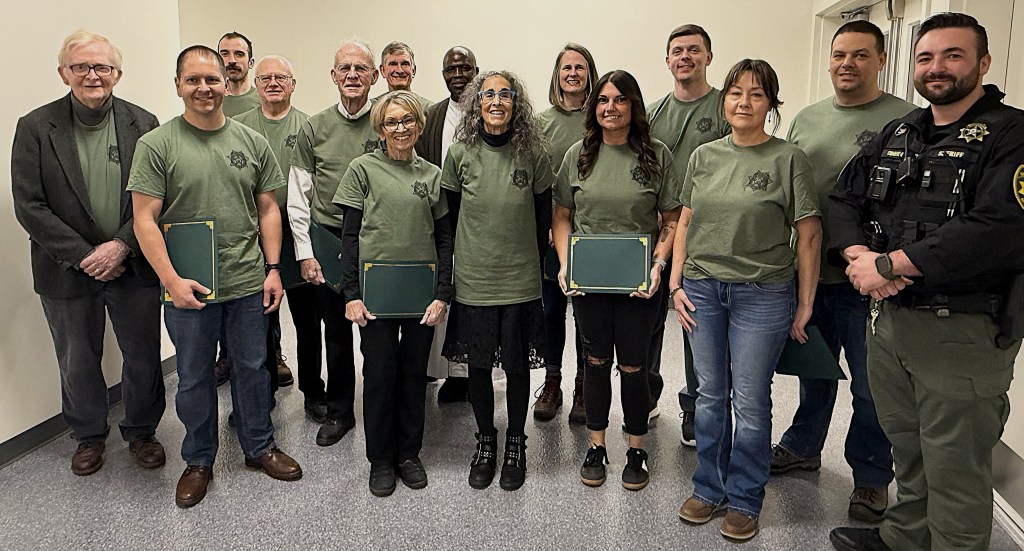
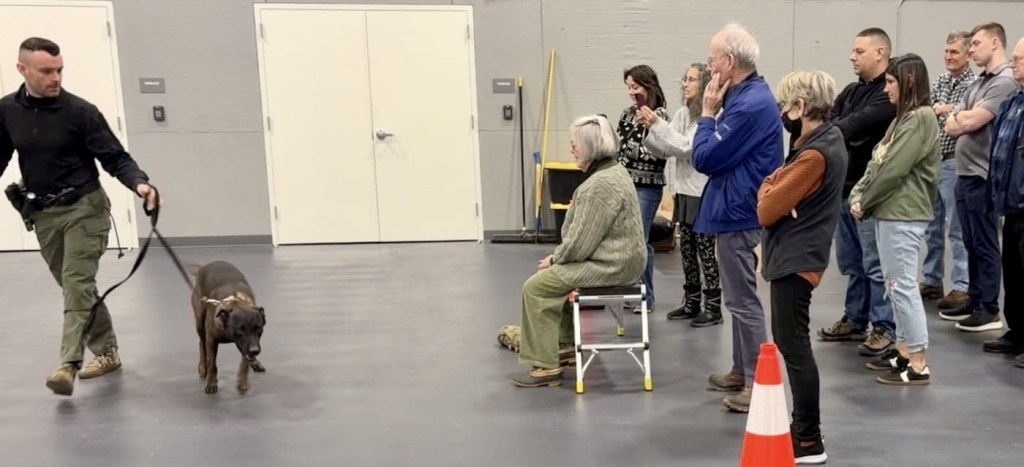


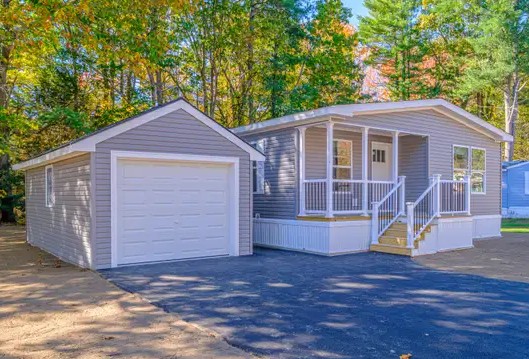




















 BIDDEFORD GAZETTE