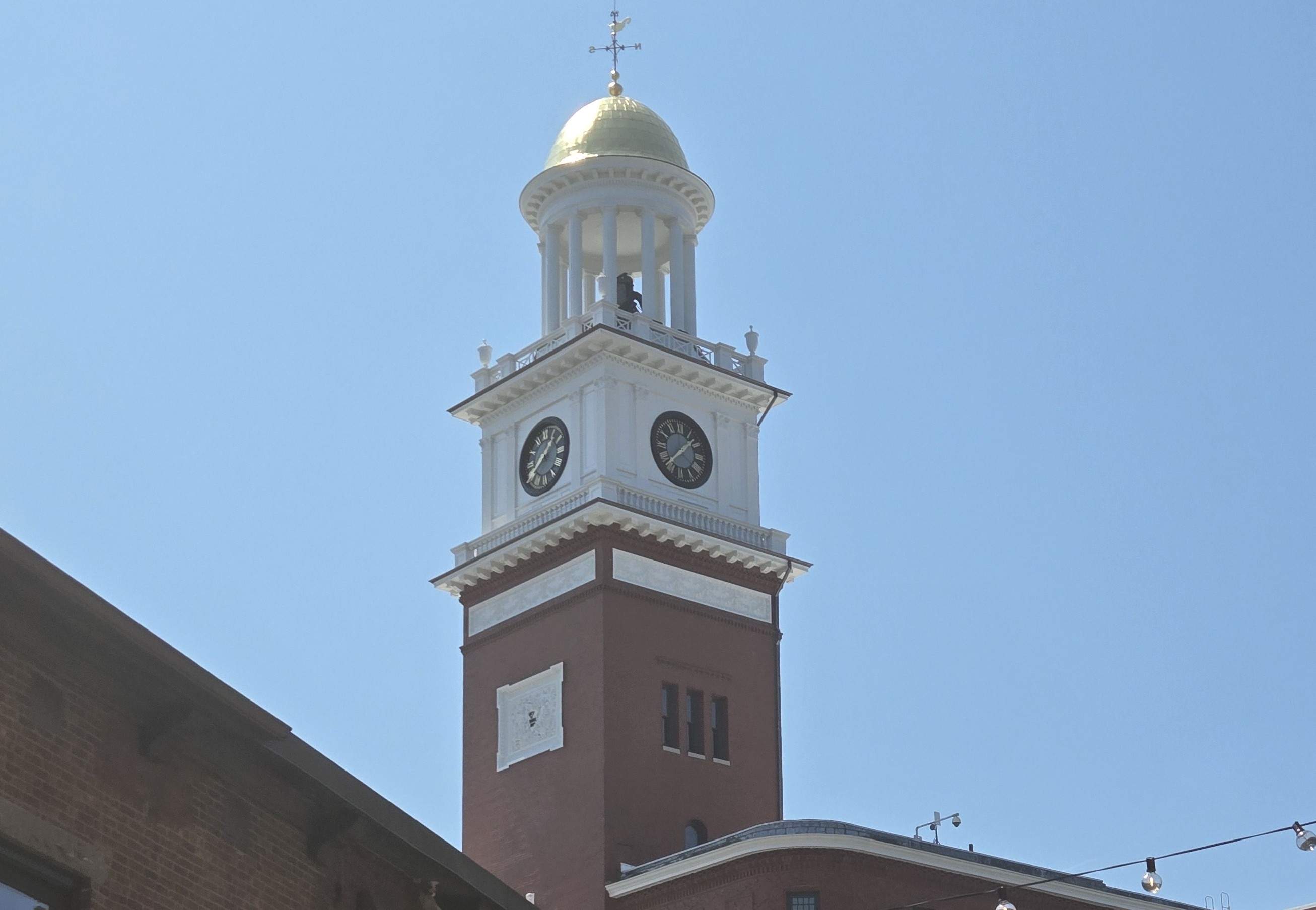
Mayor proposes moratorium on UNE development

By RANDY SEAVER, Editor

Biddeford Mayor Liam LaFountain is proposing a temporary moratorium on all development projects at the University of New England’s Biddeford campus.

LaFountain is also scheduled to nominate UNE president James Hebert to serve on an ad-hoc committee that will focus on development at the school’s Biddeford campus.

During an interview with the Gazette on Thursday, LaFountain said a temporary moratorium will allow the city to examine and evaluate the rapidly increasing pace and scale of development within the Institutional Zone (IZ).
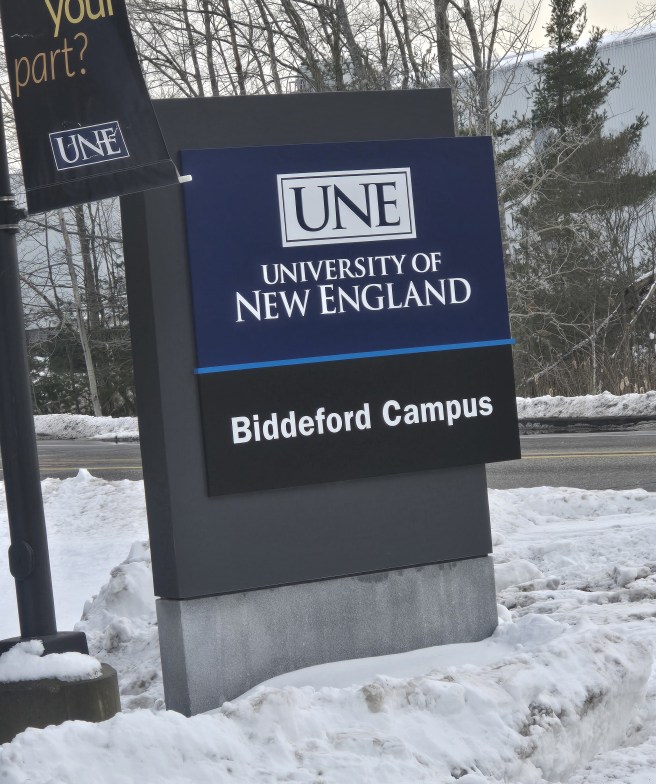
In December, the city council voted unanimously to create an ad-hoc committee that will review and make recommendations about current and future development on UNE’s campus.

RELATED: New committee will review UNE development plans

“I want that review committee able to hit the ground running,” LaFountain said, pointing out that the IZ has not been amended or updated for more than 20 years. “We need just a short pause in order to catch our breath. The current language is somewhat vague and needs to be updated.”

Recent projects have highlighted the need for the committee, LaFountain said, pointing to the university’s controversial pier project, plans to develop a fire substation near the campus and a plan to convert a former convalescent home into new dormitories for the university.

LaFountain said he believes that university development will continue to play an important role in the city’s future.

“The question before the council is not whether such development should occur, but whether it should proceed under a regulatory framework that has not been comprehensively examined in more than twenty years,” the mayor said.

UNE President James Hebert is being appointed by Biddeford’s mayor to serve on an ad-hoc committee that will review ongoing and planned development within the city’s Institutional Zone (Photo: LinkedIn

The city needs the time necessary to complete that examination responsibly and to ensure that future decisions are guided by clear standards, shared expectations, and the long-term interests of the city as a whole, the mayor added.

During a previous city council meeting in December, Ed Cervone, director of external affairs at UNE, said the university is supportive of the city’s desire to review the Institutional Zone Ordinance and creation of the ad-hoc committee.

“UNE hopes that the creation of an Institutional Zone Review Committee can bring additional clarity to, understanding of, and confidence in the ordinance,” Cervone said.

During that December meeting, Cervone suggested that the new committee should include a Hills Beach Association representative; the city planner and Ward One Councilor Patricia Boston because of her historical knowledge about the Institutional Zone and a UNE representative.

LaFountain will ask the City Council Tuesday to confirm his appointments to the six-member ad-hoc committee, which will be chaired by Councilor Pat Boston, a Hills Beach resident; Matt Haas, a former UNE employee who first raised concerns about the Saco River Corridor Commission’s approval of the university’s controversial pier proposal; and residents Christine Stone and Betsy Martin.

LaFountain has also nominated Councilor Marc Lessard and James Hebert, UNE’s president, to serve on the committee.

Committee Objectives

In his memo to the city council, LaFountain said his proposed moratorium will accomplish several objectives, including:

• Orderly Review: It allows the Institutional Zone Review Committee, City staff, the Planning Board, and the City Council to complete their work without the pressure of pending applications advancing under rules that may soon change.

• Consistency and Fairness: It avoids applying one set of standards to some projects while others are reviewed under a revised framework, promoting predictability for applicants and the public alike.

• Public Confidence: It acknowledges heightened public interest in institutional development and demonstrates that the city is taking a deliberate, transparent approach to updating its zoning ordinances and policies.

• Long-Term Planning: It ensures that decisions with lasting impacts on neighborhoods, infrastructure, and municipal capacity are informed by a comprehensive policy review rather than piecemeal approvals.

“The moratorium is not intended to halt institutional growth indefinitely, nor to target any single institution, but rather to ensure that future development proceeds under a clearer and more durable regulatory framework,” LaFountain said.

Sarah Delage, a university spokesperson, said UNE’s president is looking forward to working with the city as a member of the newly created ad-hoc committee.

______________

Randy Seaver is the editor and founder of the Biddeford Gazette. He may be reached by email: randy@randyseaver.com

c.) 2026 All Rights Reserved, Biddeford Gazette, Inc.

Never miss another update! Subscribe for free today!

UNE Refuses Citizen Request for Information

The University of New England (UNE) is, apparently, refusing to provide information to the public and the media about a federal grant the university received to construct a new “research pier” on the banks of the Saco River.

Over the last few weeks, John Schafer, a Hills Beach resident and former chair of Biddeford’s Harbor Commission, has repeatedly tried to get documents regarding a $3.5 million federal grant that the university received from the National Institute of Standards and Technology (NIST).

In previous interviews, the university says it is planning to use those funds to build a permanent pier on the Saco River that can accommodate its 60-foot marine research vessel.

Schafer says he and other residents simply want to see documents related to the grant. “I am a big believer in transparency and accountability,” he said. “I don’t understand why the university is unwilling to release details about a grant award of public funds. What are they hiding?”

The Biddeford Gazette attempted to contact both the university’s president James Herbert and Alan Thibeault, vice president of operations, for comment. Neither Herbert nor Thibeault returned our calls as of press time.

Sarah Delage, associate vice president of communications, replied to our inquiries with a one sentence response: “The University of New England has provided, and will continue to provide, all required and relevant documentation to the regulatory agencies and governmental bodies conducting the permitting process for our proposed research pier.”

After receiving that email from Delage, we sent another email inquiry to her, asking why the university is unwilling to simply share those documents with members of the public, especially those who live in close proximity to the school’s Biddeford campus.

Delage did not respond to our second email inquiry, as of press time.

The university formally submitted its plan for a new pier to the city of Biddeford in June last year. The grant application, however, was submitted several months prior.

UNE is still facing an arduous and likely lengthy review process for their proposal. In addition to the city of Biddeford, the U.S. Army Corps of Engineers and the Maine Department of Environmental Protection will need to review the proposed project.

Go here to see a copy of the application that the university submitted to the city of Biddeford.

RELATED: City review of UNE project remains unclear.

Schafer said he has been bending over backward to be courteous and professional with his requests, but says he feels as if he is being stonewalled by the university.

Schafer, wrote Herbert on January 21, asking the university president to release a copy of the application the university submitted to NIST.

Herbert, Schafer says, did not reply.

According to a recent press release issued by Schafer, Alan Thibeault called Schafer and told him that he did not need to see the application, while also saying that the university is “not required” to release it.

“I don’t get it. Why are they being so stubborn? There are no national security issues here.”

John Schafer

Thibeault did not respond to our request for comment.

Schafer says that Thibeault “reluctantly agreed to ask about permission to release the application and said he’d be back in touch.”

“I never heard back from him,” Schafer said. “At first, our conversation was very cordial, but it quickly became terse.”

Schafer says that Thibeault told him there was nothing in the grant application that wasn’t already given to various regulatory agencies.

Schafer then sent a second email to Hebert a few days later. Once again, Schafer asked to see the grant application, saying the documents should be available in the interest of transparency.

The university president has also not responded to Schafer’s second email request for disclosure.

“I don’t get it,” Schafer said. “Why are they being so stubborn? There are no national security issues here. These should be public documents. The public has a right to know how UNE presented their project to the federal government.”

Schafer commended both Biddeford City Manager James Bennett and Mayor Marty Grohman for informing UNE last year that the location of the proposed pier is not in any way approved by the city.

“The application filed with NIST could very well affect Biddeford’s regulatory process, but UNE doesn’t want it released to me, Biddeford or Saco. Luckily, freedom of information laws exist to deal with this type of obstruction,” Schafer said.

Never miss another update! Subscribe for free today!