The University of New England (UNE) and the Saco River Corridor Commission (SRCC) are both asking the York County Superior Court to dismiss a civil complaint that was filed against them by the city of Biddeford.
The requests for dismissal were each filed earlier this month after the city formally brought its complaint to the court in December.
The city’s complaint — according to City Attorney Harry Center – was triggered by new information that came to light in an Oct. 14, 2025 story published by the Biddeford Gazette: UNE Pier approval tainted by glaring SRCC mistake.
The Superior Court has yet to hear oral arguments in Biddeford’s complaint about the University of New England and the Saco River Corridor Commission.
At the center of its complaint, the city argues that the SRCC neglected to consider its earlier ruling in 2001, which created a 250-foot no-development buffer zone between UNE’s campus and the Saco River.
Despite that 2001 ruling, the SRCC approved UNE’s request to construct a large-scale pier on the Saco River in August 2024. That pier will require construction of a paved access road through the buffer zone.
In October, SRCC Executive Director Cherie Dunning described the situation as a mistake that could not be remedied retroactively because the time frame for an appeal of the agency’s decision has expired.
“It does appear that there was an omission of relevant information provided to the commissioners before last year’s vote,” Dunning told the Gazette in October.
Only weeks after the city’s biennial election, Biddeford’s new mayor and city councilors decided that the issue warranted further review and consideration.
Center told the Gazette this week that the court has yet to hear any arguments. He also said that he – on behalf of the city – has filed a request to have the court hear oral arguments.
In their motion to dismiss, the university listed several reasons why the city’s complaint should be dismissed by the court, arguing that the “court lacks jurisdiction to consider the untimely complaint and that the city failed to exhaust any administrative remedies.”
Furthermore, UNE claims that the Saco River Corridor Commission did not fail to do its due diligence in reviewing the university’s application.
The university also says the city does not have standing to bring the complaint.
Come spring, Advanced Life Support and Pediatric Life Support training programs will be in place at York County Regional Training Center. Advanced EMT classes and labs are ongoing now at the new facility. Firefighting classes are happening. Law enforcement classes are scheduled. A citizens’ academy that gives residents a look at policing meets there weekly.
The decades-long dream of a centralized location for all manner of first responder training is now a firm reality.
And a couple of old friends have teamed up to offer it all, together.
York County Regional Training Center is up and running. (Contributed photo)
The relationship between York County government and York County Community College began several years ago. Now, it is stronger than ever, with the signing of an agreement that further formalizes their relationship.
“I call it taking a handshake agreement and turning it into a true partnership,” said YCRTC Director Roger Hooper as York County Manager Greg Zinser and YCCC President Michael Fischer put their signatures to paper on Jan. 21.
What it means is that YCRTC instructors will be guiding firefighter training outside at the drill tower, sharpening their skills in safely rescuing a person trapped inside a burning building. Back inside the vast training center, YCCC instructors in an EMS lab outfitted with patient mannequins and a mock ambulance, will be leading another class.
A real jail cell will be a tool to aid those training as corrections officers, and other instructional equipment, like a dispatch console, is being considered. There’s a decontamination unit, an auditorium, and much more.
The collaboration is a system that works, those involved say.
“(This agreement) represents years of collaboration, careful planning and a shared belief that the best way to serve our communities is to invest in the people who protect them,” said York
County Manager Greg Zinser. “These agreements define roles and responsibilities, but more importantly, they align our missions.”
“When public entities work together with clarity and purpose, our communities are stronger,” said York County Community College President Michael Fischer.
“By aligning the County’s facilities and expertise with the College’s educational offerings, curriculum review processes, and assessment standards, we are able to ensure consistent, high-quality learning experiences that support education in fire safety, law enforcement, emergency medical services, and related public safety fields in a way that is coordinated and intentional,” he added.
York County Regional Training Center director Roger Hooper points out features of the drill hall to reporters and others during a tour.(Contributed photo)
Richard Clark is in his ninth year as a York County Commissioner and previously served 18 years as a Wells selectman – and he pointed out, in both levels of government, the hiring and retention of public safety personnel figures largely.
“Training is continuous,” Clark said. So, when commissioners learned York County would be awarded $40 million under the American Rescue Plan Act – what they knew would be a once in a lifetime award – they sought community input and mulled several projects.
Ultimately the board decided on two major projects: a first responder training center and a separate substance use treatment and recovery center – the latter currently under construction – as well as providing financial support for in-house projects and for initiatives by area nonprofits.
“We knew we wanted to do something to benefit all of York County,” said Commissioner Donna Ring.
YCCC Criminal Justice Program Chair Tim Burton said the new first responder facility helps expand the college footprint further into the county – Alfred is the geographic center of York County.
“(It gives) York County residents greater access to courses,” Burton said. “It increases opportunities.”
The training center is a $24 million project, funded with a combination of ARPA money, congressionally directed spending funds, grants and county funds.
York County Regional Training Center is at 79 First County Way, off Route 4 and Layman Way in Alfred.
The city of Biddeford is now facing roughly $500,000 in penalties and fines from the Internal Revenue Service (IRS).
According to City Manager Truc Dever, the issue traces back to 2021 when the city failed to submit specific forms detailing employee health insurance.
“Initially, the fines and penalties were approximately $700,000,” Dever told the city council during last week’s meeting.
Dever said the city already paid the IRS roughly $200,000 in fines. She also said that the city is working closely with staffers in U.S. Senator Susan Collins’ office to help rectify the issue.
Dever told the council that she is expecting an answer from the IRS sometime before March.
The issue first came to light in 2024, and several councilors asked whether the issue was isolated to just the 2021 incident.
Dever said the fines are incurring compounded interest payments.
Councilor Dylan Doughty asked whether the city could renegotiate the penalty payments and whether they could be spread over a period of time.
“If the IRS determines that there was no harm, no foul – will we get the $200,000 back?” Doughty asked.
Dever said she was not sure how the IRS will proceed.
City Attorney Harry Center told councilors that the IRS determined the city’s penalties by calculating the number of its employees. The city has roughly 700 employees, he said.
Mayor Liam LaFountain asked Dever if the city could be facing other penalties for different tax years and whether processes have been put in place to prevent the situation from happening again sometime in the future.
Dever told the mayor that the issue was contained to the 2021 filing and that the city is monitoring and updating all of its tax and federal filing obligations.
__________
Randy Seaver is the editor and founder of the Biddeford Gazette. He may be reached by email: randy@randyseaver.com
c.) 2026 All Rights Reserved
Never miss another update! Subscribe for free today!
NOTE:This story has been updated in order to clarify that city of Biddeford has not had any formal discussions with the owners of the Biddeford Pool volunteer fire station. We apologize for any confusion this may have caused.
It is an idea that has been discussed for nearly a decade, but it now appears that momentum is increasing to finally create a full-time substation of the Biddeford Fire Department somewhere on the eastern side of the city.
According to Biddeford Fire Chief Lawrence Best, the overall goal is to reduce emergency response times in areas from the intersections of the Guinea Road, easterly, along both Pool and West streets, toward the coastal neighborhoods of Hills Beach, Granite Point, Fortunes Rocks and Biddeford Pool.
During an interview with the Gazette last week, Best said he is looking at multiple location options.
Biddeford Fire Department Chief Larry Best (City photo)
Two of the most talked about options include converting the privately-owned Biddeford Pool volunteer firehouse; and purchasing a parcel of land now owned by the University of New England (UNE) near the intersection of Pool Street and Newtown Road.
A little more than three years ago, former mayor Alan Casavant created a committee taskforce to review potential sites and various ways to improve emergency response times.
Ward One City Councilor Pat Boston represents that part of the city, a role she held previously before taking a hiatus from serving on the council.
Boston also served on the task force created by Casavant.
“It was always about response times, and that is what drove the bulk of our conversations,” she said.
Best told the Gazette that emergency response times should not exceed a window of more than four to six minutes, at least 90 percent of the time for all calls.
Best also says that the easterly part of the city has seen an increase in demand for service, including an average of 160 calls per year from the University of New England’s Biddeford campus.
Boston quoted former city councilor Norman Belanger, saying that public safety is one of the three major functions the city should provide.
“Response times are important,” Boston said. “But it’s also important to remember that there is a substantial cost involved. Whichever option we choose we need to make sure that choice addresses both current and future needs.”
Boston says she likes the idea of converting the Biddeford Pool Fire station into a full-time, 24-7 substation staffed and operated by the city, but said she is also keeping an open mind about other potential locations.
Best describes the 30-acre parcel owned by UNE as his ‘Plan A” site but concedes that there are several potential issues that could limit or prevent future development.
“That site has some vernal pools and wetlands that would not be appropriate for development,” Best said. “As the fire chief, it is my responsibility to keep an eye out for all the options.”
Best said there would be a significant cost associated with converting the privately owned Biddeford Pool fire station into a full-time “livable station.”
“We are not having any formal discussions with the Biddeford Pool Improvement Association at this time, Best said. “I have had a couple of high-level concept discussions, but nothing formal.”
He says that the Biddeford Pool option would not necessarily meet the objectives of reducing response times in other parts of eastern Biddeford, including homes along the Guinea Road and Hills Beach Road, which cuts through UNE’s campus.
Best made a detailed presentation about the ongoing discussions and goals of creating an eastern fire substation a few weeks ago during the Dec. 16 Biddeford City Council meeting.
Best told the council that the UNE property continues to be the preferred location for a substation given its location and travel routes. “A majority of the fire/EMS calls in this area can be reached from this location within the national standard response time of four to six minutes,” he said.
Where are we, and where do we want to go?
Best joined the Biddeford Fire Department as its new chief in 2023.
The city’s Central Fire station still lives up to its name today because of its central location even as the city expands in both an easterly and westerly direction, Best said.
Today, Best describes his department as “fully staffed” with a total of 52 full-time employees, including 48 employees trained as both firefighters and paramedics, including EMTs (Emergency Medical Technicians).
“I am all about efficiency and saving the city money,” Best said. “All of our firefighters have dual training. This gives us the flexibility we need to handle every call for service.”
______________
“I am all about efficiency and saving the city money.”
— Fire Chief Larry Best
______________
Current response times to the eastern part of the city can take 12 to 14 minutes. “That is a long time to wait if you’re in an emergency situation,” Best said.
Best said Biddeford has “outstanding” mutual aid agreements in place with several surrounding communities.
“This job requires me to be vigilant and always scanning the horizon for new opportunities and planning ahead for potential challenges,” he said.
Best said he is looking forward to an upcoming workshop meeting with the mayor and city council.
“A workshop meeting is a more relaxed setting than a regular council meeting,” Best said. “This will give the council an opportunity to ask questions and for us to make sure that they have all the information they need or want.”
Editor’s Note: You may view and/or download the Dec. 16 presentation to the city by clicking the link below.
Local author Susan Graham discusses her book that recounts devastating damageto Fortunes Rocks and other Biddeford neighborhoods
By RANDY SEAVER,Editor
It would become the largest natural disaster in Maine’s history, and it destroyed dozens of homes in many of Biddeford’s coastal neighborhoods.
Overall, the “Great Fire of 1947” caused more than $30 million in damages (roughly $438 million in today’s dollars) destroying entire towns and leaving more than 2,500 Maine people homeless.
Though the fires caused considerable damage in several communities, including Bar Harbor, York County was especially hard hit.
“It was devastating for so many families, especially in Fortunes Rocks,” says local author Susan Graham.
Graham recently published “Lost Fortunes Rocks: A Maine Summer Colony and the Fire of 1947,” a detailed account of how the devastating fires impacted the city of Biddeford, including its major employers and local government.
Local author Susan Graham holds a copy of her latest book, which offers detailed information about the “Great Fires of 1947” and how they destroyed entire neighborhoods and impacted Biddeford. (Seaver photo)
Graham’s book offers more than 180 pages of historical photos and meticulously researched information about the fire’s impact on local families, including her own parents who had moved to Biddeford from Kennebunkport just before the fire.
“It was a labor of love,” Graham said during a recent interview about her book at the Lincoln Hotel in Biddeford. “I just found it fascinating, and I had this personal connection to the fire because of where my family lived at the time.”
Much of Graham’s research was conducted at the McArthur Library in Biddeford during the COVID pandemic.
“The library was a treasure trove of information,” she recalled. “They are such a wonderful resource for the community.”
Graham said it seemed – at the time – that all of York County was on fire. In fact, the fire caused extensive damage in the western parts of the county, including the small towns of Newfield and Parsonsfield – but its most devastating impact in York County happened along the shoreline from Kennebunkport to Biddeford Pool, including the resort villages of Goose Rocks Beach, Granite Point and Fortunes Rocks.
According to Graham, the weather conditions that fueled the fire were quite similar to last year’s drought conditions in southern Maine.
“The summer of 1947 was exceptionally dry,” Graham explained. “It made heavily wooded rural areas into a virtual tinderbox.”
There are many theories about what ignited the blaze that raged for nearly two weeks in mid-October. Graham and other historians say it could have been a combination of things including human activity such as a tossed cigarette or autumn brush burning.
Graham said bucket brigades worked around the clock near Fortunes Rocks Beach, but those volunteers and the city’s firefighting resources were pulled away from the coast and redirected to protecting the central part of the city.
“There were concerns that the fires would continue up Rte. 111 from Arundel and cross Five Points, threatening the city’s hospitals, “Graham said. “The city’s fathers didn’t want to risk losing both the Webber and Trull hospitals. Who could question that decision?”
___________
“The city’s fathers didn’t want to risk losing both the Webber and Trull hospitals.”
— Susan Graham
____________
Graham says the fire raged from treetop to treetop, fueled by 40 mph wind gusts. Though roughly 50 people remained in Fortunes Rocks to fight the blaze, it was not enough to prevent what she describes as devastating damage to that neighborhood.
Large local employers, including the Saco-Lowell shops, shut down production so that their employees could help the city fight the rampaging fires.
About 60 homes were destroyed in Fortunes Rocks, Graham says, pointing out that eastern portions of Biddeford were at the time a “rural bread basket” that included several farms and a major source of food for the region.
Graham says it took her almost two years to compile the research and self-publish her book.
Copies of Graham’s book – in both hardcover and paperback — are available for sale at the Brick Store Museum in Kennebunk and online at grayeaglebooks@gmail.com
____________
Randy Seaver is the editor and founder of the Biddeford Gazette. He may be reached by email: randy@randyseaver.com
c.) 2026 All Rights Reserved
Never miss another update! Subscribe for free today!
Just as I was getting used to the lull of the holidays and a slower news pace during the early days of January, the local news cycle basically exploded and caught me a bit off guard.
For the first time I can remember, I have seven stories in development and stacked up for publication. I like it this way.
Keeping busy keeps me out of trouble; well, sort of.
Some cool stuff is happening on the sidelines.
Even polar bears think it’s too cold outside Photo: Wikipedia commons
Our sister city and an introduction to journalism
I more or less stumbled onto an opportunity to interview the mayor of Bideford, our sister city in England.
According to some of the town’s residents, Bideford and Biddeford seem to have many things in common. Bideford was once England’s third largest port and its history is steeped in manufacturing, including shipbuilding.
In other news (no pun intended), I am excited about an upcoming class I will be teaching through Biddeford Adult Education.
The tentative name of the class, scheduled to begin in April, is Introduction to Journalism: Inside the Craft.
The course is being described as follows: “Students will learn about the rapidly changing world of journalism from a veteran reporter and editor. This course will prepare students to pursue a career in journalism and will offer discussions regarding AP-Style writing (Associated Press); journalism ethics; and in-depth discussions about the impacts of advancing technology in the field of journalism.
The class will also feature lecture-and-answer discussion about the history of journalism in the United States; the rising trend of “citizen journalism” and a review of how media has changed over the last 50 years.”
Pretty cool stuff, eh?
Speaking of cool stuff, I had the pleasure this week of meeting up with one of Maine’s most prolific and respected reporters.
Chris Williams spent time as a reporter working at the Portland Press Herald, the Nashua Telegraph, the Portland Evening Express, the Lewiston Sun Journal and several other publications.
Turns out that we both worked for Harry Foote, one of Maine’s most beloved newspaper editors at the American Journal in Westbrook.
Chris reached out to me and said he really likes what we’re doing with the Gazette. He offered me some very valuable insights and suggestions and said we should stay in touch. It was the highlight of my week.
Baby, it’s cold outside
Of course, the news that is dominating media outlets all across Maine is centered upon this week’s ramped up enforcement efforts by the U.S. Immigrational & Customs Enforcement Agency (ICE) here in southern Maine.
This is an emotionally and politically-charged story that is extraordinarily fluid and rapidly changing. Journalists all across the state are struggling to keep up with this story, which includes activity happening here in Biddeford.
As a service to our readers, the Biddeford Gazette has created a special section on our website to give our readers updates and links to community resources and ongoing media coverage. You can find that resource page here: ICE | Biddeford.
Over the last few days, we have also published a wide range of stories, including our exclusive coverage of how a controversial downtown parking plan was funded; and a heart-felt story about a beloved McArthur Library security guard who has been sidelined by a serious spinal injury.
After suffering a serious spinal injury, Don Creighton is not sure how he is going to survive. The community — in including his co-workers, downtown merchants and library patrons — is rallying around him.
The best part of being a journalist is being able to help people in need. Within just a few hours of publishing our story, financial donations soared by more than $4,000.
We have some awesome stories in production, including an in-depth interview with State Rep. Marc Malon about his bill to prohibit the use of credit cards for mobile gambling sites; and another exclusive story about a book written by a local author that details how the notorious 1947 wildfires engulfed the Fortune’s Rocks neighborhood and even threatened downtown Biddeford.
We also sat down this week with Biddeford Fire Chief Larry Best to talk about the plans to build a new substation closer to the eastern portion of the city.
There’s a lot more, but I should probably focus on getting caught up with our news coverage.
It looks like we’ll be starting off the week with a big winter storm and some especially frigid temperatures.
Finance Committee takes a closer look at how a downtown parking plan was funded
By RANDY SEAVER, Editor
A controversial and temporary downtown parking program will be reviewed by the Biddeford City Council at its next meeting, Feb. 3.
As first reported in the Biddeford Gazette earlier this week, Mayor Liam LaFountain and members of the city council were unaware that nearly $20,000 was being spent to offset parking costs for business owners and their employees during a seven-month long sewer upgrade project in the downtown area.
The parking plan was never reviewed or discussed by the city council or Finance Committee before it was launched last year, but the subject dominated Tuesday’s Finance Committee meeting, which raised new questions and drew a sharp rebuke from City Councilor Marc Lessard.
Biddeford’s Pearl Street Parking Garage (City photo)
Subsequent to the Jan. 19 story, the Biddeford Gazette conducted additional interviews and filed a FOIA (Freedom of Information Act) request for more information, much of which was discussed during Tuesday’s meeting.
City Attorney Harry Center told the Finance Committee that he was “troubled” by how the plan was implemented.
“I’m not a CPA. I’m not an auditor, but it troubles me as a lawyer regarding how the [invoices] were characterized as professional/consulting services,” Center said.
City Manager Truc Dever told committee members that the plan was envisioned to be “net neutral” and would not add additional spending beyond the ongoing subsidy payments that the city gives to the city’s parking garage operators, Premium Parking.
According to Dever, the city makes two payments each year to the parking garage owners so that they are guaranteed a profit — an agreement the city made years ago to entice developers to build the parking garage on city-owned land.
The most recent payment to Premium Parking was $146,570 to cover the period from July 1 to Dec. 31, 2025.
Brad Favreau, the city economic development coordinator, said that Brian Phinney – then the acting city manager – assured him that the program would be revenue neutral. He said it was Phinney who decided which account would be used to make the payments.
Phinney retired from the city earlier this month.
Favreau told the committee that former mayor Marty Grohman approved the project after some discussion between Grohman, Phinney, Favreau and Delilah Poupore, executive director of the Heart of Biddeford, a private downtown booster organization.
Favreau said only 43 downtown employees took advantage of the program.
Dever — who began her job weeks after the parking program was launched –described the program as “well-intentioned” and said no one tried to keep it a secret.
Dever said flyers about the program were made and distributed and it was posted on the city’s website and discussed during a May 28 meeting of the Downtown Development Commission (DDC).
Poupore told the Gazette that her organization was aggressive in raising awareness about the program and that she and Favreau both handed out flyers to merchants throughout the downtown area.
Former city councilor Neva (Gross) Lance served as the city council’s liaison on the DDC. She told the Gazette on Wednesday that she recalled “some vague discussion” but no official decision or approval was made at that May 28 meeting.
Councilor Lessard – a member of the Finance Committee – said it does not matter if the program was well intentioned.
“The fact that this was done during the city’s election cycle makes me raise my eyebrows,” Lessard said. “If this program was so good, it would have been brought to the council.
“Instead, it was buried in an innocuous budget line. Call me a little bit crazy, but I’m not so ready to say that there is nothing wrong with this. I’m not ready to hold hands and sing Kumbaya,” Lessard said.
Councilor Dylan Doughty said he was concerned that the program was being funded by TIF (Tax Increment Finance) funds, which are strictly regulated.
“As a whole, we have committed ourselves to accountability and transparency,” Doughty said, adding that he thinks the city should take a closer look at how all TIF funds are being used to ensure that the city doesn’t end up in a “questionable position.”
__________
“The fact that this was done during the city’s election cycle
makes me raise my eyebrows.”
— Councilor Marc Lessard
__________
Mayor LaFountain told the committee he shares their concerns about how the program was launched and operated.
“My concern is not the intentions of the program,” LaFountain said. “We’re just coming off the review of a FY 23 audit that was quite scathing. When we go down this route, we lose public confidence.”
LaFountain told the city manager he would like to see plans and policies put in place to prevent another similar event. “It doesn’t matter who is sitting in these seats,” the mayor said. “We have process failures that we need to correct.”
________
Randy Seaver is the editor and founder of the Biddeford Gazette. He may be reached by email: randy@randyseaver.com
c.) 2026 All Rights Reserved
Never miss another update! Subscribe for free today!
Those who know Don Creighton will tell you that he is always the first to step up and help others in their time of need.
Unfortunately, Don is now on the other end of that equation and wondering how he’s going to make it through the next few weeks and months ahead.
Creighton, 57, is a beloved security guard at the McArthur Library. Over the last two years, he has developed quite a fan base and has become a well-known fixture in Biddeford’s downtown area.
Don Creighton, a beloved security guard at Biddeford’s McArthur Library, is facing an uncertain future. (Contributed photo)
Don’s co-workers at the library describe him as a “gentle soul,” and as a “man with a very big heart.”
Whether he is greeting an excited second-grader or a struggling member of Biddeford’s unhoused community, Don treats everyone the same: a big smile, a warm welcome and a commitment to respect.
“Everyone deserves to be treated nicely,” Don explains. “I may be a security guard, but I see my role as being a resource. I’m there to greet people and let them know that this a safe and welcoming place, no matter who they are.”
A few weeks ago, Don had a sudden seizure while working at the library. He was unconscious for several moments and was transported to the hospital.
According to his medical providers, Don had what is known as Non-Epilepsy Seizure (NES). During the seizure and resulting convulsions, Don suffered compression fractures along his spine.
Every day since has been an ongoing battle with pain so intense that Don has a hard time moving from room to room in his small apartment on Main Street.
After returning home from the hospital, Don says he avoided eating for several days because “sitting in the bathroom was just too painful.”
Several years ago, Don experienced a similar seizure while working on a lobster boat. “There is no history of epilepsy in my family,” he said, pointing out that he does take medication to prevent seizures.
Don lives alone with his dog, Mya. He describes Mya as his only source of optimism.
He says he misses his co-workers and the people he would see every day at the library.
“I love that job,” he said. “I get to spend a lot of time talking to people, and we also have a great staff – we’re like a big family.”
The isolation, combined with the pain, is taking a toll – physically, financially and spiritually.
Although he has health insurance, he has still racked up roughly $40,000 in co-pays, medicines and day-to-day expenses including rent, utilities and food.
“I live alone, and my family is trying to help me as much as possible,” he said. “I have already drained my savings – and I’m not sure what my next steps will be.”
A community begins to rally
If you visit the library, you will likely notice that Don’s work station has been decorated by colorings and drawings done by some of the library’s youngest patrons.
“Saying that Don is missed at the library is a gross understatement, said Joe Sanderson who is the library’s technical coordinator and sometimes works at the adult reference desk.
Don Creighton’s work station at McArthur Library has been decorated by younger library patrons who miss their friendly security guard. (Contributed photo)
“He is a big part of our community,” Sanderson said. “Almost daily, we are asked about how he is doing – people want updates. They want to see him back at the library.”
Sanderson and some of his co-workers have started a GoFundMe campaign to help Don cover some of his most basic expenses.
“It’s the least we can do,” Sanderson explains. “Don is always so willing to help others. Now it’s time for us to help him.”
Sanderson and his co-workers have made flyers and distributed them throughout the downtown area.
“The response from the business community has been great,” he said. “People know Don. They know how important his presence is in our community.”
For his part, Don says he finds it hard to ask for help.
“It’s been very stressful,” he said. “It’s also very scary not knowing if my spine will heal. It’s easy to get stuck in your own mind with a lot of worry.”
Editor’s Note:If you would like to contribute to Don’s GoFundMe page, please click this link: Don Creighton Support Page
__________
Randy Seaver is the editor and founder of the Biddeford Gazette. He may be reached by email: randy@randyseaver.com
c.) 2026 All Rights Reserved
Never miss another update! Subscribe for free today!
At the advice and direction of several of our advisory board members, the Biddeford Gazette has created a special page for updates and community information regarding ramped up enforcement activities by the U.S. Immigration & Customs Enforcement Agency (ICE) in Biddeford.
According to multiple sources, ICE began an operation known as “Catch of the Day” in Biddeford and several other southern Maine communities in southern Maine beginning on Jan. 20, 2026.
“This news has created considerable community concern and some misinformation,” said Randy Seaver, the Gazette’s editor. “We felt the responsible thing to do was to provide a resource page where residents could find more information about what is happening and how it is impacting our community.”
Despite the impassioned pleas of some nuns from the St. Joseph’s Convent, the Biddeford City Council voted unanimously Tuesday to enact a temporary development moratorium on the University of New England’s Biddeford campus.
As previously reported in the Gazette, Mayor Liam LaFountain proposed the moratorium and the creation of an ad-hoc committee in order to give the city time and flexibility to review and consider several significant developments planned by the university.
Although not located on their campus, it was recently revealed that the university had ongoing plans to purchase the St. Joseph’s Convent in order to redevelop that property into additional student housing. The convent is located approximately two miles west of UNE’s main campus.
Representatives from the Good Sheperd Sisters of Quebec – the current convent owners — attended Tuesday’s meeting, saying the proposed moratorium would quash their planned sale of the convent to UNE. That sale, according to the Sisters, has been in consideration since 2017 and was scheduled to be finalized next month.
The Sisters said they can no longer afford to operate the convent. They said the moratorium would be “devastating psychologically, physically and spiritually.”
During their discussion of the issue, Councilor Jake Pierson pointed out that the moratorium would do “nothing to prevent the sale of that property.” The moratorium, he said, would only pause the university’s planned redevelopment of the property.
Although the university does not yet own the St. Joseph’s parcel, they already received approval of their reconversion plan from the Saco River Corridor Commission in November.
The St, Joseph’s Convent in Biddeford is slated to become more student housing for UNE
Former city councilor Kyle Noble told the council that UNE is pushing for projects that would be “once in a lifetime, forever decisions” that warrant careful review.
“I find it offensive that this real estate transaction has been known since 2017, and we’re just finding out about it now,” Noble said.
Councilor Dylan Doughty also expressed surprise that the university was able to get approval of their plan from the Saco River Corridor Commission before they actually owned the property.
Alan Thibeault, vice president of operations at UNE, said the city’s proposed moratorium took school officials “by surprise.”
Thibeault told the council that UNE has not built a new building on its campus since 2018. He made no mention of the controversial, large-scale pier that the university is planning to construct on the Saco River. He also did not talk about the school’s plan to add new student housing at the St. Joseph’s convent.
Instead, Thibeault reminded the council that UNE is “a major employer and economic driver” in Biddeford. “We do not believe that we have been a burden on the city,” Thibeault said, pointing out that UNE has its own wastewater treatment facility.
Furthermore, Thibeault said the university has significantly decreased its impact on the city by its decision three years ago to move roughly 360 students and 120 staffers to the school’s Portland campus that now houses UNE’s medical school programs. That move, he said, significantly reduced traffic and other impacts at the Biddeford campus.
Thibeault said the moratorium could place the university at financial risk. He said colleges and universities across the country are closing at a rate of one per month because of changing demographics.
Councilor Brad Cote, however, balked at Thibeault’s concerns about the economic impacts of the moratorium.
“I find it a little offensive that the university would come to us and express financial worries,” Cote said. “Let’s remember that their campus in Biddeford sits on land that has an assessed value of roughly $82 million.”
Thibeault said UNE appreciated that its president – James Hebert – was appointed to the city’s newly created ad-hoc committee.
“We welcome a genuine relationship with the city,” Thibeault told the council.
_____________
Randy Seaver is the editor and founder of the Biddeford Gazette. He may be reached by email: randy@randyseaver.com
c.) 2026 All Rights Reserved
Never miss another update! Subscribe for free today!
According to documents obtained by the Biddeford Gazette, the city of Biddeford is now investigating why more than $16,000 was spent on a downtown parking plan that was never reviewed or authorized by the city council or its Finance Committee.
At Mayor Liam LaFountain’s request, City Attorney Harry B. Center was asked to investigate questions about a temporary program that used various budget lines to fund a free parking program for downtown merchants during last year’s downtown sewer construction project.
The parking project, according to Center’s memo, was allegedly initiated by former Mayor Marty Grohman roughly 90 days before the city’s biennial election. The program was disbanded in mid-November just days after Grohman lost his reelection bid.
The municipal parking garage on Pearl Street (City photo)
When contacted by the Biddeford Gazette on Sunday, LaFountain confirmed that neither he nor any other elected official was told about the parking program.
LaFountain said he asked Center to investigate how the parking program was launched, operated and funded.
“It appears that it was kept within a small circle of people,” the mayor said. “Unfortunately, no one bothered to tell the council or the Finance Committee.”
LaFountain said he only found out about the project when City Manager Truc Dever asked if he wanted the program to continue.
“I didn’t even know the program existed,” LaFountain said. “It’s certainly troubling. The public expects us to be diligent and careful with public monies. Any major expenditures should be approved by the Finance Committee and then the full city council.”
______________
“It appears that it was kept within a small circle of people”
— Mayor Liam LaFountain
_____________
According to Center’s memo, the parking plan was initiated just weeks before City Manager Truc Dever began her new position with the city.
As part of his investigation, Center spoke with Finance Director Gerry Matherne.
“There was no council approval,” Matherne told Center. “Marty [Grohman] just did it.”
According to Center, Matherne confirmed that the funding source came from the Route 111 TIF (Tax Increment Finance) fund. under a line item known as “Other Professional Consulting Services.”
The funds were disbursed to Premium Parking, the private company that operates the city’s parking garage and several surface lots throughout the downtown area.
The funds were used to offset the cost of parking for vehicles with certain license plate numbers and designed to make street parking downtown much easier during the sewer construction project.
_____________
“There was no council approval. Marty just did it.”
— Finance Director Gerry Matherne
_____________
LaFountain told the Gazette that he was “troubled” by the situation, and said it only further erodes public confidence in City Hall.
Last year, during a review of the city’s FY 2023 audit, the city received a blistering report from its professional auditors who raised concerns about possible mismanagement of federal grant funds and a sloppy cash reconciliation process.
Matherne was hired in February and is continuing her work to address prior problems in the city’s Finance Department.
“Director Matherne is being asked to clean up and reconcile numerous issues that took place before she was hired,” said LaFountain. “Her professionalism and hard work are exactly what the city needs as we try to sort things out.”
Former mayor defends program
Former Biddeford mayor Marty Grohman told the Gazette that he was “unaware” that the city was giving money to Premium Parking to offset costs and provide free parking for certain downtown merchants and their employees.
Grohman said the plan was intended to be “revenue neutral,” and said he never authorized any extra payments to Premium Parking.
Grohman says the paid parking plan came from an idea first discussed during his weekly meetings with downtown merchants and others who were struggling with snarled traffic.
“I didn’t set it up,” Grohman said. “It was Brad Favreau (from the city’s economic development office) who set it up.”
Because of the holiday weekend, City Hall was closed and Favreau was unavailable for comment.
Although Grohman said he thought the program would be revenue neutral, he later said he did “not recall the source of the funding” that would be used.
Grohman said the idea behind his plan was to simply reconfigure spaces and designations of certain downtown parking lots.
Grohman described the plan as a “goodwill agreement” between the city and Premium Parking.
“They (Premium Parking) must have misunderstood the intent of the program,” Grohman said, when asked why the company billed the city an extra $3,170 every month between August and November 2025.
More than two years ago, Grohman was a city councilor and hoping to become the city’s mayor.
Grohman pledged then to “get tough” on the privately operated garage that is still subsidized by the city.
During a May 21, 2023 interview with this reporter, Grohman said the city should not be using TIF funds to make its subsidy payments to Premium Parking.
Grohman then said he considered the use of TIF funds to continue funding revenue shortfalls at the garage as “galling.”
“Our debt service is more than $4 million a year,” Grohman said during that 2023 interview. “I don’t think this [funding of garage revenue shortfalls] is the best use for the TIF funds.”
Next steps
Center’s memo about the parking plan is expected to be addressed during Tuesday’s Finance Committee meeting, which begins at 5 p.m. in the council chambers.
From Center’s memo: “In summary, the former mayor on his own initiative –without City Council or Finance Committee vote — directed that the payments be made to Premium Parking for private downtown business employees to park in the parking garage as well as surface lots during the Elm Street sewer construction project.
“Following an initial payment on August 26, 2025, in the amount of $3,690, four additional monthly payments of $3,170 were made from the “Route 111 TIF Fund” totaling $16,370. The payments were for parking but were made from a line item designated “Other Professional/Consulting Service Expense.”
The Gazette has filed a Freedom of Information request for emails that were circulated between July and October between the mayor’s office, Favreau’s office and Delilah Poupore, executive director of Heart of Biddeford.
“This situation is outrageous,” said At-Large Councilor Marc Lessard. “You can’t just spend taxpayer dollars to make people feel warm and fuzzy. Our ordinances spell out a process.
“Citizens expect us to adhere to those processes and follow the city charter,” Lessard added.
This story will be updated.
Editor’s Note: The Biddeford Gazette has filed a FOIA request related to this developing story. You may view/download our request by clicking on the link below:
Biddeford Mayor Liam LaFountain is proposing a temporary moratorium on all development projects at the University of New England’s Biddeford campus.
LaFountain is also scheduled to nominate UNE president James Hebert to serve on an ad-hoc committee that will focus on development at the school’s Biddeford campus.
During an interview with the Gazette on Thursday, LaFountain said a temporary moratorium will allow the city to examine and evaluate the rapidly increasing pace and scale of development within the Institutional Zone (IZ).
In December, the city council voted unanimously to create an ad-hoc committee that will review and make recommendations about current and future development on UNE’s campus.
“I want that review committee able to hit the ground running,” LaFountain said, pointing out that the IZ has not been amended or updated for more than 20 years. “We need just a short pause in order to catch our breath. The current language is somewhat vague and needs to be updated.”
Recent projects have highlighted the need for the committee, LaFountain said, pointing to the university’s controversial pier project, plans to develop a fire substation near the campus and a plan to convert a former convalescent home into new dormitories for the university.
LaFountain said he believes that university development will continue to play an important role in the city’s future.
“The question before the council is not whether such development should occur, but whether it should proceed under a regulatory framework that has not been comprehensively examined in more than twenty years,” the mayor said.
UNE President James Hebert is being appointed by Biddeford’s mayor to serve on an ad-hoc committee that will review ongoing and planned development within the city’s Institutional Zone (Photo: LinkedIn
The city needs the time necessary to complete that examination responsibly and to ensure that future decisions are guided by clear standards, shared expectations, and the long-term interests of the city as a whole, the mayor added.
During a previous city council meeting in December, Ed Cervone, director of external affairs at UNE, said the university is supportive of the city’s desire to review the Institutional Zone Ordinance and creation of the ad-hoc committee.
“UNE hopes that the creation of an Institutional Zone Review Committee can bring additional clarity to, understanding of, and confidence in the ordinance,” Cervone said.
During that December meeting, Cervone suggested that the new committee should include a Hills Beach Association representative; the city planner and Ward One Councilor Patricia Boston because of her historical knowledge about the Institutional Zone and a UNE representative.
LaFountain will ask the City Council Tuesday to confirm his appointments to the six-member ad-hoc committee, which will be chaired by Councilor Pat Boston, a Hills Beach resident; Matt Haas, a former UNE employee who first raised concerns about the Saco River Corridor Commission’s approval of the university’s controversial pier proposal; and residents Christine Stone and Betsy Martin.
LaFountain has also nominated Councilor Marc Lessard and James Hebert, UNE’s president, to serve on the committee.
Committee Objectives
In his memo to the city council, LaFountain said his proposed moratorium will accomplish several objectives, including:
• Orderly Review: It allows the Institutional Zone Review Committee, City staff, the Planning Board, and the City Council to complete their work without the pressure of pending applications advancing under rules that may soon change.
• Consistency and Fairness: It avoids applying one set of standards to some projects while others are reviewed under a revised framework, promoting predictability for applicants and the public alike.
• Public Confidence: It acknowledges heightened public interest in institutional development and demonstrates that the city is taking a deliberate, transparent approach to updating its zoning ordinances and policies.
• Long-Term Planning: It ensures that decisions with lasting impacts on neighborhoods, infrastructure, and municipal capacity are informed by a comprehensive policy review rather than piecemeal approvals.
“The moratorium is not intended to halt institutional growth indefinitely, nor to target any single institution, but rather to ensure that future development proceeds under a clearer and more durable regulatory framework,” LaFountain said.
Sarah Delage, a university spokesperson, said UNE’s president is looking forward to working with the city as a member of the newly created ad-hoc committee.
______________
Randy Seaver is the editor and founder of the Biddeford Gazette. He may be reached by email: randy@randyseaver.com
c.) 2026 All Rights Reserved, Biddeford Gazette, Inc.
Never miss another update! Subscribe for free today!
Contributed Story |Leinani Farnsworth, Heart of Biddeford
It’s that time of years again!
Locals and visitors of all ages are invited to the annual Biddeford WinterFest, a cabin-fever-busting weekend of outdoor fun, live entertainment, and community connection, returning Feb. 6–8, 2026. This year’s theme, “Unplug & Play,” highlights free, family-friendly, screen-free activities on Adams Street in downtown Biddeford.
Now in its 13th year, WinterFest is a collaboration between local organizations, volunteers, and the City of Biddeford. The festival traces its roots back to 2012, when then-Mayor Alan Casavant and longtime community volunteer John Maxson first imagined building a sledding hill in the middle of downtown. More than a decade later, the tradition continues to bring hundreds of residents together each winter.
Friday, Feb. 6 — WinterFest begins Friday evening with adults-only (18+) sledding on Adams Street from 6–7:30 p.m. followed by an après-sledding gathering at Brickyard Hollow from 7:45–9:30 p.m, hosted by Biddeford Recreation. The evening event includes sledding, complimentary food, door prizes, and a cash bar, with $10 tickets required in advance.
Friday night also features a 7:30 p.m. performance at City Theater featuring Piano Men – The Music of Elton and Billy, starring Joey Boucher. The show celebrates the legendary music of Elton John and Billy Joel through a high-energy piano-driven performance. Boucher brings powerful vocals, storytelling, and crowd-favorite hits to the stage in a concert-style experience. Tickets for the performance are available for purchase on the City Theater website.
Saturday, Feb. 7 — WinterFest continues with Winter Fun Time, the true heart of the celebration, from 10 a.m. to 3 p.m. in the heart of downtown Biddeford. Centered around the beloved sledding hill on Adams Street, this free, family-friendly event brings the community together for a full day of classic winter fun. Hosted by New Life Church, with activities provided by Biddeford’s Recreation Department and local organizations, the day features sledding, giant outdoor games, a Gaga Ball pit, mascots, and more! Families can also enjoy free food throughout the event, including pizza, hot dogs, walking tacos, popcorn, cookies and hot chocolate.
Live entertainment and activities take place throughout Winter Fun Time, including:
Main Stage performances from Nine Tigers Kung Fu, dance demonstrations and more.
Sparks’ Ark Animal Services demonstration inside the former Courthouse on Adams Street at 11:30 a.m. and 1:p.m.
Attendees can also meet Crusher, the Maine Celtics mascot, and WinterFest’s own Francoise, and take part in a free raffle featuring bikes, gift cards, and other donated prizes—making Winter Fun Time a can’t-miss day of winter fun for all ages.
Families are invited to a free screening of Balto at City Theater from 3:30–5:30 p.m., sponsored by McArthur Library. Saturday evening, City Theater will also host comedian Juston McKinney beginning at 7:30 p.m. A Maine native who has appeared on The Tonight Show, McKinney is known for his sharp, relatable humor and high-energy performances. Tickets for the comedy show are available for purchase on the City Theater website.
Also on Saturday, the inaugural “Big Chill” takes place at the Pepperell Center beginning at noon. Coordinated by Heart of Biddeford, the event features a business expo, art gallery, music, and local food and drinks available for purchase throughout the day. The Big Chill wraps up with a free, public dance party from 8–10 p.m., open to everyone with no tickets required.
WinterFest 2026 is a snow-or-shine event, with both outdoor and indoor programming planned throughout the weekend. “We’re thrilled to have the community return to the downtown to bust that cabin fever,” said Delilah Poupore, executive director of Heart of Biddeford – one of the planning partners. “We know that the community will also enjoy a great day of shopping and dining throughout the downtown.”
Sunday, Feb. 8 – The celebration wraps up on Sunday with one final, free event. The West Brook skating rink on Pool Street will be open for free skating and skate rentals on Sunday, Feb. 8, from 10 a.m. to 5 p.m., (weather permitting) offering a fun and relaxed way to close out the WinterFest weekend.
York County Commissioner Richard Dutremble of Biddeford was unanimously voted as chair of the five-member board during its organizational meeting Jan. 7.
Dutremble has served as a York County Commissioner for 20 years – including seven years as chair since 2007 – and said this year will be his last as a commissioner.
“I’m not running for re-election,” he said of the upcoming November vote. Noting two major projects the county has undertaken are winding down – The York County Regional Training Center which recently began offering classes to first responders and the York County Recovery Center, expected to be completed this fall – and with the county in good financial shape, he said it is time.
York County Commissioners Justin Chenette, Donna Ring, Chair Richard Dutremble, Vice Chair Robert Andrews, and Richard Clark. (Contributed photo)
Dutremble represents District 2, which includes Arundel, Biddeford Kennebunk and Kennebunkport.
Robert Andrews of Lebanon, currently vice chair, will serve in that position again in 2026, his fourth time in the role. He represents municipalities in District 1 – Acton, Berwick, Cornish, Lebanon, Limington, Newfield, North Berwick, Parsonsfield, Shapleigh, and South Berwick.
Commissioner Richard Clark f Wells, representing District 5 – Eliot, Kittery, York, Ogunquit and Wells – will continue as a director of Coastal Counties Workforce, Inc., a nonprofit that works to provide access to jobs, skill development and business services vital to the social and economic well-being of the communities in the six coastal counties it represents.
Commissioner Donna Ring of Alfred, who represents District 4 – Alfred, Dayton, Limerick, Lyman, Sanford and Waterboro, was voted as the board’s representative to Southern Maine Planning and Development Commission.
Commissioner Justin Chenette of Saco, who represents District 3 – Buxton, Hollis, Old Orchard Beach and Saco – was voted Maine County Commissioners Association representative as well as York County’s representative to the MCCA risk pool.
The five-member board of commissioners set fees for items ranging from mileage rates to notarization fees. For the most part, the fees remain the same as in past years, with the exception of the administration fee for serving civil papers. Currently at $10, commissioners voted to increase the civil process administrative fee by $25, as allowed by Maine statutes.
Those who need copies of accident reports will pay $20 – the same fee since 2021. Background check fees remain at the 2023 rate of $20; notarization and attestation fees are $5 and $10 respectively – the 2020 rate.
The county mileage reimbursement rate is 67 cents per mile – the same as in 2024, and meals for those on county business reimbursed $15 for breakfast, $20 for lunch and $25 for dinner, or a total of $60 per day.
The board approved a contract with Waterboro for deputy coverage. York County Manager Greg Zinser noted two changes – the contract spells out that the York County Sheriff’s Office will provide up to 80 hours a week coverage, and the county will purchase the cruiser and lease it hourly to the town. In prior contracts, the municipality purchased the vehicle. Zinser noted the county has always had the right to pull a deputy from coverage if needed elsewhere, and now the new contract spells it out with the “up to” 80 hours clause.
———–
Tammy Wells is a media specialist for York County government.
Never miss another update! Subscribe for free today!
Let me ask you something: what do you do when you feel pain?
That’s a loaded question. So, let’s stick to the responsible move: see a doctor and establish the cause.
The answer is no different when it comes to a business, a city, a state or even a nation. Identifying the causes of our malaise is the first step toward remedying it. So why are we so averse to that conversation in public? We are unable to get past “something hurts” and identify what’s hurting and what’s causing it.
Biddeford has suffered years of preventable mismanagement that has persisted without anyone naming the specific, often boring, causes.
Sam Pecor
Take our Comprehensive Plan. You don’t need a comprehensive plan to exist as a city. You do, however, need the state’s approval, a finding of consistency, if you want the full set of planning tools, if you expect the state to take your zoning seriously, and if you want Biddeford to be competitive for the grant dollars and capital investment that reward communities that plan.
According to the state’s own planning incentives list (quoted verbatim), here’s all that we’ve given up by not receiving state approval for our Comprehensive Plan:
Enact legitimate zoning, impact fee, and rate of growth ordinances;
Require state agencies to comply with local zoning standards;
Qualify for preferred status with many of the state’s competitive grant programs;
Guide state growth-related capital investment towards locally-chosen growth areas;
Qualify for Site Location of Development Act exemptions for certain growth-area developments;
Qualify for relaxed MaineDOT traffic permit standards for certain growth-area developments;
Qualify for authority to issue Natural Resources Protection Act (NRPA) permits; and
Qualify for authority to issue Site Location of Development Act permits.
For the residents living beside the York Judicial Center: in practice, without a state-approved Comprehensive Plan, our zoning standards can be merely advisory to the state, weakening our ability to protect abutters.
Failure to adopt a state-approved Comprehensive Plan does far more than erode our ability to self-govern. It affects everyone. It weakens our competitiveness for state grant opportunities. That leaves significant money on the table and pushes more of the burden onto property taxpayers.
A consistent failing among city leadership has been communicating the connections between these problems and the pain we are feeling today. When people understand these connections, they are more likely to support real solutions: funding for staff, investments in technology and increased compliance oversight, to name a few.
Citizens of Biddeford understand cause and effect; we get that investing $1 to save $2 is a good deal. Establish the cause, determine the cost and implement a strategy that saves more than it costs. That’s it, that’s the whole ball game.
Sam Pecor is a Biddeford resident and serves on the Biddeford Gazette’s Advisory Board. We welcome submitted commentary from our readers.For more information, please CONTACT US
Never miss another update! Subscribe for free today!
The newly elected members of the Biddeford City Council will be getting a comprehensive overview of the city’s past, present and future commercial development projects during a special workshop tonight (Jan. 13)
City Planner David Galbraith will walk the council through more than 30 slides that show specifics about ongoing and future development that includes everything from an expanded drive-thru lane at Burger King and a Popeye’s Fried Chicken location to major residential projects aimed for development in the downtown area.
And yes, it looks like Biddeford will get a brand-new Chick-Fil-A restaurant at the location that formerly housed Olive Garden.
For your convenience, we are providing you the opportunity to view or download Galbraith’s presentation.
Beyond the hype and speculation of new restaurants, several large projects and business expansions are also in the pipeline, including an expansion at Fiber Materials and several new affordable housing projects. Even a new parking garage is being envisioned.
The meeting begins at 5:30 p.m. in the City Council Chambers at City Hall.
This story will be updated.
View/download the presentation by clicking this link:
To answer one of our questions, Alex MacPhail patiently scrolls through a series of data on his computer monitor. He seems naturally comfortable and at ease, sitting at his desk and eagerly talking about the “unlimited potential” of the Biddeford-Saco region.
“This is the stuff I get excited about,” MacPhail explains. “This is where the rubber meets the road in terms of community engagement and growth.”
Alex MacPhail is the new executive director of the Biddeford-Saco Chamber of Commerce
MacPhail is quick to point out that the Chamber is much more than a business networking group. The membership also includes dozens of non-profit organizations, local government representatives and individuals working on a wide variety of projects.
“We’re not here to just do ribbon cuttings and after-hours social mixers,” MacPhail said. “We’re here to engage and raise awareness about so many of the incredible businesses and organizations that are the backbone of this community.”
MacPhail declined to speculate why the Chamber’s board decided to let go of Lewis. Instead, MacPhail is focused on some changes he’s planning to make.
“In some ways, I am putting things back together,” he said. “We’re working to build stronger relationships – paving the way for our members to be more engaged and more visible.”
The Chamber, MacPhail says, can advocate for area businesses on issues that affect and impact the entire community, such as workforce development and the need for affordable housing.
“Businesses rely on stable, quality employees,” he explains. “We need to partner with government officials and others to make sure that we’re not putting up barriers or ignoring the needs of the private sector.”
In terms of local government officials, MacPhail is married to Saco Mayor Jodi MacPhail.
Alex says that relationship does not present any tangible conflicts of interest.
“Sure, we talk about stuff privately,” he says. “But we do a really good job of staying in our own lanes.”
MacPhail previously worked for the Chamber in 2019 as a market specialist and volunteered at the Chamber long before his wife was elected to the Saco City Council and then later as the city’s mayor.
A native of the Boston area, MacPhail said he discovered the Biddeford-Saco region when his family would visit Old Orchard Beach in the summers.
“How can you not love this place,” he says, rattling off the region’s attributes including stunning natural resources, historical attributes and solid infrastructure.
MacPhail is a musician and plays the guitar. After high school, he wound up living in the Los Angeles area where he ended up becoming involved in the music industry and band management.
“Networking and building relationships have always come to me naturally,” he explains. “I see potential, and I get excited about it.”
The Chamber of Commerce works closely with other business advocacy groups including the Heart of Biddeford and Saco Main Street.
_________________
“I see potential, and I get excited about it.”
_________________
All three organizations receive some public funding from the cities of Biddeford and Saco.
When asked if that funding is redundant, MacPhail says there is some overlap but all three organizations have a different focus.
“The Heart of Biddeford is awesome,” MacPhail says. “But their focus is limited to just the downtown area. We represent and work with organizations all across the cities, in the industrial parks, the business parks and different neighborhoods.”
MacPhail says the Chamber offers its members a wide range of benefits, including analytical data regarding local trends and demographics.
“When you join the Chamber, you suddenly become part of a much larger organization. You are connected and have a strong advocate in your corner,” he said.
MacPhail says he is excited about some new projects and resurrecting some former projects such as publishing a regional business guidebook.
“This is the kind of job that you have to love in order to do it well,” he said. “We have a great board of directors that are fully committed. I get up every morning excited to go to work.”
________________
Randy Seaver is the editor and founder of the Biddeford Gazette. He may be reached by email: randy@randyseaver.com
c.) 2026 All Rights Reserved
Never miss another update! Subscribe for free today!
This is the first installment of the five-part ‘Biddeford After Dark” series that was originally published in 2001 by the Biddeford-Saco-OOB Courier
ByRANDY SEAVER, Editor
[Oct. 2001] A heavy and ominous fog — the precursor of a cold and damp weekend — rolled westward over Biddeford early on Friday evening, and it remained like a blanket over the city for at least the next 48 hours.
Halfway through the weekend, near midnight on Saturday, that fog seemed to be the perfect backdrop for a lone reporter wandering the city’s streets. A reporter looking for stories — the tales of the weary and the songs of those who make the darkness their kingdom.
I didn’t have to travel far.
The fluorescent, unearthly glow of the 7-Eleven sign cuts through the late night fog and mist like so many shards of shrapnel. The wail of a police siren can be heard in the distance and the downtown bars are packed and rocking.
The late-night bargains are being struck over shots of tequila, and the lonely hearts are growing more and more desperate with each passing minute.
Welcome to Biddeford after dark.
The 7-11 convenience store located at the intersection of Alfred and Jefferson streets continues today to serve as the epicenter of Biddeford’s late-night activity. (Seaver photo)
A cut-rate Statue of Liberty
Perhaps by default, the 7-Eleven store, at the corner of Alfred and Jefferson streets, has become the de-facto epicenter of night life in downtown Biddeford.
It’s not hard to blend in, but my notebook and pen make me a curious commodity in a parking lot full of late-night activity. The store’s neon signs and its bright interior lighting serve collectively as a beacon for both the downtrodden and those who have nowhere else to go at this hour. It is almost akin to a cut-rate Statue of Liberty: send me your intoxicated, your restless and your lonely.
The store and its parking lot become a social scene unto themselves as wannabe gangsters, mostly teenagers, strut in and out of the store, buying Marlboros and Mountain Dew. After waiting in line for up to five minutes, many of those same customers leave the cash register only to sit in their vehicles or loiter near the store’s front door for as much as 30 more minutes.
___________________
Send me your intoxicated, your restless and your lonely.
__________________
Many of those wandering in the front door know each other, and they greet one another as if they were victims of watching way too much MTV. Suddenly, this portion of southern Maine (the way life should be) resembles an imagined life in “the hood” or some dilapidated barrio.
“Yo, G-man, what up?,” hollers a young man to an acquaintance as he jumps out of a shiny SUV. Inside that Jeep Grand Cherokee, the man’s girlfriend, obviously intoxicated, mascara dripping from her eyelids, fumbles with the stereo. The throbbing pulse of rap music fills the lot and the Jeep seems to pulsate to the beat of a song that, from only a few feet away, seems indistinguishable.
Somehow, this music seems to comfort the young woman in the Jeep. She tosses her head back and closes her eyes, silently mouthing the lyrics of a Tupac Shakur song.
There is an undercurrent of violence and uncertainty hanging in the air, lending an ironic balance to the comforting quiet of the rolling fog.
Tough guys don’t dance
Across the street, in front of the Mahaney building, I approach two young men who are wearing oversized jackets and gold necklaces.
“What’s going on?” I inquire, trying to sound hip.
The men stop and look at me, puzzled by my presence and my notebook. Paper makes these tough guys nervous.
“Why do you want to know?” the shorter man asks.
“I’m doing a series of articles about Biddeford after dark,” I respond.
“Oh yeah,” the taller man says. “Make it a love story and kiss my ass.”
I keep pressing, firing off questions and promising anonymity for honest responses.
They seem to think that I am a cop. Each of them shifts from foot to foot, making hand gestures as if to proclaim that they are not intimidated. “I’ll tell you about Biddeford after dark,” the shorter man says. “Biddeford sucks.”
“Why?” I ask.
“. . . ‘cause it just does,” he responds, carefully watching me write down his response. “Hey, do you believe this [expletive]? He’s writing down what I’m saying,” the short man tells his friend. “I’m gonna be in the newspaper. I’m gonna be famous.”
The taller man is making his way toward the ‘50s Pub on Franklin Street. He wants nothing more to do with me or my five-part series.
A few moments later, I come across another man walking along Alfred Street.
Patrick, 24, is clean-cut, wearing faded blue jeans and a maroon pull-over sweatshirt. He pauses to answer my questions, carefully contemplating his responses.
“Why does Biddeford suck,” he asks, rhetorically. “Well, they put a garbage dump [MERC] right in the middle of town. Who would think to put a waste facility right in the middle of the city?”
“Why aren’t there other businesses open late at night?” I ask.
“The downtown is lousy to look at,” he replies. “and there’s not enough parking.”
The downtown parking lots are virtually empty.
There is no question that the downtown presence of the MERC waste-to-energy incinerator stunted Biddeford’s growth for more than three decades
Twenty-four, seven—
Back at the 7-Eleven, Karen stands outside the front door, smoking a cigarette.
Karen, 30, has just returned to full-time work after a six-month hiatus. She is a third-shift clerk who says the late-night hours seem to match her sleeping habits.
“I’d rather work second shift,” she says. “But this shift is still better than first shift. I can’t get up in the mornings.”
Stewart previously worked at the store, and she gives an air of being nonchalant when talking about the things she sees while most of the city sleeps. She tells of a homeless man who waits each night for her to throw the old donuts in the garbage dumpster. She sees college students with fake ID cards and high school kids stumbling into the store, drunk or stoned.
“All of the weirdos come here because we’re the only place open,” Stewart explains between puffs of her cigarette. “Last Thursday night, we must have had 20 people waiting in line.”
What do they buy?
“Hot dogs, sandwiches and cigarettes,” Stewart says. “Once the ‘50s [Pub] closes, they all wander over here ‘cause they got the munchies.”
As for the late-night beer runs, just moments before 1 a.m., Stewart confirms what we already suspected. The store becomes a madhouse of activity.
“We lock the beer coolers at 12:45,” she explains. “That way, people who are just wandering around in the store can’t buy alcohol after one.”
Life During Wartime
Inside the store, roughly a dozen people wander aimlessly through the narrow aisles, browsing the selection of potato chips, pastries and the six hot dogs at the bottom of a steamer.
The store is brightly lit, and a bag of garbage has spilled into one of the aisles. The coffee pots are full, and Stewart rings up each customer, many of whom toss crumpled dollar bills at her from across the counter.
The song playing on the store’s radio seems fitting. The Talking Heads’ “Life During Wartime”: I got some groceries — some peanut butter — to last a couple of days — but I ain’t got no speakers, ain’t got no headphones, ain’t got no records to play. . . I sleep in the daytime, work in the nighttime . . . this ain’t no party, this ain’t no disco — this ain’t no foolin’ around.
Outside, a teenager from Thornton Academy makes a deal in the parking lot. Within moments, a young man emerges from the store with a six-pack of Budweiser beer. A quick, bleary-eyed handshake later, and the student takes the beer and returns to the car where his friends wait.
Romeo and Juliet
On the edge of the parking lot, just beyond where the police cruisers roll past on Jefferson Street, a young couple is in the middle of a hushed conversation. I dub them Romeo and Juliet.
Romeo is nervous, and Juliet bravely walks alone across the parking lot. She is all of 15 and wearing braces. She buys Romeo a Mountain Dew and walks back to greet him across the street.
Romeo is wearing a baseball cap in reverse. I approach these kids.
What are you doing out this late?
“I fell asleep at my boyfriend’s house,” she explains. “My watch broke.”
“Yeah,” Romeo chimes in. “We’re cousins.”
I’m not buying what Romeo is selling tonight.
“No, we really are,” Juliet insists.
Where are your parents?
“Ain’t got no parents,” Romeo pronounces, growing more cocky with each passing second. “I live in hotels and work on a paving crew.”
Juliet thinks her father might be inside the ‘50s Pub, and she peers through the bar’s tinted windows to confirm her suspicions.
“He’s going to be pissed if he finds out I’m not home,” Juliet says of her father.
Why don’t you go home?
“Because he might be there,” she responds.
What about your mother?
“Don’t have one,” she shrugs.
Inside the bar, a cocktail waitress weaves through the sweaty crowd and a doorman stands his post near the door, keeping a careful eye on the crowded dance floor. I look for Juliet’s dad, but he’s nowhere to be found.
Juliet is in trouble, I surmise. And then, I walk home — past the closed pawn shops, nail polish parlors and restaurants. I can’t stop thinking about Juliet and her uncertain future.
This is Biddeford After Dark. Sleep well.
______________
Randy Seaver is the editor and founder of the Biddeford Gazette. He may be reached by email: randy@randyseaver.com
c.) 2026 All Rights Reserved
Never miss another update! Subscribe for free today!
The West Brook skating rink in Biddeford was first opened to the public roughly four weeks before Warren G. Harding was inaugurated as the 29th president of the United States in 1921.
Although the outdoor rink has undergone some dramatic changes over the last century, the heart of its mission has remained unchanged, and it has become an embedded part of the city’s cultural heritage — kept alive by a small team of dedicated volunteers and the generosity of local businesses.
A recent photo shows a wide age range of kids enjoy the West Brook Skating Rink (Seaver photo)
Mike Bouthillette is one of those volunteers. In fact, Bouthillette – a lifelong resident who grew up skating at West Brook – is today serving as president of the small group of older volunteers who work to keep the facility alive.
“It’s a lot of work, and we really need more volunteers,” he explains.
Bouthillette says the rink is almost part of his DNA, pausing during our interview to remember his late father, Norman who loved skating at West Brook.
“My dad was a big piece of this rink,” Bouthillette explained. “In fact, over there is the spot where he reportedly first kissed my mother,” he said pointing to the far western side of the outdoor rink.
“When I moved back here in 2018, I knew I wanted to give back to the community,” Bouthillette said. “That’s what drives our core group of volunteers. It’s the love of kids and seeing their smiles. That’s what drives us. That’s why we keep doing it.”
Some things have not changed since the rink first opened more than 100 years ago. There is no charge to use the rink. Ice skates – in a variety of sizes – can be borrowed for free.
The rink does accept donations but it’s the concession sales that keep the lights on and the building heated.
But even the concessions are sold with the needs of working families in mind.
“This is basically the only place in Biddeford where you can get in and out for under $10,” Bouthillette explains. “You can get a hot dog or slice of pizza, some popcorn, hot chocolate and candy all for under $10.”
During the chilly days of winter – especially on the weekends – you can expect to find anywhere from 300 to 500 people skating on the large outdoor rink.
“The rink is bigger than our parking lot, and our parking lot is pretty big,” Bouthillette laughed.
Mike Bouthillette talks about the generations of families that have enjoyed West Brook skating rink (Seaver photo)
Fond memories and a lasting legacy
Former Biddeford City Councilor Clement Fleurent has fond memories of skating at West Brook skating rink when he was a teenager in the late 1950s.
“Oh yes, it was quite the spot for young people,” he laughed during a recent interview. “That’s where the boys met the girls.”
Beyond socialization, Fleurent recalled fierce skating competitions on West Brook’s ice.
“I never won,” he laughed. “I always came in second or third. My older brothers – J.P and Jerry — would often win, but not me. They used to laugh a lot about that.”
Fleurent said he recalled hearing about another skating rink across the street from West Brook on the side of Pool Street known as Silver Skate, which was dominated by girls’ skating while the boys raced and did barrel jumping at West Brook.
Fleurent said he learned to skate the same way he learned to swim: trial and error.
“I remember skating at the airport,” he laughed. “There would be a little bit of rain, and it would glaze over. We lived just behind the woods at the airport, so I would just walk over and skate.”
Fleurent also recalled skating on Wilcox Pond near the cemetery on West Street. “We used to skate, regardless of the weather,” Fleurent said. “I remember skating as early as Thanksgiving back then. I would come home basically frozen.”
Fleurent, 90, says he still has his skates, but says his speed skating days are now behind him.
“What great memories we had there,” Fleurent explained. “I remember the parking lot was full and you would see cars parked up and down Pool Street.”
Even then, it was all volunteers who kept the rink operating,” Fleurent said, pointing out that the Laverriere family had a home near the Knights of Columbus Hall, and they would help maintain the ice.
“Kids like Danny Gagne and Henry Paradis were the local legends,” Fleurent recalled. “The only time I come in first is when I’m driving in traffic. I’m always first at the red light.”
A framed collection of photos from the 1940s adorns one of the walls at the West Brook skating rink
Keeping the lights on, and the ice clear
Maintaining the property and keeping the rink open is a challenge, and Bouthillette points out that West Brook is the city’s only self-sufficient recreational facility.
Over the past few years, several improvements have been made at the facility, thanks to the generosity of some local businesses and work completed by students at Biddeford’s Regional Center of Technology (BRCOT).
Bouthillette is a master electrician and a teacher at the BRCOT. He says his students helped install new parking lot lights and a sound system at West Brook.
Students from the carpentry program helped repair the rotting floors in the concession building and built new stairs leading down from the parking lot to the ice, he said.
Jim Godbout, owner of Godbout Plumbing and Heating, donated and installed a new heat pump system. The St. Louis Alumni Association donated roughly $26,000 to obtain a tractor that can be used to clear the rink after a snow storm.
Kim Cocharane, the owner of Biddeford Painting, took care of repainting the building’s interior and never sent an invoice for the services or supplies. Jeff Brochu of Camille’s Electric also donated time and supplies for electrical upgrades.
“It’s just incredible,” Bouthillette says. “We have received so much support from the community, but there is still so much we need to do. A lot of things were put off for many years, and so we’re sort of in a catching-up phase.”
West Brook skating rink is a resource free to use for families and skating enthusiasts
A big bang for the buck
In November, Biddeford voters approved a $6.1 million bond package to be used for improvements and updates at more than a dozen recreational facilities across the city.
How and where those funds will be used has yet to be determined by the Biddeford City Council, which is planning to solicit broad-scale public comment about where and how the money will be used.
Bouthillette is keeping his fingers crossed that West Brook skating rink will get just a small sliver of that money, estimating he needs less than $50,000 to make much-needed repair to the building’s doors and windows, which are made of plexiglass.
“Right now, we’re pretty much heating the outside,” he said, pointing to a visible gap in the building’s main doorway.
While other facilities, including the Biddeford Ice Arena, the Community Center and the shuttered outdoor skate park near Rotary Park, are each asking for hundreds of thousands of dollars in needed repairs, West Brook has a rather modest funding request.
Plenty of skates — in a variety of sizes — are available for community use at West Brook skating rink
City Councilor Marc Lessard – an outspoken advocate for the city’s recreational facilities – says the city can get a “big bang for its buck” by investing a comparatively small amount at the popular skating rink.
“They are doing it all with volunteers,” Lessard said of West Brook skating rink. “When you look at how many people use that facility, it becomes quickly apparent that we can get a lot of citywide value for a pretty modest investment.”
Bouthillette says he knows there are other things that will be much more expensive to repair at West Brook including the dam under Pool Street that is used to help keep the water in the rink.
“We’re trying to be realistic,” he said. “We’re just trying to stay open to serve another generation of Biddeford families.”
____________
Randy Seaver is the editor and founder of the Biddeford Gazette. He may be reached by email: randy@randyseaver.com
c.) 2026 All Rights Reserved
Never miss another update! Subscribe for free today!
Kevin Roche — a former Saco city councilor and current member of the Saco School Board — has publicly criticized Biddeford Mayor Liam LaFountain and the Biddeford City Council for the way they are handling the review of a large pier being proposed by the University of New England.
In addition to serving on the Saco School Board, Roche is also the president of SOS Saco Bay, an organization formed to address erosion issues in Saco’s Camp Ellis neighborhood.
In a Dec. 19 email to LaFountain that was also sent to Biddeford City Manager Truc Dever and Saco Mayor Jodi MacPhail, Roche begins by suggesting that Biddeford and Saco officials should be working collaboratively on issues regarding the Saco River.
Kevin Roche (right) stands near a piece of dredging equipment (Facebook photo)
He then asserts that the city of Biddeford is being unduly influenced by a few residents who have raised concerns about UNE’s large-scaled pier project.
Specifically, Roche harshly criticized the city’s decision to file a formal complaint against the Saco River Corridor Commission (SRCC) regarding that agency’s approval of the proposed pier.
The city filed the complaint after learning that a 250-foot buffer zone was created more than 20 years ago through an agreement between UNE and the SRCC.
Roche described the city’s complaint as a “fruitless endeavor” that will surely be rejected by the court.
“We are greatly troubled that the city of Biddeford has now taken the position that NO pier should be allowed due to a misreading of the 250-foot buffer zone,” Roche wrote in his email.
In his email, Roche strongly defended the university against complaints from residents who raised questions about the controversial project.
A view from the Camp Ellis Pier across the river to where the University of New England is hoping to construct a large-scale pier to support its marine research activities (Seaver photo)
Roche pointed out that UNE students regularly volunteer to help put up holiday lights in downtown Biddeford, and how the university is involved in monitoring coastal issues as well as projects to replace dune sands on both sides of the river.
Roche describes the university as a “key partner” in a planned dredging project on the Saco River that is scheduled to begin next year.
In his email, Roche said a “larger pier research vessel is critical in providing even more benefit to our greater shoreline communities.”
Roche says the goal of those opposed to the pier project was never about the location of the pier, “they simply did not want UNE to have any presence on the river.”
It is unclear whether Roche spoke to or communicated with any of those who raised concerns about the pier project.
Roche said opponents of the project “utilized slick PR guys, often posing as the press” in their attempt to derail the pier proposal.
He went on to say that the city of Biddeford has chosen to “govern based on hate and lies.” He provides no details or documentation regarding the “lies.”
Roche advised the city to do things “the right way” and should “follow facts, not fiction.” He also suggested that Biddeford should get rid of its own harbormaster and instead share Saco’s harbormaster for joint jurisdiction of river activities.
LaFountain told the Gazette that he has no plans to change the city’s current course in regard to review of UNE’s proposal or moving ahead in creating an ad-hoc Institutional Zone Review Committee to review development at UNE’s Biddeford campus.
“Our complaint with the SRCC is now before the court, so it would not be appropriate for me to comment on that matter until the court renders its decision,” LaFountain said.
“I believe we did the right thing and we are fully committed to moving forward by following criteria based upon fact, process and law, not inflammatory rhetoric.”
According to their March 20, 2025 quarterly report to their members and affiliates, SOS Saco Bay stated “We have grown our relationship with the University of New England which is doing some amazing work.”
According to that report, SOS Saco Bay was “also invited to participate in the UNE Summer Sustainability Fellowship Program, and stated that “UNE has committed to be a Platinum Supporter at our October Conference.”
Saco Mayor Jodi MacPhail told the Gazette that it would be inappropriate to comment on the views of a private organization, saying only that she is looking forward to working with Biddeford’s new mayor.
Roche did not answer any of the questions sent to him by the Biddeford Gazette. He did, however, offer a brief statement, saying “SOS Saco Bay takes no formal position on the pier location debate, but we maintain that a research pier would be a huge asset in our fight against coastal erosion.
“We feel that anyone standing in opposition to the pier is in opposition of what we are trying to do. We have not heard any arguments that a research pier will cause undue harm to our coastal waterways and shorelines.”
You can view/download a copy of Mr. Roche’s Dec. 19 email here:












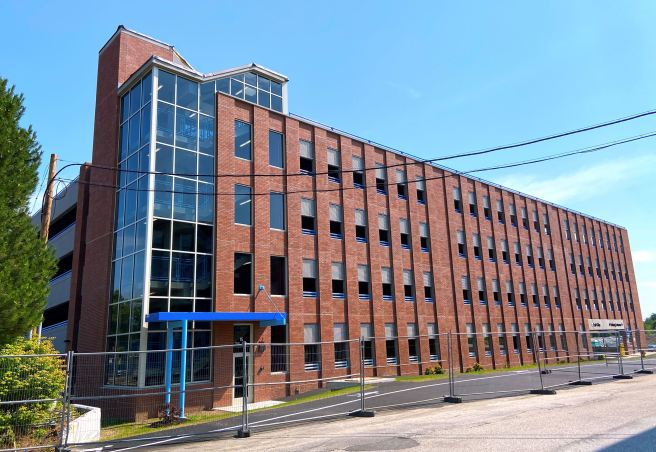




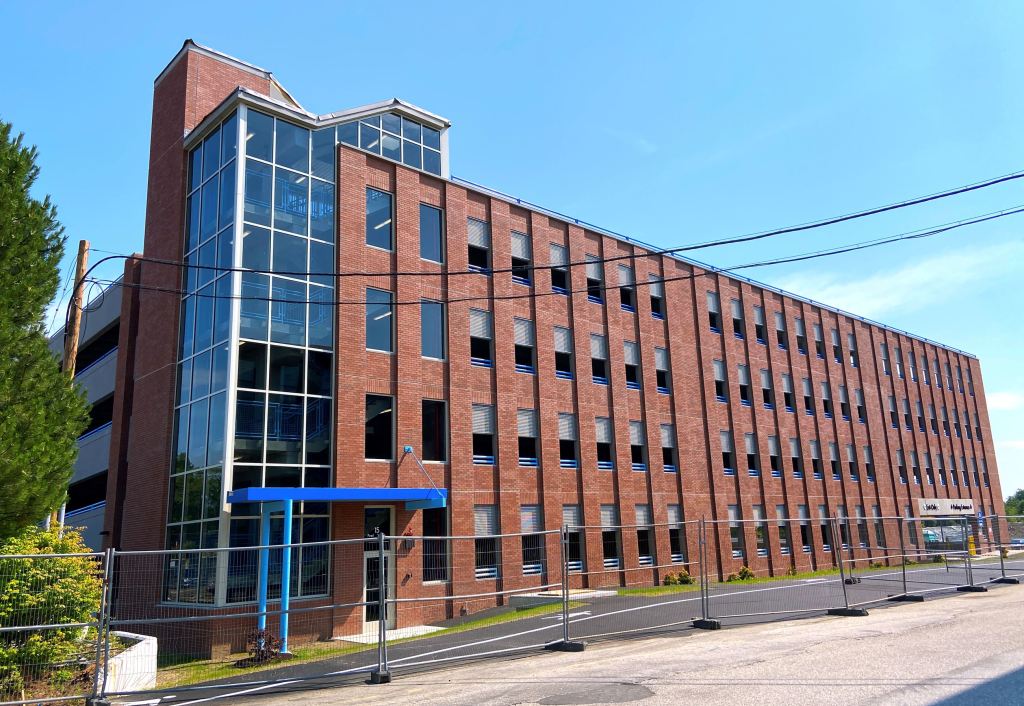








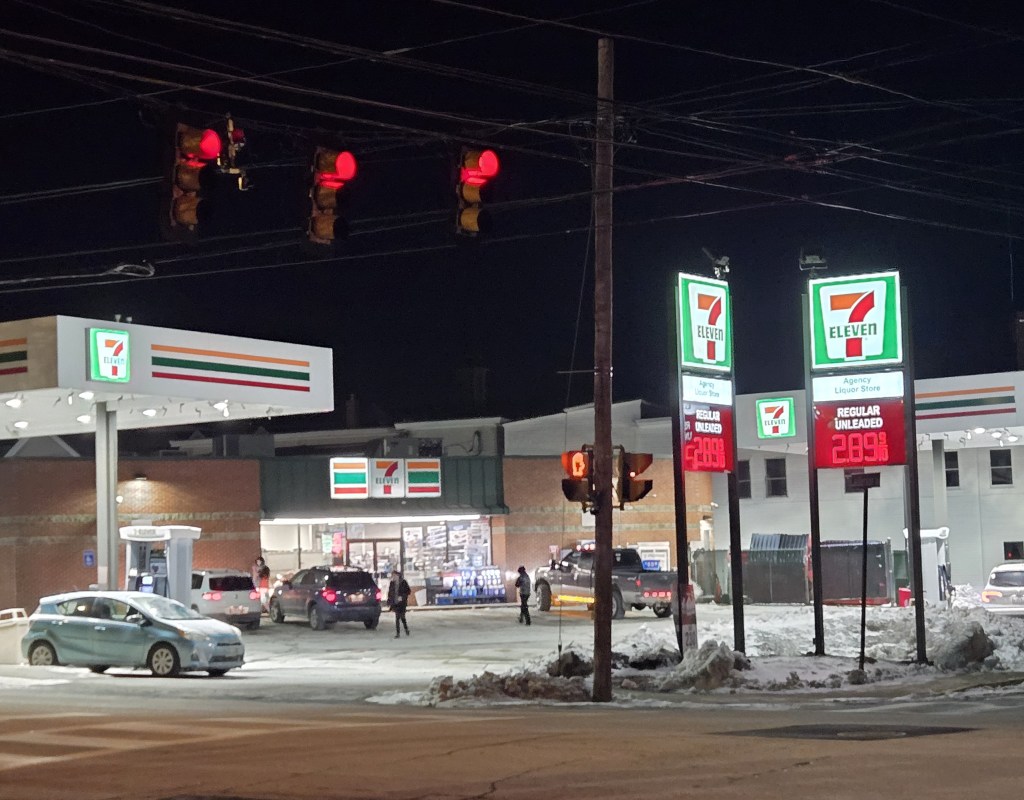


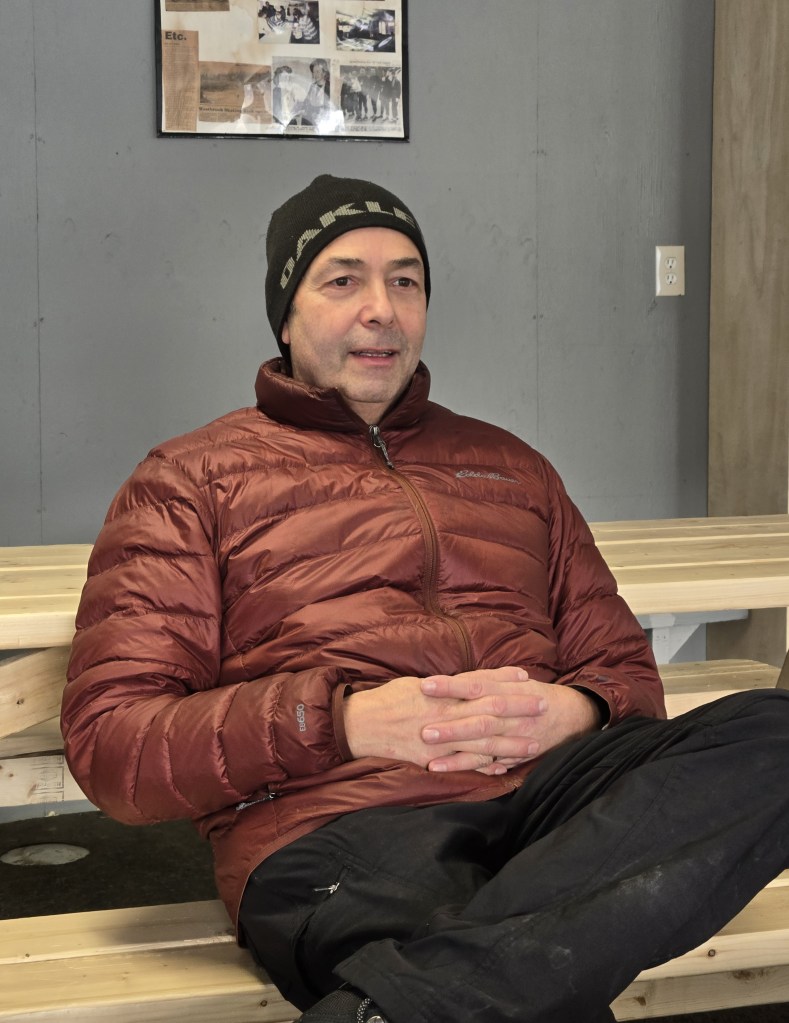
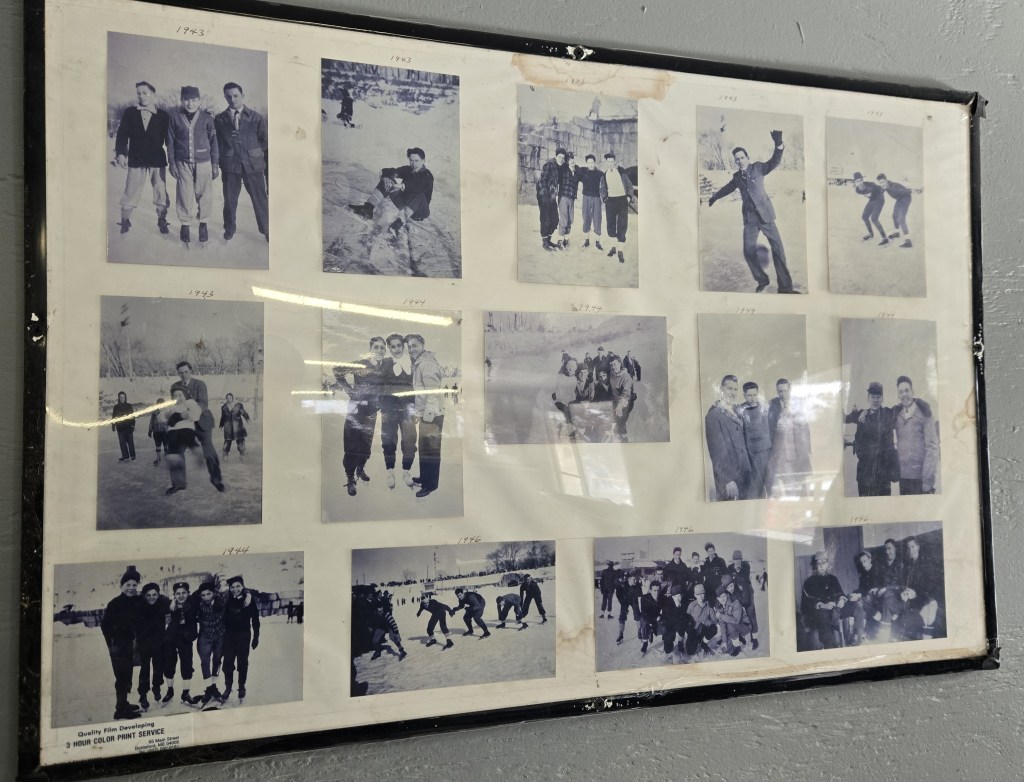




 BIDDEFORD GAZETTE