One of the most used words during this year’s Biddeford election cycle is the word “Transparency”
It has a nice ring to it, and it sounds very noble when used by political candidates hoping to curry favor with disgruntled voters. I mean, really – – who is opposed to more transparency in local government?
Abigail WoodsNasreen A. Sheikh-Yousef
That’s why I was a bit stunned when I stumbled upon a planned “candidates’ open house” on Facebook.
The post comes from the campaign page of Abigail Woods, the political newcomer who is taking on John McCurry in the battle for the Ward Two city council seat.
According to information publicly shared by Woods, she and at-large city council candidate Nasreen A Sheikh-Yousef are hosting their own “open house” event on Sunday, Oct. 12.
They didn’t send out a press release, and they also declined to provide the location of this forum, telling those who may be interested that they were required to RSVP before organizers would provide the location of their somewhat secretive meeting.
I find this event to be soaking wet in irony. Two of the most vocal and ardent supporters of increased public participation and transparency in political affairs, don’t want the public to know where they are holding their event.
What happens if they win their respective elections?
Will we now need to RSVP if we want to attend a city council meeting? Will members of the press need a secret decoder ring in order to provide news coverage for Biddeford residents?
I’ll chalk this mistake up to inexperience, but people who want the public trust really should be at a place where they can trust the public.
The last thing Biddeford needs from its elected leaders is more secrecy. It’s just not a good look, especially if you’re going to demand transparency from others.
NOTE:An earlier version of this story misspelled the last name of Nasreen A Sheikh-Yousef. We apologize for the error.
____________
Randy Seaver is the editor and founder of the Biddeford Gazette. He may be reached by email: randy@randyseaver.com
c.) 2025 All Rights Reserved
Never miss another update! Subscribe for free today!
Tomorrow, October 1, the Biddeford Gazette will officially begin its coverage of the 2025 municipal elections in Biddeford.
It’s hard to explain why I am so excited about this time of year. I feel like a little kid on Christmas morning.
After working at other newspapers, I began covering news in Biddeford during the month of October, nearly 30 years ago. I jumped right in with almost no historical perspective.
Former mayor Alan Casavant (right) was not happy when I snapped this photo during a tense city council meeting.
I was immediately hooked and fascinated by the city’s political machinations, the stories and the legends.
I found myself intrigued by long-winded tales about people like ‘Babe” Dutremble, “Papa” Lausier and “Tiny” Frechette.
Sure, I was already a lifelong political junkie. At 10 years old, my parents had to pry me from the television as I watched the culmination of the Watergate scandal.
In middle school, I would brag that I had shaken hands with Ed Muskie and Jimmy Carter. Yup, I was a weird kid.
During my junior year of high school, I found myself working in an actual newsroom during a brief internship at the Journal Tribune. We had IBM Selectric typewriters. Everyone in the newsroom drank coffee, most of them smoked – at their desks.
Bob Melville, the city editor, wore his glasses perched on the end of the nose. He referred to me only as “kid.” He almost made me cry when he questioned my loose grasp of the English language.
We got lunches at Poli’s at Five Points, and profanity was acceptable in the workplace. I was working among titans who kept the city’s political players in check.
It was a glorious time. I knew then and there what I wanted to do for the rest of my life. I wanted to be the next Carl Bernstein.
I feel a special connection to Biddeford City Hall. I am one of the lucky ones. I still remember smoke-filled, off-the-record meetings in “Ward Eight” with guys like Bob Dodge and Bruce Benway, the city’s first manager.
Secrets were carefully revealed. Suggestions were made. Deals were struck – all behind the scenes.
Former City Councilor George “Pete’ Lamontagne discusses a photo collection he helped curate for the Biddeford Mills Museum. The former president of the local textile workers union, (UNITE) Lamontagne became one of the most respected and well-liked members of the city council (Seaver photo)
Back then, there were 11 members of the city council. The city had four at-large representatives. I still remember the meeting when Mayor Donna Dion appointed Maria Martin to fill the vacancy created by her father’s death.
J. Richard “Dick” Martin was another of those local political legends.
Today, I still love the creak and groan of those old wooden stairs that lead to the Council Chamber on the third floor. The smell is the same. If you pause, silent — you can almost hear the whispers of those now ghosts who were so eager to climb those stairs for more than a century.
Today, I am honored to be entrusted by so many people to report the news that happens in Biddeford. It’s not an easy gig, and that’s what makes it great.
In the 1990s, I and my colleagues from the Tribune and Portland Press Herald sat in the back row during council meetings. We respected one another, but we were fiercely competitive.
We would have stabbed one another in the neck for an exclusive story. The people were well served by the local press. I got to work with top-notch reporters like Ted Cohen and Kelley Bouchard.
Over the years, I became more and more immersed in Biddeford politics. I got to interview people like former mayors Michael Cantara and Bonnie Pothier. I listened as former councilor Kitty Goodreau recalled a story about an angry businessman who threatened to “kneecap” a councilor because of a zoning change.
Former mayor Wallace Nutting (center) and former City Councilors John McCurry and Ken Farley devised a plan to “get tough” on MERC, the former waste-to-energy incinerator located in downtown Biddeford (Seaver photo)
Former mayor Alan Casavant once lost an election by one vote because he did not vote for himself (true story).
I vividly recall the battles like a council order to re-route all trash trucks through Saco and the predictable, regular chorus of “Peaker’s Squeakers,” the three men from Biddeford Pool who were politically aligned with Councilor Ron Peaker.
And I cannot forget the marvelous “after council” meetings that would take place at that round corner table tucked away near the bar at the Wonderbar Restaurant.
I would give almost anything to have Vinny Keely pour me another perfect pint of Guiness while I chatted, laughed and fought with people like Jim Grattelo, Kent Webster, Kyle Noble and even my old editor Bob Melville — who didn’t even remember that I briefly sat next to him in a newsroom.
Yup, I am one of the lucky ones.
The next chapter of Biddeford’s ongoing political story begins tomorrow. I only hope for two things:
First, that you find my coverage to be helpful in making your decisions about who should run our city for the next two years. Secondly, that you are unable to figure out which candidates I am personally supporting. Now, let the games begin.
NOTE:For more information about the local issues, elections and candidates, please click THIS LINK
____________________
Randy Seaver is the editor and founder of the Biddeford Gazette. He may be reached by email at randy@randyseaver.com
Never miss another update! Subscribe for free today!
Many people get excited about this time of year. They order pumpkin everything, pick apples, decorate their yards with mums and fret about having the cleverest Halloween costume for themselves and their kids.
I get excited this time of year for an entirely different reason. I am a political junkie with a local focus, and every two years Biddeford voters choose who will represent them as mayor, on the city council and as members of the school committee.
Unlike the rather dull 2023 cycle two years ago, this year’s upcoming elections are bringing some heat to the game.
We have three mayoral candidates this year, and almost every ward race will feature two candidates, except Wards Three and Five.
Marty GrohmanNorman BelangerLiam LaFountain
The last time Biddeford had more than two people running for mayor was in 2013, when former mayor Joanne Twomey and former councilor Perry Aberle both tried to deny Alan Casavant a third, consecutive term.
And one of the most interesting mayoral races in Biddeford took place in 2003 when Gen. Wallace Nutting – a Republican and Saco native – upset the ballot with a decisive win over School Committee member Dan Boucher and City Councilor Marc Lessard.
Few people predicted that outcome, and I was not one of them. For the record, that race generated a whopping voter turnout of more than 67 percent of registered voters.
Typically, turnout during local elections rarely break the 45 percent mark.
Today’s political landscape in Biddeford
Voters will also be asked this year to decide the fate of two rather significant municipal bond issues; and whether to convene another Charter Review Commission.
In my opinion, there are at least three significant issues driving more candidates and voters to participate in this year’s election.
First, issues connected to former city manager James Bennett angered many people in the community on almost every front: how federal grant money was being used, excessive staff turnover at City Hall, questions about discrepancies in the Finance Department, a blistering report from the city’s auditors and the city’s inability to pay a private contractor for his services to the city.
Former City Manager James Bennett
And Bennett was also a central figure in the controversy surrounding the University of New England’s plan to construct a large pier on the Saco River. Bennett sidelined both the city’s harbormaster and deputy harbormaster during local review of the pier proposal.
The council finally removed Bennett from office but not before he left a shitty taste in a lot of mouths across the city. Bennett filed a lawsuit against the city.
City officials, in turn, are pointing to concerns about how Bennett used his office for his own gain.
Secondly, the UNE pier proposal raised local concerns on a number of fronts as opponents raised questions about possible conflicts of interest and a lack of transparency during the project’s review.
Members of the public voiced concerns and anger earlier this year about the University of New England’s controversial plan to construct a large pier on the Saco River (Seaver photo)
Finally, continuing property tax increases are always an issue in local elections. Over the last two years, the city has passed on increased spending budgets of nearly six percent per year.
Not surprisingly, several incumbent candidates are now raising concerns about property tax burdens, yet many of them actually approved increased spending over the last two years.
Politicians will be politicians.
How will the Biddeford Gazette cover all the election news?
Our in-depth election coverage will begin on October 1.
We are now in the process of collecting questionnaires that were sent to all city council candidates. We will use those surveys as the basis for upcoming stories about each of the contested ward races. We will also periodically examine each of the races and how they align with public concerns.
The contested ward races will be covered in a single story. For example, candidates Patricia Boston and Jim LaBelle from Ward One will be featured in the same story.
Likewise, the three at-large candidates will be introduced in one story, but we will also do follow-up stories on that race.
When it comes to the mayor’s race, we will publish three separate stories regarding each candidate during the first full week of October.
Profiles and interviews with Norman Belanger, Marty Grohman and Liam LaFountain will be published in alphabetical order on three consecutive days.
Obviously, we will be writing many other stories, especially about the mayoral candidates and their campaigns.
Upcoming mayoral debate
Finally, I am proud of the fact that I was able to organize at least one public debate among all three mayoral candidates. It took a lot or work to get this thing organized but I think it’s well worth the effort.
I am especially pleased that my colleagues from Saco Bay News, and the Biddeford-Saco Courier agreed to participate as panelists with me.
That debate will take place on Friday, October 10, from 6 p.m. to 7:30 p.m. at Biddeford High School’s Little Theater on Maplewood Avenue.
The debate will be streamed live and recorded for later viewing on social media sites.
While there will be no public comment during this event, we are hoping that most of the questions will come from the public in the form of written submissions before the debate.
Something happened at last night’s Biddeford City Council meeting that should be a template for all of us.
In a time of seemingly unprecedented political tension on the national stage, two city councilors showed us all a valuable lesson about respect, collaboration and friendship – despite being almost polar opposites when it comes to political ideology.
Councilors Doris Ortiz and Marc Lessard are the city’s two at-large council members, and they about as different as you can get — but they both love Biddeford and that is what drives their friendship.
Doris Ortiz
Lessard has been a member of the council since the late 1990s. He is the longest serving council member.
Ortiz decided to run for council in 2019, saying she was inspired by my wife’s service on the council.
Like all new councilors, Ortiz recalled being nervous and feeling a little overwhelmed when she was sworn in and later attended her first meeting on the other side of the council dais.
Lessard was her seatmate on the council. He knew they would probably struggle to find consensus, but that didn’t matter. Lessard immediately took Ortiz under his wing. He coached her, advised her and reassured her that she was in the right place.
Though the city council is non-partisan, there is no denying that Ortiz and Lessard are fundamentally on different sides of the political spectrum.
That didn’t matter. They just worked together. They listened to one another and they even shared jokes and laughed together.
More than that, they often formed what was jokingly called an “unholy alliance.”
I have been watching their relationship for six years. There were times when you could almost see and feel the tension between them as they tackled a myriad of policy issues, from housing to budgets.
Marc Lessard
But they also found a lot of common ground; and they always acted with respect and civility.
Last night, Ortiz announced her resignation from the council because she is moving outside of the city.
It was an emotional announcement that encapsulated Ortiz’s philosophy and modus operandi: she was humble, authentic and grateful for the opportunity to serve.
At the end of her brief statement, it was Marc Lessard who was first on his feet to offer Ortiz a standing ovation. Everyone else in the council chamber quickly followed Lessard’s lead.
Lessard and Ortiz offered all of us a timely and relevant lesson.
No matter how discouraged we may feel about our nation’s political divisiveness, we can still choose to treat each other with civility and respect.
Godspeed, Councilor Ortiz. Thank you for your service and commitment to our city.
____________
Randy Seaver is the editor and founder of the Biddeford Gazette. He may be reached by email at randy@randyseaver.com
Never miss another update! Subscribe for free today!
I see it every day. Someone behind the wheel looking at their cellphone and not the road.
Do you want to know how I spot them? They are unable to stay in their lane, veering into mine. This makes my blood pressure soar…they callously have a complete disregard for my wellbeing because sending or reading a text message was more important than my life.
Texting while driving is not just risky – it’s deadly.
The National Highway Traffic Safety Administration (NHTSA) claims 3,275 people died from distracted driving in 2023.
That could be your spouse, daughter or son. It could be your sister, brother, mother, father, a best friend…your dog or cat even! Need I go on?
According to the NHTSA, when a car is driving at 55 miles per hour, a five-second glance at your phone means you have traveled the length of a football field with your eyes off the road. Think about that for a minute…a FOOTBALL field!
Texting demands all three things a driver needs most when behind the wheel: your eyes, hands and mind.
Texting is a deadly choice that far too many people make. Not only are they taking a gamble with their own life, but also the lives of their passengers, other drivers and pedestrians.
We need to see a cultural transformation shift. Parents can start with leading by example.
All too many times, I see an adult furiously texting away with children in the back seat. By doing this, you are teaching your children that texting while driving is okay.
The saying “do as I say, not as I do” doesn’t apply sadly. Parents must model phone-free driving for their kids. Put the phone down!
No text or phone call is worth increasing that statistic from 2023.
If it is that important, simply pull over. 90 percent of drivers are aware it is unsafe, yet over half admit they still do it.
Everyone knows better, but they haven’t decided to do better. How many more deaths must occur before this is taken more seriously?
_____________________
Gail Toussaint is a resident of Biddeford. The views and opinions expressed here are her own and not necessarily those of the Biddeford Gazette.
The Gazette strongly encourages reader feedback, including letters to the editor, contributed feature stories or op-ed pieces that offer perspectives different from the opinion pieces we publish. For more information, please send an email to biddefordgazette@gmail.com
Age has – apparently — become a factor in Biddeford’s upcoming municipal election.
Today, the Biddeford Gazette published an update to its ongoing updates of potential candidates, pointing out that two more former councilors are hoping for a political comeback: Patricia Boston in Ward One and at-large candidate Clem Fleurent.
Former city councilor Clement Fleurent
The Gazette has been publishing these updates for several weeks. No one has questioned the age of any candidate – until today.
It should be noted that these brief updates are not stand-alone news stories, such as recent stories about both Liam LaFountain and Norm Belanger who are each hoping to replace Mayor Martin Grohman.
Once the dust settles from all the flurry of the nomination process, our real news coverage of each and every candidate will begin.
Who raised the red flag about age?
Ironically, it was State Rep Ryan Fecteau who first asked for information (via a Facebook post) about Fleurent’s age. He did not make any inquiries about Boston’s age, nor did he reach out to provide us with the age of his partner, Dylan Doughty – another council candidate.
Fecteau – as I have previously reported – was only 16 when he stepped up to serve as a student representative on the Biddeford School Committee. A few years later, Fecteau became the youngest person to ever serve as Speaker of the Maine House of Representatives.
Last year, the age of political candidates became a big deal when President Joe Biden stumbled through his first televised debate with Donald Trump.
State Rep. Ryan Fecteau
For the record, Trump is only three years younger than Biden. Both men were in high school at the same time.
Fecteau was only 19 when he decided to seek a seat on the Biddeford Charter Commission and said during a prior interview that his decision created a bit of a stir in the community.
“There were certainly a lot of skeptics who wondered about this new kid and what he was trying to prove,” Fecteau said, pointing out that the commission was chaired by one of the city’s most well-known politicians. “I was only 19, and I think some people wondered about my motivations.”
Today, I wonder a little about Fecteau’s motivations.
If we’re going to promote and celebrate diversity, well – that also includes older people and senior citizens.
I don’t think age matters. I think competence and positions matter much more.
This is Maine: Our governor is over 65. Both of our senators (King and Collins) are over 65. Congresswomen Chellie Pingree is well over 65.
Is Fecteau concerned about those candidates and their age? Maybe, but I haven’t heard anything from him about it.
In closing, Fleurent is 90. I don’t know how old Pat Boston is, but I have asked her to call me back and reveal that secret.
The election ballot will not be finalized until September. At that point, the Gazette will begin in-depth coverage of all candidates — and their age.
Randy Seaver is the editor and founder of the Biddeford Gazette. He may be contacted by email: randy@randyseaver.com
NEVER MISS ANOTHER UPDATE!Subscribe for free today!
“And these children that you spit on As they try to change their worlds Are immune to your consultations They’re quite aware of what they’re going through”
Thirty-six is not the average age of Biddeford residents, it is the median age. Thus, half of all people living in the city are 36 and younger. Amazing!
How did this happen? How did an old mill town in Maine suddenly become such a dynamic and desirable place for young people?
According to research completed by the city’s department of economic development, this youthful energy is being largely driven by the revitalization of the city’s downtown area.
Photo: City of Biddeford, Greg Tansley
City officials point to “a significant influx” of young professionals and families moving here because of a “vibrant” downtown and a flourishing arts and food scene.
People are also coming to Biddeford because of its “affordable housing” options, especially in the downtown area.
Now, before you have a stroke or an aneurysm about what is (or what isn’t) “affordable” housing, take a deep breath and consider the following:
People who have lived here for a long time see their affordable housing options basically evaporate, most notably during the last decade – since the city was able to close MERC, our infamous downtown trash incinerator.
But newer residents – able to telecommute to their higher paying jobs in Boston, Portsmouth or Portland – see Biddeford as ripe for the picking. From their perspective, housing is super cheap in Biddeford, especially when compared to much of New England.
The bad news (and the good news) is that Biddeford is now hip and trendy; a desirable place to live. We are no longer “Trashtown, U.S.A.” as we were described not so long ago in a Portland Press Herald editorial.
We are not “Lewiston by the Sea” or all the other insulting names that have been slung toward our community for more than two centuries, when a wave of immigrants — searching for jobs and new opportunities — flocked to Biddeford from Quebec, Greece, Ireland and Albania.
Despite the fact that we are still a predominantly white community (91 percent), we were diverse long before diversity was a thing or so celebrated as a virtue.
Yes, the Klan tried to march here because they hate Catholics almost as much as they hate people of color.
“Biddo”: What say you?
Roughly 15 years ago, some people began using the word “Biddo” as slang to describe the city of Biddeford.
Many older residents get very riled up by that term. They see it as a put-down or at the very least as a lazy moniker for the city, much too close to the word “ghetto.”
More than a decade ago, I decided to examine this underlying current of resentment between “old” Biddeford and “new” Biddeford. You can find that story here: Biddeford: Thunderdome or Mr. Holland’s Opus?
When I was working on that piece, Roch Angers, a former city councilor, told me in no uncertain terms: “This is Biddeford, not Biddo. It has three syllables. Deal with it.”
Angers is “old school” Biddeford, like so many others who can trace their roots back to their Franco-speaking ancestors – the people who were instrumental in building this city.
As a native son, the word Biddo used to bug me too. Then again, I have a tendency to wear my heart on my sleeve.
“This is Biddeford, not Biddo. It has three syllables. Deal with it.”
— Roch Angers
Today, I am one of the admins on a community Facebook page, and I have to say, I see lots of examples where ‘Biddo’ can also be used as a term of an endearment, not just as an insult.
Consider this: does anyone get upset when people refer to the city of South Portland as “SoPo?” Or how about describing Kennebunkport as K’Port? Or closer to home, does anyone get frosty when the town of Old Orchard Beach is called “OOB?”
The young kids are just trying to be hip, and they are bringing their own vernacular to the larger conversation about our community.
Let’s embrace these new voices.
I cannot predict the future, but I can guarantee you one thing.
About 40 years from now, today’s young kids are going to be bemoaning the young kids of the future. They will complain about a lack of respect for your elders. It happens to every generation. Every generation.
We’re gonna be okay.
__________________
Randy Seaver is the editor and founder of the Biddeford Gazette. He may be contacted by email: randy@randyseaver.com
NEVER MISS ANOTHER UPDATE!Subscribe for free today!
In reference to the old gas station sign located at the Five Points intersection:
Firstly, let me say that I love the idea as well as the submitted artwork. I can honestly say that as silly as it is, yes that sign is a landmark to the city as much as the mills are, in my opinion.
I have just one thought/concern. I know that it is being regarded as a project welcoming people to the city, but where that sign is, aren’t they theoretically already pretty far into the city?
Also, in reality, I am thinking that traffic driving by will be moving too fast to really appreciate the details in the new design. Add to that all of the existing wires and other infrastructure, I feel that maybe the sign will be shorted its due deserve.
Lastly, and this is kind of stupid but valid in this day and age. Suppose a truck tries to make that turn and screws the pooch, or an accident pushes a car into the pole. Who is footing the bill for the repairs? Would it be the city of the property owner?
I know that is hopefully a far-out idea, but you KNOW that sooner or later it will happen. And when it does, you know the lawyers and insurance companies will be fighting that one for years.
But as they say, don’t bring up a problem unless you can offer a solution, so here is my thought:
Take the whole sign, shorten the pole and move it to the corner down by Main Street and Mechanics Park (picture attached).
Rotate the sign so that the “blocks” are off to the left side, sort of facing traffic in both directions.
Following the design submitted by the artist, use one side coming into Biddeford to show 04005, and the side leaving Biddeford to show 04072. (When the sign is refurbished, place a blank in the center of the blocks so that the opposite sides don’t show through on each other.)
Instead of standard white lighting inside, line the internals with basic color changing LEDs so that during holidays and events, the sign can display in colors. (Example: red/green for Christmas, orange/purple for Halloween, red/white/blue for patriotic holidays, etc.
If you want to get really fancy, landscape a circular sitting area around the base with some benches and a plaque of some sort talking about the sign.
Lastly, thinking for the future, be sure to run extra electricity inside the pole and think about possibly adding (in the future) a permanent informational display board below the “blocks” more in the driver’s eyeline since so often we end up just placing a temporary sign on that patch of land anyway for parades, festivals, parking bans, etc.
Possibly Saco would throw some money at the project since it will display their zip as well and the informational sign in the future would be used to benefit both cities.
Oh, and my thoughts on painting the pole: some shade of standard Hunter Green or something to fit in with the park and local landscaping there.
I would also do what I can to aid in the project. I am sure the money set aside would fall short but I know we can find it somewhere.
The maintenance time saved over the years would be substantial I bet because you could use our own trucks and lifts to access the sign if it were shortened, as compared to needing a crane to access the top of the sign where it currently is.
I really feel that this is a great alternative to the current placement of the sign to pair with the sign’s new use: a great welcoming to the city — both cities, really.
Can you think of a better way to say “Welcome to our Main Street District”?
NOTE:James Krause is a resident of Biddeford. If you would like to submit a column or letter to the editor for publication in the Biddeford Gazette, please emailbiddefordgazette@gmail.com
Understandably, the mayor was less than pleased by what I wrote about him in that editorial. How do I know the mayor was upset? After all, he didn’t contact me directly to offer his perspective on the matter.
I learned about the mayor’s displeasure from back-channel sources. This is becoming a regular trend with this mayor.
When I pissed off former mayors Alan Casavant, JoAnne Twomey, Jim Grattelo, Wallace Nutting or Donna Dion, trust me — I heard about it — from them. Sometimes I apologized, sometimes I didn’t.
Marty does his very best to avoid difficult or challenging subjects. He would much rather post a “selfie” of himself in a variety of locations, always posing. Always smiling.
Here I am with an unhoused person. Here I am with a Vietnam veteran! Here I am with a downtown merchant! Here I am watching traffic!
Mayor Marty Grohman buys an Italian sandwich and wants you to know about it (Photo: Facebook, Marty’s Community Corner)
A few weeks ago, I joked that the most dangerous place in Biddeford is the space between Marty Grohman and an available camera.
Marty isn’t so much supporting Biddeford as he is supporting himself — always ready for the next photo-op, the next group photo, the next feel-good proclamation, avoiding controversy and difficult questions at all costs.
Marty doesn’t want pesky reporters like me looking under the carpet at City Hall or writing stories that are difficult to explain and reconcile.
What Marty seems to want from the media is an enhanced level of public relations, not hard-hitting journalism about an out-of-control city manager, a blistering report from the city’s financial auditors or problems with delayed sewer bills.
George Orwell reportedly once opined that “Journalism is printing what someone else does not want printed; everything else is public relations.”
I happen to agree with Mr. Orwell. The Biddeford Gazette is not here to support the mayor’s or anyone else’s PR strategies. We’re here to tell you all the news; the good, the bad and the ugly.
FOOD FOR THOUGHT
To be honest, Marty was not the only one upset about my July 13 editorial. I also heard from a few of the mayor’s closest supporters, all telling me that I was making a mountain out of a molehill. They extolled all the good things that Marty has done and continues to do for the city.
They are right. Marty deserves plenty of credit for some good things, and no one can reasonably argue that he has anything less than enthusiastic passion for his adopted hometown.
In fact, I would say that cheerleading is an important part of what the mayor should be doing. On this front, Marty gets an A+ from me, and I mean that as a sincere compliment.
But was I wrong about a lack of leadership from the mayor’s office?
Marty Grohman announces that he will be seeking reelection with – – another selfie photograph. (Photo: Facebook, Marty’s Community Corner)
Over the last three weeks, we have seen some mounting evidence that supports my argument, most notably from two men who watch the mayor much more closely than most everyone else in the city.
Councilor Norman Belanger and Council President Liam LaFountain have each announced that they will be challenging Grohman for the mayor’s seat.
Both men say the city is currently lacking strong leadership. Belanger is 68, LaFountain is 28. They are very different individuals. They sometimes disagree but they are saying the same thing here: Biddeford needs and deserves strong leadership.
Consider this: Belanger and LaFountain both have a front row view of the mayor. They all attend the same meetings, even those behind-closed-door-executive session meetings where discussions about city personnel or legal matters take place.
Belanger is more of a traditional, old-school Biddeford politician. He is smart, friendly and truly wants what’s best for Biddeford. LaFountain is a younger and more dynamic candidate who will likely appeal to a broad range of citizens with his pledge to increase transparency and data-driven solutions.
Despite their differences, both men say the same thing: Biddeford is lacking real leadership.
During a fairly recent meeting with a resident, Grohman threw up his arms and joked: “I don’t even have the power to decide what sodas are available in the City Hall soda machine.”
Do you think if Jim Grattelo wanted a Mountain Dew in City Hall that his request would be rebuffed by some mid-level bureaucrat?
Are you kidding me? Do you think if Jim Grattelo wanted a Mountain Dew in City Hall that his request would be rebuffed by some mid-level bureaucrat? Or if Joanne Twomey wanted a Dr. Pepper?
Almost one year ago today, I bumped into Marty at a Chamber of Commerce function. At the time, I had given up my role as a reporter in order to orchestrate a full-throttle campaign to get rid of former City Manager Jim Bennett. (Hindsight now reveals that I was on the side of the angels with that campaign).
Marty was not happy about my work. “Why are you doing this to me?” he asked in a frustrated tone. “I’ve only been in office six months.”
Marty didn’t complain that I was making the city look bad, or even that I was making the city manager look bad. His complaint was that my work to oust Bennett also made Marty look bad. And that’s a big no-no.
I do not think Marty is a bad mayor, but I do think the city needs strong leadership.
______________
That’s my perspective, and I welcome yours. The Biddeford Gazette is always more than happy to publish letters to the editor, op-eds or columns about Biddeford, its people, places and politics from our readers.
Randy Seaver is the editor and founder of the Biddeford Gazette. He may be contacted by email: randy@randyseaver.com
NEVER MISS ANOTHER UPDATE!Subscribe for free today!
Today, July 24, is the first day that political hopefuls in Biddeford can take out nomination forms in order to have their names on the November 4 ballot.
Every local office is up for grabs: mayor, city council, school committee and ward clerks.
I have been covering Biddeford politics for 30 years, and I always look forward to this day and all the inside-baseball stuff that is going on behind the scenes.
This morning, I received no fewer than 22 text messages from people wondering about who is running and who is not. They want the latest scoop, the latest gossip.
NEW BOSS, NEW RULES
Traditionally, pesky reporters and political observers were able to get updated information daily from the City Clerk’s office, but that tradition ended two years after Robin Patterson was sworn in as city clerk.
Patterson is putting a new procedure in place. She will update a list each Tuesday of candidates who have turned in qualifying nomination forms. This procedure, Patterson told me, meets all state requirements and makes it fair for all involved.
While I miss the informality of just popping into City Hall to get the latest scoop about who is running, Patterson’s new process does strike me as a fair compromise and will likely cut down on the rumor mill about who is running for what.
INSIDE BASEBALL
Traditionally, the nomination process was akin to a city-wide poker tournament, like a game of Stratego gone haywire.
Some candidates would pull out three or more nomination forms just to throw others off their game. In the late 1990s, it was not uncommon to see candidates simultaneously pull papers for mayor, council, at-large and school committee.
And then? Christmas morning, usually near Labor Day: the deadline day for submitting one set of nomination papers per candidate.
Yes, I miss the old days, but I also think City Clerk Patterson is making the right move. It may be a game for me and some others, but it is serious work for the person entrusted to making sure that our election processes are held to the very highest standards.
All that said, if you want the all the latest updates, you can count on the Biddeford Gazette. We have created a new page dedicated to the 2025 municipal elections in Biddeford. We will update this page as soon as new information becomes available. In fact, we have created a spreadsheet that you can view or download to get the very last updates.
This morning, former city council president John McCurry said he will seek to recapture his Ward Two Seat. Incumbent City Councilors Roger Beaupre (W3) and Dylan Doughty (W4) said they will seek reelection.
To all those stepping forward — or about to step forward — thank you for your willingness to serve.
______________
Randy Seaver is the editor and founder of the Biddeford Gazette. He may be contacted by email: randy@randyseaver.com
NEVER MISS ANOTHER UPDATE!Subscribe for free today!
According to his Facebook campaign page, Biddeford Mayor Marty Grohman is “feeling frustrated” about being called out for not disclosing some relevant campaign donations made to his mayoral campaign nearly two years ago.
Apparently, Marty still doesn’t get why I mentioned his failure to disclose those donations in my story about a large-scale development that was approved by the city council during its June 17, 2025 meeting.
Allow me to explain.
Just a few weeks ago, Biddeford Planning Board Member Susan Deschambault made a point of offering a public disclosure even before the planning board was set to begin considering an application from the University of New England to build a controversial pier on the Saco River.
Biddeford Mayor Marty Grohman (Seaver Photo)
Deschambault knew that the project had created controversy. She knew that both opponents and proponents of the project were sitting in the room, all waiting to see how the board was going to tackle the issue.
She began the meeting by saying she thought it was important for everyone to know that she had been a student at the university, even though it was many years ago – back when the school was then called St. Francis College.
Does anyone really think that Deschambault may be biased about the pier project simply because she went to college at the Biddeford campus nearly 50 years ago? No. Of course not.
But to her credit, Deschambault just wanted to make sure that everyone at the table was aware of a fact that was already a matter of public record.
Unless you have been living under a rock for the past year, most people know that Biddeford has been facing some serious “red-flag issues” at City Hall. Public confidence in local government is not exactly overflowing.
Just minutes before the mayor provided his tie breaking votes regarding the proposed development project, the council and public heard a scathing report from an independent accounting firm about the city’s two-year overdue audit.
The accounting firm said they found “several serious deficiencies,” including how the city handles cash reconciliations and federal grant monies.
Furthermore, Mayor Grohman stalled this reporter, only reluctantly confirming information about the former city manager and his lawsuit against the city, not to mention the city’s counter claims.
This is all stuff that has come to light in just the past 30 days, never mind the upcoming stories or the last several months of various problems at City Hall.
Let’s be real. Grohman only received about $391 from the developers who came before the council on June 17. Those donations happened two years ago. There was no way for the developers to know that Grohman would be in a position to break several tie votes.
There is no criminal conspiracy here. After selling his company several years ago, Grohman is financially speaking quite comfortable. To think that his votes could be bought for less than $500 is laughable.
But that’s not the point.
There was absolutely NOTHING wrong about Marty accepting those donations. There was absolutely NOTHING wrong in how the mayor chose to exercise his rare voting power. Honestly, I would have probably voted the same way.
Marty’s mistake was one of poor leadership. If he had just briefly mentioned the small donations he had received two years ago, we would not be having this conversation today.
Marty’s mistake was one of poor leadership. If he had just briefly mentioned the small donations he had received two years ago, we would not be having this conversation today.
Maine voters are vigilant about government transparency. We have a “clean elections” law and rigorous reporting requirements even for local candidates.
Campaign finance reports are not intended to just “check the box” and then reside in the bottom of a dusty file cabinet. Sure, they are public records, but the public relies on the media and other observers to stay on top of those issues.
Given the current atmosphere at City Hall; given the magnitude and benefits of the development project, Grohman should have simply disclosed that he received donations from the very same developers sitting in the room.
Susan Deschambault understood the importance of integrity and leadership. Sadly, Mayor Grohman missed this point.
I think we’re all “feeling frustrated.”
_____________________
Randy Seaver is the editor and founder of the Biddeford Gazette. He may be contacted by email: randy@randyseaver.com
NEVER MISS ANOTHER UPDATE!Subscribe for free today!
We are now officially in the middle of summer but the next municipal election in Biddeford will be here before you know it.
In fact, nomination papers for this year’s election will be available in about 60 days.
If you live in Biddeford and ever thought about ways that you could make a difference in your community, you may want to consider running for public office.
The city elects a new mayor, city councilors and school committee members every two years. In a little more than 60 days, the City Clerk’s office will have nomination papers available for any resident who would like to be on the November ballot this year.
You only need 25 signatures from registered voters to be on the council or school committee; and 125 signatures to be on the ballot for mayor. (50 signatures if you want to be an at-large councilor)
But before you take out your nomination papers, consider this:
1.) The pay is terrible (About $85 per month after taxes for council; $10,000 per year as mayor. It works out to roughly $3.25 per hour)
2.) The hours are long, and the meetings can be tedious. If you’re a city councilor, you are also expected to serve on one or two other sub-committees with additional meetings. If you are mayor, you also have to chair school committee meetings and fulfill numerous other duties.
3.) Behind the scenes, you have to plow through reams of mind-numbing documents in each council packet. You are expected to do this on your own time. You can look forward to spending hours and hours talking about the benefits and pitfalls of inclusionary zoning, wetland protection and hearing concerns about the budget.
4.) If you get elected, you can expect to be criticized by the public for how you vote or about things happening in the city beyond your control.
My wife, Laura, served two terms on the school committee and then was twice elected to serve as an at-large member of the city council. Although she thoroughly enjoyed the experience, she will tell you that being an elected official is time consuming and often challenging. She has zero interest in returning to office. It is a big commitment.
If this sounds good to you, step up and raise your hand. The city needs diverse representation and people with ideas, energy and a willingness to work hard.
If you don’t want to make the sacrifice of public service, please remember points 1-4 before you criticize those who have stepped up to serve.
You have 60 days or so to think it over. I t would be nice to see a lot of new names on the ballot.
Meanwhile, enjoy your summer!
Randy Seaver is the editor and founder of the Biddeford Gazette. He may be contacted by email: randy@randyseaver.com
NEVER MISS ANOTHER UPDATE!Subscribe for free today!
Despite what one downtown merchant in Biddeford is saying on Facebook, Mayor Marty Grohman – despite his pale skin tone, blonde hair and blue eyes – is not a member of the Aryan Nation.
I’ll be kind and not call the merchant out by name — but calling the mayor a “Nazi” for something he didn’t actually do is quite a leap and a profoundly stupid move, especially when it’s posted on your business Facebook page.
I’m not suggesting that Grohman is above reproach or criticism. In fact, the most dangerous place in Biddeford is getting between Grohman and a camera. He does love posting selfies, showing us all how connected he is to the city. He is also somewhat overly genial in how he runs city meetings, but to call him or anyone else a “Nazi” is simply despicable.
So, what incurred this merchant’s wrath and their subsequent public vitriol?
Two days ago, the Saco Bay News site posted an update about this year’s Memorial Day celebration, pointing out that the traditional parade had been cancelled.
That was near the top of the story.
Apparently, a lot of people stopped reading the story beyond its second sentence and they jumped on Facebook to accuse Grohman and other municipal officials for “a slap in the face to our local veterans.”
Here, hold my beer.
One, the annual celebration is a two-community event. Where was the outrage for my step-sister, Saco Mayor Jodi McPhail? Are we absolutely sure that she’s not a Nazi? I’ve known her since she was 12, but you can never be too trusting,
Some people just love to be outraged and can’t wait to share their righteous indignation all over Facebook. The technical term for this behavior is “dumbass-it is.”
If you had taken the time to read the story – beyond the headline – you would see that this year’s Memorial Day celebration will be bigger and better than ever before.
Or, as Saco Rep. Marshall Archer says, “it will be like a parade without all the walking.”
Archer knows a thing or two about local veterans. He served four years in the U.S. Marine Corps and did two tours in Iraq. He is today the Post Commander for the Amvets in Biddeford.
Archer is also a former city councilor and today serves as a member of Maine’s Legislature. He said he was saddened by many of the comments he saw on Facebook.
“It will be like a parade without all the walking.”
Marshall Archer, Commander, Biddeford AMVETS
“This was not a last-minute decision,” Archer explained. “A lot of people worked very hard over the last several weeks to organize the event.”
Archer says that closing Main Street in both Saco and Biddeford for a parade was not a viable option this year, considering the ongoing, state-mandated road repair project.
“It’s just a different approach,” Archer explained. “We will close down the bridge for five minutes to do the annual wreath laying on the Saco River.”
Archer said this year’s event is a coordinated effort between several different organizations and dozens of volunteers.
AMVETS Post Commander Marshall Archer (Contributed photo)
I don’t suspect that the outraged businessowner was one of those volunteers.
This year’s celebration will also include musical performances by marching bands from schools in Biddeford and Saco. More details can be found by clicking this link:
“I felt compelled to respond to the rumors and criticism,” Archer explained. “There is no need to feed off the negative energy. My fallen brothers and sisters will be well-honored this year, and I’m proud to be part of that.”
Never miss another update! Subscribe for free today!
They say that the definition of insanity is doing the same thing over and over, and expecting different results.
That’s how I felt on Tuesday evening, sitting in the back row and watching the second and final public hearing on Biddeford’s proposed budget for the upcoming year.
In fact, Tuesday’s meeting was almost a carbon copy of last year’s public hearing on the city’s budget.
On Tuesday, former city councilor Stephen St. Cyr was the only member of the public who spoke in favor of trimming the projected $65.5 million budget, an increase of 5.83 percent, which would require a tax (mil) rate of $15.05.
Sure, a handful of other people spoke up, but they were there asking the council to not cut their requests for funding, including representatives from the Heart of Biddeford, the McArthur Library and the Biddeford Community Gardens.
Council President Liam LaFountain, Mayor Marty Grohman, Acting City Manager Brian Phiiney and City Clerk Robin Patterson listen intently to a member of the council.
By my count, the council saw a 4-1 margin of support for the budget.
Last year, only one member of the public spoke on behalf of beleaguered taxpayers. That’s right, it was Stephen St. Cyr. Not a peep from any other member of the public, except for those who had their hands outstretched for some municipal pork.
And then, autumn comes and people begin to open their property tax bills. Now residents go ballistic, clutching both their hearts and their wallets.
“This is outrageous,” they scream. “I can’t afford to live in my own house! Before you know it, dogs and cats will be living together.”
A total meltdown with all sorts of apoplectic flair, flooding social media accounts from near and far.
As St. Cyr pointed out on Tuesday, this latest increase comes on the back of similar increases last year and the year before, a sum impact of nearly 20 percent in local taxes.
A somewhat innocuous zoning change got obliterated, preventing another pizzeria from opening across the street. But it was about traffic flow . . . Right. Whatever (wink, wink).
Every year, it’s the same thing. I encourage people to get involved. I urge them to call their councilors or go to a meeting. And what do I get? Mostly crickets and some lame ass excuses.
“It doesn’t matter what I say. The council doesn’t listen to me.”
“The council doesn’t care about the little people, and they’ll just do what they want.”
“I’m too busy to go a meeting.”
“I didn’t know there was a meeting.”
My response? Bullshit.
You wanna see the council turn on a dime? Do what the owner of Pizza by Alex did last year. Flood the council chambers with people wearing Pizza By Alex t-shirts, including the owner and scores of employees and local fans.
A somewhat innocuous zoning change got obliterated, preventing another pizzeria from opening across the street. But it was about traffic flow . . . Right. Whatever (wink, wink).
City councilors are just like anybody else. Their opinions can be swayed, and for a stipend of $85 a month (net) you can’t expect any of them to be fierce profiles in courage.
Politicians know which way the wind blows. My grandmother always told me that the squeaky wheel gets the grease. That’s just the way it works. It’s damn hard to raise your hand and say no when you’re looking over a sea of angry and hopeful faces. Please tell me you won’t support slaughtering puppies
Bitching on Facebook doesn’t cut it.
So, let’s look at those excuses. 1.) The council will and does listen to the people who actually show up, call or send an email. It happens all the time. 2.) The council does care. They’re just in the difficult position of trying to make the right decision. 3.) Too busy? Too busy to send an email or make a phone call, but you have plenty of time to bitch on Facebook? Please. 4.) I didn’t know. You are a member of a community. You have an inherent responsibility to be an engaged and informed citizen.
Since I have probably pissed off Pizza By Alex (a felony offense in Biddeford), allow me to get a couple of other things off my chest.
To the Heart of Biddeford, the McArthur Library, the Community Gardens, the teen center and the food pantries and all the other social service groups who help make our community a great place to live: thank you for your work and service. But I also hope you guys are looking for efficiencies and alternative sources of funding.
Do we really need three food pantries? Are there opportunities for you guys to work together, collaborate?
We are funding a museum and a cultural and heritage center. Another opportunity for collaboration?
And how many years in a row do we need to fork over $20k on downtown Christmas wreaths and lights?
To the McArthur Library, when are you guys actually going to start that capital fundraising campaign you’re always talking about? Maybe this is the year when you want to tap into you rather comfortable source of private endowments?
In the movie Scarface, narcotics king Tony Montanna is negotiating with a bank president who launders the drug money. At one point, Tony gets frustrated and says, “I know how this goes: you go high, I go low.”
Thus, if you really need $750,000, you ask the city for $1 million at budget time. That way the council can slash your funding request and you still get your $750,000. Otherwise known as a win-win scenario.
What do I want?
The world, and everything in it.
Never miss another update! Subscribe for free today!
Former Biddeford Mayor Alan Casavant — now the vice president of the non-profit Biddeford Cultural and Heritage Center — appeared before the Biddeford City Council Thursday to present his organization’s annual funding request.
Before the meeting started, Casavant was seated next to me in the back row of the council chamber. We made some small talk as we were waiting for the meeting to begin.
We both agreed that this is going to be a brutal year for budget making in Biddeford. We both agreed that we were glad that neither of us were sitting on the other side of the council dais.
We both listened as presenter after presenter approached the podium to make their various pitches for some municipal funding. Representatives from McArthur Library, the Heart of Biddeford, the Biddeford Mills Museum, Seeds of Hope, Biddeford Community Gardens, La Kermesse and so many others each waited for their turn to explain why they should receive some modest funding from the city.
Casavant (left) and I chatting during his 2011 mayoral campaign
This part of the annual budget process is called the “social services” portion of the budget. These are organizations that are not part of city government or operations. These are all non-profits struggling to keep pace with inflation in an uncertain economy.
” “I also believe it is important — critical — that city government try to find ways to bring people together . . . to chat, to laugh and to find commonality.
— Alan Casavant
It’s easy to say we cannot afford these things, but ask yourself: can we afford to lose these things?
Laura and I are feeling the same economic pinch as many other families are feeling all across the country. We are in the process of trimming some fat from our own household budget. We really don’t have much of a choice in the matter, but there are some things that may look like fluff but are actually essential to our quality of life.
When it was his turn to speak, Casavant approached the podium with a certain amount of gravitas. He is the second-longest serving mayor in Biddeford’s history, first elected in 2011 and then re-elected five more times before stepping down last year,
Casavant reviewed details of his organization’s request, but it was his summary that caught me off guard and left me wondering if maybe I should reconsider some of my own thoughts about this year’s city budget.
“I realize you are facing a very difficult budget year,” Casavant said. “”But I also believe it is important — critical — that city government try to find ways to bring people together . . . to chat, to laugh and to find commonality.
“They’re not gonna find that from social media. They’re not gonna find that from their cellphones.
“People need things like festivals, musical events, historic awareness and social interaction to bring everyone together; to build community, which is also the responsibility of this council,” Casavant added.
The room erupted with vigorous applause, and I saw a glimpse that made me think: Biddeford is much more than a city. It is a community. So the question becomes, what is the value of community?
I honestly don’t know, but it’s something worth thinking about.
Disclosure: I served as Casavant’s campaign manager in 2011 and 2013.
Randy Seaver is the editor of the Biddeford Gazette. He can be reached at randy@randyseaver.com
Never miss another installment! Subscribe for free today!
We learned yesterday that the weekly Biddeford-Saco-OOB Courier will no longer be printed and now accessible only in digital form, online.
This is just part of a global trend in the newspaper industry. Let’s face facts. The cost of printing and distribution are significant.
But while technology marches onward, there are still many painful consequences. Nearly 50 employees got layoff notices yesterday from the Courier’s parent company, the Maine Trust for Local News.
Regardless of how you feel about evolving technology, we are entering an era that is making human workers more irrelevant with each passing day.
It’s not just newspapers. There are no more phone books. No more encyclopedia salesmen. EZ Pass reduces the need for human toll booth workers. Self-checkout at the grocery store, shopping online and using ATM cards are all part of the equation.
For older people who may be a bit skittish about apps, streaming television and AI (artificial intelligence), many of these changes (advancements?) are uncomfortable, if not downright terrifying.
When my children were growing up, I often told them: “Your environment does not adapt to you. You must adapt to your environment.” It’s a matter of survival.
But this latest news about the Courier leaves me feeling a bit nostalgic and a bit sad.
I am personally connected to this story nine ways from Sunday.
Let’s backup for a second. For more than 50 years, newspapers have been part of my life, first as a paperboy for the York County Coast Star, the Journal Tribune and the Portland Press Herald.
I dreaded Sundays because the weight of those Maine Sunday Telegram issues were more than twice as thick as their daily counterparts and quite heavy. I had to break my route up on Sundays simply because I could not fit all of the papers into my over-the-shoulder sack.
Even as a young boy, I had a fascination with news and politics. In high school, I even landed a short gig as an intern in the Journal Tribune’s newsroom.
Over the years, I wrote for a few different publications, but it was the Courier where I made my mark.
Today, I own and operate an online-only “newspaper.”
I was lucky enough to work for the Courier back in the good ol’ days, when the paper was still locally owned and operated.
I very much doubt that the Courier’s current owners have even visited Biddeford, but still, they have the audacity to promote the paper by describing its coverage as “hyper-local.”
Ummm . . . not really hyper-local . . . . whatever that is supposed to mean.
It’s been a long time since I have seen a Courier reporter cover City Hall. I did not see a reporter from the Courier at this year’s Winterfest festival.
When Biddeford Mayor Marty Grohman scheduled a community event to support the family of a fallen police officer, the Courier was not there to cover it, but did publish a story a few days later. Liz Gotthelf from Saco Bay News was there. I was there, representing the Biddeford Gazette but that was it for media coverage during the actual event.
Make no mistake. It’s not the reporter’s fault. It is a situation playing out in newsrooms all over the country, where ad revenue trumps news coverage.
I very much doubt that the Courier’s current owners have even visited Biddeford, but still, they have the audacity to promote the paper by describing its coverage as “hyper-local.”
I Want To Be Sedated
Sydney Richelieu is today the primary reporter for the Courier. Her editors expect her to cover six communities every single week. Think about that for a minute.
Richelieu is responsible for covering news in Biddeford, Saco, Old Orchard Beach, Arundel, Kennebunk and Kennebunkport. I don’t care who you are or how hard you work, that beat is a really big nut to crack.
Consider this. When I left the Courier in 2006, we had four full-time reporters (including me) covering the same geographic area.
Today, the Maine Trust for Local News expects one reporter to cover the same beat that was previously covered by four reporters. The Maine Trust for Local News has set Sydney up for failure even before she inherited the beat last year.
The folks at the Maine Trust for Local News love to bloviate about their dedication to “local journalism,” but maybe they should put some of their money into the newsroom, you know? Local journalism?
The Courier and the Portland Press Herald are both owned and operated by the same company, so don’t expect the state’s largest daily newspaper to step in and fill in the cracks. The way they see it, Biddeford and Saco are already covered.
Newspapers – including both tabs (tabloids) and broadsheets — are printed in four-page increments. In order to cover costs, roughly 60 percent of the newspaper needs to be covered by paid advertisements.
When I left the Courier, we were consistently publishing 44-page papers. Today, the Courier is merely a shadow of itself, hovering around 16 pages (not including advertising inserts).
I’ll close with some good news for the Courier. This move by their parent company removes their handcuffs of being published just once a week. Now they can more effectively compete with the other digital publications in this area, Saco Bay News and the Biddeford Gazette.
Being online allows journalists to be nimbler, to be in a better position to scoop some breaking news. Something that hasn’t happened at the Courier in a long time.
As a Biddeford resident who appreciates and values local news from a variety of sources, I hope that this recent transition returns the Courier to its rightful position as a competitive, local news source.
We’ll see.
Never miss another installment | Subscribe for free today!
The last time I wrote to you, I spoke about the importance of MaineCare, our state’s version of the Medicaid program. MaineCare provides health care to low-income families and children, people with disabilities and pregnant women, and is overwhelmingly supported by Maine people.
I also wrote about how Maine faces the same challenge as many red and blue states – the cost of health care is rising and state budgets are having a hard time keeping up.
This fiscal year, which runs until the end of June 2025, we face a $117 million gap in MaineCare. If unaddressed, providers already facing financial challenges would be put in an even more difficult situation. In some dire cases, providers could be forced to shut their doors – and when those doors shut, they shut for all of us.
State Sen. Henry Ingwersen (D-York)
In the last month, members of the Legislature’s budget committee worked hard to reach a bipartisan agreement on a supplemental budget that would fix this gap and get funding out the door quickly.
I was very pleased when, in early February, they reached a deal and voted unanimously to recommend passage of the supplemental budget to the full legislature. However, my Republican colleagues suddenly walked back on the deal and began insisting that to earn their support, we would need to make cuts to MaineCare and housing assistance.
While I disagree with these cuts, these are large policy conversations that can certainly be had as the Legislature moves to construct a biennial budget – which covers the next two fiscal years – in the coming weeks. Right now, Maine people are counting on us to keep MaineCare afloat and to do it quickly.
A unique aspect of Maine law requires a two-thirds vote in the Maine House and Senate to approve emergency funding, which means strong, bipartisan support. Without this two-thirds vote needed to get this funding out the door, the Department of Health and Human Services will begin cutting back funds owed to hospitals, nursing homes, and home and community-based services as early as March.
We have continued to hold votes, and Republicans continue to oppose the plan they had previously agreed to. The more votes we take, the less I understand why there is opposition.
–State Sen. Henry Ingwersen
We have continued to hold votes, and Republicans continue to oppose the plan they had previously agreed to. The more votes we take, the less I understand why there is opposition. Our most rural communities rely heavily on keeping MaineCare functional – 45 percent of folks in Washington County; 40 percent in Aroostook County and an average of 37 percent across Oxford, Franklin, Somerset and Piscataquis counties are enrolled in MaineCare.
Many of us in the Legislature are here to make sure that our rural areas are not left behind.
In addition to the people covered by MaineCare in these areas, the small health care providers that strengthen our small towns are at most risk of harm. The Maine Primary Care Association recently told the Press Herald, “Health centers operate in small, rural towns in each county, and are also present and essential in Maine’s bigger cities; like many other health care providers, they are not designed to weather endless instability in payments.”
As I’ve learned in my time on the Legislature’s Health and Human Services Committee, Maine already has many “care deserts” across our state, forcing folks to travel long distances to get the services they need. I am deeply worried that not approving this funding means the problem would only get worse.
Every day in Augusta, as I chair the Health and Human Services Committee, I hear more stories of folks struggling with access to health care. Folks like Vickie, from Norway, who shared how her insurance did not cover services she felt would have made a real difference in her mental health care.
We need to be moving forward on health care access, not backward. I stand ready to support critical funding for MaineCare, and I hope my colleagues will join me to find a path forward for Maine people.
The people of my district and the rest of Maine are not the least bit interested in the political games taking place here in Augusta. They want to make sure that they continue to get the quality health care they deserve for their families. They deserve no less from us.
As always, if you have any questions about the information here or if you would like to reach out with a comment, question or concern, you can reach out to me any time. If you want to stay up-to-date on what we’re working on in Augusta, please sign up for my email newsletter at mainesenate.org or visit my Facebook page at facebook.com/IngwersenForMaine.
Henry Ingwersen represents District 32 in the Maine Senate, which includes Biddeford and the surrounding communities of Arundel, Dayton, Hollis and Lyman. He can be reached at Henry.Ingwersen@legislature.maine.gov or 207-287-1515
Editor’s note: The views expressed here are those of the author. If you would like to contribute an opinion column, please contact us at biddefordgazette@gmail.com This column was also published in the Biddeford-Saco Courier
Never miss another update! Subscribe for free today!
Bennett, well-known in several communities throughout Maine, capped off his nine-year stint in Biddeford under a cloud of mystery. Six days ago.
I understand why the city is keeping tight-lipped, but I cannot believe that I am the only reporter in southern Maine asking questions. Six days!
The rumors are swirling, and yet every other media outlet in southern Maine is either unwilling or unable to cover the story.
If I had not published my story, the people of Biddeford would have almost no way of knowing what is happening at City Hall. Six days! Really?
I get that I have an unfair advantage because I have been covering Biddeford longer than anyone else and have developed a healthy Rolodex of sources, but six days??
This is a disservice to the people of Biddeford. This community deserves better than just my reporting.
I understand, maybe it’s difficult or embarrassing for other media outlets to acknowledge that I have been running circles around them on a zero-dollar budget for the past two months while only wearing boxer shorts in my basement and often forgetting to put in my dentures . . . but come on! Six days!
No wonder local government officials think they can do whatever they want. No one is apparently watching.
Yesterday, there was a glimmer of hope. A reporter from the Portland Press Herald sent me an email, asking me if I would share my source of the e-mail that was sent to city workers last week. I declined but offered to point her in the right direction. Then? Silence.
Seriously? Six days?
Pathetic.
Never miss another update! Subscribe for free today!
If you look at the city of Biddeford’s website, you might note that the city has more than 30 different boards, commissions and committees.
That’s a lot of committees, all of which require city staff liaison members and printing agendas and schedules, not to mention meeting spaces and other city resources.
Sure, there are some obvious boards and commissions that are actually necessary, and could be found in almost any other community, such as the Planning Board, the School Committee and the Zoning Board of Appeals.
But Biddeford takes establishing committees to a whole new level of redundancy and inefficiency.
While I was scrolling through the list of the city’s boards, commissions and committees, I was half expecting to see a Citizen’s Advisory Committee Regarding Committees.
Consider this. Do we really need a Conservation Commission and a Sustainability Committee?
Do we really need a Downtown Development Commission when we are already funding the Heart of Biddeford and have a robust and active Chamber of Commerce?
We have the Biddeford Housing Authority and the Mayor’s Affordable Housing Task Force, which was created by former mayor Alan Casavant.
We have a Harbor Commission and a Shellfish Conservation Committee. Heck, we even have a committee to ensure that we have plenty of trees in the city limits: The Project Canopy Committee.
But when it comes to questionable need, the city’s longstanding Cable Television Committee takes the cake.
Yes, that’s actually a thing, and makes me wonder if we should maybe consider creating a committee to consider the pros and cons of bringing back 8-track tapes.
Enough!
Seriously, who watches cable television anymore?
Well, apparently there are at least three or four residents who still have cable television (me included).
God bless Mayor Marty Grohman who is looking at ways to make the city a bit more efficient. A little bit more 2025 and a little less 1975.
So, last week members of the Policy Committee – not to be confused with the Citizen’s Advisory Committee – tackled the weighty issue of whether to disband the Cable Television Committee.
That particular agenda item attracted some impassioned public commentary, including my own rambling remarks before the members of the Policy Committee.
If you have cable television, you might be able to find and watch that meeting on the city’s Public Access Channel.
Relax. If you don’t have cable television, you can still watch the meeting on the new-fangled internet thing, a world wide web of some sorts. Click here.
But the funniest thing about this particular committee is that it’s basically already dissolved. According to the city’s website, the committee only has two members, both of whom have terms that are expired.
In fact, Lucien Belanger’s term expired more than four years ago; and Richard Rhames’ term expired last December.
When former city councilor Roger Hurtubise heard about the possible disbanding of the Cable Television Committee, he called some friends and decided to lead the charge in preserving the committee for “the citizens of Biddeford.”
Theoretically, it [the public access channel] is a genuine, democratic media forum.”
— Richard Rhames
Hurtubise, Rhames and I all voiced concerns about the possibility of losing the city’s public access channel, which includes citizen programming as well as municipal meetings on Channels 3 and 85.
During his testimony, Hurtubise said he applied to rejoin the Cable Television Committee last year but never heard back from anyone in the city about his request. Hurtubise formally chaired the committee and was also an active producer of citizen programming.
“You would be surprised to learn who watches the public access channel,” Hurtubise said.
During a mid-January City Council meeting, City Councilors Roger Beaupre and Marc Lessard both bemoaned the city’s struggle to keep citizens informed about what is happening in the city.
Hurtubise said the public access channel is a “valuable resource” for keeping people updated regarding municipal news.
Rhames, an ardent supporter of public access television, told the Policy Committee that the city’s public access studios and equipment were hard fought for by those willing to spend “sweat equity” in building the channel.
“I’m not sure of what’s going on,” Rhames said. “Some of us have been involved in this issue locally since 1989. Theoretically, it [the public access channel] is a genuine, democratic media forum.”
Rhames told the committee that Biddeford is the only municipality in Maine that dedicates all of its franchise fee revenues from cable television companies to funding public access programming.
“That is a testament to the work we have done here,” Rhames said.
I gave the committee a suggestion to expand the role and scope of the committee and not dissolve it.
My idea centers upon the notion that the committee be renamed as the city’s External Communications Committee that would include oversight of all municipal communication efforts, including the city’s Facebook page, distribution of the weekly Biddeford Beat electronic newsletter and the city’s website.
City Councilor Norman Belanger, chair of the Policy Committee, reassured those who spoke at last week’s meeting that the Policy Committee is not supporting any plan to dissolve the Cable Television Committee or to end public access television programming.
The city has an inherent obligation to keep the public informed about city business. At the same time, good citizenship also includes the public’s responsibility to stay aware of what is happening.
Maybe we should create a new committee to review and analyze all of this stuff, or . . . maybe not.
Never miss another update! Subscribe for free today!
There’s no denying it. This is not your father’s news industry anymore. That’s good news, but it’s also very bad news.
I’m writing this because there were three significant local changes in the news industry that happened in just the last two weeks.
More about that in just a moment.
Traditional, legacy media outlets are no longer the sole guardians of truth and justice, and that fact — like it or not – will impact you — and it might even hurt you.
For centuries, newspapers, (and then later) radio and television news operations kept an immeasurable amount of gravitas in their pants’ pocket, like so many nickels and dimes. The publishers, editors (and oftentimes the reporters) took your trust in them for granted.
Nearly 300 years ago, Edmund Burke, a member of British Parliament, reportedly coined the term “Fourth Estate” to describe the press, pointing out its obligations as a check in government oversight and its responsibility to frame political issues as well as to be an advocate for the general public.
Pretty big responsibility, eh?
The industry that was once the trusted and almost sole gatekeeper of vital public news and information is now scrambling, desperately trying to find a way to remain relevant or at least financially solvent.
So, what are the threats and challenges facing both you as a news consumer and traditional media outlets?
First and foremost, social media platforms are taking over the distribution of news and information. There are no more paperboys and even newsrooms are shifting away from brick-and-mortar structures.
In survey after survey; in poll after poll, one fact becomes abundantly clear. Consumers want their news on their schedule (on demand). Readers also try to skirt paywalls, no longer seeing the value of paid news subscriptions.
Readers today gravitate toward click-bait headlines and “news” websites that match their own political ideology.
Photo: The Death of the Newspaper Industry | John W. Hayes)
Never-ending competition, a 24-7 news cycle and the disturbing rise of AI (artificial intelligence) all remain as threats to established and not-so-established news outlets.
And to top it off, reader trust in traditional news outlets is plummeting faster than shares of K-Mart stock.
In his Nov. 29, 2022 opinion column, Boston Globe columnist Jeff Jacoby pointed to a recent Gallup report, which revealed that just one out of three Americans claimed to have a “great deal” or a “fair amount” of confidence in the media.
We could talk all day about the national news scene and the spiraling demise of legacy media, but let’s take a deeper look at the news on a local level, right here where it hurts the most.
Today, almost everyone is a journalist – or so they believe. All you need is a keyboard and an internet connection and its off to the races.
While I love certain aspects of “citizen journalism” it does sort of invite a Wild, Wild West approach in reporting news.
These citizens journalists typically do not have editors or the resources of an editorial board. They have no professional training. Ethics and objectivity are now electives, no longer requirements.
In other ways, however, these pesky citizen journalists and their social media followers do keep some much needed pressure on those Fourth Estate guys, the traditional legacy media outlets.
We’re not in Kansas anymore
Speaking of legacy, traditional media, the Bangor Daily News (BDN) – Maine’s preeminent source of political news – decided last week to shut down its editorial board. The paper will no longer have an Op-Ed (Opinion-Editorial) section.
I found that news strange. It struck me as counter-intuitive, especially since so many people are saying that readers are flocking toward opinion and away from objective news reporting.
While I love certain aspects of “citizen journalism” it does sort of invite a Wild, Wild West approach in reporting news.
In aJan. 24 column, the BDN described the move as “the end of an era.”
Susan Young, the paper’s opinion editor, said the news was “bittersweet.”
“Far too few people read opinion content, so we have to try different things,” Young told me during an online conversation, saying the decision was influenced by the paper’s digital analytics.
The BDN’s decision will also mean the end of rigorous and highly regarded opinion columns from people like Amy Fried on the political left to Matt Gagnon on the political right.
Still closer to home, the publishers of the Biddeford-Saco Courierannounced on Wednesday that they will now offer their subscribers a digital weekly update via email.
That “announcement” dropped exactly two weeks after I formally launched the Biddeford Gazette, a free digital newspaper dedicated to covering Biddeford news, opinion and events.
For more than 30 years, the Courier has relied upon free delivery of its print publication at newsstands or tossed into the driveways of private homes.
The Courier was founded and locally owned by David and Carolyn Flood. A few years ago, the paper was then sold to the owner of the now defunct Journal Tribune, a daily newspaper that was later acquired by the daily Portland Press Herald. Today, the Press Herald owners also contributor several weekly and daily publications throughout central and southern Maine.
Courier reporter Sydney Richelieu announced the “inaugural edition” of “Biddeford-Saco | Now” in an email sent to subscribers. The move, she said, is designed to offer readers another option in finding out what is happening in their community.
I have some unsolicited advice for Sydney and the Courier’s editors, please stop printing press releases and then labeling them with a byline of “Staff Reports.”
Otherwise, I am quite pleased that you guys finally want to step up your game in covering local news.
To be honest, I have a bit of an advantage over the other guys. I’m a Biddeford native and resident, and I have been covering Biddeford for nearly three decades. I have a stockpile of sources and lots of time on my hands.
Just a few days ago, a close friend of mine remarked that other local publications are now starting to pay more attention (deservedly so) to the city of Biddeford, since I launched the Gazette.
That’s actually really good news, especially for the people of Biddeford.
The other guys may not like the fact that I am now in the mix, but they should remember the folks at the Journal Tribune were none too happy when the Courier was launched in 1989; and the folks at the Courier were none too happy that Saco Bay Newscame along in 2019 and showed off the nimble advantages of being a digital publication.
Increased competition does not help the Courier, Saco Bay News or the Biddeford Gazette, but it does keep a fire lit under our asses; and that is good news for readers.
The people of Biddeford should not have to rely upon just one reporter for the news that matters to them.
Competition keeps reporters motivated, but more importantly – it keeps them in check.
The Biddeford Gazette is not trying to put anyone else out of business. In fact, the opposite is true.
The Biddeford Gazette uses its own social media pages on Facebook, BlueSky and X to round up and share local news stories from other media companies. No one else does that.
You read that right. We take the time to share news from the other guys on our social media pages. And when you click to read those stories, you are not directed to our website, instead all the postings will link automatically to whatever source produced the news, whether it’s Saco Bay News, the Courier or WGME-TV.
Please visit our new Facebook page and follow us to experience a new level of local news coverage.
Whenever or wherever news about Biddeford is published, we will be there to make sure you know about it.
That’s my mission. That’s my passion.
I value your trust.
I will not stop.
Editor’s Note: This is a corrected version of an earlier story. The Biddeford-Saco Courier was originally acquired by the publisher of the Journal Tribune, not the Portland Press Herald. We regret the error and apologize for any confusion it may have caused.
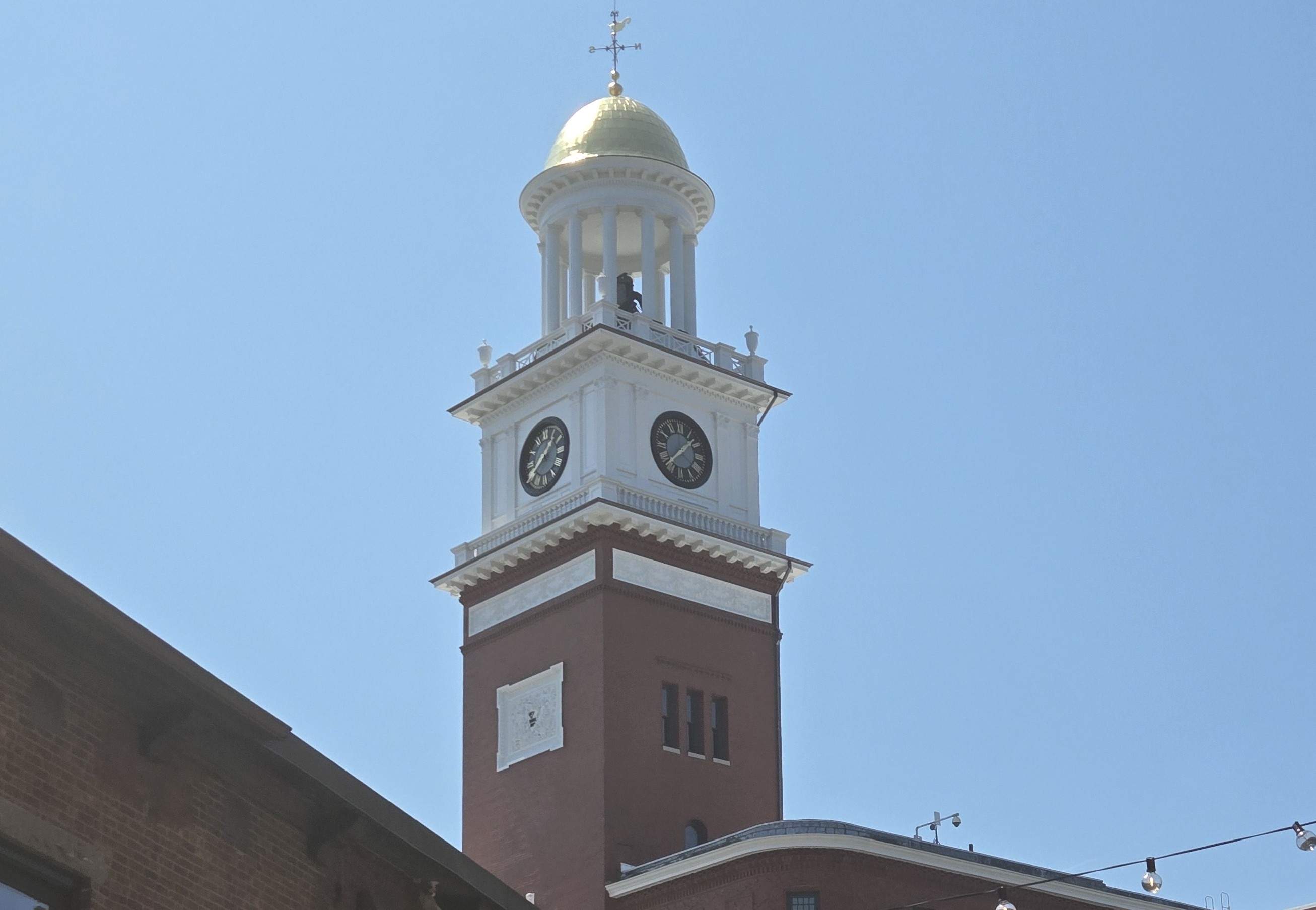


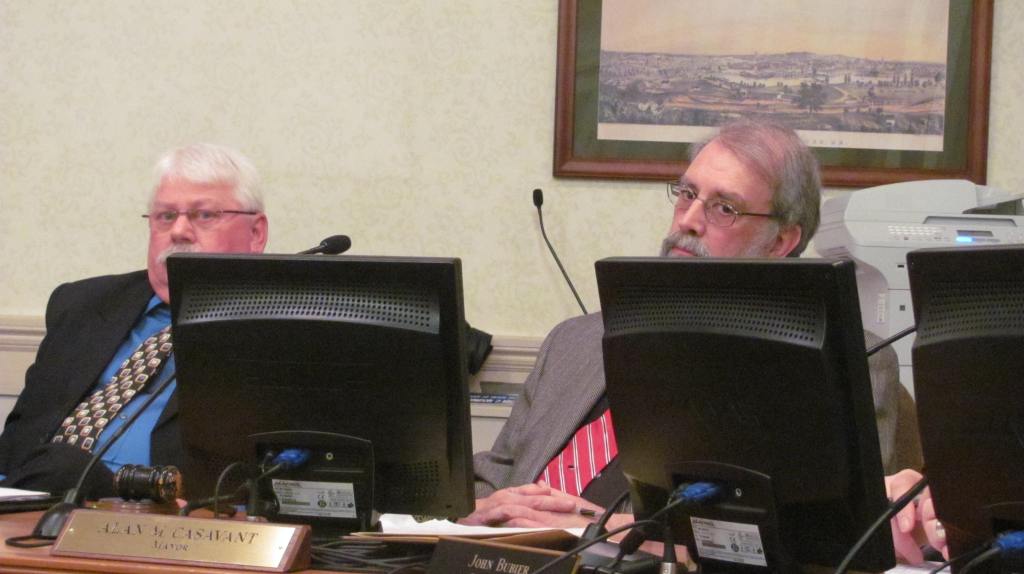












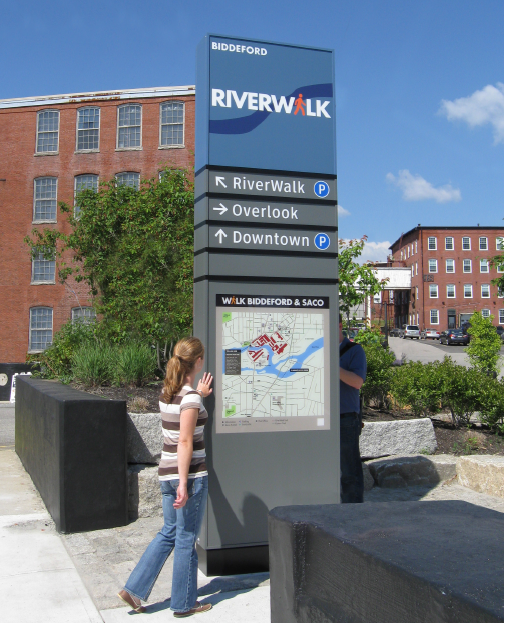
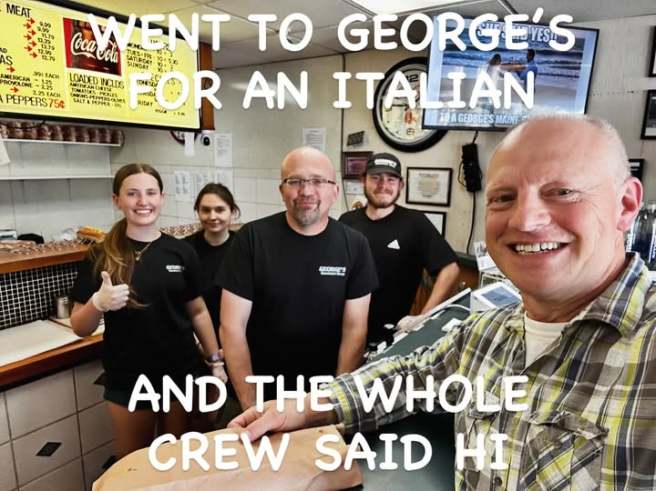




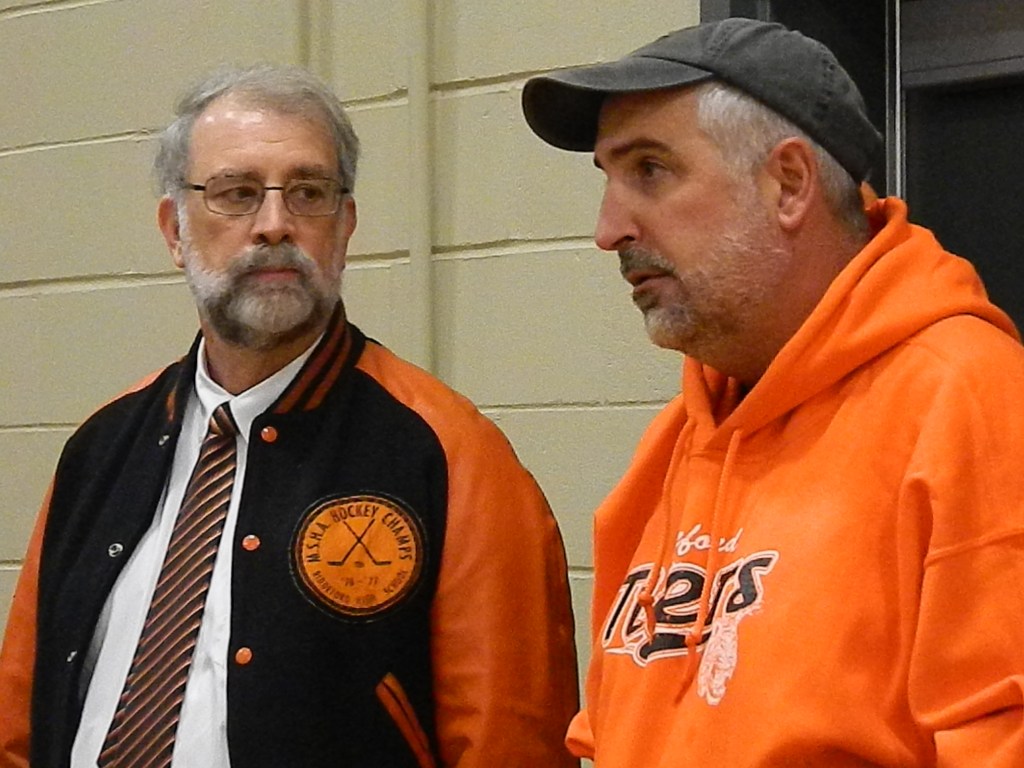


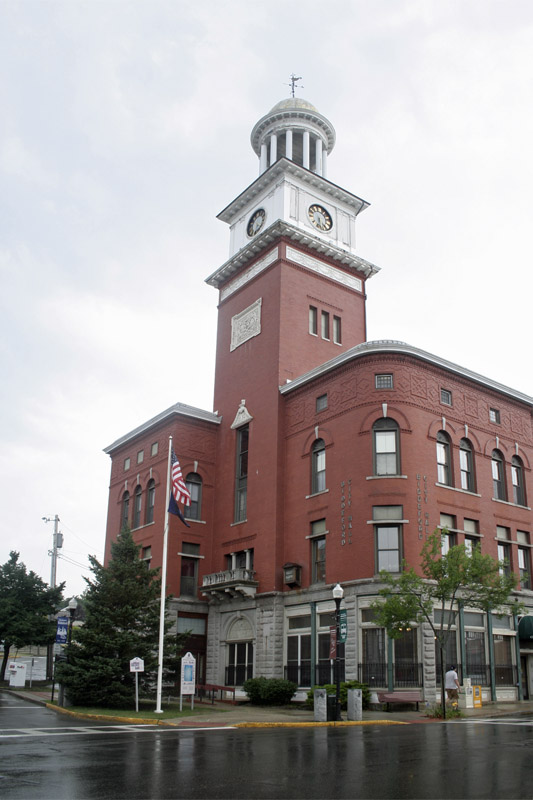


 BIDDEFORD GAZETTE