Brian Phinney — Biddeford’s former chief operating officer, who also served several months as acting city manager – is today retired “and enjoying it,” but wants to make sure that the current city council will be using correct information at their next meeting, especially regarding materials that contain his signature
Phinney, who retired in January, recently sent a letter to Mayor Liam LaFountain, City Manager Truc Dever and each member of the city council to provide detailed information about an item that the city council is scheduled to consider at tonight’s (March 3, 2026) meeting,
In order to “ensure accuracy,” Phinney also sent a copy of his letter to the Biddeford Gazette and copied Finance Director Gerry Matherne and City Clerk Robin Patterson on his correspondence to provide “verification” of his statement in case questions are raised at tonight’s meeting.
Former Acting City Manager Brian Phinney (center) listens as former Mayor Marty Grohman reads an item during a 2025 council meeting. City Clerk Robin Patterson is seated at Phinney’s right side. (Seaver photo)
Clarifying the city’s audit process
Specifically, Phinney wants to ensure that the council has historical details regarding the city’s FY 2024 audit related to the possible hiring of CBIZ, an accounting firm, that the council is considering for conducting the overdue audit.
The council will be asked whether to approve spending $103,000 to conduct the audit, including both the city and school department.
Phinney says the city is on the verge of a “duplicate” approval.
“The executive summary section states that this is a retroactive approval and discusses compliance with the purchasing policy rules as the basis for the retroactive approval,” Phinney wrote in his message to the council.
“[This] item was brought to the Finance Committee for discussion on Tuesday, September 2, 2025 in the Other Business section [of the meeting] and was subsequently approved by the full council, unanimously, that same evening.”
Phinney suggested that council members review the video transcript of the Finance Committee’s Sept 2, 2025 meeting, suggesting that current city officials to the video time stamp of 22 minutes, 58 seconds.
“At [that] meeting, Gerry Matherne is asked by Mayor LaFountain (at that time, council president) to provide an update,” Phinney said. “She [Matherne] did and the committee members asked questions.
“Funding was discussed as coming from the city’s audit account with an understanding that the expense would exceed the budgeted amount,” Phinney wrote. “This is the same account that is referenced in the March 3 [council] packet.”
Phinney points out that then Council President LaFountain made a motion to forward the item to city council for approval based on the dollar amount.
The motion passed unanimously (Lafountain, Beaupre, Lessard), Phinney noted, emphasizing that item was listed in the Finance Committee’s packet under Other Business as a discussion item.
The Finance Committee, Phinney said, voted on the item and advanced it to the council agenda.
Later that same evening (Sept. 2, 2025) – during the City Council meeting — Mayor Marty Grohman made an adjustment to the agenda, adding the item at the request of the Finance Committee, Phinney wrote, again suggesting that councilors watch the video transcript of that meeting, beginning at timestamp 7 minutes, 55 seconds.
“The item was discussed at timestamp 30 minutes, 28 seconds,” Phinney wrote, adding that the vote of the full council was unanimous. “Because this item was advanced by the Finance Committee the Order was created in series after the fact.
Phinney says the he signed the CBIZ agreement later that evening, but only after Finance Committee and City Council approval — and in full compliance with the purchasing rules in effect at that time.
“I am bringing this to your attention so that you do not waste time at the meeting duplicating previous approvals,” Phinney wrote. “And [I want] to ensure that the record accurately reflects the conditions supporting my signature.”
Following the city council’s decision to suddenly remove former City Manager James Bennett from office, Phinney served as Biddeford’s acting city manager from Feb. 20, 2025, until City Manager Truc Dever began her duties in August 2025.
Correction: In an earlier version of this story, we indicated that Phinney served as the city’s chief financial officer. That is incorrect. Phinney — in addition to briefly serving as acting city manager — was Biddeford’s chief operating officer. We apologize for the error.
__________________
ABOUT THE AUTHOR | Randy Seaver is the editor and founder of the Biddeford Gazette. He has been covering Biddeford news and politics for nearly three decades. He may be reached by email: randy@randyseaver.com
Never miss an update! Subscribe for free today!
THE BIDDEFORD GAZETTE | A Legacy of Trusted, Independent Journalism
I understand there is a moratorium on UNE initiated by the mayor and city council. UNE is an institution that is a huge plus for Biddeford. They hire professionals as professors, adjunct professors and administrators who live in our community. More importantly, UNE educates young people from Maine who aspire to better themselves and get good paying jobs.
In addition, UNE provides jobs for residents from Biddeford and surrounding areas to maintain the building, grounds and services. UNE is not a burden to residents of Biddeford.
The Portland Press Herald had an article (Biddeford Committee plans public hearing, Feb. 24, 2026) about the moratorium, which revealed the hidden agenda for this moratorium.
It appears the Hills Beach residents want to constrain development and growth of UNE. They are more interested in keeping people out and the coastline to themselves for nothing more than selfish reasons.
Biddeford has failed to provide public parking at every beach in Biddeford for all the residents. When I drive through Biddeford Pool these days, I noticed all the places I had parked to go scuba diving when I was in high school are now blocked or have no parking signs, essentially keeping city residents out.
The Biddeford City Council recently enacted a six-month moratorium on continued development at the University of New England’s Biddeford campus to allow city officials and a new subcommittee time to review and recommend potential changes
If you drive to Goose Rocks Beach, you are welcomed with a sign that says, “welcome to Goose Rocks Beach, no parking on any street any time”. When you drive through, you can see a beautiful beach near the road.
Most of the time there are very few people on the beach. But there is no public parking anywhere. Instead, you find a pseudo security guard following you to make sure you leave. He essentially chases you out.
My sister stopped there last year to show her daughter the beach and was rewarded very quickly with a parking ticket. I thought, here I am a resident of Biddeford and could not go to one of our beaches.
______________
Editor’s Note:Goose Rocks Beach is located in and controlled by the town of Kennebunkport, not Biddeford)
______________
Driving through, I noticed most of the license plates are from out of state. Is this where Hills Beach is going to not provide any public parking?
We see our coastline being bought up by many who are from out of state and moving to Maine to retire. If you read the Portland Press Herald article on February 18, Maine has become the oldest state, where people over 65 outnumber the people under 18 in Maine.
It is one thing to buy up the coastline, but another when these people do whatever they can to prevent Maine residents from accessing the beaches in order to keep the coastline to themselves. I have 22 nieces and nephews and only two still reside in Maine. The others all had to go out of state to find good paying professional jobs.
If you watch the video of the public hearing meeting just before the city council voted for the moratorium, you will see there was absolutely no interest of any city council member to listen to public inputs. They were simply going through the motions and had their minds made up.
It will be interesting to see if the public hearing meeting (March 2) will be a repeat of that or whether anyone on the city council will listen to public inputs and take them into account.
Council members should be representing all city residents, not just a handful in Hills Beach.
When one sees the committee made up of three city council members who live in Hills Beach and Patricia Boston, a Hills Beach resident heading up the committee, there is little faith they will do their job of representing all residents of Biddeford, but more for their own benefit.
I believe this committee is a serious conflict of interest and unethical. I hope the mayor and other city council members choose to do that right and just thing and abandon this moratorium.
ABOUT THE AUTHOR:Bernard Roy is a former Biddeford resident, and 1971 graduated of Biddeford High School. Today, he resides in Ada, Michigan
_________________
NOTE: The Biddeford Gazette strongly encourages reader feedback and public commentary regarding our coverage and issues directly related to the city of Biddeford. To submit a letter to the editor or guest column, please contact us at biddefordgazette@gmail.com
Never miss an update! Subscribe for free today!
THE BIDDEFORD GAZETTE | A Legacy of Trusted, Independent Journalism
Students at Biddeford Primary School wish the Gazette’s editor a happy birthday.
What a truly awesome way to celebrate your birthday!
I used to be a second grader in Biddeford — a long, long time ago, And that — along with the fact that today is also the birthday of Dr. Seuss, I thought it was fitting to read “Oh the Places You’ll Go’ as part of the Read Across America initiative.
Thanks, kids! You made me cry!
Randy Seaver reads “Oh the Places You’ll Go” to some second graders at Biddeford Primary School
______________
ABOUT THE AUTHOR | Randy Seaver is the editor and founder of the Biddeford Gazette. He has been covering Biddeford news and politics for nearly three decades. He may be reached by email: randy@randyseaver.com
Never miss an update! Subscribe for free today!
THE BIDDEFORD GAZETTE | A Legacy of Trusted, Independent Journalism
It’s been an interesting, busy and somewhat exhausting week here at the Biddeford Gazette.
In fact, I was moving in some many directions that I forgot to send out this newsletter on Saturday.
My former boss David Flood always used to say there’s a lot more to running a newspaper than just writing and publishing news stories. I never appreciated that fact until I decided to launch my own publication.
Spreadsheets, meeting with our attorney, tracking expenses, insurance, content distribution, reviewing analytics and coordinating other people’s work.
It’s a lot. And I’m not getting any younger. More about that in a moment.
Running a news organization involves a lot more than writing news,
Beyond all the tedious business stuff (all of which is well outside of my comfort zone), our news and editorial content is growing by leaps and bounds.
Consider this: In February 2025 – about three months after the Gazette was created – we published 14 items on our website, not including our weekly obituaries.
Flash forward one year, and we have seen an increase of more than 300 percent! During the month of February 2026, we published 49 items on the Gazette’s site.
The good news is that nearly 40 percent of that material was generated by the community, not by us.
These community contributions include several letters to the editor, guest columns and high-quality news and feature pieces, such as last week’s story from Tammy Wells about a new partnership between the Catholic Church and the York County Jail, allowing inmates to celebrate weekly Mass.
State Rep. Marc Malon and State Sen. Henry Ingweresen also publish their regular monthly columns in the Gazette. Former mayor Marty Grohman submitted his own op-ed last month in the Gazette.
We are honored that so many people in the community regard the Gazette as a reliable and trusted source for community news and information.
Getting older; Biddeford Primary School Fun
On a personal note, this is my last day of being 61, and tomorrow (March 2) will be the first birthday that I wanted to avoid.
Every Sunday morning for the past 14 months, I spend a few hours editing, formatting and publishing local obituary notifications.
With increasing frequency, I am posting the obituaries of people who were younger than me at the time of their passing.
Statistically speaking, the average life expectancy of an American man is 76 years.
That means I likely have only 14 years or fewer remaining — for the rest of my life.
I remember clearly where I was 14 years ago today. It goes by really fast. Really fast.
All the advice from my friends, family and the expert gurus suggests that you should live each day to its fullest and focus on the things that make you happy.
So, I am pleased to announce that I have once again been invited to read to students in Ms. Jillian Palladino’s second-grade class at Biddeford Primary School. It’s the one part of my upcoming birthday that I am actually excited about.
Coincidentally, March 2 is also the birthday of Theodore Geisel, more commonly known as Dr. Seuss . . . what a wonderful confluence of events!
Quick recap and preview
Ward Five City Councilor David Kurtz (Seaver photo)
My favorite story this week comes from my thoroughly enjoyable interview with City Councilor David Kurtz. I will be doing similar interviews with each member of the city council over the next few weeks. (Chatting with City Councilors)
Our goal is to peel back the perfunctory layers to give our readers some deeper context about the men and women running our city.
Our most popular story this week – by far –was our exclusive coverage and tour of the Adams Point Family Housing project that is scheduled to open in April. That story blew up our email and social media accounts, underscoring Biddeford’s pressing need for more affordable housing.
What’s coming up?
I will cap off my birthday celebration tomorrow (March 2) by attending the first public hearing for the Institutional Zone Review Committee, which will be making recommendations about ongoing development at the University of New England’s Biddeford campus.
That meeting begins at 6 p.m. in the Council Chamber at Biddeford City Hall.
Hope to see you there! Have a great week!
_________________
ABOUT THE AUTHOR: Randy Seaver is the editor and founder of the Biddeford Gazette. He has been covering Biddeford news and politics for nearly three decades. He may be reached by email: randy@randyseaver.com
Never miss an update! Subscribe for free today!
THE BIDDEFORD GAZETTE | A Legacy of Trusted, Independent Journalism
On Monday (March 2) nomination papers become available for one of the most consequential civic processes Biddeford has undertaken in decades: — the election of a Charter Revision Commission.
In November, voters approved Question Three (The Establishment of a Charter Review Commission) “for the purpose of revising the municipal charter.”
The issue received little coverage at the time. It deserves far more attention now.
Don’t be misled by the word “revising.” In Maine, a charter revision can mean anything from targeted amendments to a ground-up rewrite. Those elected to this Commission will determine the scope of the work, and voters will ultimately have the final say at a future referendum. The direction depends entirely on who chooses to serve and who chooses to participate.
So, what exactly is a charter?
The National Civic League, in its Guide for Charter Commissions, describes a local charter commission as “the closest thing we have to being part of a constitutional convention.” In practical terms, the charter is Biddeford’s governing framework. It determines how power is structured, how elections function, how authority is divided, and how accountability is maintained. It is the rulebook beneath the ordinances and policies we debate each year.
Here in Maine, we operate under the principle of ‘home rule,’ meaning municipalities retain all powers not in conflict with state or federal law. A charter defines how we exercise those powers. It is not symbolic. It shapes how the city works.
Biddeford last adopted a new charter in 2006, followed by amendments in 2012 and 2016. Past revisions have tended to be limited in scope and relatively quiet affairs, often drawing little public attention. That may be comfortable, but it is not ideal for something that governs the structure of local power.
This time could be different
November’s elections brought new energy to City Hall: a 28-year-old mayor, new city councilors, and a new city manager. Regardless of whether one supported those changes, it is difficult to argue that Biddeford is not at an inflection point.
Moments of transition are precisely when foundational questions deserve sunlight.
If we are serious about delivering on promises, including strengthening transparency, accountability or long-term vision — the charter is where those commitments can be formalized.
Each of the city’s seven voting wards will elect one representative to the nine-member commission, with two additional members appointed by the mayor.
Nomination papers are available from the City Clerk beginning March 2. Candidates must collect the required signatures and submit papers before the April deadline, with the election scheduled for June 9.
This is not a ceremonial body
It will decide what questions are asked and what proposals come before voters
That work should not happen in obscurity. It should involve broad conversation, thoughtful disagreement, and genuine civic engagement. Schools, civic groups, and residents alike can treat this as an opportunity to engage in the fundamentals of local self-government.
The outcome of this commission will reflect the level of participation it receives. If you believe Biddeford’s governing document should reflect the city we are becoming, not just the city we were, consider stepping forward or, at minimum, paying close attention.
Processes like this are rare. What we build, revise, or reaffirm now may guide the city for decades.
___________________
ABOUT THE AUTHOR: Sam Pecor is a Biddeford resident. Although he currently serves on the Biddeford Gazette’s Advisory Board, his views do not necessarily reflect those of other advisory board members, the Biddeford Gazette’s publisher, staff, volunteers and supporters.
We welcome submitted commentary from our readers.For more information, please CONTACT US
On Monday, March 2 at 6 p.m., the Institutional Zone Review Committee will hold its first public hearing at City Hall. The meeting begins the public input phase of a broader review of how Biddeford regulates institutional development.
For many residents, the term “Institutional Zone” may not be familiar. In practical terms, it is the zoning framework that governs development at the University of New England’s Biddeford campus.
UNE’s campus sits largely within an area that, under typical zoning rules, is generally limited to single-family houses.
In 2001, the city created a dedicated zoning district to allow the university to build and grow in ways that no other entity could within that setting. The ordinance established a structured process requiring a comprehensive Institutional Master Plan, a document outlining anticipated growth over five to ten years and analyzing impacts on traffic, parking, infrastructure, municipal services, and campus design standards.
Biddeford Mayor Liam LaFountain, City of Biddeford photo
The University of New England has long been an important part of Biddeford’s civic and economic fabric. It is one of the city’s largest employers and contributes to the local economy, research activity and cultural life.
Students, faculty, and staff are neighbors and active participants in Biddeford. The relationship between Biddeford and UNE has evolved over time, shaped by growth on both sides.
The City’s zoning has long provided a clear pathway for institutional growth. However, the Institutional Zone ordinance has not been comprehensively updated in nearly 25 years. As both the university and the city have evolved, it is reasonable to review whether that framework remains aligned with current conditions and future expectations.
In recent years, several development projects within the Institutional Zone have generated strong reactions. Often, disagreements have centered less on whether development should occur and more on how clearly the ordinance defines what is permitted, how impacts are evaluated, and how decisions are made. When expectations among the university, the city, and residents are not fully aligned, even well-intended projects can become contentious.
That context, in part, led the city council to establish the Institutional Zone Review Committee at the beginning of this council term.
The committee serves in an advisory capacity. It does not approve projects, determine property sales, or make final legislative decisions. Its responsibility is to review the ordinance, gather public input, and recommend whether revisions are warranted. Any proposed changes will proceed through the standard public legislative process before the Planning Board and City Council.
Formed through the regular public appointment process, the committee operates in open session under Maine’s Freedom of Access laws. All members are Biddeford residents. The membership includes two city councilors, the president of the University of New England, the president of the Hills Beach Neighborhood Association, a facilities manager who previously worked for UNE and is a UNE graduate, and a local real estate professional. Together, they reflect a range of civic, professional, and neighborhood perspectives within the city.
Meetings are open to the public, materials are posted online, and the process is structured to ensure transparency, accountability, and broad participation before any ordinance changes are considered.
________________
The process is structured to ensure transparency, accountability,
and broad participation before any ordinance changes are considered.
As part of this review, the City Council adopted a temporary six-month moratorium on new institutional development and university uses. The pause is not directed at any single proposal and does not prohibit the purchase or sale of property within the Institutional Zone, nor does it prevent any property owner, including the University of New England, from entering into a real estate transaction.
It applies only to new development activity or changes of use during the review period, allowing the city to evaluate and, if necessary, update the ordinance before additional projects proceed under standards that may soon change.
Zoning ordinances shape municipalities for decades, influencing infrastructure investments, traffic patterns, public safety demands and neighborhood character.
Recent institutional projects have underscored the need for clearer expectations and a more consistent and transparent framework. As public interest has grown, so too has the expectation that development decisions be predictable and participatory. Reviewing the ordinance openly and deliberately is a responsible step toward that goal.
Public comment from Biddeford residents on March 2 and in the months ahead will help inform this work and strengthen the final recommendations. The objective is a regulatory framework that provides clarity, consistency, and confidence as institutional growth continues in Biddeford.
_________________
ABOUT THE AUTHOR: Liam LaFountain is serving his first term as Mayor of Biddeford and previously served two terms on the Biddeford City Council. He welcomes questions, comments, and ideas and can be contacted directly at liam.lafountain@biddefordmaine.org. The views and opinions herein are solely those of the author.
Never miss another update! Subscribe for free today!
THE BIDDEFORD GAZETTE | A Legacy of Trusted, Independent Journalism
City is on the right track in its thoughtful, measured review of UNE development plans
I read the recent letter regarding the University of New England review committee with concern, but also with a sense that the issue deserves a more balanced perspective.
It is important to remember that residency alone does not disqualify someone from serving fairly or objectively. Hills Beach residents are citizens of Biddeford, just as much as anyone living downtown, in the mills district, or elsewhere in the city. Suggesting that they are inherently incapable of acting in the broader public interest risks dividing our community rather than strengthening it.
The committee’s role is to review plans and gather input — including through a public hearing — not to act as “plaintiffs” or to obstruct progress. The public hearing itself is evidence of a transparent process that invites participation from the entire community.
The University of New England is indeed an asset to Biddeford. Its educational, economic, and cultural contributions are significant. At the same time, thoughtful review of development proposals is not the same as impeding progress. Responsible growth benefits from careful consideration of environmental impact, neighborhood character, traffic, infrastructure, and long-term planning. That is not obstruction — that is governance.
________________
“Thoughtful review of development proposals
is not the same as impeding progress.”
________________
If residents are concerned about representation, the solution is engagement. Attend the hearing. Submit comments. Volunteer for boards and committees. Run for office. Democracy functions best when more voices participate — not when we question the legitimacy of neighbors simply because of where they live.
Biddeford is stronger when we work together — university community, beach residents, mill district entrepreneurs, and long-time families alike. Let’s focus on collaboration rather than division.
Mark Poirier,Biddeford
NOTE: The Biddeford Gazette strongly encourages reader feedback and public commentary regarding our coverage and issues directly related to the city of Biddeford. To submit a letter to the editor or guest column, please contact us at biddefordgazette@gmail.com
Never miss an update! Subscribe for free today!
THE BIDDEFORD GAZETTE | A Legacy of Trusted, Independent Journalism
David Kurtz takes in a deep breath – pauses – and looks away, toward the coffee shop’s window before answering one of our questions during an informal and candid interview.
Kurtz, 39, is one of the three new Biddeford city councilors who were each first elected to office in November.
Despite the relaxed setting on a Tuesday afternoon at the Time & Tides coffee shop on Main Street, Kurtz approaches our questions with the same style of deliberative and thoughtful responses that are becoming his public trademark.
He is a serious man but is also equally funny and somewhat self-deprecating.
Biddeford City Councilor David Kurtz (Seaver photo)
Our hour-long conversation is free-wheeling. At times the mood is light and jovial. But Kurtz also doesn’t pull any punches when talking about growing up as “a geek” with divorced parents in southern Maine.
And he is as serious as a heart attack when discussing some of the issues now facing the city of Biddeford.
“There is absolutely no question,” he said. “We need to do better, but I also think we’re on the right track.”
Kurtz’s childhood was much less than anything that could be described as idyllic. His father struggled with a drug addiction. His mother did her best to raise her son alone on a meager income.
Despite those somewhat gritty circumstances, Kurtz heaped praise on both of his parents.
“They both loved and supported me unconditionally,” he recalled. “They were doing the best that they could do. Yes, my father had a substance use disorder, but he read to me every night when I visited him on weekends or vacation days.”
Here are three things everyone should know about David Kurtz.
First, he wore open-toed sandals to the interview, despite piles of frozen snow on the sidewalks and mid-February freezing temperatures.
A few hours later, he was dressed in a jacket and necktie for a meeting with his constituents at City Hall to discuss priorities for the city’s recreational assets. No sandals. Polished shoes.
Secondly, Kurtz worked in a liquor store when he was just 17 years old. “I looked more like 39 back then, than I do today,” he laughed.
Finally, Kurtz is often accompanied by his mother, Cynthia, during public events, including last week’s ward meeting and while enjoying the city’s annual downtown Winterfest celebration.
Sometimes people need to be willing to grab a shovel and help pick up some shit.”
In his very first bid for public office, Kurtz was unopposed in his quest for the council’s Ward Five seat.
Kurtz received 553 votes – a little less than 73 percent of the total ballots cast in that council race. According to the city clerk’s office, 211 voters in Ward Five left that particular ballot choice blank.
Ward Five – previously represented by Neva Lance, Julian Schlaver, Victoria Foley and Amy Clearwater – includes the city’s downtown area and a sprawling collection of repurposed former mill buildings.
While Biddeford is, in fact, Maine’s youngest city (35.6 median age), Ward Five is also arguably the most diverse, youngest and politically progressive of Biddeford’s seven voting wards.
Kurtz is a corporate lawyer. He graduated from the University of Southern Maine’s Law School in 2016.
Today, Kurtz is employed as a corporate lawyer for Robert S. Gitmeid & Associates, a New York-based firm with offices in all 50 states. Kurtz runs the firm’s Maine and Vermont offices.
Kurtz “shares a bed and custody of two cats” with his girlfriend, Dani, a veterinarian. The couple lives in a newly constructed residential building on Upper Falls Road (formerly Gooch Street).
Meet the new guy
Kurtz takes a sip from his coffee as we begin the Q & A portion of our meeting.
“Okay, I’m ready,” he laughed. “Let me have it.”
You double-majored in economics and bio chemistry at Hampshire College. Bio chemistry?
“All my friends were pre-med. I couldn’t keep up with their conversations, so I decided to try a new tact.” (Laughs)
How and why did you get involved in city politics?
“I served on the Recycling & Waste Management Commission. I found it fascinating. I got to work closely with [Public Works Director] Jeff Demers. Man, that guy knows a lot.”
“On that committee, I worked alongside [city councilors] Brad Cote, Jake Pierson and Abigail Woods and with Liam [LaFountain] before he became mayor.”
You’re not a Biddeford native.
“No. Almost, but not quite.” (Laughs) “I wasn’t born here, and I’m a bit self-conscious about that. I am from Maine, if that helps. (Laughs). My dad lived in Biddeford. My mom lived in Kennebunk. I commuted between the two communities during my childhood.”
You say you grew up in a financially challenged household, yet you ended up at Waynflete, a prestigious private high school. How did that happen? Good grades?
“Exactly. I was as shocked as anyone that I got in.”
Serving on the city council is often a thankless and tedious endeavor. Did you think it through before taking out nomination papers?
“Oh sure. I talked with [former Mayor] Marty Grohman and Norm [Belanger] and Liam – the three guys running for mayor. They didn’t try to talk me out of it.”
What motivated you to run?
“I saw where the city was heading, and I had my own concerns, I’m of the belief that sometimes people need to be willing to grab a shovel and help pick up some shit.”
What are your current committee assignments?
“I serve on the Policy Committee, the Citizens Advisory Committee and the Diversity, Equity and Inclusion Committee. I also serve as the city council liaison on both the Biddeford Housing Authority and the Heart of Biddeford.”
You’re keeping busy.
“Pretty much. I also have a pretty time-consuming job. Dani and I are planning a vacation in 2028.” (Laughs)
You seem to be a good fit for this particular ward.
“Well. Thank you for that, kind sir. I feel at home in this ward. Many of my constituents are just like me – – relatively new arrivals in the city. I want to make sure their voices are heard.”
Future political plans?
“Nope. This is the end of the line for me.”
Your father read to you nightly. What books?
“Rudyard Kipling, Robert Heinlen, Issac Asimov – all the good Jewish writers.” (Laughs)
Hobbies? Background?
“I’m a big fan of long-distance hiking. I was actually a ‘ridge runner’ with the Appalachian Mountain Club.”
Is gentrification a concern for Biddeford?
“I think so, and I’m part of the issue. Higher-income, newer professional resident. We have to work through it without denying the challenges.”
You describe yourself as a “political leftie.” What’s your mission statement as a city councilor?
“I want the lowest taxes possible without cutting essential services.”
Note:The Biddeford Gazette will be conducting similar interviews with the other eight members of the city council over the next few weeks.
____________________
ABOUT THE AUTHOR | Randy Seaver is the editor and founder of the Biddeford Gazette. He has been covering Biddeford news and politics for nearly three decades. He may be reached by email: randy@randyseaver.com
Never miss an update! Subscribe for free today!
THE BIDDEFORD GAZETTE | A Legacy of Trusted, Independent Journalism
Guy Gagnon has been excited about this particular project for several years.
The project is Adams Point, a 39-unit affordable family housing project on the upper end of Adams Street in Biddeford.
Following more than three years of planning and construction, Adams Point is expected to finally open in April.
The four-story building will feature one, two, three and even four-bedroom apartments — all with competitive rental rates below current, average rental prices in Biddeford.
The Adams Point family housing project is expected to open in April (Seaver photo)
“This is huge for Biddeford,” Gagnon explains. “Our population is the youngest in Maine, but we don’t have a lot of housing opportunities for young families. True family housing hasn’t been built in Biddeford for many years.”
A native of Biddeford, Gagnon has served as executive director of the Biddeford Housing Authority (BHA) since 2010.
The BHA is a non-profit organization with a mission “to provide lower income families, including the elderly, disabled and unhoused, the opportunity to live in decent, safe and sanitary housing within the community.”
According to Gagnon, the rental rates at Adams Point will be “extremely competitive,” and each unit will include all utilities and free internet service.
For example, a two-bedroom unit will range between $1,200 and $1,500 per month. A three-bedroom unit will rent between $1,400 and $1,600 per month.
One- bedroom apartments will start at $1,000 per month.
“When you consider the fact that all utilities – heat, water and electricity — are included, it becomes really affordable,” Gagnon said.
Gagnon points out that providing affordable housing is not just a Biddeford problem.
Since 2018, the rental cost burden across the state has increased sharply for most households, especially for those with household incomes between $35,000 and $75,000 in total household income.
A Community Comes Together
Guy Gagnon, executive director of Biddeford’s Housing Authority, provided the Gazette with a preview tour of the Adams Point family housing project
The Adams Point project, Gagnon said, is the result of collaboration with private banks and contractors willing to offer competitive financing and rates. The project is also supported by the Maine Housing Authority and received some funding from the city of Biddeford’s Affordable Housing Trust Fund.
The city’s Affordable Housing Trust Fund is supported from required donations by private real estate developers.
When Gagnon requested a financial commitment from the city, he told the council that the BHA would refund any monies that were not used or left over from the project’s construction.
“I’m happy to report that it looks like we came in under budget on this project,” Gagnon said.
Residents at Adams Point will not only enjoy the convenience of included utility services, they will also have access to free internet services being provided by a grant from GoNetSpeed.
“This is a really exciting project for Biddeford,” Gagnon said.
Editor’s Note: For more information about availability and income guidelines, please contact theBiddeford Housing Authority.
______________________
ABOUT THE AUTHOR: Randy Seaver is the editor and founder of the Biddeford Gazette. He has been covering Biddeford news and politics for nearly three decades. He may be reached by email: randy@randyseaver.com
Never miss an update! Subscribe to the Gazette for free today!
THE BIDDEFORD GAZETTE | A Legacy of Trusted, Independent Journalism
Political newcomer John Salamone, a Republican who recently moved to Hollis from Portland, announced on social media Monday that he is withdrawing from the Dist. 32 State Senate race.
In a brief post on his personal Facebook page, Salamone wrote: “After a great deal of reflection and prayer, I’ve decided to withdraw my campaign for state senate.”
John Salamone of Hollis
Salamone was the second candidate to announce a challenge to incumbent Henry Ingwersen, a Democrat who is hoping for a third term. Jason Litalien, a former Biddeford mayoral candidate, remains in the race as an independent, unenrolled candidate.
“Over the past several months, I’ve been humbled by the encouragement and generosity of so many people who believe in our shared vision for Maine,” Salamone wrote. “Your support, whether through kind words, time, or financial contributions, has meant more to me than I can express.”
Salamone said he and his wife recently welcomed a newborn daughter into the world.
“As any parent knows, this is a profound and life-altering moment,” Salamone said. “The responsibility of fatherhood is immediate, personal, and sacred. At this time, my focus needs to be fully on my family.”
Salamone said he cares deeply about the direction of state government. His decision to withdraw, he said, was not easy.
“I remain committed to the principles we discussed, and I look forward to continuing to engage in our community as my capacity allows,” he added.
_________________
ABOUT THE AUTHOR:Randy Seaver is the editor and founder of the Biddeford Gazette. He has been covering Biddeford news and politics for nearly three decades. He may be reached by email: randy@randyseaver.com
Never miss an update! Subscribe for free today!
THE BIDDEFORD GAZETTE |A Legacy of Trusted, Independent Journalism
Given recent complaints about the city of Biddeford’s sidewalk snow removal policies, Jeff Demers, the city’s public works director, recently sent the Gazette a detailed explanation regarding his department’s priorities when it comes to clearing snow from city sidewalk policies.
Jeff Demers, Biddeford Public Works Department director (Seaver photo)
Demers said resources are stretched thin, and if residents want changes, they should contact the city council and request more funding and manpower.
Here is a recent memo from Demers regarding sidewalk snow clearing:
“Sidewalks are a major concern for many people throughout our community year after year,” Demers wrote.
“Public Works can never do them all. As of today, we do an average of 34 miles of sidewalks taking up around 30 to 100 hours after any given storm.
“Not to mention the ongoing cleanup. More equipment and personnel are needed to add on more sidewalks at this time.
“If the City Manager and city council want to re-prioritize the way we do them today more discussion is warranted, in my opinion,” Demers said.
Demers said sidewalks are done by the following priorities.
Outside the Good Shepherd Food Bank in Auburn, the morning felt unmistakably like Maine. The sun was bright, the air was cold, the wind was sharp, and snow clung to the edges of the parking lot. It was the kind of day that makes you hurry from your car to the door.
Inside, the world felt entirely different.
The warehouse moved with purpose. Volunteers sorted boxes beneath lights that cast winter light across the concrete floor. Pallets of apples, pasta, cereal, and canned vegetables rose in every direction, bound for all corners of the state.
“This is Good Shepherd Food Bank,” says President Heather Paquette. “We are the Feeding America Food Bank for the state of Maine.”
She gestures to the vast space around her.
“You are in the Auburn facility, which is about 55,000 square feet. We also have a 48,000 square foot facility in Hampden, so in total we operate about 100,000 square feet of distribution space that services 33,000 square miles.”
On a cold Maine morning, the warmth of this place, its people, and its purpose feels even larger.
Good Shepherd Food Bank of Maine in Auburn, Maine.
One statewide food bank with rising need
Good Shepherd Food Bank is Maine’s only Feeding America affiliate, which is unusual.
“Every state in the nation has at least one Feeding America food bank,” Heather says. “There is not one food secure state in the United States. Maine is one of only a handful of states that has one Feeding America food bank that serves the entire state. We see that as an incredible responsibility and privilege.”
The numbers weigh heavily.
“When I took this job, Maine was at 11% percent food insecurity. We are currently at 13.8% percent and growing,” she says. “191,000 people in Maine are experiencing food insecurity. Within that number are 55,000 children.”
Good Shepherd receives USDA food, donated food from retailers, purchased food, and fresh produce from Maine farms through the Mainers Feeding Mainers program.
The food security ecosystem
Good Shepherd Food Bank Ecosystem
Early in her role, Heather began describing their work as a food security ecosystem.
“We provide food and support to more than 600 partners, who then provide direct service to the 191,000 neighbors experiencing food insecurity. That is the straight up and down part of our model,” she explains.
“But everything surrounding that line is just as important. Lawmakers, the business community, 22,000 donors, 1200 volunteers, other nonprofits, and our retail partners all affect the system.”
Retail pickup is especially significant. “Half of our distributed food comes directly from grocery retailers,” she says. “There are 215 pantries that pick up from 150 retailers, and that schedule operates every day of the year.”
The system works, but it is fragile. “When one part shifts, we must rely more heavily on the other parts,” she says.
This year brought a major shift.
A sudden crisis in SNAP
On October 21 (2026), Good Shepherd Food Bank received word that if a federal government shutdown continued, SNAP benefits scheduled for November 10th would not be funded.
“It was quite a crisis,” Heather says. “People who were food secure because they received SNAP were suddenly at risk of losing the ability to buy food.”
Agencies across the state felt the impact almost immediately.
“We heard from partners that lines were thirty to fifty percent longer overnight,” she says. “There were dozens of first time enrollments at food pantries. Our partners were looking to us to do more, and we needed to rise to that challenge.”
Meanwhile, federal food and federal funding had already been reduced.
“We receive less so we do less is not an acceptable answer,” she says. “We have agencies and people counting on us.”
The team increased its pace instantly.
When Maine stepped forward
Media attention intensified. Heather completed more than thirty interviews in a short period. “The media is very good to us,” she says. “They help us tell our story so people can understand what is happening and stand with us.”
Then came a call she will never forget.
“It was a first time donor who gave two hundred thousand dollars and wished to remain anonymous,” Heather recalls. “She said she could not sit back and do nothing.”
“After the governor’s contribution and the foundation gift, we distributed the funds to our 600 partner agencies,” she says. “Everyone received $1000 dollars. Biddeford Food Pantry, for example, spends about $190,000 dollars a year on purchased products. They were grateful, but the need is much larger.”
Still, every gift mattered. And then one gift changed everything.
The Onions and the gift of sunlight
Years ago, Susan and Fritz Onion, yes – that’s their last name, funded solar panels on the Auburn and Hampden facilities, saving Good Shepherd Food Bank about $200,000 thousand dollars annually. The plan was for the food bank to eventually purchase the panels from the Onions.
“We had the money set aside, but then we lost $1.2M dollars in federal funding and half of our food distribution. I was not comfortable writing that check,” Heather says.
During a meeting on October 22nd, the Onions surprised her. “Fritz said, ‘We have decided to donate the solar panels to the food bank,’ which is essentially an $800,000 dollar gift, plus $200,000 dollars in annual savings,” she says. “I was moved to tears. None of us knew that was coming.”
The panels now generate about 65% of the energy used in both facilities. “It was a beautiful sign of partnership and an enormous financial relief,” she says.
Small donations add up
During the SNAP crisis, donations surged.
“We saw about 900 new donors between late October and mid November,” she says. “We might normally see a couple hundred during that period. People really stepped up.”
Many gifts were small.
“We operate with 22,000 donors. Half give less than one thousand dollars,” Heather says. “We rely on generous Mainers who give what they can.”
Your $5 or $100 donation is not small. It truly matters. It is part of the lifeblood of the ecosystem.
A Biddeford upbringing and a path she never expected
Heather’s work ethic traces back to her childhood.
“I am a proud Biddeford Tiger alum,” she says. “Biddeford is a mill town at heart. There is a sense of pride and work ethic that comes from that.”
After graduating from the University of Southern Maine, she spent 24 years at Hannaford and its parent company, serving in 14 roles across three states.
One of her favorite roles brought her back home.
“I got to be the assistant store manager in the Biddeford store,” she says. “I loved seeing the people I grew up with and experiencing that incredible work ethic again.”
She tells the story of a 70-year-old seafood department employee whose daughter worked at corporate.
“He was very mad at me one day because he told me I could not force him to take a break because he had too much work to do,” she says, laughing. “This is an hourly employee and breaks are paid. I had to tell him that I was going to get in trouble if he didn’t take his break.”
Later, while working for Hannaford, a blind date with “some guy from Portland” turned out to be even more familiar.
“Four sentences into a blind date, it turned out he was from Biddeford and had graduated five years prior to me,” she says about her husband Brian. They have two children, Ben and Audrey.
‘This was always meant to be’
Heather never expected to leave Hannaford – until a restructuring eliminated her team. “I had an unfortunate event that many people have in their careers, where my team was part of a reduction in force and the entire team that I was leading was cut,” she says.
Around the same time, Good Shepherd Food Bank’s previous president, Kristen Miale, announced she was stepping down.
“The same day I learned about the significant reduction in force was the same day that Kristen announced to her team that she was departing,” Heather says. “And I truly believe that it was meant to be.
This was always meant to be.”
She knows herself well enough to know she might not have applied otherwise. “I think I would have seen that announcement in the paper and been like, drooling, like I would love to have that job, but I’m pretty sure I would not have been brave enough to actually put myself in a job search for it,” she says. “So I think the universe stepped in, and I’m grateful every day.”
The search took nine months and spanned the country.
“It was a nationwide search. There were several hundred candidates,” she says. “I’m really grateful to the selection committee.”
In the truck and at the pantry
Heather immerses herself in every part of the work.
She spent one memorable day riding with Sandy Swett of the Harrison Food Bank. “It was a twelve-hour day of lifting banana boxes full of frozen meat,” she says. “It was the hardest physical work I have ever done. Sandy is 71 and never slowed down.” At the end of the day, Sandy went to a bar to watch her husband play guitar and catered a wedding the next day. Heather, meanwhile? “I didn’t move off my couch,” she says. “My friends were texting me to go meet them. It was 8:00pm. I had my pajamas on. I just got my butt totally kicked. It was so humbling.”
________________
At a pantry during the SNAP crisis, she met a woman named Jasmine. “She arrived with a binder, ready to justify why she should be allowed to get food,” Heather says. “The pantry director told her, ‘You do not need the binder. Please fill your bag. That is why we are here.’”
__________________
Another man refused a ten dollar gift card to Walmart. “He said, ‘I have everything I need. I have this place where I can get food,’” she recalls. “It was incredibly moving.”
Her first pantry visit revealed a heartbreaking truth.
“I watched one hundred people line up for seventy spots,” she says. “Those who received boxes shared items with those who did not.”
“The work is tough, it’s emotionally tough,” Heather says. “I often shake my head thinking about the things that stressed me out in corporate America that very much do not matter in the real world. “
“That is when it hit me,” she says quietly. “This work is gratitude and service.”
Looking ahead
Good Shepherd had finalized a strategic plan before the SNAP crisis. It focuses on improving food distribution while addressing root causes of hunger and reducing stigma.
“My leadership purpose is always ‘press forward and always give back,’” Heather says.
The crisis made the mission more urgent, but also more visible.
“We have had a powerful spotlight these past months,” she says. “People who never knew our story now know it. That gives us hope.”
What Mainers can do — starting today
When asked what people can do to help, Heather doesn’t hesitate.
“The number one thing people can do for us is be our ally,” she says. “Be able to tell our story. This is who Good Shepherd Food Bank is. There’s 600 partners throughout the state and a 13.8% and growing population with food insecurity. These are people who you see at stores. These are people you go to church with. These are people whose children go to school with your children.”
“If you think you don’t know somebody who’s experiencing food insecurity, you do,” she adds. “So be an ally to that.”
Part of being an ally is practical:
“Go on to www.feedingmaine.org. There’s a button where you can donate. Every dollar you give the food bank, we can do really great things with,” she says.
“There’s also a button that says ‘Find Food,’ and you can type in ‘04005’, for example, and you’ll see Youth Full Maine, which is in the Biddeford High School parking lot, the Biddeford Food Pantry, and a number of different food pantries around the area. Reach out directly to ask them, what specifically do you need?”
“Some need volunteers, others are being overwhelmed with volunteers right now, which is a good problem to have. So they need food, and everyone needs money. Ask the question about what people need and give generously.”
In a state where one food bank shoulders the responsibility for all 30,000 square miles, Heather brings Biddeford grit, Hannaford know-how, and a simple conviction that “we receive less so we do less is not an acceptable answer.”
Thousands of Mainers – from anonymous donors quietly wiring $200,000 to neighbors giving $5 online – and everyting in between – are standing with her.
And somewhere in Auburn and Hampden, under solar panels given by a family named Onion, forklifts are moving, volunteers are packing, and boxes are headed out to 600 partners, so that another neighbor, on another hard day, can hear four simple words:
ABOUT THE AUTHOR: Cy Cyr www.cycyr.com) grew up in Biddeford and returned after 25 years away. He started BrickTides.com as a way to reconnect with the community that shaped him, using photography and longform storytelling to document the people shaping southern Maine today.
BRICK+TIDES is a weekly digital magazine based in York County, Maine. We share positive and inspiring stories about local businesses, people, and places that make Southern Maine special. If you’d like to read our free weekly email, we’d love for you to subscribe!
When journalists compete, readers win | Good news for people in Biddeford
Whether you’re buying a new car or just picking up the week’s groceries, you are always better off when you have choices and competition in the marketplace.
It’s no different when it comes to the highly competitive world of journalism. Having choices about where you get your local news ensures that you are well-informed and up to date about what is happening in your community.
Most journalists I know – me included – would rather have “exclusive rights” when it comes to local news reporting. We’re doing just fine. There’s no need for competition. Thank you very much.
But if there is only one dominant media outlet in any market – large or small –news consumers suffer.
Competition keeps journalists on their toes, hungry to find new and more detailed information. Competition also serves the public as an appropriate ‘check and balance’ on each reporter and every media outlet.
Bias and inaccuracy are exposed when multiple journalists cover the same beat.
The idea – and the importance – of “getting the scoop” is a well-known mantra, that even those outside the realm of the so-called Fourth Estate understand and appreciate.
But getting the scoop should be much more focused on getting the story right rather than getting the story first.
So, how does all of this impact local news consumers in Biddeford?
What’s the buzz? Media competition in Biddeford
The local news landscape in the Biddeford area has changed dramatically over the last 30 years.
I have written about this subject ad-nauseam on my personal blog, Lessons in Mediocrity.
I grew up here, and when I returned to Biddeford in the mid-1990s, there were three newspapers regularly covering City Hall, local politics, news and events.
The Portland Press Herald – Maine’s largest daily newspaper – had a fully-staffed regional bureau on Main Street. The legendary and award-winning Journal Tribune – an afternoon daily – was then “the paper of record.”
At the same time, the weekly Biddeford-Saco-OOB Courier – a locally-owned publication — was keeping the big boys on their toes, filling the gaps and providing (during my tenure as editor) a somewhat manic approach to covering City Hall.
What happened?
For all intents and purposes, it was like a slow-acting bomb was triggered. There were a lot of things at play, most notably corporate restructuring of local media and big changes in how consumers accessed their news and information.
Welcome to the internet and social media.
Suddenly, everyone was a reporter. The Fourth Estate was being overrun by a mob of discontented citizens who no longer trusted the media or valued its self-described role as guardians of local news and information.
The Journal Tribune – after more than a century of providing local news in Biddeford – permanently closed its doors in October 2019. The Press Herald closed its regional bureau; and the Courier was sold and then – just last year – ceased publishing its print edition and was folded into an electronic newsletter distributed by the Press Herald.
Rising from the ashes
It may have happened slowly, but over time folks in the Biddeford area realized that they were living in a vacuum of local news coverage. The local newspapers were always taken for granted.
Many of us didn’t recognize how lucky we were to have three independent, professional publications covering Biddeford news.
Not surprisingly, it was a local journalist who took the very first step in filling the news vacuum in Biddeford.
Liz Gotthelf, a former Journal Tribune reporter, launched Saco Bay News – a digital publication – only months after her employer sent her and her co-workers packing in 2020.
Liz Gotthelf (Saco Bay News photo)
It likely would have been easier for Liz to find a job at another newspaper or go into the much more lucrative field of public relations. But with tenacity and grit, she almost single-handedly built a trusted, local media source.
Saco Bay News does an excellent job of covering local news, but since Liz is basically running it as a one-person show, she is stretched thin and challenged by simultaneously covering three communities: Biddeford, Saco and Old Orchard Beach.
Another fighter enters the ring
Almost two years ago, I found myself increasingly frustrated about some local issues, including Biddeford’s brash and rather obnoxious former city manager and a lack of coverage about a controversial project put forth by the University of New England.
In November of 2024, I tentatively launched the Biddeford Gazette as a special section on my blog. Two months later – following my wife’s suggestion – I formally launched the Gazette as a stand-alone publication.
Biddeford is the largest community in York County, and the eighth-largest city in Maine. I thought the city deserved its own news source.
I doubt that Liz – a good friend and former co-worker – was very happy about a new competitor, but readers almost immediately embraced the Gazette because of its commitment to be a Biddeford-only publication.
There’s an old saying: “Write what you know.”
Well, I know Biddeford. My family’s roots here go back generations. I was raised on the third-floor of a Quimby Street triple decker and received First Communion at St. Mary’s.
Heck, I even had a paper route delivering the Journal Tribune in the 1970s.
As a professional journalist, I have been covering the city of Biddeford for nearly 30 years. Thus, I have a somewhat unfair advantage over Liz and various reporters from the Press Herald. I know this city and its people, and they know me.
The media landscape continues to change
Today, any person with a smartphone and an internet connection can set themselves up as a journalist or as “a community reporter.”
That’s a good thing, and that’s a bad thing. Allow me to explain.
Last year, during a small, community symposium about local media issues that was hosted by The Maine Monitor at the McArthur Library, several folks raised concerns about how to “separate the wheat from the chaff.”
In an age of rampant internet communication, how are consumers supposed to discern and distinguish the news being fed to them, asked Susan Gold, a veteran journalist who once worked at the Journal Tribune.
Sadly, there is no easy answer to that question.
As I said at the top, increased competition among the media is good for you, but you have to be careful.
A few months ago, another digital media outlet emerged in Biddeford.
The Biddeford Buzz was launched last summer by Josh Wolfe, a man who was reportedly less than satisfied with the area’s existing news coverage, especially the Gazette.
The Biddeford Buzz may not be my cup of tea. Josh has had no editorial training or professional news experience prior to launching his own publication. For example, the Buzz recently published a story about a political candidate simply by “copying and pasting” something the candidate wrote on Facebook. She called me to complain. “He [Wolfe] never even called me,” she said.
But what Mr. Wolfe may lack in experience, he more than compensates with enthusiasm and a dogged desire to keep other reporters on their own toes.
Unlike many other reporters, Wolfe has become a regular fixture at Biddeford City Council meetings. He has a near perfect attendance record, always sitting up front and eager to cover even rather benign city issues.
Furthermore, — and perhaps most importantly — the Biddeford Buzz gives its readers and others another platform to share their own news and opinions about the city of Biddeford. That’s very important, especially for people who have a rather dim view of the Gazette or other local publications.
More choices often lead to better outcomes, and at least Biddeford consumers are no longer living in a news vacuum
CORRECTION: The original article contained an error. The Journal Tribune closed in October 2019, not in 2020. The story has been updated, and we apologize for the error.
Representatives from the University of New England say they are now in “early conversations” with Biddeford city officials about the possibility of extending a natural gas line from the city’s downtown area, along the Rte. 9 corridor, to the school’s Biddeford campus.
A UNE spokesperson said the potential infrastructure project could bring significant benefits to the broader Biddeford community.
A Unitil employee checks some of the company’s infrastructure. (Courtesy photo)
According to Sarah Delage, associate vice president of communications at UNE, the university is now “exploring the possibility” of partnering with Unitil – an industrial, commercial and residential provider of natural gas — to extend the natural gas main from downtown to the UNE campus.
The potential project first came to light during Tuesday’s city council meeting when City Manager Truc Dever mentioned the potential project during her regular update report to the council.
In a recent press release, Delage said the university is proactively sharing information with city officials and the media at the outset of the project to ensure transparency and to explore opportunities for collaboration.
Delage said the project supports UNE’s long-term goals of reducing its carbon footprint and improving operational sustainability.
She also said the potential community benefits are “equally compelling.”
“Extending the natural gas line along Route 9 would meaningfully reduce heavy fuel delivery truck traffic through the corridor,” Delage wrote in a statement issued to local media outlets earlier this week.
Delage said the natural gas line extension could be made available for homes and businesses along Rte. 9 — potentially expanding access to natural gas service for the surrounding community.
“We look forward to continued conversations and potential collaboration on this project,” Delage said.
_________________
Never miss an update from the Gazette! Subscribe for free today!
THE BIDDEFORD GAZETTE |A Legacy of Trusted, Independent Journalism
The first meeting of Biddeford’s revived Institutional Zone Review (IZR) Committee was held Thursday evening, giving members a chance to introduce themselves and to complete several organizational and administrative tasks, including scheduling their first public hearing.
The committee was launched earlier this year, at the direction of Biddeford Mayor Liam LaFountain who attended Thursday’s meeting as an observer.
Members of the newly formed Institutional Zone Review Committee begin their work during their first meeting Thursday. Left to right: Betsy Martin, Christine Stone, Matt Haas, Dr. James Herbert, Chair Patricia Boston and Code Enforcement Officer Roby Fecteau (Seaver photo)
The mission of the committee is to review planning documents that have been submitted by the University of New England over the last 20 years; to seek public input and make recommendations regarding future growth at the school’s Biddeford campus.
From the public podium, LaFountain spoke only briefly to welcome and thank the committee members for their willingness to “dig deep” into issues that will likely impact the city and the University of New England.
“You have taken on an ambitious timeline,” LaFountain told the committee, reminding them that the city hopes to receive their preliminary recommendations in May for city council review and input.
The final recommendations are expected for a public hearing in July, LaFountain said.
“The council will rely upon your diligence and judgment,” LaFountain told the committee. “What matters most is that you approach this work respectfully and thoughtfully and encourage public input and feedback.”
On that note – following a rather arduous process of coordinating various schedules and available meeting times at City Hall – the new committee tentatively scheduled its first public hearing for Monday, March 2, at 6 p.m.
The committee is scheduled to have at least two more meetings before the first public hearing.
Nearly a quarter-century ago, a previous IZR committee was tasked with similar objectives.
City Councilor Pat Boston, a Hills Beach resident, is serving as chair of the current committee. She recalled serving on the first IZR Committee in 2001.
“I recently came across a note from [former mayor] Donna Dion, thanking us for our service,” Boston laughed.
Thursday’s meeting was sparsely attended by members of the public.
John Shafer – an outspoken critic of the university’s controversial pier proposal – sat in the back of the room, carefully watching the meeting. UNE vice president Alan Thibault also attended the meeting along with City Planner David Galbraith and City Manager Truc Dever.
For more information about the Institutional Zone Review Committee, you may visit the committee’s webpage, which is a section of the city’s larger website.
In addition to Councilor Boston, other committee members include City Councilor Marc Lessard; Dr. James Herbert, the university’s president; Matt Haas, a former UNE employee and graduate; Christina Stone, a real estate agent and Hills Beach resident; and Associate member Elizabeth Martin of Biddeford.
Lessard did not attend Thursday’s meeting.
Code Enforcement Officer Roby Fecteau will serve as the committee’s staff liaison.
________________________
ABOUT THE AUTHOR: Randy Seaver is the editor and founder of the Biddeford Gazette. He has been covering Biddeford news and politics for nearly three decades. He may be reached by email: randy@randyseaver.com
________________________
THE BIDDEFORD GAZETTE | A Legacy of Trusted, Independent Journalism
City Councilor Marc Lessard falls on his own sword by saying he is partly responsible for some of the city’s ongoing financial problems
By RANDY SEAVER, Editor
Tuesday’s meeting of the Biddeford City Council’s Finance Committee made one fact abundantly clear.
The city is still struggling to clean up the damage done over the last few years by a Finance Department that was beleaguered by rapid staff turnover and minimal supervision from city leaders.
“You can spread the blame around like peanut butter,” said City Councilor Marc Lessard during a telephone interview with the Gazette on Wednesday.
“But you know what?” Lessard stated. “I’m partly responsible for the problem.”
Council President Roger Beaupre and Mayor Liam LaFountain discuss the city’s finances during Tuesday’s Finance Committee meeting about upcoming sewer work. (Seaver photo)
The city’s ongoing financial problems were raised again Tuesday evening when Finance Committee members took up the subject of how to pay for another state-mandated sewer update project.
The city is currently trying to catch-up on several of its long overdue financial audits. The city is now working to finalize the FY 2024 audit, now more than two years overdue.
The problem impacts the city in numerous ways, most notably preventing city departments from accessing bond funds that were approved by voters.
In November, voters approved a $20 million bond to complete long overdue sewer updates that are mandated by the state of Maine.
Last year’s major project on Elm Street was paid for from money in the city’s general fund versus an account that is replenished by sewer fee revenues.
That situation put Public Works Director Jeff Demers in an uncomfortable position. When he asked the former city manager about the lack of funds for the project, he was told to move forward and that funding for the project would come from another line item in the budget.
“I did what I was told,” Demers told the committee. “I took my marching orders, but I’ve lost sleep over it.”
Lessard – a member of the committee — asked how that decision to move funds around impacted other parts of the city’s budget.
“If we took $4.1 million from one part of the budget – roughly 5 percent of our budget – what item or work didn’t get funded?” Lessard asked.
City Manager Truc Dever said city staff is working overtime to sort out numerous issues that took place over the past few years, in addition to performing all of their current day-to-day responsibilities.
Although Mayor Liam LaFountain rang alarm bells about the situation, describing it as a “DEFCON 1 financial scenario,” he also offered at least one point for optimism during a follow-up conversation with the Gazette on Wednesday.
“We are doing everything possible to regain public trust and confidence in City Hall,” LaFountain said. “It’s nearly impossible to fix everything that took place over several years in just a few months.”
More importantly, LaFountain noted that the conversation – although difficult and somewhat concerning – took place in a public meeting with cameras rolling and members of the press in the room as opposed to “a couple guys meeting in an office behind closed doors.
LaFountain was able to oust former Mayor Marty Grohman in November by using a campaign pledge to bring “accountability and transparency” back to City Hall.
______________________
“It’s nearly impossible to fix
all of these problems
in just a few months.”
— Mayor Liam LaFountain
______________________
“It may not seem like it on the surface, but we are moving in the right direction,” LaFountain said. “It’s frustrating, but we now have the right people in place to help us in our overall course correction.”
Lessard said he was also feeling frustrated.
“There’s plenty of blame to go around,” he said. “And frankly part of that responsibility lies at my feet.”
Lessard – a veteran member of the council – said that, in retrospect, he should have pushed harder for accountability and transparency.
“There were many times when we allowed the former city manager and others to skirt, delay or obfuscate the issues,” he said. “That should not have happened, and I have to accept my own share of responsibility for that, even though that’s not what most politicians do.”
_____________________
ABOUT THE AUTHOR: Randy Seaver is the editor and founder of the Biddeford Gazette. He has been covering Biddeford news and politics for nearly three decades. He may be reached by email: randy@randyseaver.com
_____________________
THE BIDDEFORD GAZETTE |A Legacy of Trusted, Independent Journalism
Despite some misinformation floating about on social media, the Biddeford City Council did not vote Tuesday against funding for emergency shelters to assist unhoused residents.
Instead, the council took up a resolution introduced by Mayor Liam LaFountain to express support for a bill now being considered by the Maine Legislature.
The bill – LD 2124 – would change how some county tax revenues are used. The proposed legislation calls for shifting revenue generated by real estate transfer taxes to a fund that could be used to help municipalities offset the cost of providing emergency services to unhoused residents.
Before debating the proposed resolution, the council heard testimony from Richard Dutremble of Biddeford, the current chair of the York County Commissioners.
“We are totally against this,” Dutremble told the council, saying the transfer of county revenues to the state’s coffers for new spending would ultimately hurt individual cities and towns in York County.
County Commissioner Richard Dutremble addresses the Biddeford City Council. (Seaver photo)
“This will decrease our revenue and impact our ability to provide services,” Dutremble told the council. “If this bill passes, it will have an immediate impact on our communities. We’ll have to make up that budget loss by asking for additional tax money from communities such as Biddeford.”
“Once again, people in Augusta are trying to extract more money from the counties,” Dutremble said, noting that the county does provide funding for unhoused services.
One of the bill’s co-sponsors is State Rep. Ryan Fecteau of Biddeford, the Speaker of the House.
City Councilor Dylan Doughty — Fecteau’s domestic partner — asked permission to abstain from discussion or voting on the issue because of what could be perceived as a conflict of interest.
Doughty’s recusal set the stage for a 4-4 split on whether to vote in support of the legislative resolution.
LaFountain told the council that the city’s legislative delegation – including State Representatives Marc Malon and Traci Gere, along with State Sen. Henry Ingwersen – are all supporting the bill.
LaFountain serves on a group known as the Mayors Coalition, an advocacy group made up of the state’s 11 mayors, including Saco Mayor Jodi MacPhail and the mayors of Portland, Lewiston, Westbrook, South Portland, Bangor and others.
That coalition, LaFountain said, is supporting the bill.
Following rigorous debate and questions about the bill’s potential impacts on county government and Biddeford taxpayers, the council split evenly on whether to approve the expression of support for LD 2124.
Councilors Roger Beaupre, Brad Cote, David Kurtz and Abigail Woods voted to support the legislative resolution.
Councilors Patricia Boston, Marc Lessard, Jacob Pierson and Lisa Vadnais voted against supporting the resolution.
Councilor Doughty abstained from voting.
By council rules, the mayor only votes when the council is tied.
LaFountain – who supported the resolution – said he felt compelled to vote against the measure since it did not receive a majority vote of the council.
“This is a strange position to be in,” the mayor laughed.
During a follow-up interview, the mayor said residents should contact their state representatives to express support or concerns about the bill.
ABOUT THE AUTHOR: Randy Seaver is the editor and founder of the Biddeford Gazette. He has been covering Biddeford news and politics for nearly three decades. He may be reached by email: randy@randyseaver.com
_________________________
THE BIDDEFORD GAZETTE |A Legacy of Trusted, Independent Journalism
During Tuesday’s city council meeting, several residents used the words “community engagement,” during a public hearing about how the city should prioritize funding of its neglected recreational assets.
Several of those who testified before the council pointed to the principles and importance of community engagement, arguing that the council should prioritize projects that have received the most public feedback — most notably support for repairing or replacing the city’s former skate park that was located on outer Main Street as part of Rotary Park.
Tuesday’s public hearing was only the city’s latest effort to again seek public input and feedback about the city’s recreational facilities, and which projects should be a priority.
In November, voters approved a $6 million bond that is designated for upgrades and repairs to more than a dozen of the city’s recreational assets, including parks, playgrounds and infrastructure.
Anne Thompson of Biddeford tells the city council that the skatepark was a vital community resource, especially for at-risk youth who may not participate in more structured recreational activities (Seaver Photo)
Over the next few weeks, city councilors from each of the city’s seven voting wards will be hosting individual ward meetings to solicit resident feedback about the recreation bond and other community issues.
Several people packed the council chambers Tuesday but most left quickly after the recreation public hearing.
Despite several pleas and noting the importance of public engagement, there was absolutely no community engagement or public comment during a second public hearing regarding the use of federal Community Development Block Grant (CDBG) funds.
Kids got a ‘raw deal’ from the city
The former skate park received broad public support from a diverse and vocal group of city residents.
Several residents said the city “took away” the skate park, a popular social gathering spot for younger residents.
City officials, however, maintain that the park was closed because of “safety and liability” concerns created by cracked and crumbling concrete skating pads.
Steven Gudschinsky of Biddeford told the council that the city should have been maintaining the skatepark as opposed to letting it fall into disrepair (Seaver photo)
Several residents balked at the city’s rationale for closing the park, arguing the city has a responsibility to repair and maintain all of its public infrastructure, including the skatepark.
“We now have an opportunity to heal an old wound,” said resident Holly Culloton during her remarks in support of the skatepark.
Other residents were equally as passionate, saying the city should embrace “atonement” for its decision to close the park nearly two years ago.
Anne Thompson, an older resident, told the council that the skatepark was a vital community asset and a resource for “at-risk kids” who may not participate in more structured school sports programs.
Steven Gudschinsky of Biddeford didn’t mince his words.
“The kids and the voters got a raw deal,” he said. “That park should have been maintained all along”
Why was previous public input ignored?
Biddeford resident Samanntha Lance and her wife, former city councilor Neva Lance, drew rousing applause from the audience when they offered their comments to the council from the podium.
Former city councilor Neva Lance watches as Samanntha Lance tells the council that they are duty-bound to honor a commitment the city made more than two years ago about the former skatepark. This is a matter of trust, she said. (Seaver photo)
Samanntha Lance reminded the newer members of the council that her wife attended a previous public meeting about the skate park that was also attended by former mayor Marty Grohman and current mayor Liam LaFountain – before the skate park was closed for public use.
Lance told the council that a “large number of parents and young people” also attended that event.
“That meeting was not casual conversation,” Lance told the council. “It was a serious discussion. Families and kids showed up. They spoke about what the skate park meant to them. They shared concerns, ideas, and hopes for its future. Their input was documented. And the three sitting city officials present — including my wife — gave their word that their concerns would not be ignored and that the skate park was not gone forever.”
Lance said those words seemed to fall on deaf ears, despite continued robust community input during subsequent city meetings.
“The city later told those same families that funding was not available,” Lance told the council. “Residents were encouraged to pursue fundraising efforts — GoFundMe campaigns and other community-driven solutions — if they wanted to see the project rebuilt.”
Lance said the skate park should not have to compete among the city’s other recreational assets because the public already spoke out overwhelmingly in support of the skate park.
“The public showed up in numbers we have not seen for any other recreation issue in the past year. The community has already spoken,” Lance said.
“In a time when trust in government is fragile, keeping your word matters. When public officials give their word to families and children, that promise should stand — especially when the funding now exists.”
“This is about more than concrete and ramps,” Lance added. “It is about trust. It is about accountability. And it is about showing this community — especially its young people — that when they show up and speak, their government listens.”
CORRECTION:An earlier version of the story incorrectly listed Samanntha Vance as Samantha Vance. It has been corrected. We apologize for the error.
_________________________
ABOUT THE AUTHOR: Randy Seaver is the editor and founder of the Biddeford Gazette. He has been covering Biddeford news and politics for nearly three decades. He may be reached by email: randy@randyseaver.com
__________________________
THE BIDDEFORD GAZETTE | A Legacy of Trusted, Independent Journalism
A longtime fixture at City Hall, Roch Angers tells the Gazette he wants to follow in Richard Dutremble’s footsteps at the county level
By RANDY SEAVER, Editor
Roch Angers – a longtime former Biddeford city councilor and a current planning board member – told the Gazette Sunday that he is seriously considering a run for the District Two seat on the York County Board of Commissioners.
The county’s District Two seat is being vacated this year by Richard Dutremble of Biddeford who announced in January that he will not seek reelection after 20 years of service on the board.
Last week, former Biddeford City Councilor Doris Ortiz formally announced that she is hoping to replace Dutremble as the county commissioner representing Biddeford.
Angers, 73, is a well-known politician in the city of Biddeford. For many years, his family ran a small grocery store on South Street. He attended St. Louis High School and then graduated from Biddeford High School in 1971.
Angers has been a fixture at City Hall for more than three decades. His brother Luc was Biddeford’s city clerk in the 1980s.
Former Biddeford City Councilor Roch Angers (Contributed photo)
Roch Angers has served on the Biddeford City Council under four different mayors, including Lucien “Babe” Dutremble, Roger Normand, Donna Dion and Alan Casavant.
“I guess you could say that I have been around for quite a while,” he laughed during a telephone interview. “I still enjoy public service.”
Angers, a self-described moderate and fiscal conservative, said he wants to follow in Dutremble’s footsteps.
“I think he [Dutremble] is an outstanding commissioner,” Angers said. “When I learned he was stepping down, I picked up the phone and begged him to stay in the seat.”
Angers has served nearly a decade on the Biddeford Planning Board, and he became the center of controversy last year when he personally appeared before the Biddeford City Council to express his concerns about a controversial research pier being proposed by the University of New England.
In August – only days before the planning board narrowly voted 3-2 to approve the project — Angers told the council he was troubled by the review process.
“Something about this seems fishy,” Angers told the council. He was one of two planning board members who later voted against the proposal.
Planning Board member Roch Angers shares his concerns about UNE’s controversial plan to build a research pier on the Saco River during an August 5, 2025 council meeting. “Something about this feels fishy,” he said. (Seaver photo)
Former Mayor Marty Grohman was incensed by Angers’ move to speak publicly about the project while also serving as a member of the planning board.
Grohman later attempted to remove Angers from the planning board but got almost no support for that effort from the city council.
When Grohman brought the issue forward, the council remained silent and stone-faced. No one would second a motion offered by former Ward One City Councilor William Emhiser.
After several seconds of silence from the other eight councilors, City Attorney Harry Center advised the mayor that the issue was dead on arrival.
Grohman later told the Gazette that he would continue his efforts to remove Angers from the planning board. That never happened.
Today, Angers is enjoying his retirement after working many years in various management positions for Shaw’s supermarkets across Maine.
“I think I have something to offer,” Angers said, pointing out that he is concerned about the growing county budget and its impact on Biddeford and the city’s neighboring communities of Arundel, Kennebunk and Kennebunkport.
Angers said he hopes to make a final decision about running in the next few days. He said he has been calling several people throughout the community.
“Many people have told me that they would support me,” Angers said. “I am honored and truly appreciative of that support, but I want to make sure that I dot my I’s and cross my T’s,” he laughed.
___________________________
CORRECTION: This story contained an error, stating that Angers retired as a butcher from the Shaw’s supermarket in Saco. In fact, Angers retired from Shaw’s after many years of working in various management positions for Shaw’s supermarkets across the state. We have corrected the story, and apologize for the error.
____________________________
ABOUT THE AUTHOR:Randy Seaver is the editor and founder of the Biddeford Gazette. He has been covering Biddeford news and politics for nearly three decades. He may be reached by email: randy@randyseaver.com
___________________________
THE BIDDEFORD GAZETTE |A Legacy of Trusted, Independent Journalism
A small group — including some other legislators — gathered Sunday at Pizza By Alex in Biddeford to help State Sen. Henry Ingwersen (D-Arundel) launch his campaign for a third consecutive term in the Maine State Senate.
State Sen. Henry Ingwersen (right) shares a laugh with State Rep. Malon (D-Biddeford) during Ingwersen’s campaign kickoff party in Biddeford (Seaver photo)
Among those attending were State Sen. Jill Duson (R-Portland) and Rep. Marc Malon (D-Biddeford). Biddeford City Councilor David Kurtz attended the event with him mother, and Richard Lambert, a former Biddeford City Councilor, said he was happy to be supporting Ingwersen.
“He’s been doing some good stuff in the Legislature,” Lambert said of Ingwersen.
Ingwersen chats with River Trudo (10) of Biddeford and her mother Rochelle Trudo (Seaver photo)
Kayla Lewis — an associate member of the Biddeford Planning Board — told the crowd that she is serving as Ingwersen’s “campaign captain” in Biddeford and drew rousing applause when she addressed the gathering.
“This meeting shows the collective power and the collective impact that happens when small groups gather,” Lewis told the crowd as she formally introduced Ingwersen.
Kayla Lewis (right) chats with a fellow supporter during Ingwersen’s campaign kickoff party (Seaver photo)
“It’s great to see so many friendly faces,” Ingwersen said.
____________________
ABOUT THE AUTHOR:Randy Seaver is the editor and founder of the Biddeford Gazette. He has been covering Biddeford news and politics for nearly three decades. He may be reached by email: randy@randyseaver.com
_______________________
THE BIDDEFORD GAZETTE |A Legacy of Trusted, Independent Journalism

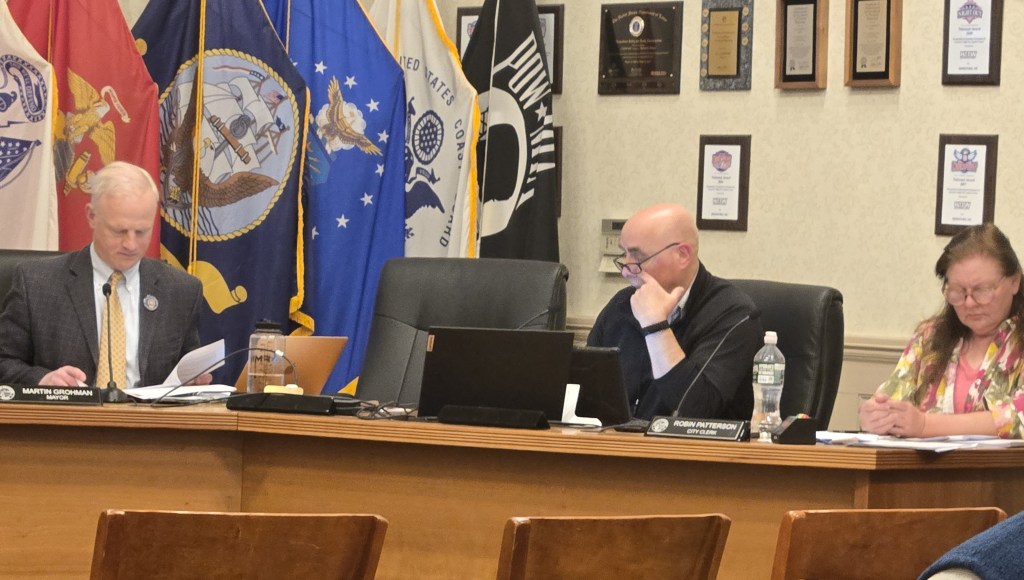









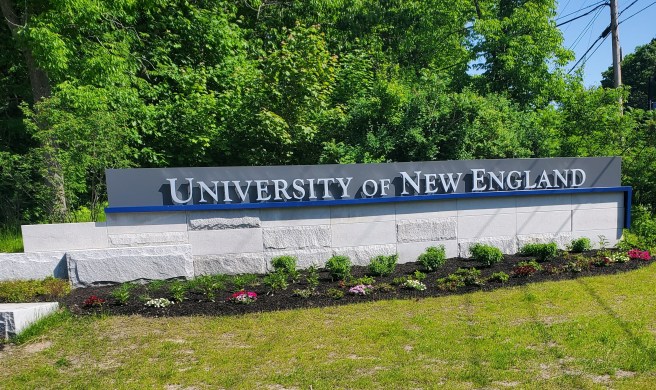

















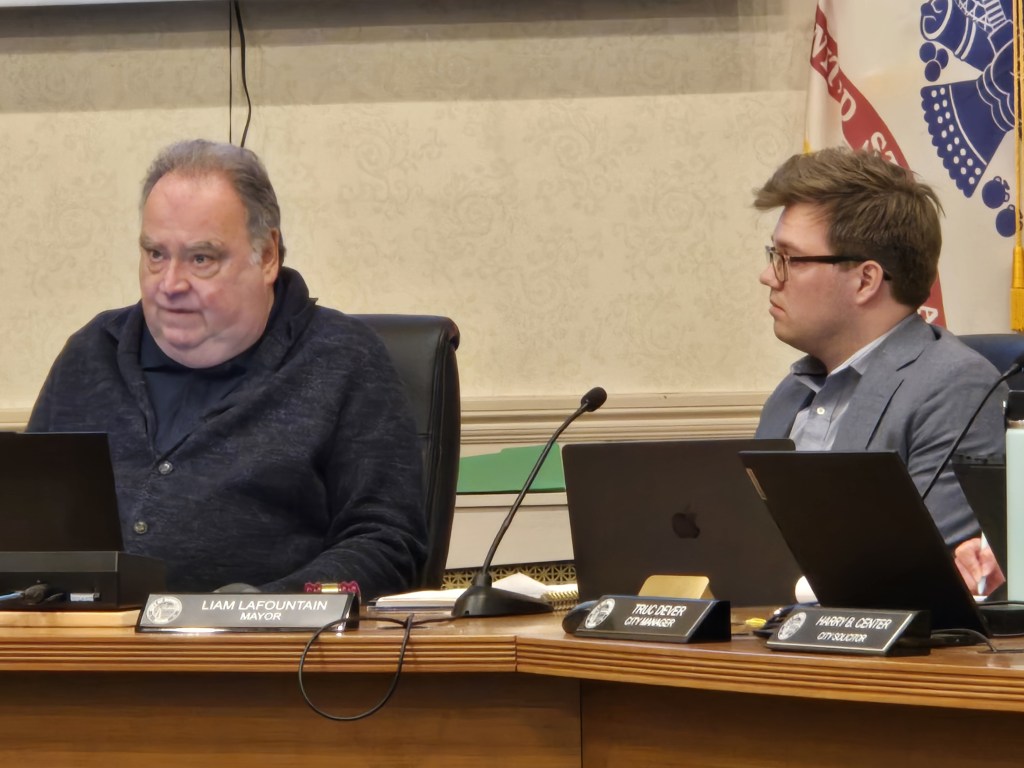


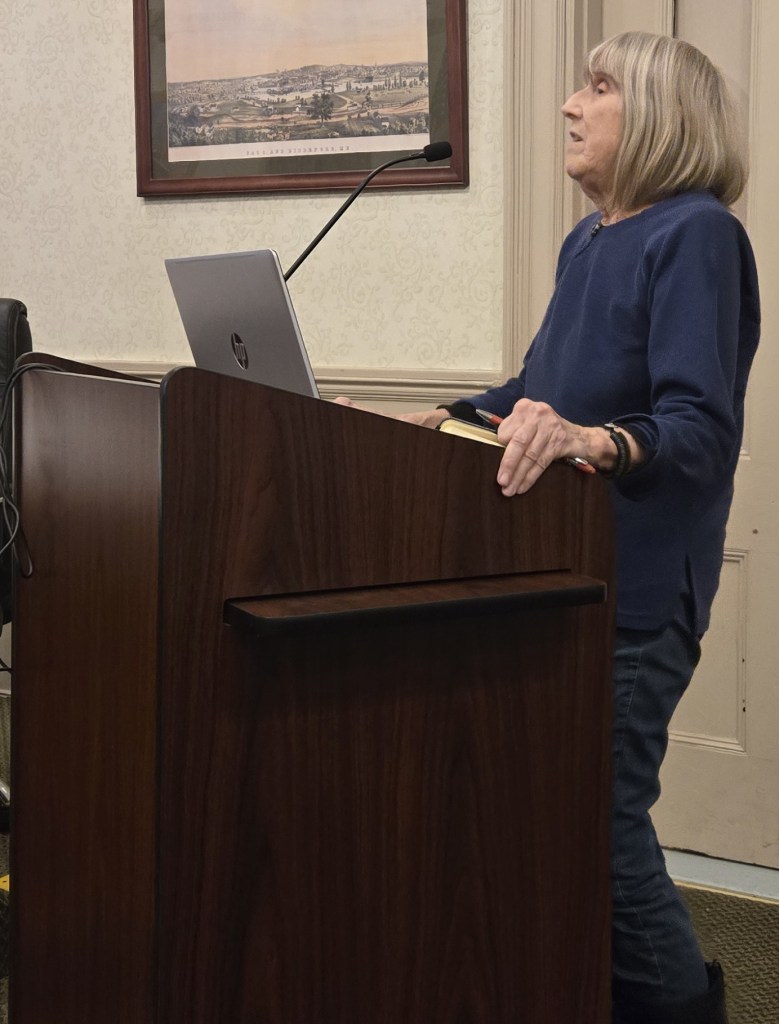
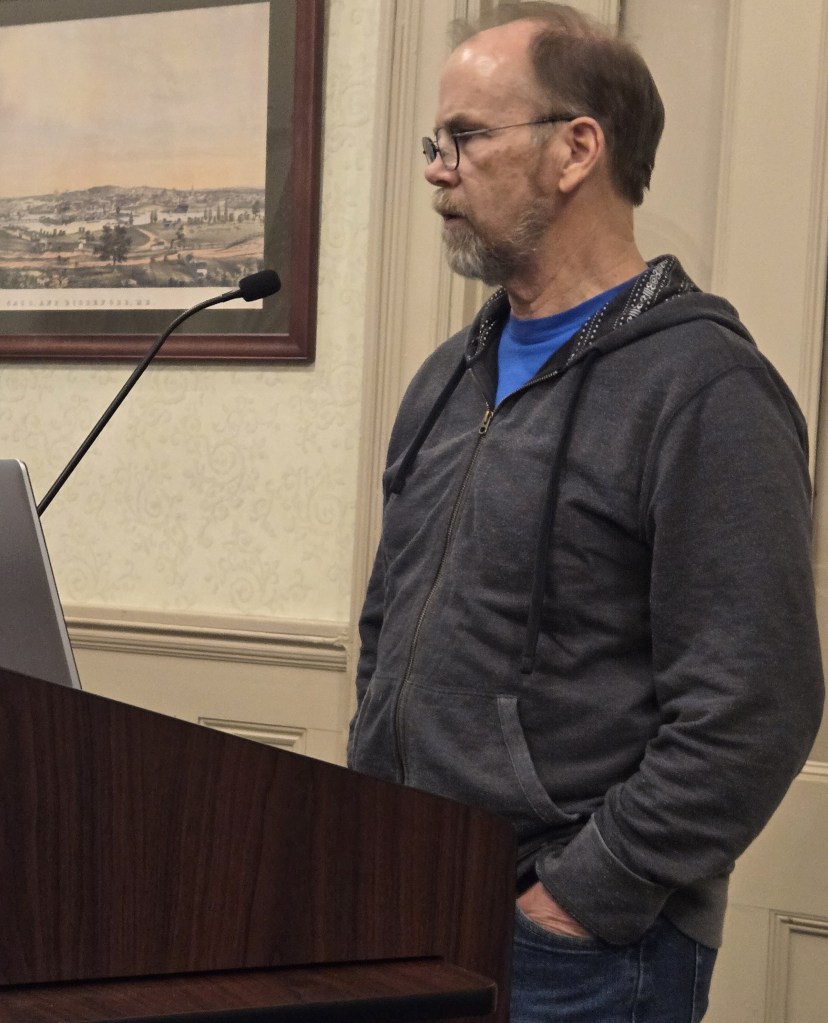


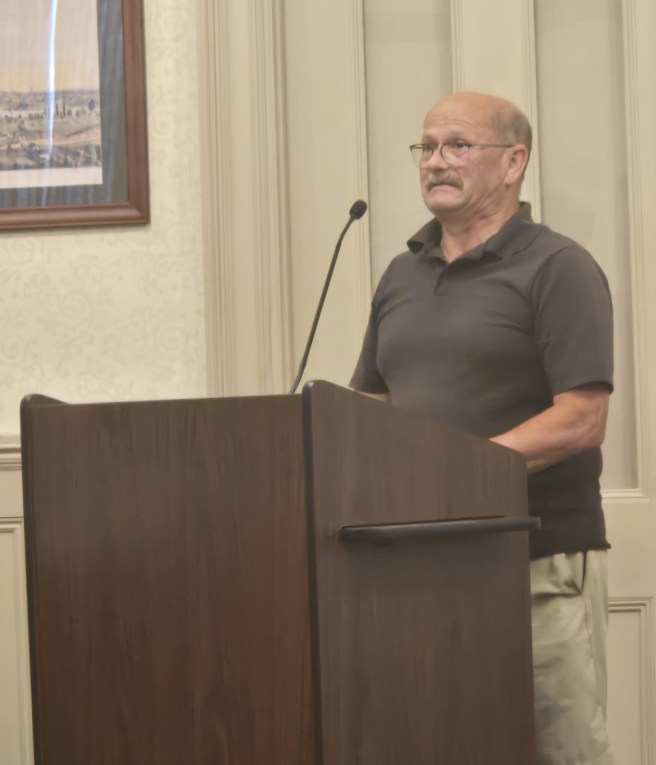



 BIDDEFORD GAZETTE