Randy Seaver is a veteran journalist who has been covering news and politics in the city of Biddeford, Maine for nearly three decades. He may be contacted at randy@randyseaver.com
A few Biddeford firefighters recently found themselves fighting a small fire on the second floor of the city’s Central Station on Alfred Street.
According to Fire Chief Lawrence Best, the small fire happened in the second-floor kitchen during the early morning hours of Saturday, Feb. 7 at approximately 3:15 a.m.
No one was injured in the incident, but Best said there was extensive smoke damage as the result of the fire.
Best said he is working with the city’s insurance company and estimates that the damage could total several thousand dollars because of smoke damage to ceiling tiles and the building’s HVAC system.
The fire broke out as the result of spontaneous combustion that occurred within a stainless-steel container of dish towels and cleaning rags, Best said.
“It’s actually not that uncommon,” Best explained. “Those towels — over time –soak up lots of oils and cleaning solvents. Thankfully, they were in a stainless-steel container. Otherwise, things might have been worse.”
Best said his employees regularly wash all kitchen towels in the department’s washing machine, which Best described as a “residential-type” appliance. Those types of units generally do not exceed 130 degrees of hot water. In order to effectively remain oils and solvents that build up over time, you need water that ranges between 160 and 170 degrees, Best said.
Because the incident happened in a fire station, Best said that the State Fire Marshall’s Office was notified and conducted its own independent investigation of the incident.
Best said such incidents also require review by the Bureau of Alcohol, Tobacco and Firearms (ATF).
“It’s an inconvenience, but we’re really lucky that the damage was contained and that no one was injured,” Best said.
______________________
Randy Seaver is the editor and founder of the Biddeford Gazette. He may be reached by email: randy@randyseaver.com
Wayne Roberts, 54, of Biddeford, was arrested by the Biddeford Police Department after officers were called to a Hill Street residence on Sunday, February 1, 2026.
According to a press release, the Biddeford Regional Communications Center received a phone call reporting that there was a physical altercation going on inside a residence on Hill Street with screaming heard.
The individual involved was identified as Wayne Roberts, 54, of Biddeford. The other involved individual was a protected party in a set of bail conditions belonging to Roberts from a previous domestic violence arrest.
Roberts would not answer the door when officers arrived. With quick thinking by the officers on scene, a Biddeford Police officer was able to obtain a search warrant for the residence. With safety and efficiency, officers executed the search warrant and located Roberts in direct violation of his bail conditions.
Roberts refused to submit to arrest or detention. The victim was located unharmed.
Roberts was charged with Refusing to Submit to Arrest or Detention, Physical Force (Class D) and Violating Conditions of Release (Class E)
Due to the underlying charges of Roberts’ conditions of release, a bail commissioner deemed bail was not an option. Roberts was brought to the York County Jail.
A new legislative session is now underway, and there are many pressing matters in front of us that impact Biddeford residents and Mainers from all over. Whether addressing Maine’s housing crisis to overcoming federal funding cuts to important programs like SNAP and healthcare, we have a lot of work to do to make sure Maine families can get ahead and stay ahead.
While our legislative work progresses with the normal cadence of public hearings, work sessions, and floor votes, what has been happening outside the State House, and in our own community here in Biddeford, is anything but normal.
I was dismayed by the surge of ICE agents in our state under the grotesque title of ‘Operation Catch of the Day’. These agents were shirking good policing standards in favor of warrantless, indiscriminate, and quota-driven detentions. I know their actions sowed fear in our community, especially for people of color. It was painful to hear from friends, including those who are lifelong U.S. citizens, who feared they could be profiled and detained based entirely on the color of their skin. So many are now carrying their “papers” (e.g., a birth certificate or passport). Is this America?
House Speaker Ryan Fecteau (D-Biddeford) Contributed photo
Moreover, the surge of ICE agents and their actions were completely inconsistent with President Trump’s campaign promise to “go after criminals”. The headlines told the true story: whether restaurant workers at Kobe in Biddeford, or corrections officers at Cumberland and York Counties, or a civil engineer with a work visa, this “immigration crackdown” appears less focused on criminals and more about inciting fear and terror among people who came here to chase the promise of America: life, liberty, and the pursuit of happiness. I was horrified at the news of a single mom snatched by agents after dropping her daughter off at Biddeford Primary school, and the arrest of Marcos Gaspar Da Silva, who worked on a home renovation project for me. He’s highly rated on the handyman app Thumbtack, because, as I learned, he is hardworking and diligent.
While politicians in DC may say that the “surge” or “enhanced operations” have ended, the devastation left in the wake of ICE’s actions is far from over. ICE agents are still operating in Maine. Families are still seeking information on loved ones who continue to be detained. Lawyers are still trying to connect with their clients as those clients are shuffled among detention centers outside Maine and across the country. Our neighbors are still fearful of going outside, of simply being seen in our community, because they worry they could be next.
_______________
“What has been happening outside the State House,
and in our own community here in Biddeford,
is anything but normal.”
__________________
If what’s happening in Maine wasn’t enough, a nurse who worked at the VA hospital in Minneapolis was killed by an ICE agent just a few weeks ago, at least the fourth shooting fatality linked to immigration enforcement since Trump returned to the Oval Office. The Trump Administration hurriedly made public comments that suggested Alex Pretti was going to carry out a mass shooting against ICE. Of course, this assertion unravels when you see with your own eyes the video of Alex with his hands down on the pavement, surrounded by six or more ICE agents, being shot. Alex is shot just moments after a different agent removes Alex’s gun from a holster. Alex was exercising his Second Amendment rights and had a permit to carry. It didn’t matter. He was killed.
These operations across our country are not making us safer. What we are seeing is inconsistent with safety. There is a reason why we are a nation of laws. There is a reason why warrants are required to conduct searches and arrests. These things demand precision and liability. The rogue, indiscriminate, inhumane, and brutish nature of these ICE operations means innocent and lawful people are being wrongfully detained. It means this agency’s credibility is now nonexistent.
In the legislature, we’ve taken action to protect the rights of Mainers. This fall, LD 1971 became law, ensuring that workers are not detained, investigated, arrested, or searched by state, county, and local law enforcement officers solely for immigration enforcement purposes. And this session, LD 2106 proposes to require a valid, judge-signed warrant for immigration enforcement in sensitive locations like schools, hospitals, daycares, and libraries.
These are uncertain and perilous times. I’ll be honest, it can feel hopeless to see such federal abuses of power and have little oversight. However, I am proud of the ways in which Mainers across our state are standing up for their neighbors, and making it crystal clear that ICE is not welcome to bring their reckless tactics here to foment fear and chaos. These are the moments where we show the best of who we are. These are the moments where we conquer hate with love, fear with hope, and stand strong against a tide that seeks to weaken the pillars of our constitutional republic. These are the moments that define us.
_____________________
Ryan Fecteau of Biddeford is currently serving as Speaker of the House in the Maine House of Representatives.
ALFRED, Maine – Two local banks with deep roots in York County are leading the way in helping build the York County Substance Use Treatment and Recovery Center.
Partners Bank, headquartered in Sanford, and Kennebunk Savings, headquartered in Kennebunk, have each contributed $150,000 to First County Foundation, the charitable arm of York County government, earmarked for the recovery center.
The 58-bed center under construction at First County Way in Alfred will provide observation, detox, short, medium and long-term residential treatment for people with substance use disorders.
Partners Bank and Kennebunk Savings have each contributed $150,000 to First County Foundation, Inc. earmarked for the York County Substance Use Treatment and Recovery Center. York County Manager Greg Zinser, First County Foundation Board Chair Billy Shore, York County Chief Advancement Officer Rachel Stansfield, Partners Bank President and CEO Anthony Cataldi, Kennebunk Savings President and CEO Lex Meagher, and First County Foundation board members Candice Simeoni, Chris Burbank and Kathy Dumont.(Contributed photo)
Much of the project is funded through a portion of York County government’s ARPA funding, opioid settlement funds, county funding and reimbursements, but gaps remain.
“It’s a great cause,” said Partner’s Bank President and CEO Anthony Cataldi. “This strikes the right chord with us.”
Kennebunk Savings President and CEO Lex Meagher said the partnership representing the public, private and nonprofit sectors working together is an appealing model.
“(This facility) will have a huge impact on York County,” Meagher said.
The recovery center plan emerged as York County Commissioners sought projects in which to invest ARPA funds – projects that would make a long-term impact on the lives of York County residents.
Representatives of Kennebunk Savings and Partners Bank toured the York County Substance Use Treatment and Recovery Center currently under construction in Alfred. Each of the two banks donated $150,000 to First County Foundation, earmarked for the recovery center.(Contributed photo)
“This is going to be an incredible resource for the county and probably a model for the state and the region,” said First County Foundation Board Chair Billy Shore.
“We thank Kennebunk Savings and Partners Bank,” said York County Manager Greg Zinser. “Your commitment to these projects and your sense of community is phenomenal.”
Construction of the 52,000 square foot facility is expected to be completed sometime this fall.
York County Chief Advancement Officer Rachel Stansfield said Kennebunk Savings and Partners Bank see the value in the projects, and believes other partners will emerge to help fill the gaps.
“They are the leaders,” she said of the two banks. “I hope these generous contributions from Kennebunk Savings and Partners Bank will help ignite support from others.”
______________
Tammy Wells is a media specialist who works for York County Government
The former Biddeford city councilor said she is excited about the prospect of returning to public service
By RANDY SEAVER, Editor
Doris Ortiz had to give up her at-large seat on the Biddeford City Council last year when she and her partner decided to buy a home in the adjacent town of Arundel.
During an interview with the Gazette this week, Ortiz said she missed being able to help her neighbors as a local government representative.
Today, Ortiz is hoping that she can once again have a meaningful impact on her community and another chance to help her neighbors.
Ortiz, 58, has formally announced that she is seeking the District Two seat on the York County Commissioners board. That seat is currently held by Richard Dutremble of Biddeford, who is now serving as the commission’s chair.
Former Biddeford City Councilor Doris Ortiz says there are a lot of similarities between serving as a city councilor and as a county commissioner (Contributed photo)
In January, Dutremble announced that he would not seek reelection after 20 years of service on the commission.
District Two includes the communities of Arundel, Biddeford, Kennebunk and Kennebunkport.
Ortiz says there are a lot of similarities between serving as a city councilor and as a county commissioner. Both organizations address many of the same issues, from regional housing needs to infrastructure updates and improvements.
“I found serving on the city council to be very fulfilling,” Ortiz said. “It was a tremendous experience, and I learned a lot during my almost six years of being a city councilor.”
One of the things Ortiz learned was that county government has a big impact on the city of Biddeford.
“Whether you’re talking about the city’s share of the county’s budget or about shared resources, including emergency services and other things, what happens at the county level makes a big impact on the city of Biddeford and other communities.”
Because Biddeford is the largest municipality in York County, Ortiz says the city shoulders a lot of the burden for people who live just beyond the city’s borders.
“Biddeford is a service center community in York County,” Ortiz said. “As a result, the city gets a lot of traffic and growing demands for a variety of services.”
Those services include a regional hospital and state services, including the county’s combined district courthouse, the Department of Health and Human Services and a plethora of popular retail outlets.
The county, meanwhile, offers municipalities several services and facilities, including operations of the jail, a full-time sheriff’s department and support services for both emergency housing options and a regional food pantry.
Ortiz said she was intrigued by some of the things she has seen the county take on over the past few years.
“The new First Responders Training Center got me really excited,” Ortiz said. “It’s an excellent opportunity for collaboration between the city and the county, and will help municipalities as they struggle to find, hire and train emergency first responders.”
But Ortiz says the biggest reason she’s running again is because it could be another opportunity to give back to her community.
“It’s really a central part of who I am and what drives me,” Ortiz said. “I know it may sound weird, but I actually enjoy digging into public policy and finding innovative ways to help people around me.”
Ortiz is employed by Bernstein Shur, a Portland-based law firm, where she has worked as a client service specialist for nearly 13 years.
Ortiz was first elected to the Biddeford City Council in 2019 and was then twice reelected for successive terms as one of the city’s two at-large representatives.
_______________________
Randy Seaver is the editor and founder of the Biddeford Gazette. He may be reached by email: randy@randyseaver.com
The moratorium on the sale of St Joseph’s convent by the city council took me by surprise.
It is not just that the city council appears so unwelcoming to the university, but it is their callous disregard for the plight of the nuns who so crucially need the income for their continued maintenance. Council unanimously halts UNE development
Have the members of the city council forgotten that these nuns spent their lifetimes giving the children of the city an exceptional education, permitted many of them to go on to graduate and postgraduate educations and professional lives? How many on the city council had their parents, themselves, or their children taught by the nuns?
The University of New England has expressed interest in purchasing the former St. Joseph’s Convent on Pool Road in Biddeford to be used for additional student housing (File Photo)
Do the city council members not realize that the plight of the nuns results from the fact that they worked without salary and do not receive social security benefits as the rest of the community which they taught?
You would think that there would be an outpouring of gratitude for the immense benefit to the community provided by these sisters. Instead total ingratitude and disregard.
I cannot believe the citizens of Biddeford who I grew up with would support this callousness. It leads me to wonder how representative of the community the city council is.
A second issue: Most communities welcome a university campus in their city. The professional management, teaching, and research staff enhance the economic, social, and cultural fabric of the community, not to mention the educational benefits available locally. Many people looking for a community to relocate will consider a local university as a major benefit.
I also find it surprising that someone would bring up the value of the land the school sits on. You can be land rich and finances poor.
I myself had to go out of state to medical school because Maine was one of the few states with no in-state medical school at that time. I’m also convinced that my education at St Joseph’s Gramnar and High School were a major factor ability in my admission to that most competitive of professions. I also know how to be grateful.
This brings up another question. Who are these people whose complaints have such an outsized influence on the council?
Are they on the council themselves? What is their relationship to the council members? Who is the council representing? Certainly not the community, and certainly not its most deserving and vulnerable members, women in their 80s and 90s who taught generations of children without pay.
The ingratitude shown by the city council cannot possibly represent the sentiments of the community and the entire process should be investigated and reviewed.
Shirley Roy, Biddeford
Editor’s Note:The city’s six-month moratorium on development at UNE’s Biddeford campus, does NOTHING to prevent the university from moving forward with its planned purchase of the St. Joseph’s Convent.The moratorium also does not apply to St. Joseph’s Convent, which is located nearly two miles west of UNE’s Biddeford campus.
_________________________
The Biddeford Gazette encourages robust community conversations and welcomes letters to the editor and guest columns submitted by our readers. For more information about submitting a letter or column, please click this link. CONNECT WITH US
In the very crowded race to become Maine’s next governor, former State Sen. Rick Bennett is hoping to stand out as an Independent candidate who is ready to tackle tough issues with a common-sense approach and a commitment to people rather than any political party.
Bennett, 62, brought his campaign to Biddeford on Saturday, at the height of the city’s annual WinterFest celebration.
Rick Bennett — one of five Independent candidates hoping to become Maine’s next governor — visited Biddeford and said the state’s leaders need to stop bickering and worrying about political affiliation. “The system is broken,” he said. “We need to focus on solutions.” (Seaver photo)
So far – according to the Maine Secretary of State’s office – there are seven declared Democratic candidates hoping to win the June primary and 10 Republicans running for their party’s nomination.
Bennett is one of five independents who are hoping to gain support and build a coalition from both sides of the political aisle.
Bennett is the most well-known of the five Independent candidates and leads that field in fundraising, raising nearly $530,000 for his campaign so far. His closest challenger, State Rep. Ed Crockett of Portland, has raised just shy of $10,000 for his campaign.
A former president of the Maine Senate, Bennett has a long history of public service that dates back to the early 1980s. As a teenager, he volunteered on various political campaigns and participated in the YMCA’s Model Legislature program, in which young people attend a three-day conference to learn about how the Legislature works and how ideas become state laws.
Bennett was elected to the Maine House of Representatives, representing the town of Norway in 1990 and was unopposed for a second term.
He didn’t wait long to jump onto the national scene. In 1994, he became the Republican nominee for Congress in Maine’s second district, narrowly losing the general election to John Baldacci, 46-41 percent with two other candidates in the race.
In 1996, Bennett was elected to the Maine State Senate where he later became senate president.
Described as a successful business innovator, Bennett served as chair of Maine’s Republican Party from 2013 to 2017.
Today, he says, Maine needs political leaders who are not focused on political affiliation.
His campaign website paints a picture of a man with a long history of reaching across the political aisle to achieve legislative goals in environmental leadership, consumer protection and campaign finance reform.
Bennett co-sponsored several laws targeting toxic PFAS “forever chemicals” and reforming Maine’s solid waste and recycling practices. He was an outspoken opponent of the “CMP Corridor” project and sought to end foreign ownership of Maine’s electric utilities. He also sponsored legislation to end “predatory practices” by payday lenders.
The candidate enjoys Winterfest
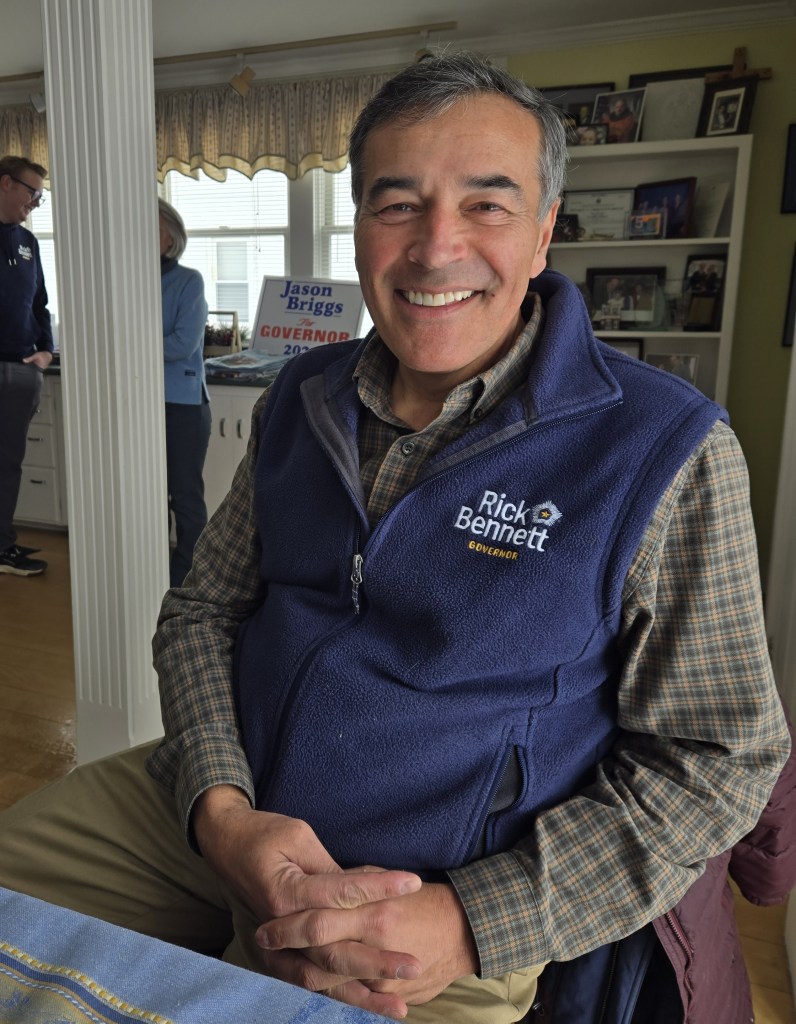
We met with Bennett and his wife, Karen, at the home of Biddeford resident Jason Briggs, a well-known community volunteer and local Republican leader.
While touring the Makers Market, Bennett couldn’t resist picking up some treats from Tabarek Alabbooti from Amira Cuisine in Biddeford. (Seaver photo)
Briggs described Bennett as “the real deal,” pointing out that they have known each other for nearly 40 years.
When asked why he is not running as a Republican, Bennett didn’t hesitate with his response. “Our government is broken, and political parties are a big part of the problem,” he said.
Bennett said partisan politics are becoming increasingly divisive in Maine, a rural state that is well-known for its hard-working, down-to-earth populace.
“Both parties have become very strident, focusing more on partisan bickering than the needs of Maine people,” Bennett said.
____________________
“Our government is broken,
and political parties are
a big part of the problem.”
— Rick Bennett
_____________________
When asked what he believes are the top issues facing Maine residents, Bennett pointed to skyrocketing and “outrageous” energy costs, underperforming public schools and a statewide housing crisis.
“These are issues that need and deserve a collaborative approach,” Bennett said. “We’re a small state. We know each other and take care of our neighbors. We need to find a better way forward.”
Bennett – who shared the Maine Senate President’s office with Democrat Mike Michaud when the senate was briefly evenly split – said today too many legislators are afraid to pick up the phone and talk to their peers on the other side of the aisle.
“We cannot afford to see bipartisanship as a weakness,” Bennett said. “The people of Maine have real needs, and they deserve a better approach.”
Bennett received a warm response as he toured Biddeford’s downtown area during the WinterFest celebration.
He spoke briefly with both Mayor Liam LaFountain and City Councilor Jake Pierson, telling them “we’re all in this together” and that local leaders play an important role in Maine’s future.
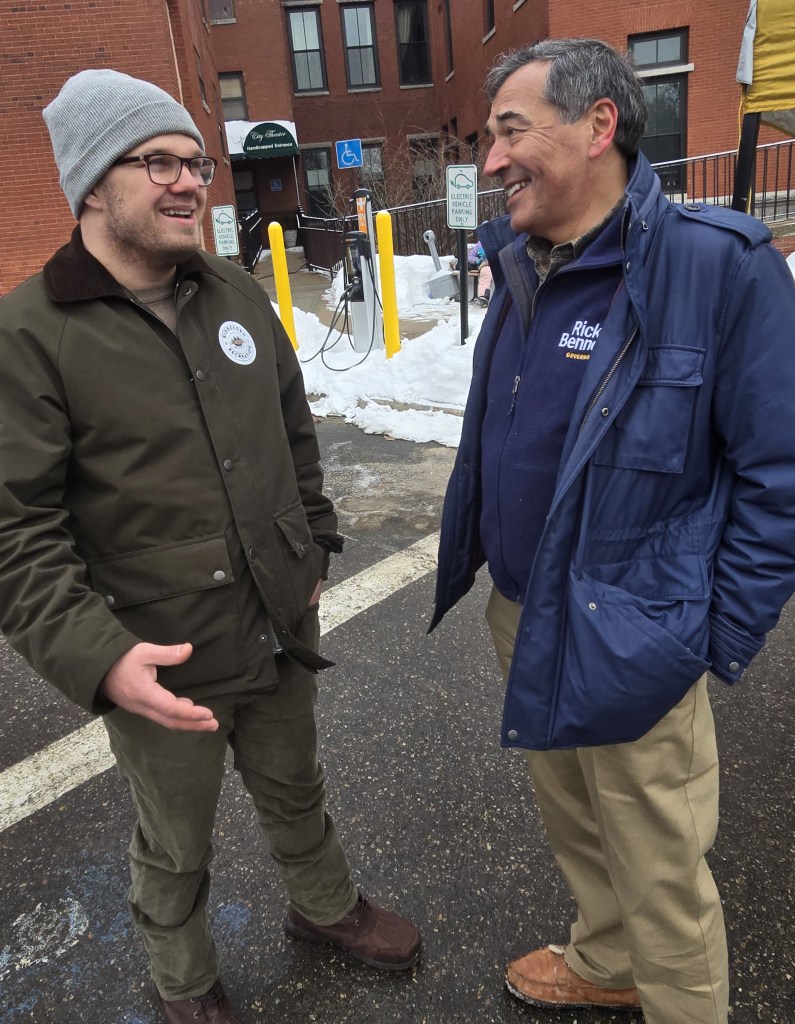
Rick Bennett (right) shares a laugh with Biddeford Mayor Liam LaFountain during Saturday’s Winterfest celebration in downtown Biddeford. Both men agreed that city and state governments need to be “solutions-focused.” (Seaver photo)
Bennett said he was “blown away” by the revitalization of the city’s downtown area, including the business incubator concept being used in the city’s former textile mill buildings.
“What’s happening here is really exciting,” Bennett said while touring the Makers Market event in the former Pepperell Mill building.
But Bennett wasn’t the only gubernatorial candidate visiting Biddeford on Saturday. Democrat Dr. Nirav Shah was also touring the Pepperell Mill building on Saturday.
“I think we can both agree that this is a pretty awesome community event,” Bennett told Shah.
“You are absolutely correct about that,” Shah replied with a big smile.
If elected as governor, Bennett said one of his first moves will be to convene a weekly “Legislative Leadership” dinner meeting with legislative leaders from both parties.
“We need to break bread together, and work together to develop meaningful solutions,” Bennett said. “That’s what people want us to do. That’s the Maine tradition.”
_______________________
Randy Seaver is the editor and founder of the Biddeford Gazette. He may be reached by email: randy@randyseaver.com
You may view and learn more about our editorial standards and policies here:
Feedback from our readers reinforces the Gazette’s mission statement
Wow! What a busy week it’s been.
In a few moments, I’ll be headed out the door and on my way to this year’s WinterFest activities in downtown Biddeford.
WinterFest is so much than just a giant man-made sledding hill on Adams Street. It is now three-days of various activities and fun for people of all ages. Over the last 14 years, WinterFest has grown and become one of Biddeford’s most notable community events.
But none of it would be possible without dozens of volunteers and community sponsors. Go here: to learn more about this year’s WinterFest celebration.
Good times return to Biddeford for annual WinterFest celebration. File photo: Devin Wright
A peek behind the scenes at the Gazette
Speaking of celebrations, Laura and I — and some of our closest friends and supporters –celebrated a few milestones achieved this week by the Biddeford Gazette.
It’s mostly some little, housekeeping things — but they all reinforce the idea that the Gazette has grown from just a simple concept to a full-fledged media outlet.
This week, we received our registration papers as a non-profit media company and secured a PO Box for the Gazette. We also opened a business bank account at PeoplesChoice Credit Union. Things are getting real!
We also updated our website with a few new static pages, most notably a section that details our Standards and Policies and a page that describes our history, but there is another new page that leaves me almost speechless and close to tears each time I look at it.
Support from the community
If you get a chance, please check out our READER FEEDBACK page. We have archived some of the comments we have received from the community over the last few months.
If you want to know why I do this, what motivates me and keeps me going — check out some of the feedback we have received from our readers. From my perspective, these comments are more valuable than gold. Thank you so much!
If we pick your suggestion, you will score a $20 gift certificate to Reilly’s Bakery on Main Street. Talk about motivation.
What’s ahead?
It’s election time again, and the Biddeford Gazette will soon begin our coverage of local legislative and York County races with the comprehensive approach that our readers have come to expect.
We also plan to do a deeper dive on several issues now brewing just beneath the surface in Biddeford. Stay tuned! We have some good stuff in the pipeline!
The Biddeford City Council discusses a controversial downtown parking plan that has been discontinued.
From the “Very Good News” department: we posted an update this week, letting people know that the IRS has opted to waive more than $700,000 in penalties and fees dues to some missing health insurance forms on the city’s 2021 tax return.
The Gazette first broke that story last year, and it’s nice to see that it was resolved with a positive outcome.
Okay, now it’s off to WinterFest! We’ll be posting some photos of this year’s celebration later today.
Be safe! Stay Warm! Have fun and . . . Go, Patriots!
______________________
Randy Seaver is the editor and founder of the Biddeford Gazette. He may be reached by email: randy@randyseaver.com
You may view and learn more about our editorial standards and policies here:
Friday morning, I engaged with a post on the Instagram account of U.S. Senate candidate Graham Platner. My comment was not a personal attack, but a critique of messaging and political culture. Earlier that day, I had been watching a panel of reporters, cultural critics and activists discussing a racist meme Donald Trump posted and later deleted about the Obamas.
Like many people, I’ve had a hard time disengaging from the nonstop dystopian news cycle. One point from that discussion stuck with me: a racist president does not emerge in a vacuum, but from history and cultural norms. It made me think about how often we focus on political figures as personalities or celebrities rather than the communities they are meant to serve. It also pushed me back to question how some people are more readily granted credibility, relatability and benefit of the doubt than others.
U,S Senate candidate Graham Platner visited Biddeford in November (File Photo)
That same morning, I saw a Platner post celebrating his status as a Senate frontrunner. Even though I wasn’t sure any good would come of it, I decided to speak up. My comment was sharp but focused: I may ultimately support his policy positions, but I questioned ego-driven messaging and the tendency to rally around someone simply because they feel relatable, even when others have long championed the same ideas.
My motivation was not that I dislike Graham Platner, or even that I don’t personally relate to him. I grew up in rural Maine. I’ve worked since high school to put myself through college. I have friends from many demographics, viewpoints, and walks of life, including veterans who are no longer with us. I’m outspoken, and in some ways I can see pieces of myself in Graham, as much as a woman can. I was initially excited about his candidacy and even defended his rugged, relatable rhetoric to my skeptical mother.
Later, I learned about past comments he made about sexual assault in the military and about Black people tipping. I was told those remarks were from 2012 by people I respect, but it has still been a lot to grapple with. Wanting to be fair, I attended an event where he spoke at Biddeford Middle School. In person, he was engaging and more humble than his social media presence suggests. He spoke about hardworking Mainers and real community issues (he also mentioned liking Kurt Vonnegut — hey look, not something I’m gonna base my vote on, but respect). I found him personable, but I also noticed him shy away from more specific policy questions. That mirrors what I see in his campaign messaging: broad themes, with far less discussion of specific legislation.
He does come across as an everyman. It’s admirable that he served as a Marine. It’s also great that he was able to fly his wife out of the country for IVF, and I fully support access to that care. But that level of access isn’t feasible for many Mainers. Is he really the everyman of Maine?
I also find myself questioning why many people readily frame him as inherently virtuous. Is it the polished image? But if I suggest it may also relate to who he is and how he presents, I risk being accused of “identity politics,” yet image clearly plays a role in how candidates are received. More than that, the tone of his campaign also gives me pause. Much of his messaging focuses on projecting confidence, bravado, and victory, while specifics go unaddressed.
I question why we so often elevate candidates based on relatability and image rather than depth of policy discussion. For me, this raises broader questions about who we instinctively see as credible and why. Is this result of a two-party system? Of our own ability to embrace nuance? Modern culture? Something else?
________________
I question why we so often elevate
candidates based on relatability and image
rather than depth of policy discussion.
_________________
When I made my comment, perhaps not unexpectedly, I received dismissive replies from his supporters. One person, who said he was a friend of Graham’s, said I seemed “insufferable” and focused on defending Mr. Platner’s character instead of addressing the substance of my comment. Another person mischaracterized my argument in a way that echoed familiar tropes often used to trivialize women’s political voices, and suggested I must think Graham is unintelligent because he is a man. After several rounds in which he ignored my actual points and resorted to personal attacks, I checked his profile and saw that he does not appear to be a U.S. voter.
I continued monitoring the comments partly out of concern, because expressing political opinions online can invite harassment. I then noticed that Waukeag Oyster Company, an oyster farm business founded by Graham Platner, “liked” comments suggesting my critique was simply about him being a man, while my original comment went unanswered. Public “likes” may seem small, but they signal which messages a campaign chooses to acknowledge or amplify. I do not know whether it was Graham himself, a business partner, or a social media manager engaging with those comments. Still, liking a response that framed my critique as gender-based, rather than engaging with the substance of what I said, felt dismissive and unnecessarily divisive. Especially considering that this person, according to their Instagram bio, is not even part of Mr. Platner’s voter base.
I messaged Waukeag Oyster Company to point this out and received no response.
Look, if Graham Platner gets elected, I can live with it. I may end up voting for him if he is truly the frontrunner, and I will more than likely include him in my ranked-choice ballot in the primaries. But what concerns me is when supporters place personality and relatability over policy. In an age of rising authoritarian tendencies, we should be asking where solidarity turns into conformity, and why we tolerate brashness in some demographics while condemning it in others. Not for the sake of purity, but for equity and for preserving our own critical thinking, rather than saying yes to whoever is speaking the loudest.
UNE dental students again provided free care to local students; Rep. Ryan Fecteau introduced a bill to expand dental coverage for Maine children.
Contributed stories
Students from the University of New England’s College of Dental Medicine and Department of Dental Hygiene welcomed 85 elementary students from Old Orchard Beach to the university’s Oral Health Center on Friday, Feb. 6, for UNE’s fifth annual “Give Kids a Smile” event.
According to organizers, the Old Orchard Beach students received a full slate of preventive dental services at no cost, including cleanings, fluoride treatments, protective sealants, and oral health education.
Students from the University of New England’s dental school provided cleaning and other dental services to 85 Old Orchard Beach elementary school students. This is the fifth year that UNE has participated in the annual cleaning Give Kids A Smile event. (Contributed photo)
The services were delivered by UNE dental medicine and dental hygiene students working together in clinical teams. Each child also received a take-home oral care kit with a toothbrush, toothpaste, floss and educational materials to support healthy habits beyond the visit.
The one-day event provided more than $14,000 in free dental care, helping remove barriers to access while introducing families to ongoing resources available through UNE’s Oral Health Center, located on UNE’s Portland Campus for the Health Sciences — the only fully integrated health sciences campus of its kind in New England.
“Untreated dental disease can lead to severe pain that impacts a child’s ability to eat and drink properly, disrupts their sleep patterns, affects their concentration, and contributes to changes in behavior,” said Nicole Kimmes, D.D.S., dean of the UNE College of Dental Medicine. “By hosting events like Give Kids a Smile, we improve access and education for the children of Maine and decrease the number impacted by these conditions right in our home communities.”
The now-annual event is part of a national Give Kids a Smile initiative coordinated by the American Dental Association, during which dentists and dental students across the country provide care to underserved children.
At UNE, the program has grown steadily since its launch in 2020 and continues to reflect the University’s commitment to improving community health while preparing future providers through hands-on, team-based learning.
“This experience, with dental hygiene and dental students working together to deliver care to children, enhances communication and delivers more comprehensive oral health education to the children coming to visit the OHC today,” said Dianne Smallidge, RDH, Ed.D., director of the undergraduate Department of Dental Hygiene at UNE.
Alexander Dyke, a UNE student who is scheduled to graduate later this year, is planning to pursue a pediatric residency. He said events like Give Kids a Smile benefit both families and students.
“The work we’re doing today is extremely important in providing underserved populations get the care they otherwise wouldn’t have,” Dyke said. “It also means that I get experience, and it means other students get experience. “We get to work with faculty and see their input on the type of ways they would go about doing that — it broadens my horizons and increases the tools in my toolbox.”
Fecteau introduces bill to expand access to dental care
Earlier this week, State Rep. Ryan Fecteau (D-Biddeford) introduced a bill to improve dental access care for children.
Fecteau’s bill – LD 2123 — seeks to modify the MaineCare Reimbursement Methodology for the provision of anesthesia for certain dental services.
Fecteau – who is currently serving as Speaker of the House – says his bill will hopefully address a growing backlog of children awaiting care for dental issues.
The legislation proposes a targeted increase to MaineCare reimbursement rates for anesthesia services provided to children at ambulatory surgery centers treating at least 50 percent for MaineCare patients. As a result, Fecteau said these centers will be able to continue their operations, increase capacity, and reduce wait times.
“Access to care is critical. Too many Maine children are suffering with tooth pain because of the limited options for care,” Fecteau said. “This bill is a key step that will help ease just a little bit of that suffering and make it more feasible for other ambulatory surgery centers to expand services for MaineCare patients.”
According to Fecteau, many children receiving MaineCare lack a “dental home,” meaning they do not have a dentist they see regularly for cleanings and other preventative care. Without this routine maintenance, curable issues – things like cavities – turn into surgical events, with long waits for care.
“No child should have to suffer in pain because of their insurance status when treatment is available,” said Becca Matusovich, Executive Director of the Children’s Oral Health Network of Maine. “LD 2123 is one important element of a comprehensive strategy to address dental disease among Maine children who have been unable to access dental care.”
The Health and Human Services Committee is scheduled to consider Fecteau’s bill in the coming weeks.
Note: This story was updated with a correction: The UNE event in Portland took place on Friday, Feb. 6, not Thursday. We apologize for the error.
_____________
Alan Bennett, Assistant Director of Communications at the University of New England, contributed to this story
The Biddeford City Council received an update Tuesday regarding how the city’s local allocation of Opioid Settlement funds has been used over the last year.
The funds come from several class action lawsuits that were filed against opioid manufacturers and distributors roughly 10 years ago.
Jake Hammer, Biddeford’s General Assistance supervisor, gave the Biddeford City Council a presentation Tuesday about how the city is using its portion of the Opioid Settlement Funds.
The defendants – including Johnson & Johnson, Walmart, Walgreens and CVS –reached a $56 billion settlement with those states, counties and municipalities that filed suit against them. The funds can only be used to provide for treatment and other services directly linked to opioid use.
Opioids — more commonly known as “painkillers” — are often prescribed to treat severe pain. They can be highly addictive and addiction causes consequences for communities in terms of crime, economic instability and fractured interpersonal relationships.
Examples of opioids include Oxycontin, Fentanyl and Demerol.
According to reporting by Emily Bader from The Maine Monitor, Maine communities and counties have received roughly $20.3 million from the $66.4 million they’re set to receive by 2038.
The money, Bader reports, “has been used for a wide range of initiatives, from grants to community organizations providing recovery services to scholarships for residential treatment beds.”
Biddeford’s General Assistance Supervisor — Jake Hammer – provided the council with an annual overview of how the city has been handing its portion of the funds allocated to Maine communities.
According to Hammer, the funds began flowing in 2022 and are scheduled to continue through 2038.
Hammer told the council that at least 70 to 85 percent of the funds must be used for future opioid remediation, including treatment, harm reduction, prevention, and recovery services.
In September 2024, the city council adopted an ordinance to track and report how the city’s share of Opioid Settlement Fund (OSF) is being used.
A little more than a year ago, the city council approved an OSF Strategic Action Plan, Hammer said. That plan includes Strategic Goals and measurement criteria, which are required by the Maine Attorney General’s office, as spelled out by state law.
Hammer told the council that the city now has six recovery residences — total of 95 beds –available for those struggling with opioid addiction. Roughly 83 percent of the city’s allocation last year was used to support those residential facilities.
The city received roughly $378,039 during the last calendar year as its annual allocation of funds.
Hammer also supplied the council with some demographic information about the 58 people who have requested addiction treatment during the past year.
The bulk of those requesting or applying for services were white men (44), Hammer said. 18 individuals identified as having a physical or mental disability; and 14 applicants were employed when seeking services.
Councilor Dylan Doughty asked if the city could use some of its allocation for further public outreach about treatment options in the city.
“That is absolutely something we can do,” Hammer responded.
How do you know you’ve been covering Biddeford news for a long, long time?
I have covered the city’s annual WinterFest celebration since — well – since before it was called WinterFest.
Biddeford’s annual downtown winter celebration was the brainchild of newly elected Mayor Alan Casavant in 2012.
Casavant — who was also serving as a state representative back then –had attended a community dog-sledding event and celebration in Fort Kent.
“I was really impressed by the community turnout,” the former mayor said during a recent interview. “It wasn’t just dog-sledding and races, they had lots of different activities. It really brought people together.”
Casavant returned home full of optimism and ideas about how Biddeford could do something similar.
Let her rip! Former mayor Alan Casavant tackles the man-made sledding hill on Adam’s Street during the very first WinterFest celebration in February 2012. The annual festival was then known as L Fete d’ Hiver
The city was in the early stages of a downtown renaissance, and Casavant was eager to draw people back to the downtown area — even though MERC was still burning garbage roughly 1,200 feet away from the first man-made sledding hill on Adams Street and the fact that there were then fewer than 438 places in downtown Biddeford to get gourmet coffee, craft beers and specialty pizzas.
Casavant enlisted the help of resident John Maxson who jumped into the project with both feet and a smile that never faded until his passing several years ago. Maxson’s memory and community service is enshrined by a bronze plaque that was placed on the outside wall of City Hall near Adams Street.
Originally, the celebration was called La Fete d’ Hiver, a nod to the city’s then dominant Franco-American heritage.
The first festival exceeded expectations for community turnout, and the weekend celebration was later expanded and became more popular with each passing year and a growing base of volunteers.
But by the third year, the name La Fete’ d’ Hiver was dropped and replaced with a more inclusive moniker: WinterFest, much easier for most of us to pronounce and spell.
Look, my family attended Mass at St. Mary’s, not St. Andre’s or St. Joseph’s.
When my parents bought their first home in Saco, I served as an altar boy at Most Holy Trinity, not Notre Dame.
I graduated from Thornton Academy, not St. Louis High School.
I knew just enough French to get in trouble and flirt with local girls. Et, pourquoi pas?
I’m not trying to position myself as the defender of Biddeford’s Franco-American heritage. Growing up in Saco, we made jokes about French people.
Laura and I were getting our groove on during the city’s first WinterFest celebration in 2012
It should also be noted that Biddeford’s cultural roots are not just pure-bred French Canadian. Our community was also built by immigrant factory workers who came here from Ireland, Greece, Albania and numerous other countries, including Syria, Russia and Italy.
When it comes to cultural diversity, Biddeford pretty much knocks it out of the park.
But I do feel sad and a bit troubled by the gentrification now taking place in my community.
What’s next? Are we going to rename the city’s annual La Kermesse celebration as SummerFest?
I think the Lincoln Hotel lobby is fantastic and a wonderful place to meet friends. I enjoy hanging out at Element’s and drinking really good beer at Sacred Profane.
__________________
But I do feel sad and a bit troubled
by the gentrification now taking place
in my community.
_________________
But like many other people, I do so sometimes wax nostalgic about getting new school clothes at Butler’s, eating at the Woolworth’s lunch counter or browsing the vast collection of records at Murphy’s Music.
The once vibrant shoe factory on State Street is now an apartment complex. You no longer get your local groceries at Sevigny’s Market and charge your purchases to your weekly slip.
You blissfully ignored whatever it was that would periodically spew forth directly into the river from the Saco Tannery.
There will be many activities for adults and children throughout the weekend, but the downtown sledding hill remains as a favorite among area children. (Photo by Devin Wright)
There was no Home Depot. You went to McKenney & Heard Hardware on Main Street, You got your prescriptions at Doyon’s Pharmacy not Wal-Mart.
If you lived in Biddeford, your furniture came from Warren’s. If you lived in Saco, you probably bought your new dining set at Atkinson’s.
With each passing day, it is getting harder and harder for longtime residents to keep pace with soaring rental costs and restaurants that now cater to a younger, more affluent clientele.
People tell me all the time that they miss print newspapers like the Journal Tribune or the Biddeford-Saco Courier.
Nearly 128 million people are expected to watch Sunday’s Superbowl Championship game between the 17-3 New England Patriots and the 16-3 Seattle Seahawks.
One of those people who will be watching the Superbowl LX game on television is Biddeford’s relatively new city manager Truc Dever.
Dever relocated to Biddeford last summer from her home in Kirkland, Wash., a Seattle suburb where she served as that city’s public works director.
When asked Wednesday about which team she would be rooting for, Dever took in a deep breath and paused before offering her reply.
“I’m probably going to get in a lot of trouble for saying this, but I’ll be cheering for the Seahawks,” she admitted.
Biddeford City Manager Truc Dever (File Photo)
When asked to predict the game’s outcome, Dever laughed: “I’m probably in enough trouble already.”
Dever was previously asked a similar question last year, when she was interviewed by Biddeford Gazette reporter Jim Krause.
The Biddeford City Council finally got the chance Tuesday to discuss a controversial parking plan that has raised questions and eyebrows about city spending procedures.
One councilor described the project as a significant breach of city procedures, but another councilor described the $20,000 project as “small potatoes,” when compared to other issues facing the city.
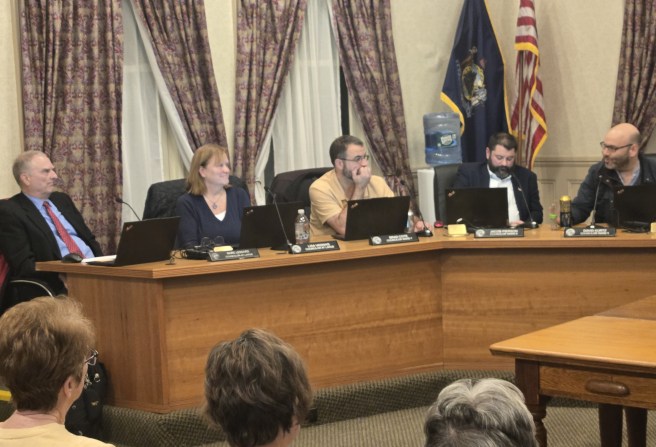
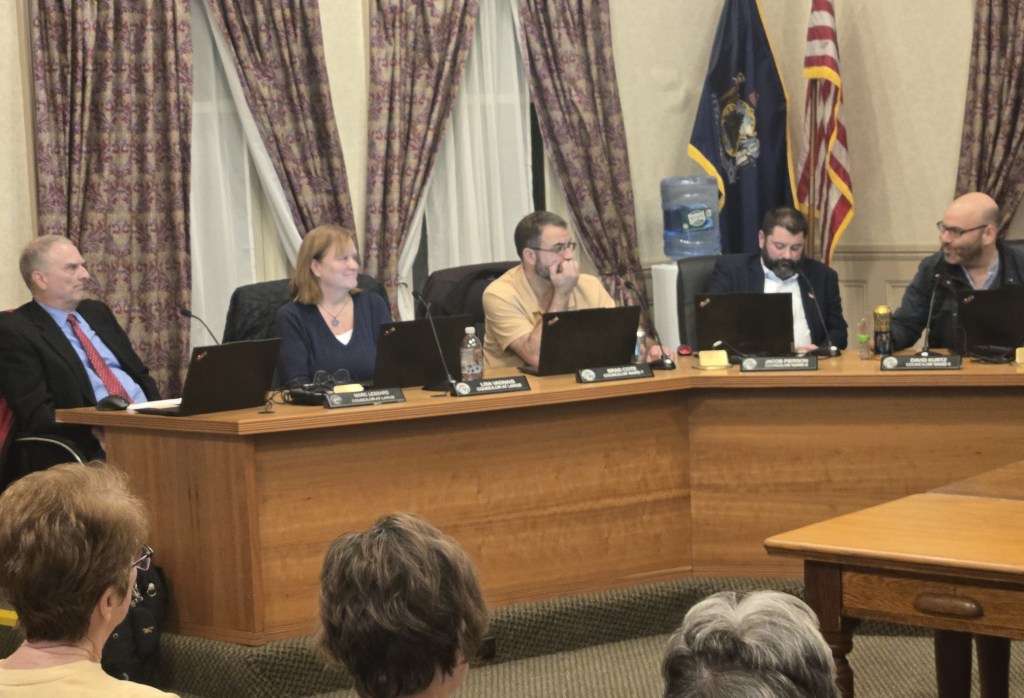
The Biddeford City Council took up several issues Tuesday night, including discussion about a controversial parking program that was launched last year (Seaver photo)
The temporary parking plan is no longer in place. It was designed to help struggling downtown businesses by providing them and their employees free parking during a major sewer construction project last year in the downtown area.
The city spent roughly $20,000 over a five-month period to fund the program. It was designed to be “net neutral,” transferring money from an account the city uses for subsidizing bi-annual payments to the company that operates the Pearl Street parking garage.
Councilor Brad Cote blasted the program and the city’s former mayor, saying he was outraged about how it was funded and implemented.
“This was done without the approval or knowledge of the Finance Committee or the city council,” Cote said. “This was a one-man show, and it was shooting from the hip. I think it’s awful and insulting to taxpayers.”
In December, Mayor Liam LaFountain – the former council president and chair of the finance committee — said he was flabbergasted when he first learned about the program months after it had been launched.
LaFountain then asked City Attorney Harry Center to investigate the issue. In his Jan. 3 memo to the mayor and city council, Center raised concerns about the program’s “process.”
But Councilor Jake Pierson said the issue is relatively benign.
“I think we’re making a mountain out of a molehill here,” Pierson said. “I guess I don’t understand the outrage. I see this as a waste of our energy and city resources.
“When we look at all the other issues facing the city, I see this as small potatoes,” Pierson added.
Councilor Marc Lessard – an outspoken critic of former mayor Marty Grohman – said his concerns were rooted in the process used behind the program’s funding.
“It was incorrectly done,” Lessard said, pointing out that the former mayor “lobbied hard” last year for a 35 percent increase to the Heart of Biddeford’s annual funding request.
The Heart of Biddeford – a non-profit downtown booster organization – coordinated the parking program, providing outreach and information to downtown businesses.
“This is yet just another example of mismanagement,” Lessard said. “It was swept under the rug, and it should have never happened.”
In order to reconcile the city’s accounting ledgers and prepare for future financial audits, the council voted 7-1 (Cote) to retroactively approve the project and redirect the expenditures from a different account in the city’s budget.
_______________
Randy Seaver is the editor and founder of the Biddeford Gazette. He may be reached by email: randy@randyseaver.com
Our municipal employees are the backbone of our communities. They plow our streets at three in the morning during snowstorms. They respond to service requests, maintain our infrastructure, and keep our cities running smoothly day after day. These dedicated public servants often work with limited resources, facing growing demands while dealing with staffing constraints and aging technology systems.
We owe it to them to provide every tool that can make their jobs easier, safer, and more effective. Artificial intelligence isn’t about replacing these hardworking people—it’s about giving them support so they can focus on what matters most: serving our residents.
Photo: Open.gov
Starting Small: Meeting Minutes and Administrative Tasks
The simplest place to start is often the most impactful. Consider the countless hours municipal employees spend transcribing meeting minutes, summarizing discussions, and producing reports. In Gray, Maine, Communications and IT Director Kyle Hadyniak has embraced this exact opportunity.
Gray uses Microsoft Copilot to create meeting recaps of Town Council sessions much faster than manual transcription would allow, with the AI automatically generating timestamps and natural language summaries that help Hadyniak turn around news articles in just an hour or two. This means residents get information about their local government faster, and it means one less tedious task weighing down a small municipal staff.
Gray adopted a formal AI policy in the summer of 2025 that requires staff training before receiving access to AI tools and emphasizes that AI outputs must be treated as draft material requiring human review. This responsible approach recognizes that technology should augment human judgment, not replace it.
The impact goes beyond time savings. When communications staff can produce meeting summaries quickly, they have more time for community engagement, answering resident questions, and improving accessibility. Hadyniak noted that small municipalities in Maine with fewer than ten full-time staff members would particularly benefit from AI tools to handle smaller administrative tasks.
Making Our Streets Safer and More Efficient
Syracuse, New York, demonstrates how municipalities can use technology to enhance essential services while maintaining transparency and community oversight.
For snow removal operations—a critical service in upstate New York—Syracuse’s Department of Public Works has implemented GPS fleet tracking and AI cameras on trucks. These systems don’t just monitor employees; they protect them. Cameras provide visual documentation of road conditions and can help verify crew safety and accountability. Real-time GPS tracking allows operations superintendents to optimize routes, respond to service requests more effectively, and ensure no streets get missed during storms.
Think about the worker driving a plow truck for twelve hours straight during a blizzard. That technology means their supervisor knows where they are, can send help if needed, and can verify their route is safe and efficient. It means fewer callbacks to streets that were already plowed and better coordination across the entire fleet.
The next generation of municipal AI applications will transform how cities deliver services:
Route Optimization for Waste Collection: AI can analyze traffic patterns, construction zones, and historical data to create more efficient garbage and recycling routes. Drivers spend less time in traffic, trucks use less fuel, and residents get more consistent service.
Predictive Infrastructure Maintenance: Machine learning can identify patterns in service requests and sensor data to predict when a water main might fail or when a road needs repaving—before it becomes an emergency. This helps cities budget more effectively and prevents those frustrating situations where the same street gets dug up multiple times.
Intelligent Website Navigation: Many municipal websites are difficult to navigate, especially for residents who aren’t familiar with government terminology. AI-powered search and chatbots can help residents find the right form, understand a regulation, or get connected to the correct department without spending hours clicking through menus or waiting on hold.
Smart Permitting Systems: AI can review permit applications for completeness, flag common errors, and route them to the appropriate reviewers automatically. This speeds up processing times for residents and businesses while freeing up permit staff to handle complex cases that need human expertise.
A Commitment to Our Employees
Our municipal employees didn’t sign up for endless paperwork and administrative burden. They chose public service to make a difference in their communities. We need to innovate to keep our taxes down, and every minute we can give back to our hardworking employees through smart automation is a minute they can spend on more meaningful work—and providing the personal touch that no algorithm can replicate.
As we move forward, the question shouldn’t be whether to embrace AI in municipal operations, but how to implement it responsibly in service of the dedicated people who serve our communities every day. They’ve earned our support, and technology is one more way we can show we value their contributions.
The future of municipal service isn’t about choosing between people and technology—it’s about using technology to empower people to do their best work. Our employees deserve nothing less.
_____________________
ABOUT THE AUTHOR:Marty Grohman of Biddeford is a former Maine State representative and former mayor. He has served as the Executive Director of E2Tech, a clean energy trade association, and built a successful manufacturing business in southern Maine.
Firefighters from several communities are now on scene at the former Sleepy Hollow Motel on Elm Street in Biddeford. A structure fire was reported shortly before 9 a.m. Tuesday.
One firefighter was removed from the scene by an ambulance from the Goodwins Mills fire department. It is unclear why the firefighter was taken from the scene.
Elm Street traffic near the Hannaford grocery store is closed to traffic in both directions.
This story will be updated as more information becomes available.
_________________
Randy Seaver is the editor and founder of the Biddeford Gazette. He may be reached by email: randy@randyseaver.com
c.) 2026 All Rights Reserved Biddeford Gazette, Inc.
City officials in Biddeford are breathing a sigh of relief today after learning that the IRS will be waiving more than $500,000 in fees and penalties that were levied against the city two years ago.
Furthermore, City Manager Truc Dever says the IRS will also refund roughly $200,000 that the city already paid in penalties that resulted from the city’s failure to file employee health insurance forms with the IRS in 2021.
The Biddeford Gazette first published information about the IRS penalties in March 2025,
“This is really great news,” Dever told the Gazette earlier today.
According to Dever, much of the credit for getting the fines removed were the result “of some very hard work” by staffers in U.S. Sen. Susan Collins’s regional office in Biddeford.
“Both Pam Buck and Andrea Sarris in Senator Collins office worked closely with the city of several months to help us resolve this issue,” Dever said.
Assessor leaving
The Gazette also learned today that City Assessor Deanne Vail has accepted a new job in the town of Scarborough.
Vail will remain at her current job in Biddeford until Feb. 26, according to the city manager
These reports will be updated as new information becomes available,
______________
Randy Seaver is the editor and founder of the Biddeford Gazette. He may be reached by email: randy@randyseaver.com
c.) 2026 All Rights Reserved — Biddeford Gazette, Inc.
Never miss another update! Subscribe for free today!
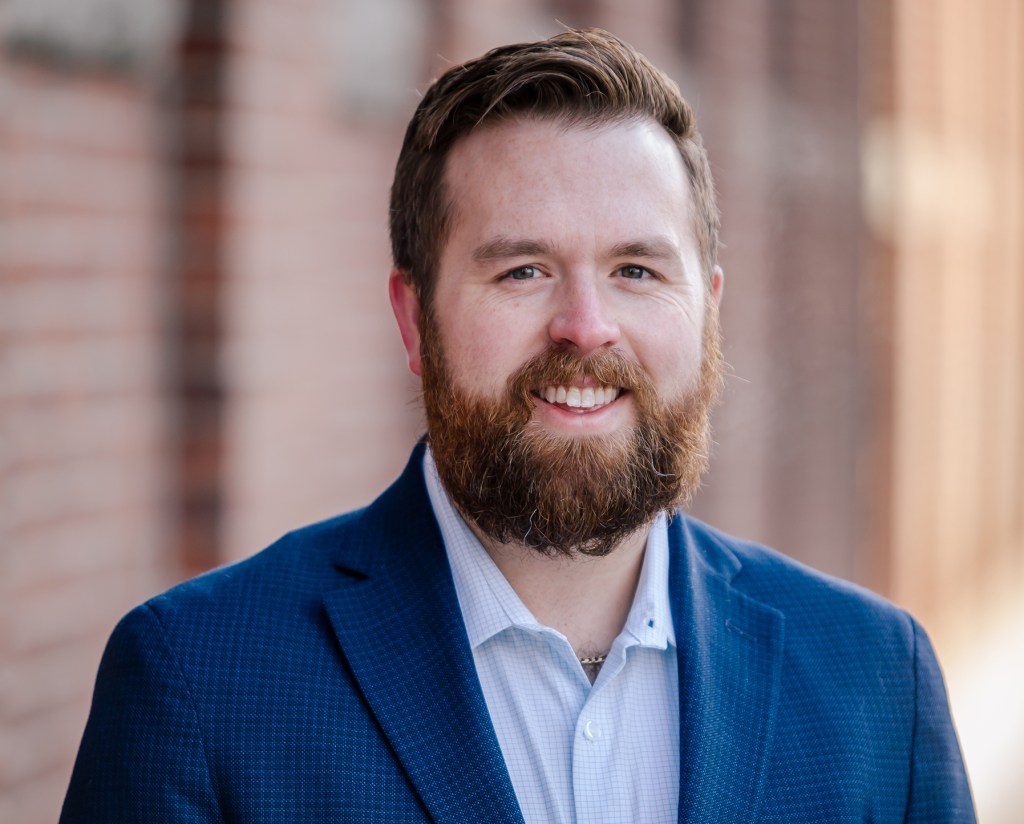
Brian Pellerin — deputy chief of the Cumberland County Sheriff’s office — recently announced that he is running for York County Sheriff in the November 2026 election.
“I am running as a principled independent candidate, committed to professional, nonpartisan leadership in public safety,” Pellerin wrote in a press release that was sent to several media outlets in southern Maine.
Brian Pellerin, IndependentBill King, Incumbent
The York County Sheriff’s Office operates the York County Jail and provides law enforcement to 14 rural towns without police departments. The Sheriff’s Office also provides contract deputies to several municipalities within the county and maintains a civil process division.
According to the Maine Secretary of State’s office, incumbent Sheriff William King – a Democrat –will be seeking a fourth, four-year term. First elected sheriff in 2014, King – a Saco resident — began working at the Sheriff’s Office in 2010.
King did not return the Gazette’s request for comment on Monday.
For his part, Pellerin says he is running as an independent candidate because the sheriff’s office “must remain above partisan politics.”
As of Monday, no Republican candidate has yet filed the required candidacy paperwork for the York County sheriff’s position.
Pellerin says the job requires accountability, transparency and a clear focus on putting people over politics.
“I have more than 30 years of law enforcement experience at the local, county, state, and federal levels,” Pellerin wrote in his press release. “I currently serve as Chief Deputy of the Cumberland County Sheriff’s Office, a nationally accredited agency serving more than 300,000 residents.”
Pellerin – a Saco native – today lives in Dayton, where he has resided for more than 20 years and served as a community volunteer, coach and civic leader.
Pellerin previously spent more than two decades as a federal special agent with the U.S. Secret Service and the U.S. Department of Health & Human Services Office of Inspector General, conducting complex investigations and protective operations both domestically and internationally, according to his press release.
“The Sheriff’s Office exists for no other reason than to serve and protect the people of York County,” Pellerin said. “In the coming weeks and months ahead, I look forward to earning the trust of voters and building a Sheriff’s Office that sets the standards for professionalism, accountability and service.”
_________________
Randy Seaver is the editor and founder of the Biddeford Gazette. He may be reached by email: randy@randyseaver.com
c.) 2026 All Rights Reserved Biddeford Gazette, Inc.
According to blogger Mat Zucker, it is becoming more and more important for news outlets to have a pithy, clever tagline that differentiates them from an overflowing pot of news sources and media sites.
“The motto of a news organization is more than just marketing,” Zucker writes. “It’s a declaration of journalistic purpose. These short phrases encapsulate an outlet’s mission, values, and unique approach to reporting.”
Help the Gazette create a tagline, get a gift certificate to Reilly’s Bakery File photo
As the Biddeford Gazette begins its second year, I’m asking our readers for suggestions and ideas about a possible tagline for our humble, hyper-local organization.
To get your creative juices flowing, here are a couple of ideas that have been rattling around in my mind.
We could co-opt the New York Times famous tagline: “All the news that’s fit to print,” how about this?
The Biddeford Gazette — All the Biddeford news that’s fit to publish on the internet.
Or maybe we could bend this oft-mentioned piece of writing advice:
Biddeford Gazette — An economy of words; a wealth of Biddeford information
One of my favorite potential taglines came to me last year while talking with former mayor Marty Grohman:
The Biddeford Gazette — We’re free, and we’re worth it!
Of course, we could always take the serious and boring route:
The Biddeford Gazette — Your trusted source for Biddeford news and information;
According to the experts, your tagline should really describe your brand and reputation. So, how about:
The Biddeford Gazette — There’s no such thing as a day off in our newsroom?
But my all-time favorite has to be this one from a former colleague who wished to remain anonymous:
The Biddeford Gazette — Where cranky, old-school journalists go to die in southern Maine.
That story was one of the most popular pieces we have published. Dozens of people emailed me their own recollections and the stories that were passed down from generation to generation.
At first blush, I considered Malon’s proposal to be yet another example of government overreach into private affairs, but he convinced me otherwise.
In closing, a funny story about the power and benefit of local news, the flexibility of the internet and accessible reporters. Malon really liked the story, but he was a bit uncomfortable with our original headline: “Online gambling addiction troubles Biddeford lawmaker.”
When Malon texted me to ask if we could change the headline, I was more than happy to oblige. Some people were inferring that Malon was having personal problems with a gambling addiction.
One of my old editors – Harry Foote – was likely rolling in his grave. I had forgotten the most basic fundamentals of headline writing: Short, clear in subject-verb-object order.
And that’s a wrap! Stay warm and be safe!
P.S. Oh, yeah. . . . almost forgot to mention: The Biddeford Gazette is now a registered and incorporated as a non-profit entity in the state of Maine!
____________
Randy Seaver is the editor and founder of the Biddeford Gazette. He may be reached by email: randy@randyseaver.com
c.) 2026 All Rights Reserved, Biddeford Gazette, Inc.
Never miss another update! Subscribe for free today!
Over just the last few years, online gambling has exploded in popularity all over the country and its impacts are being felt here in Maine — on several different fronts.
That gambling explosion – especially the rise in online sports/fantasy wagering – has also caused some problems, most notably a sharp increase in gambling addiction.
In response, State Rep. Marc Malon (D-Biddeford) has introduced a bill to provide additional safeguards for Mainers struggling with gambling addiction. LD 2080, Malon says, is designed to prohibit the use of credit cards in online sports betting.
State Rep. Marc Malon (D-Biddeford) testifies before the Legislature’s Veterans and Legal Affairs Committee. Committee about his bill to prohibit the use of credit cards for online sports betting (Contributed photo)
Although at first glance, it may seem that his proposed legislation is just another example of government overreach into private affairs or the expansion of a so-called “nanny state,” Malon points out that several large, national gambling sites already prohibit the use of credit cards for online sports betting.
In fact, DraftKings – one of the nation’s largest online fantasy sports and sportsbook betting sites – decided last year to discontinue allowing its players to use their credit cards for online wagers.
“You can rack up a lot of debt real fast by using your credit card,” Malon said. “That’s especially true in the highly addictive realm of online gaming.”
Malon also points out that current state law prohibits the use of credit cards at casino slot machines.
During an interview last week with the Gazette, Malon said he struggled when Gov. Janet Mills did not veto an internet gaming bill. “That was one of the hardest decisions I had to make as a state legislator,” he said.
According to the National Institutes for Health (NIH), online gambling addiction is a growing problem in the United States.
In Maine, more people are calling the Maine Problem Gambling Hotline since the state legalized online sports betting over a year ago, according to a Feb. 7, 2025 story by Madi Smith of Maine Public.
In 2018, a Supreme Court ruling struck down a federal sports betting ban, and gambling skyrocketed in subsequent years. Today, roughly 22 percent of Americans—and 48 percent of men ages 18–49—report having at least one online sportsbook account, according to the Siena Research Institute.
As of December 2025, 31 states, plus Washington, D.C., allow for some form of online sports betting, according to Hopkins Bloomberg Health Magazine.
“Legal and regulated gaming creates jobs and provides significant revenue to our state,” said Malon. “But as the popularity of sports wagering grows and as iGaming comes online, the Legislature must prioritize measures that balance sports betting’s economic benefits with modest guardrails to protect Mainers from addiction and falling into debt. This bill strikes that balance.”
Malon cited research which shows that enabling credit card payments for online betting and sports gambling contributes to higher wagering amounts, increased rate of compulsive gambling and greater financial consequences, as people can more easily accumulate debt.
There are currently seven states, including Maine’s neighbors of New Hampshire and Massachusetts, that already have this prohibition in place, Malon said.
In related news, the owners of Oxford Casino — one of Maine’s two casinos – told WGME-TV earlier this week that they will be suing the state over a new law that allows Maine’s four federally recognized tribes to offer iGaming.
Oxford Casino calls that an “unlawful monopoly” and says it’s “discrimination” based on “race.”
The lawsuit says internet gaming could take away from its revenue, causing “substantial job losses and hundreds of millions of dollars in lost economic output.”
____________
Randy Seaver is the editor and founder of the Biddeford Gazette. He may be reached by email: randy@randyseaver.com
c.) 2026 All Rights Reserved
Never miss another update! Subscribe for free today!



























 BIDDEFORD GAZETTE