Mayor says the goal was always to ensure transparency and accountability, but it does not make sense to continue a legal challenge against the Saco River Corridor Commission
By RANDY SEAVER | Editor
The University of New England has moved at least one step closer to beginning construction of their controversial research pier on the Saco River.
On Tuesday, Biddeford Mayor Liam LaFountain announced the city is withdrawing its complaint against the Saco River Corridor Commission (SRCC) regarding that agency’s approval of the proposed pier.
In December — just days after being sworn into office – the newly elected mayor and city council filed a complaint against the SRCC in York County Superior Court.
City officials said at that time they were hoping for legal clarification about a 250-foot shoreline buffer that was overlooked when the SRCC approved the pier project in 2024.
RELATED | City files court challenge of UNE pier approval
The SRCC held a public hearing and later ruled 7-3 on August 26 that their prior approval of UNE’s pier was valid. Subsequently, the SRCC granted UNE a time extension for their project.
LaFountain said the decision to withdraw the city’s court challenge only made sense, given the SRCC’s reaffirmation of the project two weeks ago.
“Biddeford residents raised legitimate questions about whether that longstanding shoreline protection was being honored,” LaFountain said. “We wanted those questions investigated, and now we have a definitive answer from the SRCC, so there’s really no need to keep pursuing our court challenge.”
UNE campus development moratorium still in effect
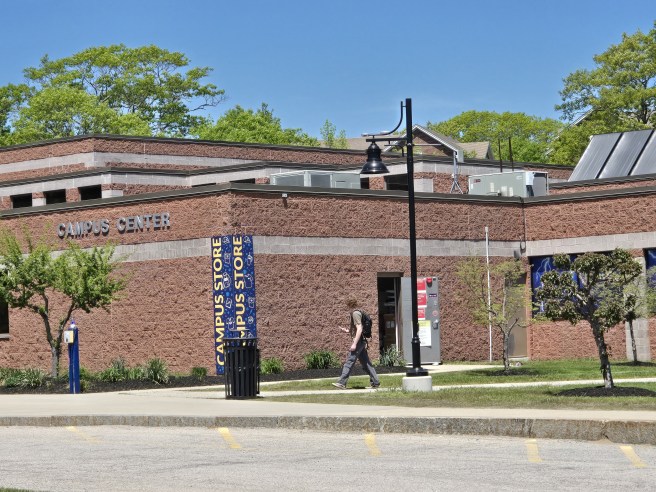
Despite the city’s decision to withdraw its legal challenge against the SRCC, the university still has its hands tied and cannot immediately begin construction of the 180-foot, year-round pier.
The delay is because of a city-imposed development moratorium that prevents all development at UNE’s Biddeford campus.
The Biddeford City Council voted unanimously to approve the moratorium in January, saying that the city needed some breathing room when considering rapid development on UNE’s campus.
The university and many of its supporters cried foul, but city leaders said the moratorium was necessary because the Institutional Zone that surrounds the Biddeford campus had not been addressed or updated in more than 25 years.
In May — after losing an appeal before the Biddeford Zoning Board of Appeals — the university filed its own lawsuit against the city, arguing that the moratorium was little more than an “attempt at retroactive zoning.”
In their case against the city, school officials pointed out that they had already received all the required permits to build the pier, including approval by the city’s own planning board.
RELATED | UNE files lawsuit against Biddeford
Tensions between UNE and the city continued to escalate throughout the spring. James Hebert, UNE’s president, described the relationship between the school and city as “broken” in an open-letter he sent to local media outlets.
Next steps?
When the city council decided to impose the moratorium on UNE’s campus in January, they also voted to re-establish an Institutional Zone Review (IZR) Committee to review and make recommendations about zoning standards in that same part of the city.
LaFountain appointed UNE’s president to serve on that committee, along with two city councilors and three Biddeford residents.
City Councilor Patricia Boston represents the city’s coastal neighborhoods and serves as chair of the IZR Committee.
Boston said the IZR Committee has held numerous, in-depth meetings over the last few months. She said the committee will meet on Sept. 17, when they are expected to issue a final set of recommendations to both the city’s planning board and city council.
LaFountain said both the planning board and city council will hold two public hearings on the IZR’s recommendations. The review timeline means UNE may not get a building permit until sometime near the Thanksgiving holiday.
UNE’s Response
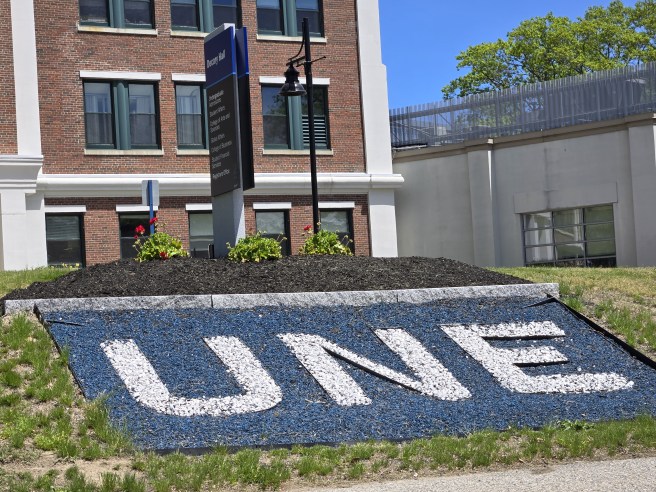
“The University of New England appreciates the city’s decision to dismiss its appeal and welcomes the clarity provided through the Saco River Corridor Commission,” said UNE spokesperson Sarah Delage.
Delage said the SRCC’s Aug. 26 vote reaffirmed the validity of UNE’s permit and confirmed that activities within the 250-foot vegetative buffer remain subject to the commission’s oversight and approval.
Delage said UNE is confident that their project can move forward without any adverse environmental impacts. “We are hoping for a return to a strong and collaborative relationship with the mayor and city council for the benefit of Biddeford residents and UNE students alike.”
With regard to next steps, Delage said there should be no reason for the city to further delay issuing permits, pointing out that the city has stated that the IZRC’s recommendations are for future projects and won’t apply to the pier project.
Questions about the SRCC remain
“Spending additional taxpayer
— Mayor Liam LaFountain
dollars to continue litigation
under these circumstances
is not the responsible way forward.”
Biddeford officials say the SRCC’s Aug. 26 decision represents “a clear and significant departure from their 2001 written findings of fact, in which SRCC commissioners determined that “a 250-foot no development buffer is the most secure method of protecting the river from land use development impacts in perpetuity.”
During the SRCC’s August 26 proceedings, its chairman, Benjamin Pinault, characterized his agency’s authority, saying “we are allowed to amend our own stuff at any time.”
The SRCC was established in 1973 to protect the Saco River watershed. It is a quasi-state agency with zoning and permitting enforcement authority along the length of the river in Maine, from Fryeburg to the ocean.
LaFountain says the SRCC’s Aug. 26 ruling changed the landscape and essentially made the city’s complaint a moot point.
Despite the outcome, LaFountain said the city’s complaint against the SRCC accomplished its essential purpose by bringing the 2001 shoreline protection into full public view and requiring the SRCC to address it directly.
“Spending additional taxpayer dollars to continue litigation under these circumstances is not the responsible way forward,” LaFountain said.
“We wanted the 2001 record examined, and important questions answered,” Boston said. “In 2024, the SRCC acted without considering the 250-foot protection of an area that includes but also extends well beyond the proposed pier project. In 2026, it acted with full knowledge of it. Our persistence helped bring the underlying issue into the open, and that matters.”
LaFountain described the Saco River as one of Maine’s great environmental treasures.
“The city pursued this appeal in good faith on behalf of residents who deserved to know whether a longstanding protection of its shoreline was being honored,” the mayor added. “That question has now been answered, and Biddeford will move forward by continuing to advocate for responsible stewardship of the river and transparency in decisions affecting our shoreline and natural resources.”
.
This story was made possible by the generous support of our readers and these sponsors. Learn about our sponsorship opportunities | CONTACT US




.
STAY CONNECTED | SUBSCRIBE FOR FREE TODAY
.

BIDDEFORD GAZETTE
“Keeping You Connected to Biddeford”
Editorial Standards & Policies
© 2026 Biddeford Gazette, Inc. All Rights Reserved
 BIDDEFORD GAZETTE