Feedback from our readers reinforces the Gazette’s mission statement
Wow! What a busy week it’s been.
In a few moments, I’ll be headed out the door and on my way to this year’s WinterFest activities in downtown Biddeford.
WinterFest is so much than just a giant man-made sledding hill on Adams Street. It is now three-days of various activities and fun for people of all ages. Over the last 14 years, WinterFest has grown and become one of Biddeford’s most notable community events.
But none of it would be possible without dozens of volunteers and community sponsors. Go here: to learn more about this year’s WinterFest celebration.
Good times return to Biddeford for annual WinterFest celebration. File photo: Devin Wright
A peek behind the scenes at the Gazette
Speaking of celebrations, Laura and I — and some of our closest friends and supporters –celebrated a few milestones achieved this week by the Biddeford Gazette.
It’s mostly some little, housekeeping things — but they all reinforce the idea that the Gazette has grown from just a simple concept to a full-fledged media outlet.
This week, we received our registration papers as a non-profit media company and secured a PO Box for the Gazette. We also opened a business bank account at PeoplesChoice Credit Union. Things are getting real!
We also updated our website with a few new static pages, most notably a section that details our Standards and Policies and a page that describes our history, but there is another new page that leaves me almost speechless and close to tears each time I look at it.
Support from the community
If you get a chance, please check out our READER FEEDBACK page. We have archived some of the comments we have received from the community over the last few months.
If you want to know why I do this, what motivates me and keeps me going — check out some of the feedback we have received from our readers. From my perspective, these comments are more valuable than gold. Thank you so much!
If we pick your suggestion, you will score a $20 gift certificate to Reilly’s Bakery on Main Street. Talk about motivation.
What’s ahead?
It’s election time again, and the Biddeford Gazette will soon begin our coverage of local legislative and York County races with the comprehensive approach that our readers have come to expect.
We also plan to do a deeper dive on several issues now brewing just beneath the surface in Biddeford. Stay tuned! We have some good stuff in the pipeline!
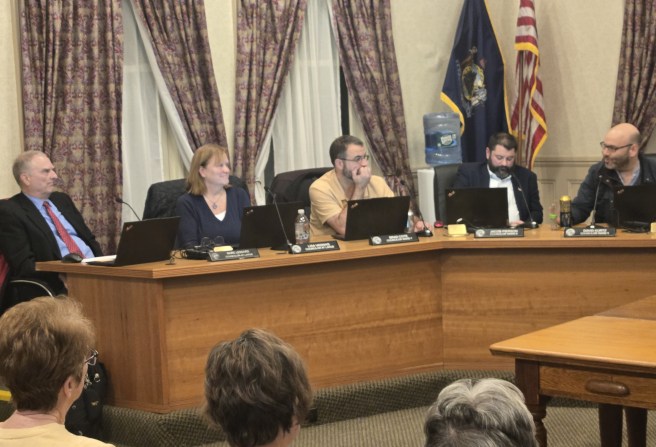
The Biddeford City Council discusses a controversial downtown parking plan that has been discontinued.
From the “Very Good News” department: we posted an update this week, letting people know that the IRS has opted to waive more than $700,000 in penalties and fees dues to some missing health insurance forms on the city’s 2021 tax return.
The Gazette first broke that story last year, and it’s nice to see that it was resolved with a positive outcome.
Okay, now it’s off to WinterFest! We’ll be posting some photos of this year’s celebration later today.
Be safe! Stay Warm! Have fun and . . . Go, Patriots!
______________________
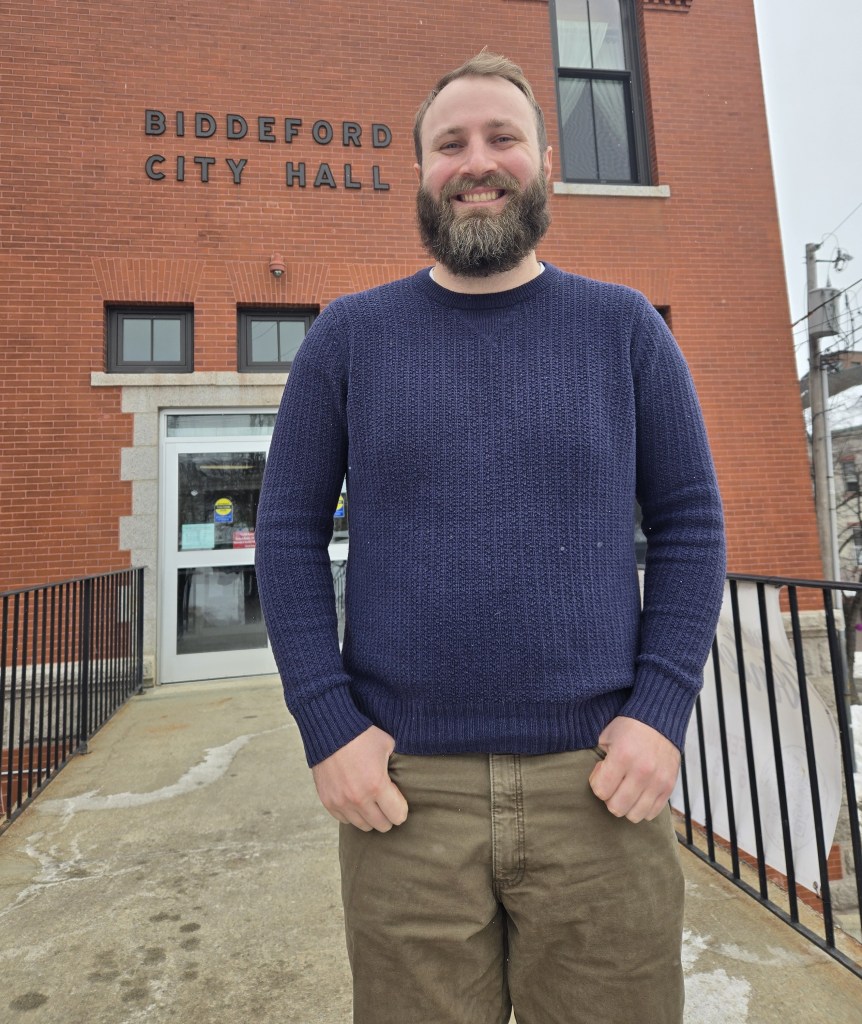
Randy Seaver is the editor and founder of the Biddeford Gazette. He may be reached by email: randy@randyseaver.com
You may view and learn more about our editorial standards and policies here:
The Biddeford City Council received an update Tuesday regarding how the city’s local allocation of Opioid Settlement funds has been used over the last year.
The funds come from several class action lawsuits that were filed against opioid manufacturers and distributors roughly 10 years ago.
Jake Hammer, Biddeford’s General Assistance supervisor, gave the Biddeford City Council a presentation Tuesday about how the city is using its portion of the Opioid Settlement Funds.
The defendants – including Johnson & Johnson, Walmart, Walgreens and CVS –reached a $56 billion settlement with those states, counties and municipalities that filed suit against them. The funds can only be used to provide for treatment and other services directly linked to opioid use.
Opioids — more commonly known as “painkillers” — are often prescribed to treat severe pain. They can be highly addictive and addiction causes consequences for communities in terms of crime, economic instability and fractured interpersonal relationships.
Examples of opioids include Oxycontin, Fentanyl and Demerol.
According to reporting by Emily Bader from The Maine Monitor, Maine communities and counties have received roughly $20.3 million from the $66.4 million they’re set to receive by 2038.
The money, Bader reports, “has been used for a wide range of initiatives, from grants to community organizations providing recovery services to scholarships for residential treatment beds.”
Biddeford’s General Assistance Supervisor — Jake Hammer – provided the council with an annual overview of how the city has been handing its portion of the funds allocated to Maine communities.
According to Hammer, the funds began flowing in 2022 and are scheduled to continue through 2038.
Hammer told the council that at least 70 to 85 percent of the funds must be used for future opioid remediation, including treatment, harm reduction, prevention, and recovery services.
In September 2024, the city council adopted an ordinance to track and report how the city’s share of Opioid Settlement Fund (OSF) is being used.
A little more than a year ago, the city council approved an OSF Strategic Action Plan, Hammer said. That plan includes Strategic Goals and measurement criteria, which are required by the Maine Attorney General’s office, as spelled out by state law.
Hammer told the council that the city now has six recovery residences — total of 95 beds –available for those struggling with opioid addiction. Roughly 83 percent of the city’s allocation last year was used to support those residential facilities.
The city received roughly $378,039 during the last calendar year as its annual allocation of funds.
Hammer also supplied the council with some demographic information about the 58 people who have requested addiction treatment during the past year.
The bulk of those requesting or applying for services were white men (44), Hammer said. 18 individuals identified as having a physical or mental disability; and 14 applicants were employed when seeking services.
Councilor Dylan Doughty asked if the city could use some of its allocation for further public outreach about treatment options in the city.
“That is absolutely something we can do,” Hammer responded.
A new program is being launched in Biddeford to help find work opportunities for unhoused individuals in the community.
Organizers are calling it the “Biddeford Opportunity Crew,” and it is a collaborative effort between several organizations to help “champion a workforce with purpose.”
The Biddeford Opportunity Crew is a new initiative based on a nationwide model that provides paid, meaningful work for local residents who face barriers to traditional employment. Primary project partners include the Biddeford-Saco Chamber of Commerce, Seeds of Hope, the Heart of Biddeford and the city’s General Assistance office.
Organizers say the new program will “give participants purpose, income, job readiness, and a direct way to contribute to the community.”
In a notice released by the Chamber, organizers said that “many people in our city want to work — but are held back by housing instability, a prior record, lack of transportation or work clothes. The Opportunity Crew will give them a path forward.”
From June 1 through Labor Day, a supervised team of five individuals will be hired to complete beautification and maintenance projects throughout the city – from public parks to sidewalks to eligible clean-up tasks for small businesses. Workers will earn minimum wage, receive breakfast and lunch, and be supervised by a city staff member. The program will operate two days a week for the pilot year and be managed through the city of Biddeford’s General Assistance office.
This will be a city-run program, but it’s powered by community partnership, say organizers, hoping area businesses will help support the new program with donations, sponsorships and job opportunities. Participating businesses will be mentioned in press releases and updated social media posts about the initiative if desired.
“I’m really excited about this program,” said Vassie Fowler, executive director of the Seeds of Hope Neighborhood Resource Center on South Street. “We’ve been talking about this for a few months, and I think it’s going to be a really great opportunity for people trying to put their lives back together.
“We want to help people restore their dignity and self-worth,” she added.
Fowler said the new program will not be mandatory or a requirement to receive benefits. Instead, the new program is intended to give unhoused people an opportunity to begin putting their lives back on track.
To learn more or become a sponsor of the new program, please contact Jake Hammer, Biddeford’s General Assistance Supervisor at | 207.298.3913 or jacob.hammer@biddeformaine.org
Never miss another update! Subscribe for free today!
I usually arrive for my shift at the Seeds of Hope Neighborhood Center a little before 9 a.m. to get coffee going, but on this Monday, I am also delivering a large pan of American Chop Suey. Since I am not a native Mainer, I have no idea why this is the name for what is essentially a noodle casserole, but it’s good and eagerly awaited. Several more pans arrive just after me, and what passes for a kitchen is a bit chaotic as we volunteers get ready to start serving.
The neighbors — (how Seeds of Hope describes the people we serve) some of whom have spent the night upstairs — are already in place at tables scattered throughout the dining room. All 36 seats are filled, and more people come through the front door as 9 a.m. It’s all ages, all backgrounds and races, and a mix of people who are staying upstairs, a few still living rough and those who live nearby and come for the meals and for the companionship.
A community gathers/ Photo courtesy Seeds of Hope
While waiting outside for one of the pans to arrive, I am approached by a young woman who wants to know if she can come inside. I tell her it’s not up to me and ask her why she wouldn’t be allowed. Turns out that last night she had smoked a blunt with some other stuff in it and ended up on the emergency room after causing a ruckus. She’ll need to sit down with staff before being let back in.
As the clock hits 9 a.m. we get busy getting out coffee, juice, milk, cereal, and taking orders for toast, waffles or English muffins. Then the bowls of Chop Suey go around and the room gets quieter for a bit.
We expect to serve about 50 people in the first 45 minutes, so it’s a hustle. There are usually four or five us serving food, including regulars Lee on the toaster and Carmelita Alison making and dishing out hot food, soup or sandwiches and a volunteer running for supplies and keeping trays filled. We are all volunteers, with the staff (Sylvia, Amanda and Jackie) stepping in as needed.
Today there is also one of the overnight staff who has stayed on to help out. At this point, we all know our jobs very well and know each other quite well too. As the morning goes on there is time to catch up and learn more about each other.
Because the new kitchen is not finished, what passes for a kitchen right now is all crammed into one end of the dining room. There is a table for cereal and condiments, a refrigerator, a coffeemaker, a sink, a stove and an industrial toaster. People are learning the dance of working together in very close quarter and even a minor spill is quite rare. But we do look forward to what a real kitchen will bring. The appliances are on order, I am told.
I see most of the same faces at the tables week after week, and many of the same groupings of families and friends who sit together and pass the time after eating. Today there is one family with two kids playing with new Christmas toys. A young woman is rotating the fishing game because the batteries have died.
At another table, a young man who keeps to himself is three-quarters through a jigsaw puzzle. People are giving the puzzle master a respectful space but still keeping an eye on his progress. On another Monday morning I watch a young man practicing card tricks. Pretty good but needs more practice.
Seeds of Hope occupies an old church building. It’s only in the last year that funding has come in to start renovations, and much of the lower level is pretty much in its original state. It’s tight.
Of course, in any environment where people are close together there is drama, but it’s not always evident to us volunteers.
Now that people are sleeping upstairs, there is even more compressed togetherness. That works for some people better than others. We know that there are still people sleeping outdoors, but now they are in out-of-the-way places. I serve one man who keeps ordering food because he’s famished having spent the night in our bitter cold. He says he’s not yet ready to go inside.
Public support for the homeless in Biddeford continues to evolve and expand as more people and organizations figure out how they can be effective.
I don’t often have time to sit and chat, but today my knee is bothering me, and I sit with people I don’t know well. The man opposite me works at Domino’s and is sleeping upstairs. We talk a bit about employment in Biddeford. I know of several others who come in after night jobs, and a few who head to work after eating. I am noticing one grouping of younger people and wonder about jobs and training for them.
Joe (I’ll call him), a gregarious regular who has made a life for himself sleeping in his car, is sitting glumly by himself. His car heater exploded over Christmas week and the car is a total wreck, without windows and doors and is currently being inundated by the rain.
“I don’t know what happened,” he says, one minute he’s looking at his phone and then there is a big flash and boom. He has scabs on his face and hands and feels lucky to get out alive, but all his possessions are in that car. And it’s raining.
Joe is not unusual at Seeds in that he has enough income for gas and food, but nowhere near enough to get a place to live unless he can find subsidized housing. Now he is staying at Seeds and is not happy with the “gravity chairs” that substitute for beds (because of state regulations).
One bright spot is that in order to stay at Seeds Joe was required to register with the city of Biddeford’s General Assistance (GA) Department. The GA department is now directed by a former outreach worker for the police department, Jake Hammer. Jake is now the central intake point for a variety of services, including programs that can help place people in affordable housing.
More to the point, some of those who go through GA also give permission to be part of the brainstorming sessions held on Monday mornings. These “huddle” meetings include city officials, representatives from the Biddeford Police Department, the Biddeford Housing Authority and various service providers. Mayor Marty Grohman is a regular attendee.
The goal of the “huddle” meetings is to get unhoused people into some form of housing as quickly as possible, and also to link them with service providers who can assist with health, addiction and mental health issues.
We’ll see. It’s slow going because there is so little affordable housing available in Biddeford. Everybody is keeping an eye on Washington D.C. and the new Administration to see what happens to federal programs, including funding for Section 8 vouchers and Community Development Block grants.
The huddle group is succeeding in finding housing for an average of one person per week.
“Housing may look different than what we would expect,” says Seeds of Hope’s executive director, Vassie Fowler.
“Traditional housing isn’t always the best fit for neighbors who experience chronic homelessness,” Fowler explains. “Group homes, sober living houses, single room occupancies are all viable options for getting people successfully housed.”
The people doing this work are treating it as a learning experience, constantly thinking about who else needs to be in the room. They are also thinking about how to reach those few neighbors who remain outside in this bitter weather. (A new issue for Biddeford is that as services here become more well known, other municipalities and over-stressed providers are sending their overflow here.)
The cities of Waterville and Biddeford are featured in a newly released ”White Paper” from the Maine Statewide Homeless Council titled Ending Homeless Encampments in Maine. The paper notes the extremely difficult problem Maine faces with a huge gap in affordable housing.
Public support for the homeless in Biddeford continues to evolve and expand as more people and organizations figure out how they can be effective.
This morning, there is a group of ladies camped in the still-unfinished kitchen offering basic first aid and a few supplies like socks and nail care. They are from a variety of churches in the Kennebunk area and come to Seeds several times each month.
There is also a line of people waiting for clothing, which is another service Seeds provides.
The meals that came in today are from a church in Biddeford Pool, which does this once a month. More home-cooked food seems to arrive daily. Another new development is that New Life Church has acquired a building off Alfred Street near the post office that is designed to serve as a faith-based outreach and service center for unhoused people and people at risk.
But the reality is that since closure of the encampment at Mechanics Park last summer, the old church building that Seeds of Hope currently occupies is close to capacity.
Staff and volunteers from Second Congregational Church across the street are frequent visitors. They also host the Bon Appetit evening meal, so there is a lot of familiarity with the same set of people and a lot of informal communications between the two organizations.
Second Congregational is an active church, which makes it difficult for it to dedicate more space than it already does for community services, or to get federal and state money to do what they do now for free.
As volunteers, we get to know some of the neighborspretty well, with relationships that vary from casual to pretty serious. Seeds is the kind of place where some locals get quite involved in the lives of individuals, but for the most part that’s not us volunteers. The staff, on the other hand, have a very hands-on relationship as they tackle individual problems or opportunities and pass problems on to appropriate partners.
Today was clean-out day, which had been advertised for months in every possible way so folks were forewarned. Stuff that people have left behind that they had hoped to retrieve later but never did. It now overflows a back-room that serves as both storage and laundry room. A couple of volunteers fill bins and cart them out to the street and into a dumpster that has just been delivered.
This is not a happy task. Even though these items were clearly abandoned there are always people who hate to see personal stuff go, and others who hate the idea of not recycling stuff that seems perfectly good.
Seeds does have some very limited storage space, but is otherwise bursting at the seams.
Each neighbor staying in the newly refurbished upstairs has their own tote basket so they can leave their valuables there with confidence they will be safe. They also have access to new bathrooms with showers, as well as the plentiful food, an unending supply of clothes, and as the weather gets colder, a safe place to keep warm.
Seeds of Hope Neighborhood Center is a place that emphasizes community and caring.
“We can’t meet all of the needs,” Fowler said, “but we are doing our best.”
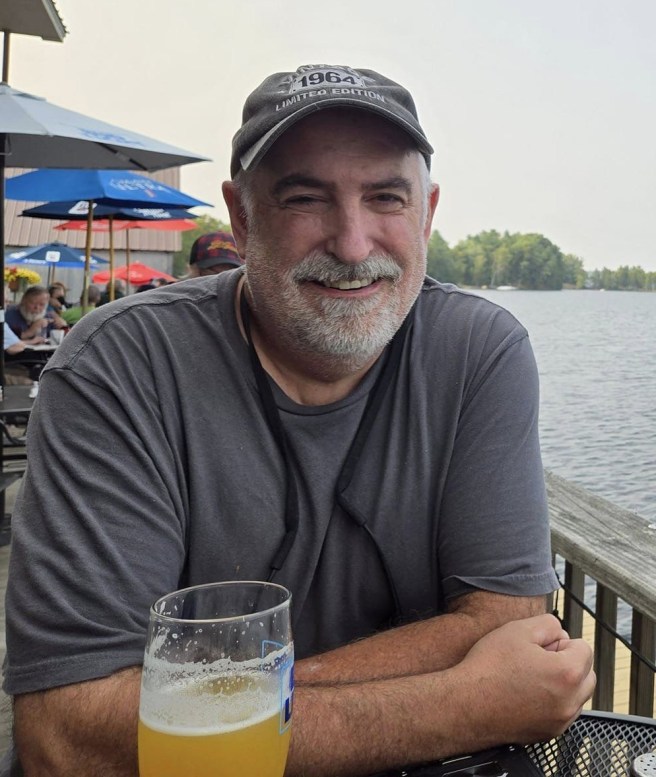
Thomas McPheeters is community volunteer at the Seeds of Hope Neighborhood Resource Center on South Street. He is a former journalist and a Biddeford resident. He can be reached at tommcp@me.com
If you would like to contribute an op-ed or column regarding local interests, please send an email to biddefordgazette@gmail.com
Editor’s note: The views expressed here are solely those of the author and do not necessarily reflect the views and opinions of the Biddeford Gazette.
Never miss another update! Enter your email to subscribe for free today!




 BIDDEFORD GAZETTE