ALFRED — A couple of classes of the Citizens Police Academy conducted by York County Sheriff’s Office this winter included law and the US Constitution. It was part of the nine-week program that saw students learn everything from how to conduct a traffic stop to the role of police dogs – typically called K9s – to crime scene processing and use of force.
Among the 16 graduates of the program were Bob Dyer and Matt Ryan. Both had been members of the inaugural academy in 2025 and enjoyed it so much they signed up for 2026.
“It’s a good way for the community to see what’s going on behind the scenes,” said Ryan, who said he is interested in a career in law enforcement.
PROUD GRADS | Academy grad: After 27 hours of instruction and a ride along with a deputy, 16 members of the YCSO Citizen Police Academy graduated March 6. The evening classes encompassed an array of topics, from crime scene investigation to the special response team, K9 handling, dispatching, jail operations and much more. The academy is held each January and February. (Tammy Wells Photo)
Dyer said he found the first academy so interesting he was eager to sign up for the second. “I was amazed at the amount of time they spent on law and the Constitution,” said Dyer. And then came mock traffic stops, conducted in the drill hall of the York County Regional Training Center. “At night it was really dark,” said Dyer, with the vast drill hall simulating what it is like outside on a moonless night. “That was a whole new scenario.”
Program administrator Deputy Matt Cummer said the class of 16 was a diverse group that included retirees, lawyers, healthcare workers and others who took time out of their busy weeks to attend.
The graduates were recognized on March 6, at the sheriff’s office annual awards ceremony.
“I liken the citizen police academy to the Wizard of Oz movie – we give people a glimpse of what goes on behind the curtain,” said York County Sheriff William L. King “The citizen academy is not only interesting to the participants, but gives them a true appreciation of the challenges of policing in a rural environment.”
Katarina Champlin works in a hospital emergency department and married into a police family.
“I wanted to see the aspects of what they do,” said Champlin, who said crime scene processing and investigations were her favorite parts of the program.
“I’ve always been intrigued,” said Anthony Legueux. “It was interesting.”
Topics for the free program includedpolice patrol operations and tactics, communications, fingerprinting, jail operations, crime scene processing, political implications, investigations, community policing, constitutional law, use of force, K9 utilization, and special response team operations. In all, it was a 27-hour program plus a required ride-along. Those applying agree to a background check.
FAVOITE PART OF THE CLASS | K9: A popular topic at the YCSO Citizen Police Academy is the use of K9s in all manner of investigations. Here, Deputy Cody Frazier and K9 Rebel take a turn around the drill hall. (Courtesy Photo)
“Everyone is interested in the K-9 part because dogs are cool, but I think students got the most out of the use of force class, reviewing case law on the subject and (now) understand how law-enforcement officers are judged when using force – it can be eye-opening,” said Cummer.
Graduates included Ilene Kanoff, John Burrows, Karen Furrow, Roycean Weyand, Katarina Champlin, Danny brown, Anthony Lagueux, Andrew Lehmann, Elaine Guillemette, Thomas Collins, Matt Ryan, Robert Dyer, Joshia Jacques, Henry Monday, Tyler Smith and Sarah Newick.
Dyer said the academy was time well spent.
“This is in a class by itself,” he said.
__________________________
ABOUT THE AUTHOR | Tammy Wells is a media specialist with York County government. You may reach her at tlwells@yorkcountymaine.gov
Never miss an update! Subscribe for free today!
________________________
THE BIDDEFORD GAZETTE | A Legacy of Trusted, Independent Journalism
ALFRED, Maine — An elderly man with dementia wandered into a garage and climbed to the second story, where the only “floor” was planks placed across the support beams. It was unclear whether he intended to harm himself or if he was merely confused, investigators said. He wielded a shovel and threatened to strike York County Sheriff Deputy Levi Johnson. When the man was distracted, Johnson was able to safely bring him to the ground floor.
In another situation, Sgt. Mathieu Nadeau and Deputy Duane Fay saved the life of a young woman who was threatening suicide – she was preparing to jump from a second story window when the two longtime law enforcement officers intervened.
Now-retired Deputy Jason Solomon was responding to a disturbance when he noticed a vehicle on the roadside and the driver slumped in the seat. He stopped, thinking it might be related. The man had about two dozen stab wounds, and was driving himself to the hospital when he felt faint. Without Solomon’s intervention, the man would have perished, said Sheriff William L. King Jr.
Those situations – for which lifesaving awards were given – were among many accounts of how members of the York County Sheriff’s Office Police Services, Corrections Division and Civil Process divisions did the hard work – and were recognized for it on Friday, March 6 at the YCSO Annual Awards Ceremony.
Travis Jones, a 25-year veteran of York County Sheriff’s Office, was promoted to sergeant and is seen here in ceremonies March 6, as his wife Beth affixes his badge. Courtesy photo
“Preparing for these events is a humbling experience because I learn of, or am reminded of the great work we do on a regular basis,” said King. “Having these ceremonies is my greatest pleasure as the sheriff.”
There were commendations, meritorious awards, the Mat Baker Awards, a promotion, a graduation recognition for members of the Citizens Police Academy, a nod to outgoing and incoming members of the York County Jail Board of Visitors, a shout out to community members, recognition of retirees, and officers and deputy of the year.
Johnson received a commendation in addition to a lifesaving award and is the York County Sheriff’s Office Deputy of the Year for 2025 – King noted Johnson’s sustained superior performance over his 12-year career, crime solving abilities, investigative skills, and the calming effect he brings to any situation.
“You never lose your composure,” King said as he made the award.
Ellis Mattison was named Corrections Officer of the Year. “He is a true leader in the jail,” said King, “He Issues many safety bulletins, stays current in corrections issues, and keeps the staff abreast of any changes.”
Levi Johnson, a 12-year veteran of York County Sheriff’s Office, was named Deputy of the Year during annual award ceremonies March 6. (Courtesy photo)
Natalia Morneau is Reserve Corrections Officer of the Year, recognized as a subject matter expert on video arraignment, and assists with assuring inmates attend required court appearances.
Sgt. Kyle Kassa received a meritorious award for solving series of incidents where firearms were at homes and properties in Lebanon and Acton from a moving vehicle. In one case, a homeowner found 24 bullet holes in the siding on his home. In another, a bullet entered a bedroom where an infant was sleeping. The child was not injured.
Kassa, Chief Deputy Jeremy Forbes, Detective Steven Broy, Deputy Evan Sousa, Groundskeeper Luke O’Brien and Administrative Clerk Jenny Miller all received commendations.
Sgt. Matheu Nadeau received a meritorious award for sustained superior performance by ensuring all deputies are current with their trainings and are notified of any changes in law, said King.
Natalia Morneau was named Reserve Corrections Officer of the Year in ceremonies March 6. (Contributed photo)
Brian Maddox, who retired a couple of years ago after a 40-year career at York County Jail was recognized for his service. “From the old jail on route 111 to our current facility, he was there mentoring younger corrections officers,” said King. “He spent his career keeping his colleagues and inmates safe – he continues that role,” noting Maddox’s work as a judicial marshal at York Judicial Center in Biddeford.
David Francoeur, who recently retired after 28 years at York County Emergency Management Agency was recognized by the sheriff’s office. EMA and the sheriff’s office often work closely together- and King noted Francoeur remains a volunteer with EMA.
Deputy Shawn Sanborn was recognized for his 20 years of service and what will be a brief retirement – Sanborn will return to YCSO in a new county program that allows retired individuals to continue working – a plus for both the retiree and the agency – which King said will benefit from having an experienced deputy aboard.
Travis Jones has been a deputy for 25 years and is now sporting a new rank – sergeant. Jones has been an informal leader in the patrol division, filling roles of officer in charge, field training officer, and as an acting sergeant.
Others marking significant years of service were, from the patrol division Kyle Kassa, 20 years; Troy Chenard, Duane Fay and Darren Cyr, 15 years; and Cody Frazier and Paul Mitchell, each with 10 years. At York County Jail, Lieut. Cindy Sanborn is marking 25 years, Adam Boynton 10 years and John Nardelli, five years.
Ellis Mattison was named York County Jail Corrections Officer of the year in ceremonies March 6. (Contributed photo)
There were three recipients of the Mat Baker Award. Baker was Chief Deputy from 2006 until his passing in 2012. The recipients are Corrections Officer Keith Merrifield, David Pratt and Stacy Thistlewood who throughout the year make an extraordinary effort toward the success of York County Sheriff’s Office.
The Sheriff’s Office noted the work of Bob Kirton of Shapleigh Rescue in assisting his town and others. As well as his duties as a clergyman, Chaplain Kirton wears many hats: Rescue Driver, EMT, and more, including a situation in Acton, where he assisted deputies after a local man passed away. The man’s widow had dementia, and no family nearby. Kirton stayed until family members could arrive.
Former deputy James Webber worked for several police departments and York County Sheriff’s Office. He was injured on the job many years ago and did not return, and was belatedly recognized for his work.
Outgoing York County Jail Board of Visitors members Janet Drew, Sarah Johnson, Pastor David Corbett and Cheryl Dearborn Mills were thanked for their service, as was Susan Wiswell, who volunteered to stay on with incoming BOV members Kenneth Blow, Gary Prolman, Nicole Butler, Deborah Hamilton, Charlyce Goodwin and Matthew Baron. Drew and Johnson will continue as advisory members.
Jessica Peck-Lindsey sang The National Anthem, accompanied by Civil Deputy Rosario Cordolio on trumpet. Aurelia Lindsey led the Pledge of Allegiance, while Chaplain Trent Boyd gave the invocation.
________________
ABOUT THE AUTHOR | Tammy Wells is a media specialist with York County government. You may reach her at tlwells@yorkcountymaine.gov
Never miss an update! Subscribe to the Gazette for free today!
THE BIDDEFORD GAZETTE | A Legacy of Trusted, Independent Journalism
ALFRED, Maine – York County Jail has earned a 100 percent score on their recent biennial state inspection.
That means the 294-bed facility aced all 145 mandatory standards, and all 95 essential standards for 2024 and 2025.
The 100 percent rating is a first for York County Jail.
“We’ve been close, gotten scores into the 90s, but never 100 percent,” said York County Jail Administrator Major Lori Marks.
York County Sheriff William L King Jr. said Maine Department of Corrections officials emphasized how rare it is for a facility to achieve a 100 percent compliance rating.
“They were very complimentary on how well York County Jail is operated,” said King. “I am very proud of this rating. Lori and her team are dedicated professionals, and they do a remarkable job.”
The standards encompass every facet of the jail operation, from specifying clothing items issued to inmates to control center operations, documentation of inmate counts, facility searches for contraband, medical care, use of force, food service requirements, programs, and a host of others.
“A perfect score in two years is very commendable,” said Steven French, Manager of Correctional Operations and Compliance for the Maine Department of Corrections.
The inspection program requires documentation of how each standard is achieved, followed by an intensive two-day in-person facility inspection by Maine DOC.
“The inspection encompasses every corner of the jail, from maintenance to community programs – everything in the jail,” said French. “They did very well.”
________________________
Don’t miss out! Subscribe for free today!
THE BIDDEFORD GAZETTE |A Legacy of Trusted, Independent Journalism
Political newcomer John Salamone, a Republican who recently moved to Hollis from Portland, announced on social media Monday that he is withdrawing from the Dist. 32 State Senate race.
In a brief post on his personal Facebook page, Salamone wrote: “After a great deal of reflection and prayer, I’ve decided to withdraw my campaign for state senate.”
John Salamone of Hollis
Salamone was the second candidate to announce a challenge to incumbent Henry Ingwersen, a Democrat who is hoping for a third term. Jason Litalien, a former Biddeford mayoral candidate, remains in the race as an independent, unenrolled candidate.
“Over the past several months, I’ve been humbled by the encouragement and generosity of so many people who believe in our shared vision for Maine,” Salamone wrote. “Your support, whether through kind words, time, or financial contributions, has meant more to me than I can express.”
Salamone said he and his wife recently welcomed a newborn daughter into the world.
“As any parent knows, this is a profound and life-altering moment,” Salamone said. “The responsibility of fatherhood is immediate, personal, and sacred. At this time, my focus needs to be fully on my family.”
Salamone said he cares deeply about the direction of state government. His decision to withdraw, he said, was not easy.
“I remain committed to the principles we discussed, and I look forward to continuing to engage in our community as my capacity allows,” he added.
_________________
ABOUT THE AUTHOR:Randy Seaver is the editor and founder of the Biddeford Gazette. He has been covering Biddeford news and politics for nearly three decades. He may be reached by email: randy@randyseaver.com
Never miss an update! Subscribe for free today!
THE BIDDEFORD GAZETTE |A Legacy of Trusted, Independent Journalism
Republicans are trying their best to tie Democrats to fraud this election cycle.
President Donald Trump has spent months hammering Minnesota for its handling of a welfare scheme. The Republican National Committee has referred to Maine’s governor, who is now running for Senate, as “Fraudulent Janet Mills.”
And the National Republican Congressional Committee has singled out multiple candidates who they say failed to stop fraud on their home turf.
The National Republican Congressional Committee criticized Maine House (CD 2) candidate Matt Dunlap for his work as a state auditor. (Photo by Robert F. Bukaty of the Associated Press)
“Billions of dollars intended for families and communities in need have been diverted to benefit fraudsters,” NRCC spokesman Mike Marinella said in a statement. “Working families are furious, and Democrats can’t run on ‘anti-corruption’ while their own states are ground zero for massive fraud.”
Both parties are seeking to mix other alleged malfeasance into their affordability messaging. Democrats are emphasizing anti-corruption policies and the Epstein files scandal, saying their opponents are protecting elites over ordinary Americans.
Republicans are countering that Democrats have looked the other way on fraud, allowing people to take benefits meant to go to the people who need them.
Republican strategist Matthew Bartlett, who served as a political appointee in the first Trump administration and is co-founder of Darby Field Advisors, said fraud is on voters’ minds right now, particularly after the federal government sent large amounts of money out via the states.
“Very legitimate questions about ‘where did all this money go?’ exist,” Bartlett said. “Very sadly, I think there are instances of waste, fraud and abuse. So that is in the public interest, that is a legitimate question if you’re an elected official.”
However, he said, “Is this the top priority of the American voting public right now? No.”
Emily Cain, former Maine state senator and executive director of EMILYs List, agreed that fraud is important to root out but not at the top of voters’ minds.
“If someone is breaking the law or taking advantage of a system they should be held accountable. That is just true. But is fraud the thing that people are thinking about when they’re going to the grocery store this week? No, it’s not,” Cain said. “Republicans are feeding them a narrative of fraud because they don’t have anything else to campaign on right now.”
Democrats largely argue that the ties between them and alleged fraud perpetuated by outside actors is tenuous, such as pinning alleged health care fraud on a candidate for supporting a health care policy.
In Maine, there is a potential fraud scandal underway. The state paused payments to Gateway Community Services, which overbilled MaineCare, the state’s Medicaid program, for interpretation services by more than $1 million, according to an audit by the Department of Health and Human Services. Gateway denies the allegations of fraud.
The NRCC is targeting state auditor Matt Dunlap, who is running for Maine’s 2nd Congressional District, by claiming he failed in his role and should have included Gateway as part of his audit that included Maine Department of Health and Human Services.
In a statement in response to the allegations, Dunlap campaign manager Harry Burke said, “The work of the Auditor of Maine is confidential. Period. Matt will not comment on any audit that may or may not be conducted. The audit work will speak for itself.”
In a conversation about general audit practices, Dunlap explained that his job as state auditor is to audit the major agencies, such as the Maine Department of Health and Human Services, and not the smaller nonprofits or programs which get their funding from the major agencies.
For example, in the 2024 audit report, there are recommendations for the state DHHS on how to better operate, but none of the smaller organizations it works with are listed in the audit; that is something DHHS audits internally.
“The purpose of an audit is to improve an organization. We’re not trying to play gotcha, we’re trying to help these agencies be better,” Dunlap said. “If business is the language, auditing is a spellcheck.”
Republicans also singled out one of Dunlap’s Democratic opponents, state Sen. Joe Baldacci, saying he was tied to the potential fraud. Baldacci voted in favor of expanding MaineCare.
“Anyone who defrauds MaineCare should be prosecuted to the fullest extent of the law. Period,” Baldacci said, adding that he has long been a champion for affordable health care.
The Republican National Committee has targeted Senate candidate Gov. Janet Mills, connecting her to fraud in multiple statements pointing to Medicaid overbilling and refusing to turn over SNAP data to the federal government.
Mills accused the Trump administration of using fraud as an excuse to attack Maine with Immigration and Customs Enforcement.
“This is part of President Trump’s malicious playbook of using his administration’s power to punish anyone who dares to stand up to him or who disagrees with him,” Mills said in the Feb. 9 statement. “That is why as governor, my Administration has implemented new and unprecedented licensing requirements for Medicaid providers, prioritized audits, and worked directly with State and Federal authorities to hold accountable individuals who attempt to defraud our state.”
The push goes beyond Maine.
The NRCC accused Democratic Rep. Dave Min in California’s 47th Congressional District of trying to cover up fraud because he dismissed the administration’s investigation into Minnesota as “partisan and racist” during a House Oversight Committee hearing.
The Min campaign pointed out that the lawmaker started out his remarks in the hearing by calling what happened in Minnesota “ fraud of the worst kind” and calling for “aggressive enforcement and accountability when it comes to taxpayer dollars and their disbursement.”
Min called the hearing “partisan and racist” because “we have not had other hearings when it comes to fraud that takes place in Republican-led states. We have not had hearings in this committee as far as I am aware or on any other committee this year as long as I’ve been in Congress that go after those who are not Somali-American.”
The NRCC said that Min should be more concerned about fraud at home in California.
“I started my career as an SEC enforcement attorney, where I cracked down on corporate greed and fraud. As a member of the Oversight Committee, I will always fight for accountability with your taxpayer dollars, weeding out fraud wherever it is discovered,” Min said in a statement to NOTUS.
In New York, then-Republican candidate for attorney general Khurram Dara called for an investigation into New York’s Consumer Directed Personal Assistance Program — with a dig at Democratic Gov. Kathy Hochul.
“In Minnesota, a fraud measured in the hundreds of millions triggered indictments, federal coordination, and asset seizures,” Dara, who dropped out of the race last week. “In New York, a program with more than $10 billion a year flowing through it was allowed to operate for years with virtually no enforcement. The scale here is far larger, yet the response was far weaker.”
A spokesperson for Hochul called the claim “old news.”
“Governor Hochul already put an end to waste, fraud and abuse in CDPAP by cutting out hundreds of middlemen over a year ago — and it’s already saving over $1 billion for New York taxpayers,” the spokesperson said.
________________
ABOUT THE AUTHOR: Torrie Herrington covers the Maine and Vermont congressional delegations for NOTUS, in partnership with The Maine Monitor and VT Digger. Torrie grew up in Arkansas and graduated from the University of Central Arkansas with a bachelor’s degree in journalism and public relations. At UCA, she was editor in chief of the student newspaper, The Echo, where she reported on local political races, a professor accused of misconduct, campus events and more. She has also interned at the Log Cabin Democrat, where she covered community events and nonprofits. You can contact her at TorrieHerrington@notus.com
NOTE: This story was produced as part of a partnership between NOTUS, a publication from the nonprofit, nonpartisan Allbritton Journalism Institute and The Maine Monitor, a nonpartisan, nonprofit news organization covering the state of Maine.
York County Commissioners understand the need to support the unhoused through shelter subsidies and are urging legislators to seek ways to support them within the state’s coffers, not the counties’ far slimmer purse.
In testimony to the Legislature’s Housing and Economic Development Committee at a public hearing Feb. 10, commissioners urged the committee members to vote “ought not to pass,” on L.D. 2124, a bill that would further dip into each county’s share of the real estate transfer tax.
And despite a 2025 state law that increased real estate transfer taxes on properties that exceed $1 million, York County officials say the increase won’t offset a further one percent hit L.D. 2124 would impose on their already modest share of the real estate transfer tax.
Photo: via York County Government, Facebook
A committee work session took place on Tuesday and was ultimately tabled. That means committee members will continue their research, and another work session that could potentially include a vote will be scheduled, possibly as soon as the week beginning Feb. 23, a committee staffer said.
Real estate transfer tax is collected by each county Registry of Deeds, which until recently sent 90 percent of the collected tax to the state, with counties retaining 10 percent. The county share was reduced to 9.2 percent in the first session of the 132nd Legislature, with 0.8 percent directed to a housing affordability program for two years.
L.D. 2124, if passed as written, would direct an additional 1 percent of the county share to subsidize shelters, leaving the counties with an 8.2 percent share going forward, and the state with 91.8 percent share.
The bill’s sponsor, Rep. Drew Gattine of Westbrook, whose district includes a portion of Saco, said as a result of a 2025 increase in the Real Estate Transfer Tax for home sales exceeding $1 million, counties are projected to receive an increase in revenue.
“This bill proposes that additional ongoing support be provided for shelters by utilizing a portion of the percentage of increased Real Estate Transfer Tax revenue that currently goes to the counties,” Gattine said in testimony to the committee on Tuesday. “To be clear, the intent here is not to reduce funding to the counties, but to redirect extra funds from the increased tax on high end homes.”
York County Manager Greg Zinser said the amount of money the bill’s sponsors believe will be generated for the counties through the 2025 increase in real estate transfer tax on properties that exceed $1 million will not materialize because of the current 90.8 percent state share and the 9.2 percent county share.
“With their cut, the only people receiving the windfall is the state of Maine,” Zinser said. “Taking an extra 1 percent from the counties’ small share as proposed in L.D. 2124 will further reduce the county share of real estate transfer tax. It is taking a greater percentage of the transfer tax retained by the county as a whole than the high-end home tax is putting in.”
Zinser said York County recognizes the shelters need assistance. He noted York County Commissioners have helped local housing initiatives, awarding $440,000 from York County’s share of ARPA funding to Sanford Housing Authority to assist with a supportive housing project, and about $750,000 to Kittery-based Fair Tide to develop supportive housing and a social services hub. York County Commissioners also voted to use APRA and a variety of other funds to build the York County Substance Use Treatment and Recovery Center.
Under construction now, the 58-bed center is expected to play a role in the circumstances of those seeking recovery services who may also be unhoused.
In their testimony, York County Commissioners said the proposal to further reduce the county share of the real estate transfer tax by 1 percent would mean direct annual revenue loss to York County of $244,000. They calculated that the additional state revenue gained if the bill is approved would yield about $1.2 million annually to subsidize shelters statewide.
County operations are funded primarily through a portion of property tax and have few outside revenue streams – among them deeds recording fees and the real estate transfer tax.
In practice, this (bill) simply shifts limited funds from one unit of government to another, without creating new resources,” York County Commissioners testified.
Commissioners also wondered where the subsidy would go in York County, noting the 2025 closure of the sole emergency shelter that had been operated by the private nonprofit York County Shelter Programs, Inc. As well, they said some parts of the bill as currently written would require clarification to avoid a possible greater impact on counties.
“Please understand registers of deeds are not against funding of emergency shelters. In fact, we agree shelters need a funding source, but not at the expense of further burdening our property owners,” said Oxford County Register of Deeds and Maine Registers of Deeds Association secretary Cherri L. Crockett, who was among those testifying at the public hearing.
In practice, this (bill) simply shifts limited funds from one unit of government to another, without creating new resources,
Emily Flinkstrom, executive director of Fair Tide, testified on behalf of 10 organizations that are among members of the York County Committee on Homelessness. She said shelters in Portland and Portsmouth, NH have seen increased demand as has Seeds of Hope Neighborhood Center in Biddeford as a result of the closing of the York County Shelter Programs Inc. emergency shelter.
Flinkstrom said the group recognizes “there is some friction” regarding specifics of the funding mechanism and its impact on county budgets, but encouraged legislators to move the bill forward, with an understanding that the Legislature, counties, and state partners continue work to resolve implementation details.
Sanford Housing Authority Director Diane Small testified that state funding for emergency shelter operations has remained flat at $2.5 million annually since 2016, even as demand and costs have increased, creating an unsustainable funding gap.
Small noted the closure of the York County Shelter Programs emergency shelter has had a profound impact and urged an “ought to pass” vote.
Oxford County Commissioner Sawin Millett, a former longtime Maine legislator, testified that his county sensitive to and supportive of homeless shelters, but opposes the manner in which the subsidy would be funded.
“If you need $1.1 million, why take it away from us,” he asked, noting the shortfall created would impact property taxpayers. “We would like to work with you and look at other alternatives.”
Co-sponsors of the bill include Maine House Speaker Rep. Ryan Fecteau of Biddeford, Rep. Traci Gere of Kennebunkport, and Rep. Daniel Sayre of Kennebunk, along with state representatives from Penobscot, Waldo, and Androscoggin County and a Cumberland County state senator.
________________________
Tammy Wells is a media specialist with York County government. You may reach her at tlwells@yorkcountymaine.gov
Never miss an update! Subscribe for free today!
________________________
THE BIDDEFORD GAZETTE | A Legacy of Trusted, Independent Journalism
A small group — including some other legislators — gathered Sunday at Pizza By Alex in Biddeford to help State Sen. Henry Ingwersen (D-Arundel) launch his campaign for a third consecutive term in the Maine State Senate.
State Sen. Henry Ingwersen (right) shares a laugh with State Rep. Malon (D-Biddeford) during Ingwersen’s campaign kickoff party in Biddeford (Seaver photo)
Among those attending were State Sen. Jill Duson (R-Portland) and Rep. Marc Malon (D-Biddeford). Biddeford City Councilor David Kurtz attended the event with him mother, and Richard Lambert, a former Biddeford City Councilor, said he was happy to be supporting Ingwersen.
“He’s been doing some good stuff in the Legislature,” Lambert said of Ingwersen.
Ingwersen chats with River Trudo (10) of Biddeford and her mother Rochelle Trudo (Seaver photo)
Kayla Lewis — an associate member of the Biddeford Planning Board — told the crowd that she is serving as Ingwersen’s “campaign captain” in Biddeford and drew rousing applause when she addressed the gathering.
“This meeting shows the collective power and the collective impact that happens when small groups gather,” Lewis told the crowd as she formally introduced Ingwersen.
Kayla Lewis (right) chats with a fellow supporter during Ingwersen’s campaign kickoff party (Seaver photo)
“It’s great to see so many friendly faces,” Ingwersen said.
____________________
ABOUT THE AUTHOR:Randy Seaver is the editor and founder of the Biddeford Gazette. He has been covering Biddeford news and politics for nearly three decades. He may be reached by email: randy@randyseaver.com
_______________________
THE BIDDEFORD GAZETTE |A Legacy of Trusted, Independent Journalism
This year’s District 32 State Senate race could become a crowded affair.
So far, three candidates have announced their intentions to seek the senate seat that represents Biddeford, Arundel, Dayton, Lyman and Hollis in the Maine Legislature.
The Gazette learned this week that there is a possibility more candidates may be coming forward in the near future for that seat.
The declared candidates now include incumbent Democrat Henry Ingwersen of Arundel; Republican newcomer John Salamone of Hollis; and Independent Jason Litalien, an unenrolled attorney from Biddeford.
IngwersenLitalienSalamone
We spoke recently with Ingwersen and Litalien, but Salamone was unavailable for an interview at press time, saying he would contact us in the near future.
Ingwersen, a retired public-school teacher and a beekeeper, is now serving his second consecutive term in the senate. He is senate chair of the Health and Human Services Committee and also serves on the on the Agriculture, Conservation and Forestry Committee.
He previously served one term in the Maine House of Representatives from 2018 to 2020, saying he got into politics because of his “frustration” with President Donald Trump, a brash and outspoken Republican.
Ingwersen, 75, says he hopes to win a third term in the senate in order to continue working on issues that matter to his constituents.
“I’m running to continue the work that I’ve always done to build a stronger, more affordable and caring Maine that brings our communities together,” Ingwersen said. “Now, in these impossible times, I feel more strongly than ever before that I am called to support affordable, accessible health care for all, fight for funding for affordable child care for Maine families, take on food insecurity by supporting universal free school meals, and much more.”
He said he enjoys listening to my constituents, and helping them when he is able. “It is what I do, and will keep doing.” Ingwersen said.
Litalien, 50, told the Gazette that he places a strong value on community service.
“Ever since I was a little boy, I have wanted to serve the public,” he said. “Right now, the political climate is so toxic, and that’s why I’m running as an independent candidate. We have to stop pointing fingers at each other and focus on meeting the needs of Maine people.”
Litalien, a veteran who served in the United States Air Force, made his name well-known in the city by running a very strong challenge against former Mayor Alan Casavant in 2019, losing that race by only 107 votes (2,234-2127).
Two years prior, Litalien ran against Casavant as a write-candidate and received only 78 votes.
In 2023, Litalien challenged and lost to former police chief Roger Beaupre for the Ward Three seat on the city council.
Litalien said his number one issue is public education.
“We need to take a serious look at why our students all across Maine are scoring below national averages,” he said.
But education is not Litalien’s only concern.
“It is an atrocity to see all the new taxes that our representatives are approving in Augusta,” Litalien said.
Litalien blames many of Maine’s problems on what he described as a fractured and dysfunctional two-party system.
“What matters to me is fixing the problem, not the color of your necktie,” he said. “Too many people are now blinded by party lines and party allegiance.”
Litalien said today’s publics school students are being taught what to think rather than how to think.
“We have some of the highest per-pupil costs in the country and some of the lowest student test scores,” he said. “That just doesn’t make sense to me.”
Both Ingwersen and Litalien are running as Clean Election candidates as opposed to traditionally funded campaigns.
“I don’t like owing anyone, and this way I am not beholden to anyone or any special interest,” Litalien said.
Ingwersen has previously described Maine’s Clean Elections program as “a valuable tool” that opens the doors to more candidates who might not otherwise be able to seek public office. “It levels the playing field,” he said.
Ingwersen said he is proud of his accomplishments over the last four years in the senate, pointing to his commitment to fully funding MaineCare and sponsoring a bill to create a network of regional resource hubs to connect child care providers, employers, and families.
He also pointed to a bill he sponsored that would continue the Child Care Employment Award to help pay the child care tuition of those employed as child care professionals.
“I opposed proposed budget cuts to child care worker wage supplements, child care tuition coverage, and Head Start funding, making sure that they were put back into the budget,” Ingwersen said.
When it comes to Maine’s economy, Ingwersen said he worked hard to maintain the state’s commitment to cities and towns by keeping revenue sharing at five percent and funding 55 percent of K-12 education.
“Prior to 2018, revenue sharing was at two percent, and state funding for education was at 49 percent. We increased both of these things over the years and have embedded them in the budget,” Ingwersen said.
There’s a lot more that needs to be done to help the people of Maine, Ingwersen said.
Litalien said the Legislature needs to be “more creative” in addressing problems, and stop creating new taxes such as a recent new tax levied on streaming services such as Netflix.
“When it comes to Augusta, it’s just taxes, taxes and more taxes,” Litalien said. “It has to stop. It’s not sustainable for hard-working Maine families.”
For more information about Ingwersen’s campaign, you may visit his website, Henry for Senate.
For more information about Litalien’s campaign, you may visit his website, Jason for Maine
For more information about Salamone’s campaign, you may visit his website, Salamone for Senate.
This story will be updated as the campaigns continue and new information becomes available.
Correction:Prior to 2018, the state share local K-12 public schools was at 49 percent, not 55 percent which is today’s rate. It was a clerical error, and the story has been updated. We apologize for the mistake
________________________
ABOUT THE AUTHORRandy Seaver is the editor and founder of the Biddeford Gazette. He has been covering Biddeford news and politics for nearly three decades. He may be reached by email: randy@randyseaver.com
______________________
THE BIDDEFORD GAZETTE |A Legacy of Trusted, Independent Journalism
A new legislative session is now underway, and there are many pressing matters in front of us that impact Biddeford residents and Mainers from all over. Whether addressing Maine’s housing crisis to overcoming federal funding cuts to important programs like SNAP and healthcare, we have a lot of work to do to make sure Maine families can get ahead and stay ahead.
While our legislative work progresses with the normal cadence of public hearings, work sessions, and floor votes, what has been happening outside the State House, and in our own community here in Biddeford, is anything but normal.
I was dismayed by the surge of ICE agents in our state under the grotesque title of ‘Operation Catch of the Day’. These agents were shirking good policing standards in favor of warrantless, indiscriminate, and quota-driven detentions. I know their actions sowed fear in our community, especially for people of color. It was painful to hear from friends, including those who are lifelong U.S. citizens, who feared they could be profiled and detained based entirely on the color of their skin. So many are now carrying their “papers” (e.g., a birth certificate or passport). Is this America?
House Speaker Ryan Fecteau (D-Biddeford) Contributed photo
Moreover, the surge of ICE agents and their actions were completely inconsistent with President Trump’s campaign promise to “go after criminals”. The headlines told the true story: whether restaurant workers at Kobe in Biddeford, or corrections officers at Cumberland and York Counties, or a civil engineer with a work visa, this “immigration crackdown” appears less focused on criminals and more about inciting fear and terror among people who came here to chase the promise of America: life, liberty, and the pursuit of happiness. I was horrified at the news of a single mom snatched by agents after dropping her daughter off at Biddeford Primary school, and the arrest of Marcos Gaspar Da Silva, who worked on a home renovation project for me. He’s highly rated on the handyman app Thumbtack, because, as I learned, he is hardworking and diligent.
While politicians in DC may say that the “surge” or “enhanced operations” have ended, the devastation left in the wake of ICE’s actions is far from over. ICE agents are still operating in Maine. Families are still seeking information on loved ones who continue to be detained. Lawyers are still trying to connect with their clients as those clients are shuffled among detention centers outside Maine and across the country. Our neighbors are still fearful of going outside, of simply being seen in our community, because they worry they could be next.
_______________
“What has been happening outside the State House,
and in our own community here in Biddeford,
is anything but normal.”
__________________
If what’s happening in Maine wasn’t enough, a nurse who worked at the VA hospital in Minneapolis was killed by an ICE agent just a few weeks ago, at least the fourth shooting fatality linked to immigration enforcement since Trump returned to the Oval Office. The Trump Administration hurriedly made public comments that suggested Alex Pretti was going to carry out a mass shooting against ICE. Of course, this assertion unravels when you see with your own eyes the video of Alex with his hands down on the pavement, surrounded by six or more ICE agents, being shot. Alex is shot just moments after a different agent removes Alex’s gun from a holster. Alex was exercising his Second Amendment rights and had a permit to carry. It didn’t matter. He was killed.
These operations across our country are not making us safer. What we are seeing is inconsistent with safety. There is a reason why we are a nation of laws. There is a reason why warrants are required to conduct searches and arrests. These things demand precision and liability. The rogue, indiscriminate, inhumane, and brutish nature of these ICE operations means innocent and lawful people are being wrongfully detained. It means this agency’s credibility is now nonexistent.
In the legislature, we’ve taken action to protect the rights of Mainers. This fall, LD 1971 became law, ensuring that workers are not detained, investigated, arrested, or searched by state, county, and local law enforcement officers solely for immigration enforcement purposes. And this session, LD 2106 proposes to require a valid, judge-signed warrant for immigration enforcement in sensitive locations like schools, hospitals, daycares, and libraries.
These are uncertain and perilous times. I’ll be honest, it can feel hopeless to see such federal abuses of power and have little oversight. However, I am proud of the ways in which Mainers across our state are standing up for their neighbors, and making it crystal clear that ICE is not welcome to bring their reckless tactics here to foment fear and chaos. These are the moments where we show the best of who we are. These are the moments where we conquer hate with love, fear with hope, and stand strong against a tide that seeks to weaken the pillars of our constitutional republic. These are the moments that define us.
_____________________
Ryan Fecteau of Biddeford is currently serving as Speaker of the House in the Maine House of Representatives.
In the very crowded race to become Maine’s next governor, former State Sen. Rick Bennett is hoping to stand out as an Independent candidate who is ready to tackle tough issues with a common-sense approach and a commitment to people rather than any political party.
Bennett, 62, brought his campaign to Biddeford on Saturday, at the height of the city’s annual WinterFest celebration.
Rick Bennett — one of five Independent candidates hoping to become Maine’s next governor — visited Biddeford and said the state’s leaders need to stop bickering and worrying about political affiliation. “The system is broken,” he said. “We need to focus on solutions.” (Seaver photo)
So far – according to the Maine Secretary of State’s office – there are seven declared Democratic candidates hoping to win the June primary and 10 Republicans running for their party’s nomination.
Bennett is one of five independents who are hoping to gain support and build a coalition from both sides of the political aisle.
Bennett is the most well-known of the five Independent candidates and leads that field in fundraising, raising nearly $530,000 for his campaign so far. His closest challenger, State Rep. Ed Crockett of Portland, has raised just shy of $10,000 for his campaign.
A former president of the Maine Senate, Bennett has a long history of public service that dates back to the early 1980s. As a teenager, he volunteered on various political campaigns and participated in the YMCA’s Model Legislature program, in which young people attend a three-day conference to learn about how the Legislature works and how ideas become state laws.
Bennett was elected to the Maine House of Representatives, representing the town of Norway in 1990 and was unopposed for a second term.
He didn’t wait long to jump onto the national scene. In 1994, he became the Republican nominee for Congress in Maine’s second district, narrowly losing the general election to John Baldacci, 46-41 percent with two other candidates in the race.
In 1996, Bennett was elected to the Maine State Senate where he later became senate president.
Described as a successful business innovator, Bennett served as chair of Maine’s Republican Party from 2013 to 2017.
Today, he says, Maine needs political leaders who are not focused on political affiliation.
His campaign website paints a picture of a man with a long history of reaching across the political aisle to achieve legislative goals in environmental leadership, consumer protection and campaign finance reform.
Bennett co-sponsored several laws targeting toxic PFAS “forever chemicals” and reforming Maine’s solid waste and recycling practices. He was an outspoken opponent of the “CMP Corridor” project and sought to end foreign ownership of Maine’s electric utilities. He also sponsored legislation to end “predatory practices” by payday lenders.
The candidate enjoys Winterfest
We met with Bennett and his wife, Karen, at the home of Biddeford resident Jason Briggs, a well-known community volunteer and local Republican leader.
While touring the Makers Market, Bennett couldn’t resist picking up some treats from Tabarek Alabbooti from Amira Cuisine in Biddeford. (Seaver photo)
Briggs described Bennett as “the real deal,” pointing out that they have known each other for nearly 40 years.
When asked why he is not running as a Republican, Bennett didn’t hesitate with his response. “Our government is broken, and political parties are a big part of the problem,” he said.
Bennett said partisan politics are becoming increasingly divisive in Maine, a rural state that is well-known for its hard-working, down-to-earth populace.
“Both parties have become very strident, focusing more on partisan bickering than the needs of Maine people,” Bennett said.
____________________
“Our government is broken,
and political parties are
a big part of the problem.”
— Rick Bennett
_____________________
When asked what he believes are the top issues facing Maine residents, Bennett pointed to skyrocketing and “outrageous” energy costs, underperforming public schools and a statewide housing crisis.
“These are issues that need and deserve a collaborative approach,” Bennett said. “We’re a small state. We know each other and take care of our neighbors. We need to find a better way forward.”
Bennett – who shared the Maine Senate President’s office with Democrat Mike Michaud when the senate was briefly evenly split – said today too many legislators are afraid to pick up the phone and talk to their peers on the other side of the aisle.
“We cannot afford to see bipartisanship as a weakness,” Bennett said. “The people of Maine have real needs, and they deserve a better approach.”
Bennett received a warm response as he toured Biddeford’s downtown area during the WinterFest celebration.
He spoke briefly with both Mayor Liam LaFountain and City Councilor Jake Pierson, telling them “we’re all in this together” and that local leaders play an important role in Maine’s future.
Rick Bennett (right) shares a laugh with Biddeford Mayor Liam LaFountain during Saturday’s Winterfest celebration in downtown Biddeford. Both men agreed that city and state governments need to be “solutions-focused.” (Seaver photo)
Bennett said he was “blown away” by the revitalization of the city’s downtown area, including the business incubator concept being used in the city’s former textile mill buildings.
“What’s happening here is really exciting,” Bennett said while touring the Makers Market event in the former Pepperell Mill building.
But Bennett wasn’t the only gubernatorial candidate visiting Biddeford on Saturday. Democrat Dr. Nirav Shah was also touring the Pepperell Mill building on Saturday.
“I think we can both agree that this is a pretty awesome community event,” Bennett told Shah.
“You are absolutely correct about that,” Shah replied with a big smile.
If elected as governor, Bennett said one of his first moves will be to convene a weekly “Legislative Leadership” dinner meeting with legislative leaders from both parties.
“We need to break bread together, and work together to develop meaningful solutions,” Bennett said. “That’s what people want us to do. That’s the Maine tradition.”
_______________________
Randy Seaver is the editor and founder of the Biddeford Gazette. He may be reached by email: randy@randyseaver.com
You may view and learn more about our editorial standards and policies here:
UNE dental students again provided free care to local students; Rep. Ryan Fecteau introduced a bill to expand dental coverage for Maine children.
Contributed stories
Students from the University of New England’s College of Dental Medicine and Department of Dental Hygiene welcomed 85 elementary students from Old Orchard Beach to the university’s Oral Health Center on Friday, Feb. 6, for UNE’s fifth annual “Give Kids a Smile” event.
According to organizers, the Old Orchard Beach students received a full slate of preventive dental services at no cost, including cleanings, fluoride treatments, protective sealants, and oral health education.
Students from the University of New England’s dental school provided cleaning and other dental services to 85 Old Orchard Beach elementary school students. This is the fifth year that UNE has participated in the annual cleaning Give Kids A Smile event. (Contributed photo)
The services were delivered by UNE dental medicine and dental hygiene students working together in clinical teams. Each child also received a take-home oral care kit with a toothbrush, toothpaste, floss and educational materials to support healthy habits beyond the visit.
The one-day event provided more than $14,000 in free dental care, helping remove barriers to access while introducing families to ongoing resources available through UNE’s Oral Health Center, located on UNE’s Portland Campus for the Health Sciences — the only fully integrated health sciences campus of its kind in New England.
“Untreated dental disease can lead to severe pain that impacts a child’s ability to eat and drink properly, disrupts their sleep patterns, affects their concentration, and contributes to changes in behavior,” said Nicole Kimmes, D.D.S., dean of the UNE College of Dental Medicine. “By hosting events like Give Kids a Smile, we improve access and education for the children of Maine and decrease the number impacted by these conditions right in our home communities.”
The now-annual event is part of a national Give Kids a Smile initiative coordinated by the American Dental Association, during which dentists and dental students across the country provide care to underserved children.
At UNE, the program has grown steadily since its launch in 2020 and continues to reflect the University’s commitment to improving community health while preparing future providers through hands-on, team-based learning.
“This experience, with dental hygiene and dental students working together to deliver care to children, enhances communication and delivers more comprehensive oral health education to the children coming to visit the OHC today,” said Dianne Smallidge, RDH, Ed.D., director of the undergraduate Department of Dental Hygiene at UNE.
Alexander Dyke, a UNE student who is scheduled to graduate later this year, is planning to pursue a pediatric residency. He said events like Give Kids a Smile benefit both families and students.
“The work we’re doing today is extremely important in providing underserved populations get the care they otherwise wouldn’t have,” Dyke said. “It also means that I get experience, and it means other students get experience. “We get to work with faculty and see their input on the type of ways they would go about doing that — it broadens my horizons and increases the tools in my toolbox.”
Fecteau introduces bill to expand access to dental care
Earlier this week, State Rep. Ryan Fecteau (D-Biddeford) introduced a bill to improve dental access care for children.
Fecteau’s bill – LD 2123 — seeks to modify the MaineCare Reimbursement Methodology for the provision of anesthesia for certain dental services.
Fecteau – who is currently serving as Speaker of the House – says his bill will hopefully address a growing backlog of children awaiting care for dental issues.
The legislation proposes a targeted increase to MaineCare reimbursement rates for anesthesia services provided to children at ambulatory surgery centers treating at least 50 percent for MaineCare patients. As a result, Fecteau said these centers will be able to continue their operations, increase capacity, and reduce wait times.
“Access to care is critical. Too many Maine children are suffering with tooth pain because of the limited options for care,” Fecteau said. “This bill is a key step that will help ease just a little bit of that suffering and make it more feasible for other ambulatory surgery centers to expand services for MaineCare patients.”
According to Fecteau, many children receiving MaineCare lack a “dental home,” meaning they do not have a dentist they see regularly for cleanings and other preventative care. Without this routine maintenance, curable issues – things like cavities – turn into surgical events, with long waits for care.
“No child should have to suffer in pain because of their insurance status when treatment is available,” said Becca Matusovich, Executive Director of the Children’s Oral Health Network of Maine. “LD 2123 is one important element of a comprehensive strategy to address dental disease among Maine children who have been unable to access dental care.”
The Health and Human Services Committee is scheduled to consider Fecteau’s bill in the coming weeks.
Note: This story was updated with a correction: The UNE event in Portland took place on Friday, Feb. 6, not Thursday. We apologize for the error.
_____________
Alan Bennett, Assistant Director of Communications at the University of New England, contributed to this story
Brian Pellerin — deputy chief of the Cumberland County Sheriff’s office — recently announced that he is running for York County Sheriff in the November 2026 election.
“I am running as a principled independent candidate, committed to professional, nonpartisan leadership in public safety,” Pellerin wrote in a press release that was sent to several media outlets in southern Maine.
Brian Pellerin, IndependentBill King, Incumbent
The York County Sheriff’s Office operates the York County Jail and provides law enforcement to 14 rural towns without police departments. The Sheriff’s Office also provides contract deputies to several municipalities within the county and maintains a civil process division.
According to the Maine Secretary of State’s office, incumbent Sheriff William King – a Democrat –will be seeking a fourth, four-year term. First elected sheriff in 2014, King – a Saco resident — began working at the Sheriff’s Office in 2010.
King did not return the Gazette’s request for comment on Monday.
For his part, Pellerin says he is running as an independent candidate because the sheriff’s office “must remain above partisan politics.”
As of Monday, no Republican candidate has yet filed the required candidacy paperwork for the York County sheriff’s position.
Pellerin says the job requires accountability, transparency and a clear focus on putting people over politics.
“I have more than 30 years of law enforcement experience at the local, county, state, and federal levels,” Pellerin wrote in his press release. “I currently serve as Chief Deputy of the Cumberland County Sheriff’s Office, a nationally accredited agency serving more than 300,000 residents.”
Pellerin – a Saco native – today lives in Dayton, where he has resided for more than 20 years and served as a community volunteer, coach and civic leader.
Pellerin previously spent more than two decades as a federal special agent with the U.S. Secret Service and the U.S. Department of Health & Human Services Office of Inspector General, conducting complex investigations and protective operations both domestically and internationally, according to his press release.
“The Sheriff’s Office exists for no other reason than to serve and protect the people of York County,” Pellerin said. “In the coming weeks and months ahead, I look forward to earning the trust of voters and building a Sheriff’s Office that sets the standards for professionalism, accountability and service.”
_________________
Randy Seaver is the editor and founder of the Biddeford Gazette. He may be reached by email: randy@randyseaver.com
c.) 2026 All Rights Reserved Biddeford Gazette, Inc.
Over just the last few years, online gambling has exploded in popularity all over the country and its impacts are being felt here in Maine — on several different fronts.
That gambling explosion – especially the rise in online sports/fantasy wagering – has also caused some problems, most notably a sharp increase in gambling addiction.
In response, State Rep. Marc Malon (D-Biddeford) has introduced a bill to provide additional safeguards for Mainers struggling with gambling addiction. LD 2080, Malon says, is designed to prohibit the use of credit cards in online sports betting.
State Rep. Marc Malon (D-Biddeford) testifies before the Legislature’s Veterans and Legal Affairs Committee. Committee about his bill to prohibit the use of credit cards for online sports betting (Contributed photo)
Although at first glance, it may seem that his proposed legislation is just another example of government overreach into private affairs or the expansion of a so-called “nanny state,” Malon points out that several large, national gambling sites already prohibit the use of credit cards for online sports betting.
In fact, DraftKings – one of the nation’s largest online fantasy sports and sportsbook betting sites – decided last year to discontinue allowing its players to use their credit cards for online wagers.
“You can rack up a lot of debt real fast by using your credit card,” Malon said. “That’s especially true in the highly addictive realm of online gaming.”
Malon also points out that current state law prohibits the use of credit cards at casino slot machines.
During an interview last week with the Gazette, Malon said he struggled when Gov. Janet Mills did not veto an internet gaming bill. “That was one of the hardest decisions I had to make as a state legislator,” he said.
According to the National Institutes for Health (NIH), online gambling addiction is a growing problem in the United States.
In Maine, more people are calling the Maine Problem Gambling Hotline since the state legalized online sports betting over a year ago, according to a Feb. 7, 2025 story by Madi Smith of Maine Public.
In 2018, a Supreme Court ruling struck down a federal sports betting ban, and gambling skyrocketed in subsequent years. Today, roughly 22 percent of Americans—and 48 percent of men ages 18–49—report having at least one online sportsbook account, according to the Siena Research Institute.
As of December 2025, 31 states, plus Washington, D.C., allow for some form of online sports betting, according to Hopkins Bloomberg Health Magazine.
“Legal and regulated gaming creates jobs and provides significant revenue to our state,” said Malon. “But as the popularity of sports wagering grows and as iGaming comes online, the Legislature must prioritize measures that balance sports betting’s economic benefits with modest guardrails to protect Mainers from addiction and falling into debt. This bill strikes that balance.”
Malon cited research which shows that enabling credit card payments for online betting and sports gambling contributes to higher wagering amounts, increased rate of compulsive gambling and greater financial consequences, as people can more easily accumulate debt.
There are currently seven states, including Maine’s neighbors of New Hampshire and Massachusetts, that already have this prohibition in place, Malon said.
In related news, the owners of Oxford Casino — one of Maine’s two casinos – told WGME-TV earlier this week that they will be suing the state over a new law that allows Maine’s four federally recognized tribes to offer iGaming.
Oxford Casino calls that an “unlawful monopoly” and says it’s “discrimination” based on “race.”
The lawsuit says internet gaming could take away from its revenue, causing “substantial job losses and hundreds of millions of dollars in lost economic output.”
____________
Randy Seaver is the editor and founder of the Biddeford Gazette. He may be reached by email: randy@randyseaver.com
c.) 2026 All Rights Reserved
Never miss another update! Subscribe for free today!
By STATE SEN. HENRY INGWERSEN,Special to the Gazette
On the first day of the legislative session, I joined my colleagues in the House and Senate at a press conference to outline our sweeping “Lower Costs, Stronger Communities” bill package. From health care and energy to childcare and housing, we are going to work hard to lower everyday costs for Maine families.
As part of this package, I’d like to highlight my bill, LD 1859, “An Act to Improve Access to Child Care and Early Childhood Education by Establishing Regional Resource Hubs.” It seeks to address Maine’s childcare crisis by creating a network of regional hubs to connect families, childcare providers and employers with much-needed information and support. It would help them locate early childhood programs and similar resources, including training opportunities for providers in the state. I know that childcare is a personal issue for many, and, as a grandfather, it’s personal for me and my family, too.
Photo: Minnesota Department of Children, Youth and Families
In that same vein, following another press conference a couple of weeks later with Senate President Mattie Daughtry, parents and childcare workers, I introduced a bill to invest in Maine’s essential child care system. I presented LD 2066, “An Act to Establish the Child Care Employment Award,” to the Health and Human Services Committee, which I chair.
Seeking to build on a successful two-year pilot program, the bill would make the Child Care Employment Award (CCEA) a permanent component of Maine’s child care subsidy system, supplemented by the Child Care Affordability Program (CCAP). The CCEA maximizes existing public investments in child care and gives an added boost to those who work as child care professionals. 62% of participating families are eligible for the CCAP and receive subsidies from it. The CCEA covers the required co-payments for those children whose parents are child care professionals at an average of $114 per child. That’s real money that parents can keep in their pockets. This is an added incentive to the child care staff who currently are some of the lowest-paid professionals in Maine.
At its core, this bill recognizes a simple truth: our child care system cannot function without the educators and staff who show up every day to care for Maine’s youngest children – and those workers must be able to afford child care themselves. When child care workers can afford care for their own children, staffing levels stabilize, classrooms stay open and parents across all sectors can continue working. This program is not simply a benefit for individual educators – it is essential infrastructure.
I told the Committee: As of September 2025, the program currently supports 511 Maine children from 313 working families. Without additional funding, 470 children from 312 families will remain on the waitlist. These children – and their hardworking parents – have already waited too long. We need to get them off the waitlist and into child care centers across the district, like St. Louis Child Development Center in Biddeford.
I had the opportunity to tour St. Louis Center in Biddeford in the fall. During the visit, I learned about the high-quality childcare that St. Louis has been delivering to children of all backgrounds and needs for over 35 years. Indeed, the Center has extensive experience navigating Maine’s childcare system, and they excel at working with families from all walks of life. I especially appreciated their comments and feedback on how we can make the childcare system less burdensome for care providers and families alike.
I, along with some of my colleagues, have taken that feedback to heart. The child care workers at St. Louis emphasized the importance of predictability and stability in state child care programs in order for centers to keep their doors open and retain staff. We need to continue to fund and support the child care subsidy system, and we need to be creative in making it work for more families.
With these critical investments, we can support Mainers with children and those who take care of them, making it easier and more affordable to start a family here in Maine.
___________
State Sen. Henry Ingwersen represents the communities of Arundel, Biddeford, Dayton, Hollis and Lyman in the Maine Senate. (District 32)
By State Sen. HENRY INGWERSEN,Special to the Gazette
This time of year, we’re all familiar with the Grinch who, seeking to ruin the holidays, sneaks around and tries to steal Christmas from the good people of Whoville.
However, on December 3, I gaveled in the final meeting of a commission that had its eye on another crafty fellow – the fraudster that fakes property deeds, stealing land and homes from right underneath buyers and sellers alike. Known as a “seller impersonator,” he is often a fraudulent seller who fakes a deed for a property, sells it to a legitimate buyer and walks away with the money, causing harm and legal headaches to hardworking Mainers.
Earlier this year, I introduced legislation to create the Deed Fraud Prevention Commission. LD 353 received unanimous, bipartisan support in the Judiciary Committee and Maine Senate. It was signed into law on July 1.
Commission members included licensed realtors, title attorneys, registrars of deeds, representatives of law enforcement and banking, the Secretary of State’s office and bipartisan legislators. I was honored to serve as the Senate Chair of the Commission.
Throughout the fall, my fellow commission members and I met in an attempt to gain a better understanding of the crime of deed fraud, how prevalent it is in Maine and how it occurs. We also learned about existing criminal penalties for deed fraud; available educational materials for awareness and prevention; and recent studies, recommendations and legislation from other states designed to prevent and provide relief from deed fraud.
Commission members and invited guests explained the duties and practices involved in property sales in Maine, including identity verification, notarization, the scope of title insurance and recording of deeds. They also spoke of their experiences and perspectives of deed fraud in Maine.
During our meetings, we found that seller impersonation fraud is a growing, complicated problem nationwide and in Maine. We learned that “red flags” warning of possible deed fraud can include, among other things, a vacant land transaction, a push for a hurried sale at below market value, the seller only communicating electronically and an all-cash sale. Also, due to the difficulties of locating and holding responsible perpetrators of deed fraud and unwinding the fraudulent deed once it is recorded, we found that prevention is crucial.
_______________
We found that seller impersonation fraud is a growing,
complicated problem nationwide and in Maine.
__________
At our final meeting, we discussed and voted on our proposed findings and recommendations. By the end of the month, we’ll finalize our report, which we’ll present to the Judiciary Committee in the new year, including any recommendations for legislation the Committee can develop and propose to the full Legislature.
With the rise in deed fraud, it is critical that we take action to protect fellow Mainers from predatory scammers, especially for those who have worked hard and lived in their homes for decades or held onto vacant property as a nest egg for later in life. Through this thoughtful commission, we developed a fuller understanding of the problem and how we might be able to address it in the next legislative session.
If you want to learn more about our work, you can find all of the Commission’s materials online here. You can watch the archived audio-visual recordings of the meetings and read and review the background materials. Once it’s available, you can also read the final report.
Along with our findings and recommendations, I hope that these materials help raise public awareness about these kinds of real estate scams. After all, as we learned, it is much harder to prevent them if folks aren’t aware of them.
I want to wish you all a happy new year and blessings for a healthy and positive 2026.
__________________
Henry Ingwersen is serving his second term as the state senator representing District 32, which includes Biddeford, Arundel, Dayton, Hollis and Lyman.
As one of the most rural states in the country, the state of Maine is well known for its so-called “heritage industries” that rely on outdoor occupations, such as farming, fishing and logging.
Those industries have long driven Maine’s economy but they also present a few — somewhat hidden – challenges.
Overall, the bulk of those working in Maine’s “heritage” industries are men, and those physically-demanding jobs often come attached with significant mental health strains.
Workers in Maine’s “heritage industries” face lack of mental health resources. (Associated Press Photo)
“We know from years of statistical data that men are far less likely to reach out for mental health assistance than women,” explains State Sen. Henry Ingwersen (D-Biddeford). “And that is having an impact on our economy and our overall quality of living.”
Ingwersen is the senate chair of the Legislature’s Health and Human Services Committee. He is also a member of the Joint Agriculture, Conservation and Forestry Committee.
Those two roles intersect when it comes to addressing the health needs of those who work in one of Maine’s often rigorous and demanding heritage industries.
“Simply put, there are not a lot of mental health resources for people employed in small farming and fishing operations,” Ingwersen said. “Furthermore, men are often reluctant to ask for help.”
According to the U.S. Center for Disease Control (CDC), the suicide rate among males in 2023 was approximately four times higher than the rate among females.
Men make up roughly 50 percent of the population but nearly 80 percent of suicides.
To address this issue, Ingwersen plans to submit new legislation when the Legislature reconvenes in January.
State Sen. Henry Ingwersen (D-Biddeford)
That legislation will focus on creating a subcommittee to examine and address the lack of mental health resources in Maine’s heritage industries.
The bill — “Resolve, to Establish a Working Group to Prioritize Mental Health and Wellness Resources Within Maine’s Heritage Industries,” — was approved for introduction by a majority of the Legislative Council in a November 20 meeting.
“As senate chair of the Health and Human Services Committee and a member of the Agriculture, Conservation and Forestry Committee, I’ve had a front row seat to the ways health intersects with our heritage industries,” Ingwersen said. “We all know that farming, fishing and logging are physically demanding industries. But there is less awareness of the significant mental strain on these workers, which leads to burnout, stress — or worse.
“It is critical that we take care of the people who power our economy, help us put food on tables and provide the material to build our homes.”
As proposed, the bill would create a working group to convene and work on policy recommendations to address the mental health needs of Maine’s workers in heritage industries.
Earlier this year, Ingwersen attended and spoke at Maine’s first-ever Land and Sea Farmer Wellness Forum, which was rooted in the work of The University of Maine Cooperative Extension.
The Extension recently conducted a survey, revealing that 61 percent of respondents from agriculture, aquaculture and wild-harvest fisheries identified the need for increased public education to raise awareness and reduce stigma around mental health.
Survey data showed that suicide rates remain higher for agriculture, fishing and forestry occupation groups. Many farmers and fishermen have no employer-provided health insurance.
“These industries are critical to Maine’s economy and yet we are facing some serious vulnerabilities that – as a cumulative effect – could disrupt the flow of the food we eat and the materials we use to build our homes,” Ingwersen said.
______________
Randy Seaver is the editor and founder of the Biddeford Gazette. He may be reached by email: randy@randyseaver.com
c.) 2025 All Rights Reserved
Never miss another update! Subscribe for free today!
There are many resources available for those struggling with food insecurity
By STATE SEN. HENRY INGWERSENSpecial to the Gazette
This week, I hope that the residents of Senate District 32 — whether in Dayton, Biddeford or Arundel, Hollis and Lyman, — can celebrate the holiday with their families, friends and neighbors. This time of year, our community always seems to pull closer together, and the past month has been no exception.
As we experienced the uncertainty of funding for SNAP (food stamps) for the nearly 1,500 families in our area that depend on it, businesses, groups, individuals and organizations rose to the occasion. Some of you donated items, money or time. Some of you shared flyers and posts on social media. Some of you checked in on a friend or a neighbor and found help for them. I am grateful for all of you and your efforts.
(Photo Courtesy Youth Full Maine)
Although folks ultimately received their full SNAP benefits, hunger remains present in our community. Among the many food assistance resources available, I want to spread the word about the new Maine Food Access Map from the Department of Agriculture, Conservation and Forestry.
The Ending Hunger Corps collaborated with food security organizations throughout the state to collect and compile data on a wide range of resources, which you can view online here. Because the map is new, I still encourage folks to contact the organization to confirm details such as hours of operation and services. I hope you explore the map, whether you are looking for help or you are looking to help.
In addition to the Maine Food Access Map, Youth Full Maine has put together a more local list of food resources for residents of Biddeford, Saco and Dayton. You can view the chart online here. I would like to highlight that, thanks to Youth Full Maine and our School Departments, every school in the district has an emergency food pantry. They offer take-home ingredients and meals, which may be helpful over the holiday break.
Looking a little beyond Thanksgiving, from 11:30 a.m. to 1:30 p.m. on Thursday, Dec. 4, Youth Full Maine will host a free food distribution in the parking lot of Biddeford Ice Arena (14 Pomerleau St.). It will be a drive-thru event with dry goods and fresh produce, featuring Santa. Mark your calendars and share the event.
As a reminder, for the entire month of November, the Maine Federation of Farmers Markets continues to provide Maine Harvest Bucks to SNAP participants at farmers’ markets. When you show your EBT card at a participating farmers’ market, including the nearby Kennebunk Farmers Market, you will receive $15 in Maine Harvest Bucks to spend on fresh produce. You can do this every time you visit the market in November. (Please be sure to check the hours ahead of time.)
Even before the SNAP crisis, I was proud to work on a bill that allocates ongoing funding to the Maine Harvest Bucks program. Although the full amount did not make it into the state’s budget, my proposal has been carried over to the next legislative session. That means I can try again.
Last month, I also successfully made the case for why the Legislature should, next session, consider a new bill to ensure we can continue to fund this critical program from private or state sources – even if federal match dollars disappear or dry up. After the Legislature resumes its work in January, I will be sure to share more information on this bill, including how and when to testify on it.
Being a grandfather, I am looking forward to time with my family this week. I hope you will, too. If the resources in this column do not provide the help you or someone you know is looking for, you can always call 211 or contact me at Henry.Ingwersen@legislature.maine.gov. You can also call the Senate Majority Office at (207) 287-1515.
___________
Henry Ingwersen is serving his second term as the state senator representing District 32, which includes Biddeford, Arundel, Dayton, Hollis and Lyman.
State Sen. Henry Ingwersen (D-Biddeford) and Senate President Mattie Daughtry (D-Brunswick) visited the St. Louis Child Development Center in Biddeford, as part of a statewide Child Care Listening Tour.
“As the Senate chair of the Health and Human Services Committee, I know that access to affordable child care remains a top priority across the district,” Ingwersen said. “This time of year, I have the opportunity to be in the district, listening directly to the folks who do this great work.
Ingwersen (left) listens to staff at the St. Louis Child Development Center in Biddeford.
“They know what the issues are, and I am grateful for the chance to listen to them and zero in on what the actual problems are so that we can formulate a way to solve them. Affordable childcare makes the economy and the community healthier and better. It’s good for the future of our state.”
Daughtry is conducting the listening tour that includes stops at community childcare centers, public pre-K partnerships, Head Start programs and nonprofit organizations across the state.
“Affordable childcare makes the economy and the community healthier and better.”
— State Sen. Henry Ingwersen
The goal is to spotlight innovative solutions, identify gaps in service and elevate the voices of those most impacted by Maine’s child care crisis. Parents, businesses and early educators are invited to complete a survey to share their experiences: http://www.tinyurl.com/supportkidssupportmaine.
The insights gathered will help inform future legislation and policy aimed at expanding access to high-quality, affordable child care for all Maine families.
Ingwersen has two child care-related bills that have been carried over to the Second Regular Session of the 132nd Maine Legislature. LD 1728, “An Act to Establish the Maine Child Care Affordability Program Advisory Board,” seeks to establish a board to advise the Office of Child and Family Services on the Maine Child Care Affordability Program. The bill awaits further action and work in the Health and Human Services Committee.
LD 1859, “An Act to Improve Access to Child Care and Early Childhood Education by Establishing Regional Resource Hubs,” seeks to establish, through contracts with community entities, early childhood learning and development resource hubs. Earlier this year, it received unanimous, bipartisan support in the Maine Senate. It now awaits funding on the Appropriations and Financial Affairs Table.
Additionally, Ingwersen plans to introduce “An Act to Secure and Sustain the Maine Child Care Affordability Program,” which was approved for introduction by the Legislative Council on October 23.
As proposed, the bill would allow Maine to protect a proven strategy for stabilizing the childcare workforce, supporting businesses and ensuring children of early childhood programs have access to high-quality care. It will be drafted, referenced and worked on in the Second Regular Session.
_______
Henry Ingwersen is serving his second term, representing District 32 in the Maine Senate, which includes Biddeford and the surrounding communities of Arundel, Dayton, Hollis and Lyman. He may be reached at Henry.Ingwersen@legislature.maine.gov
Never miss another update! Subscribe for free today!
Do you know anyone currently suffering from polio?
My guess is you probably don’t. But polio has existed throughout recorded human history, and the worst outbreak in the United States killed more than 3,000 people in 1952. It left countless others with lifelong health consequences.
Photo credit: South Dakota Department of Health
Finally, after years of research, Dr. Jonas Salk was able to develop the first effective polio vaccine. By 1961, only 161 cases in the U.S. remained. Salk was committed to ensuring that the vaccine was available to all, famously saying, “There is no patent. Could you patent the sun?”
Life-saving vaccines have helped to all but eradicate some of the most dangerous diseases that affect humans. Now this progress, and the decades-long progress made against diseases like polio, measles and mumps is in serious peril due to recent actions from the federal government.
Unfortunately, alongside the successful track record of vaccines, the anti-vaccine industry has sprouted up and flourished in recent years as a result of misinformation shared widely online. The unscientific views of anti-vaccine advocates gained an even stronger foothold due to the significant social disruption of the pandemic and the corrosive effect of social media. What was once an overwhelming bipartisan and nonpartisan societal agreement that vaccines are a good thing has sadly become polarized.
Alongside the successful track record of vaccines, the anti-vaccine industry has sprouted up and flourished in recent years as a result of misinformation shared widely online.
And the groups that push these beliefs are profiting from their lies. In 2023, the Informed Consent Action Network, an anti-vaccine group run by Del Bigtree, who is an ally of Health and Human Services Secretary Robert F. Kennedy, Jr., reported $23 million in revenue. Kennedy’s own organization, Children’s Health Defense, has also raked in millions through the years. They push lies blaming vaccines for autism and various other maladies, use it to sell products and propaganda, and get rich off vulnerable people getting sick.
This is why it is so distressing to witness Kennedy’s actions to gut the federal CDC and to stack vaccine advisory boards with anti-science skeptics, which will make it more difficult to effectively investigate rare but real cases of vaccine injury, and stifle necessary research and development. Right now, the federal CDC is attempting to restrict access to the COVID-19 vaccine for folks 65 and older and for younger people who have preexisting medical conditions, in contradiction to the fact-based guidance of experienced medical professionals.
So, what are we doing about it in Maine? Thankfully, we have strong vaccine protections in place. Certain vaccines are mandatory for children to attend Maine schools, with exemptions only allowed for medical reasons. This helps preserve the herd immunity necessary to prevent the spread of life-threatening diseases. The weakening of standards in other parts of the country like Florida is still alarming. But that gives us more reasons to do everything we can to protect ourselves and our communities.
Rep. Marc Malon says Maine is leading the way in ensuring public access for vaccinations
For the 2025-2026 COVID-19 vaccine, the Mills Administration has issued a standing order to ensure that every Mainer who wants a vaccine can get one. The standing order essentially serves as a prescription for all Maine people, and it will allow them to get the shot at local pharmacies, clinics and health care offices.
It also requires state-regulated health insurance carriers, including those with MaineCare, to provide full coverage of the cost of the vaccine. The shot is recommended for all children from ages six months to 23 months, all individuals ages 18 and older, and children two to 18 years old based on risk factors – check with your children’s medical provider. If you want a vaccine, you should be able to receive your COVID-19 booster at your local pharmacy. I encourage folks to do so. I did it this week.
Vaccine opponents like to paint the decision to vaccinate as purely a personal choice. The problem is that these personal decisions can impact other families and broader communities. The miracle of vaccination is a miracle of community, and when communities need action, our history shows us that we take it because we care about not only our families, but those around us.
So, let’s band together once again, roll up our sleeves, literally, and not take for granted the hard work, sacrifices and medical advancements that have actually made America healthier for decades.
______
Rep. Marc Malon is serving his second term in the Maine House, representing a portion of Biddeford. He serves as a member of the Veterans and Legal Affairs Committee and the Housing and Economic Development Committee. He can be reached via email at marc.malon@legislature.maine.gov.
Never miss another update! Subscribe for free today!
Mainers will see two big questions on the ballot this year: one about election procedures, and one about a potential red flag law.
Maine citizens can put proposed legislation directly before voters through a process called a citizen initiative. For a citizen initiative petition to be approved by the Secretary of State’s Office, petitioners must collect the signatures of registered Maine voters equal to at least 10 percent of the votes cast in the previous gubernatorial election, which in this case was at least 67,682. The petition then goes to the Legislature, which can choose to enact the bill as written or send it to a statewide referendum.
Photos by Stephanie McFeeters.
On Nov. 4, Maine voters will decide on two referendum questions brought by coalitions of citizens through this process: one that would change voter ID and absentee voting rules and one that would create a process by which family members could petition the courts to temporarily remove weapons from an individual at risk of harm to themselves or others.
As in-person absentee voting begins this week, here’s what you need to know:
QUESTION ONE
Question 1: “An Act to Require an Individual to Present Photographic Identification for the Purpose of Voting”
Do you want to change Maine election laws to eliminate two days of absentee voting, prohibit requests for absentee ballots by phone or family members, end ongoing absentee voter status for seniors and people with disabilities, ban prepaid postage on absentee ballot return envelopes, limit the number of drop boxes, require voters to show certain photo ID before voting, and make other changes to our elections?
This referendum question was brought forward by a coalition that calls itself Voter ID for ME. The proposed legislation would make a number of changes to the way votes are cast in Maine.
It would require all voters to present photo identification in order to vote in-person or absentee, and would allow voters from the same municipality to challenge the validity of another person’s ballot for alleged failure to comply with the ID law or for a non-matching signature on an absentee ballot envelope. Exceptions would only be granted if someone had religious objections to being photographed.
Valid forms of photo ID would be limited to a Maine driver’s license, non-driver identification card, or interim identification card; a U.S. passport or passport card; or a military or veteran identification card. Voters would not be able use a student ID, Tribal ID or Maine Department of Corrections-issued ID.
The legislation would also make significant changes to absentee voting procedures. In addition to requiring photo ID from those requesting an absentee ballot, election officials would also have to issue an “identification envelope” with all absentee ballots for voters to fill out with information, including their political party affiliation and ID.
If passed, Maine’s current laws that allow an immediate family member to request an absentee ballot on behalf of a voter and make it possible for a voter to request an absentee ballot by telephone would be repealed.
Instead, voters would be required to request an absentee ballot electronically or in person themselves, though they could still designate someone else to return a ballot on their behalf. The proposed changes would also eliminate two days of absentee voting.
Maine’s current ongoing absentee voter enrollment program, in which a senior or person with disabilities can register once to vote absentee and is automatically sent an absentee ballot each election thereafter, would be repealed. Voters, regardless of age or ability, would have to request an absentee ballot for each election.
The proposed law would also limit each municipality to one drop box, designate one municipal office at which election officials could accept absentee ballots, prohibit election officials from including prepaid return postage with an absentee ballot and would bar the Secretary of State’s Office from charging a fee for non-driver identification cards, which are currently sold for $5 each.
The Legislature’s nonpartisan Office of Fiscal and Program Review estimated that the free non-driver ID cards would decrease the state’s highway fund by about $29,000 annually. The Secretary of State’s office, according to OFPR, estimated the voter ID requirement would cost the state more than $1.3 million the first fiscal year and about $156,000 every following year.
The law would go into effect on January 1, 2026.
Supporters
The Maine-based conservative political action committee The Dinner Tableis behind the citizen initiative. Alex Titcomb, who co-founded the group with state representative Laurel Libby (R-Auburn), said the proposed law emerged out of “election integrity issues.”
He emphasized that Question 1 is meant to be “future-looking,” and said he believes it will increase the “security and transparency of the election process.”
It’s also about fairness, he said, explaining that every municipality and every voter should start on a level playing field. That means every town should get one drop box, regardless of size, he said, and that people who want to cast absentee ballots should have to make that request themselves.
“I can’t go in on election day and go in line and ask, ‘Hey can I have my ballot and my wife’s ballot and go take care of it?’” But Titcomb said he can request both his and his wife’s absentee ballots, which he did last year and finds unfair to people who aren’t voting absentee.
Same goes for requesting an absentee ballot by phone.
“Every person should request their own ballot, and there should be a paper trail,” Titcomb said.
He called the opposition’s campaign “fear-mongering.”
“Every person should request their own ballot, and there should be a paper trail,”
— Alex Titcomb
“Maine people are smart people and they’re independent people,” Titcomb said. “Every person that wants to cast a ballot will figure out how to cast a ballot.”
David Farmer, the campaign manager for Save Absentee Voting, said Question 1 is a “clear attack on absentee voting in Maine.” While the campaign spearheaded by Titcomb is called Voter ID for ME, the majority of the proposed legislation has to do with absentee voting, Farmer said.
Among his coalition’s concerns are the “new and onerous restrictions” on election officials and the reduction of local control.
“This is a voter suppression measure. It’s meant to reduce the number of people who participate,” Farmer said.
Absentee voting has been around in some form for more than a hundred years, he added, and has proven to be safe and secure. Question 1, if passed, would put up “new hurdles,” particularly for seniors, people with disabilities and people in rural areas who Farmer said “disproportionately use the absentee voting system.”
He added that he encourages all voters to read the full proposed legislation before heading to the ballot box.
“This is a voter suppression measure. It’s meant to reduce the number of people who participate”.
– David Farmer
“They’re putting in new restrictions to how people access absentee voting and they’ve used language that’s unclear in its intent and purpose,” he said.
Members of the Save Absentee Voting coalition include the ACLU of Maine, Disability Rights Maine and the Maine Immigrants’ Rights Coalition, among several others. The Maine Democratic Party also opposes the proposal.
_______
QUESTION 2
Question 2: “An Act to Protect Maine Communities by Enacting the Extreme Risk Protection Order Act”
Do you want to allow courts to temporarily prohibit a person from having dangerous weapons if law enforcement, family, or household members show that the person poses a significant danger of causing physical injury to themselves or others?
If voters approve this question, it would enact an Extreme Risk Protection Order Act, which would create a process by which family members or law enforcement could petition the courts to temporarily remove weapons from an individual at risk of harm to themselves or others and temporarily prohibit them from possessing or purchasing firearms.
Extreme risk protection orders are already in Maine statute, currently as a one-of-a-kind yellow flag law, which went into effect in 2020. Under the current version of the law, only law enforcement officers have the ability to submit a court petition to temporarily take away a person’s weapons.
Under the yellow flag law, a law enforcement officer must first bring a person into protective custody, which is different from arresting someone, and obtain a behavioral health practitioner’s assessment that a person may hurt themselves or others. Only then can they bring a weapons restriction order (also called an extreme risk protection order) to a judge or justice for final approval.
Following the mass shootings in Lewiston in 2023, state lawmakers passed a bill that, among other changes, gave law enforcement officers the ability to obtain a warrant to take someone into protective custody.
There are two key differences between the proposed red flag law and the current yellow flag law: one is that family or household members, in addition to law enforcement, could file a petition requesting the court issue an extreme risk protection order; the second is that a red flag order would not require a behavioral health assessment.
If passed, the proposed legislation would add the red flag law to Maine statute without repealing the yellow flag law, meaning Maine would have two different methods of temporarily confiscating weapons from people deemed to be a danger.
If the red flag law passes, the Administrative Office of the Courts, via OFPR, estimated a one-time cost of $76,000 to the Maine Judicial Branch for “significant system programming updates” and temporary staffing to implement it.
The administrative office estimated that the red flag law would require an additional annual appropriation of approximately $1.1 million to establish six new positions “to handle the increased workload expected to be generated.” OFPR also noted state and local law enforcement agencies may see increased costs for the collection and storage of firearms.
The law would go into effect 30 days after the governor makes a public proclamation of the result, which must be within 10 days of the election. The governor has no veto power on legislation enacted via a citizen initiative.
Supporters
Jack Sorensen, the spokesperson for the Safe Schools, Safe Communities initiative that submitted the petition for Question 2, said red flag laws have been “proven effective at saving lives, disarming people who threaten mass shootings, including school shootings, and reducing suicide.”
Sorensen called the current yellow flag law, which went into effect in 2020, an “experiment” negotiated by the governor, lawmakers and gun rights lobbyists.
“The experiment failed in Lewiston, horrifically and tragically, despite the fact that the gunman’s family knew he was dangerous and repeatedly warned law enforcement,” he said.
Giving family and household members, who may be the first to notice concerning behavior, the ability to directly petition the court “adds a tool to the toolbox,” he said, noting that families may not want to get law enforcement involved immediately out of fear that it could escalate a situation.
In response to opponents’ argument that a red flag law diminishes a person’s right to due process, Sorensen pointed out that subjects of a red flag order still get their day in court: Once a petition is filed, the court must schedule a hearing within 14 days to determine if there is a preponderance of evidence that the person poses a significant risk before approving the order.
Family or law enforcement can also petition for an emergency extreme risk protection order, which does not require that the subject be given prior notice before an order is approved. A hearing is still required within 14 days of when the order was issued.
Supporters of the proposed red flag law include the Maine Gun Safety Coalition (the sponsor organization behind Safe Schools, Safe Communities), many of the state’s professional medical organizations and the Maine Education Association.
Opponents
Opponents of Question 2 said that the proposed red flag law is not only unnecessary, given what they called the yellow flag law’s success, but infringes on due process and personal liberty.
As of late September, Maine law enforcement agencies had completed nearly 1,100 yellow flag orders since the law went into effect in 2020. David Trahan, executive director of the Maine Sportsman’s Alliance, said this is evidence that the yellow flag law is working. Law enforcement cited threats of suicide in three-quarters of all orders, which Trahan said weakens supporters’ argument that a red flag law would help reduce suicides.
“Our law is working. There’s no way they can spin that any other way,” he said.
Some supporters of a red flag law, like Sorensen, said that Maine shouldn’t have a law that conflates mental illness with violence. A person could be violent without an underlying mental illness, and mental illness does not necessarily predispose someone to commit a violent act, which is part of why supporters want to do away with the behavioral health assessment requirement.
But Trahan sees it differently. To him and other opponents, getting rid of the assessment — and giving people who are not law enforcement officials the power to directly petition the court to remove someone’s weapons — suggests the aim of the red flag law is “eliminating due process in the law.”
“This is a slippery slope,” he said. “Because if you can do it for a person’s Second Amendment, you can do it for a person’s First Amendment, Fourth Amendment, Fifth, 14th, you name it.”
Trahan said there are already other ways to take away weapons from a person who poses a threat of violence, like protection from abuse orders or arresting someone on criminal threatening charges.
Other opponents of the red flag law include the Maine State Police — with Lt. Michael Johnston writing in testimony earlier this year that the agency worries it could increase the likelihood of a violent encounter — and Gov. Janet Mills. The Democrat was part of the bipartisan group who helped draft the yellow flag law in 2019.
In an op-ed published in the Portland Press Herald, Mills said a red flag law would “create a new, separate and confusing process that will undermine the effectiveness of the law and endanger public safety along with it,” adding that based on her experience, “if there is a potentially dangerous situation, I want the police involved as soon as possible.”
Update (Oct. 6): This article has been updated to reflect the fact that the National Alliance on Mental Illness Maine is no longer listed among the organizations endorsing Question 2 on the Safe Schools, Safe Communities website.
This story was originally published by The Maine Monitor, a nonprofit and nonpartisan news organization. To get regular coverage from The Monitor, sign up for a free Monitor newsletter here.
____________
ABOUT THE AUTHOR: Emily Bader is a health care and general assignment reporter for The Maine Monitor where she covers substance use, mental health and access to care.
She is particularly interested in exploring how these issues affect Mainers’ everyday lives, how communities are seeking solutions and in serving as a watchdog on decision-makers.
Prior to joining The Monitor, Emily was a reporter for three years at local Maine papers. She has earned recognition from the New England Newspaper & Press Association, Maine Public Health Association, National Newspaper Association Foundation and Maine Press Association. She is a member of Investigative Editors & Reporters and the Association of Health Care Journalists.

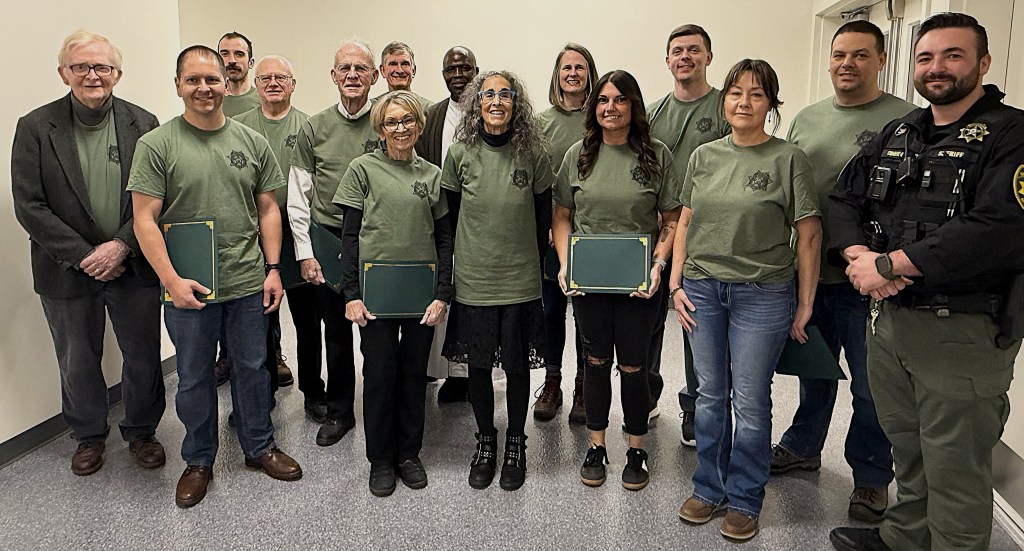
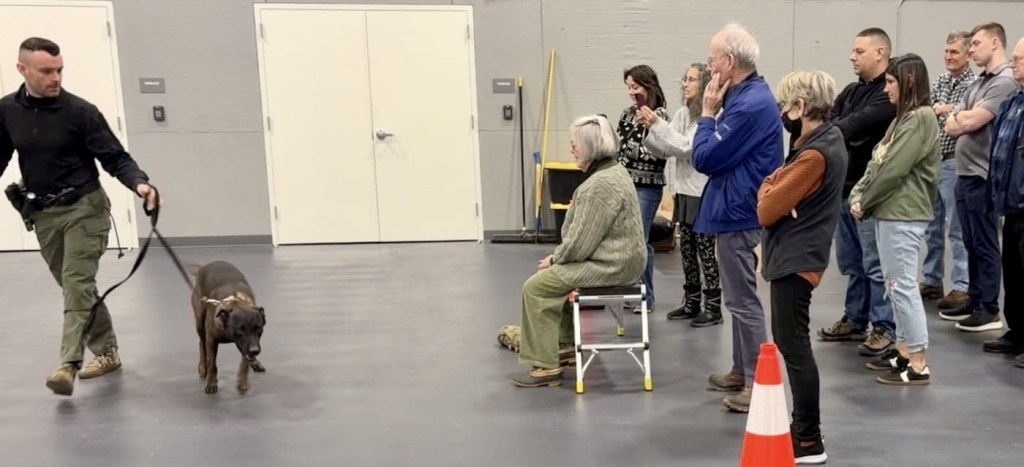

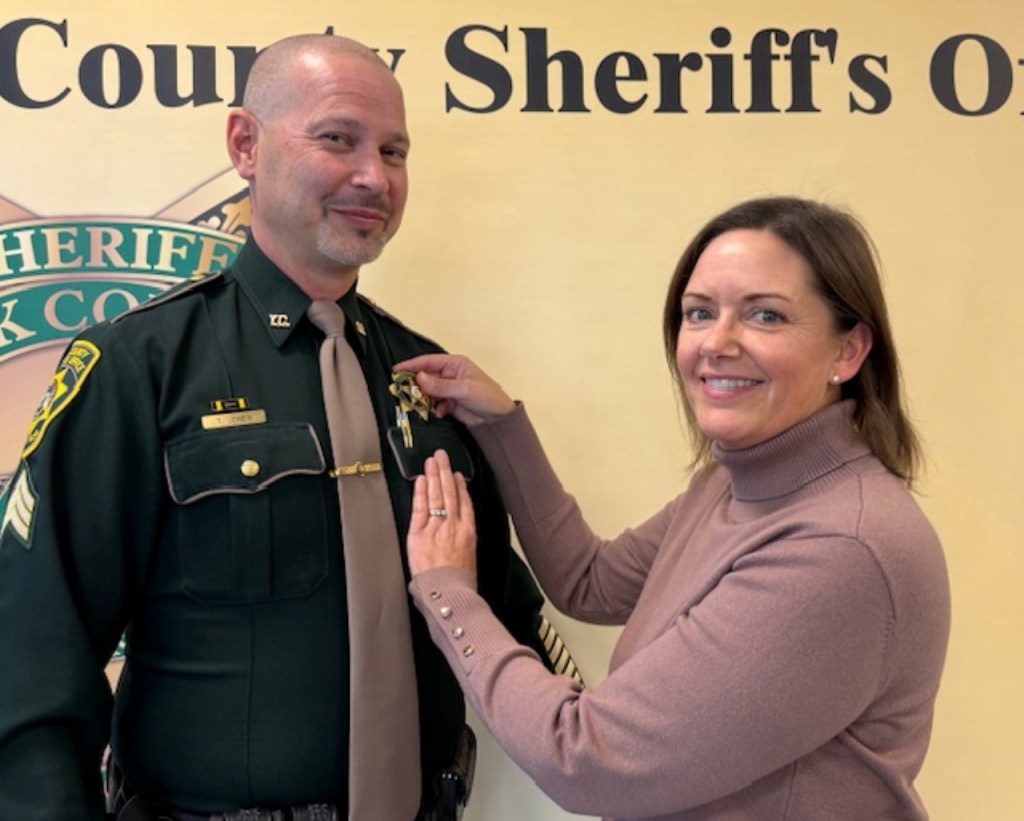

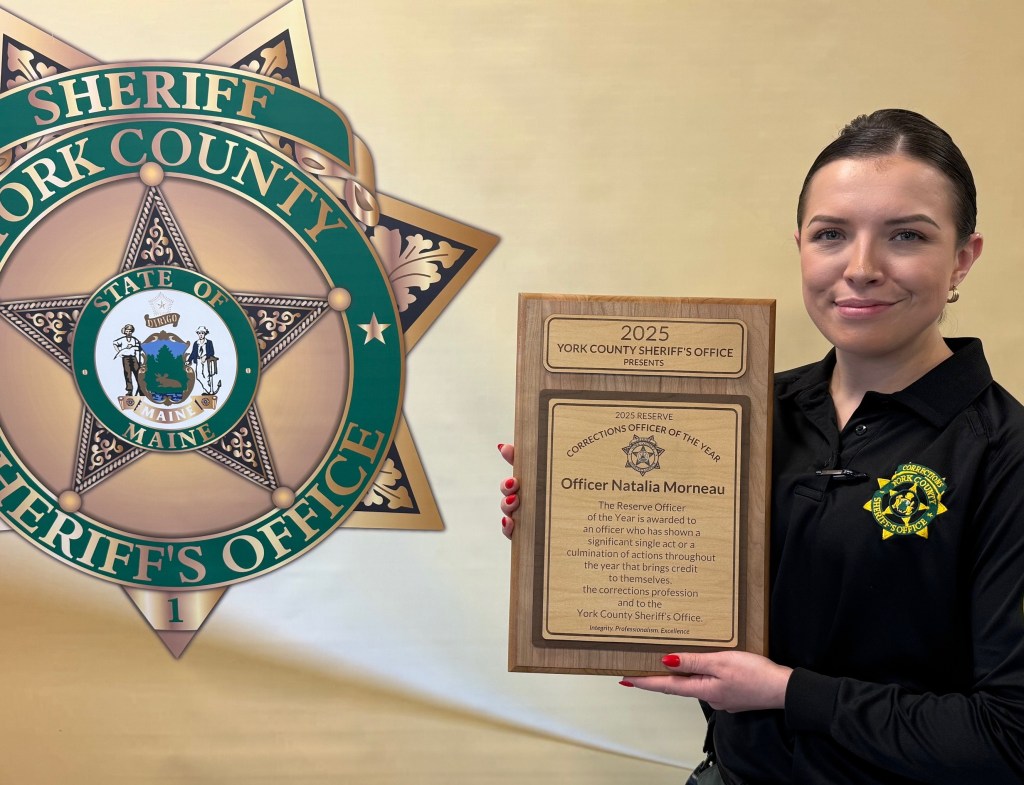













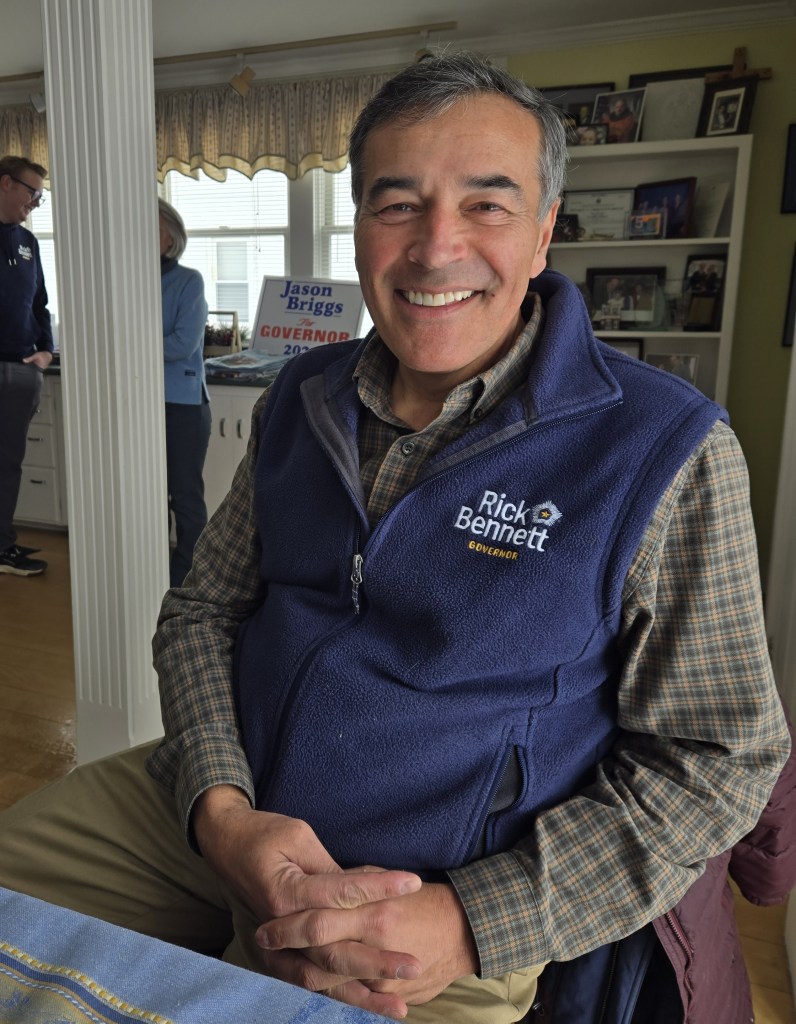

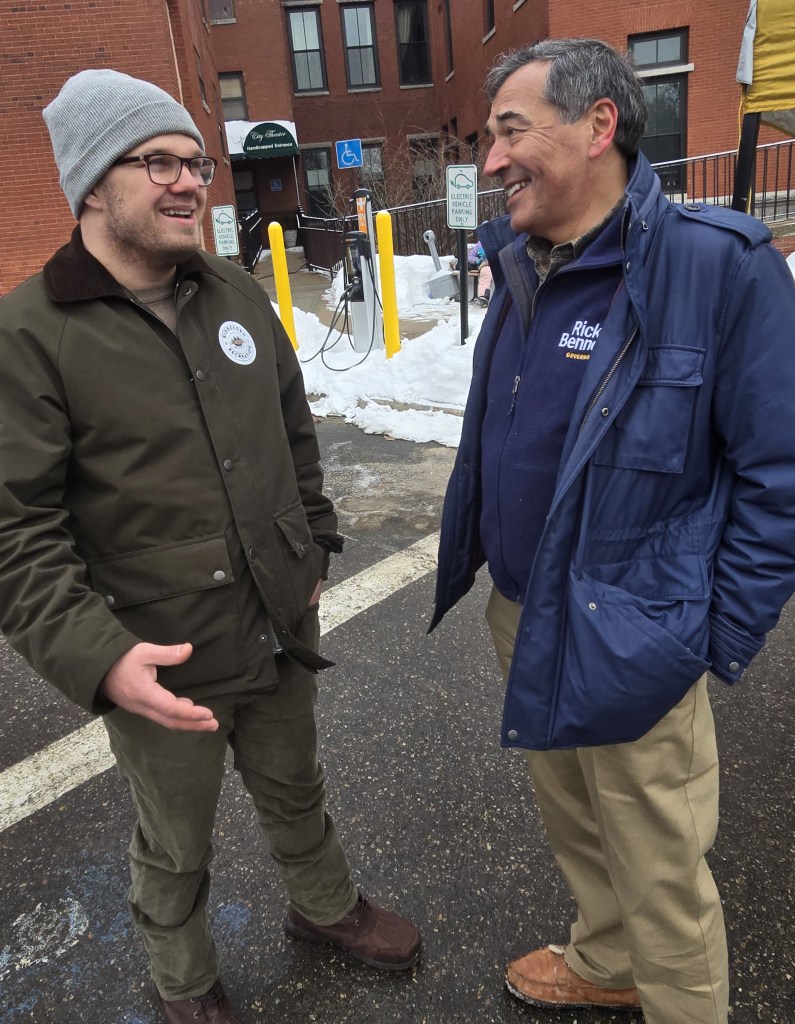

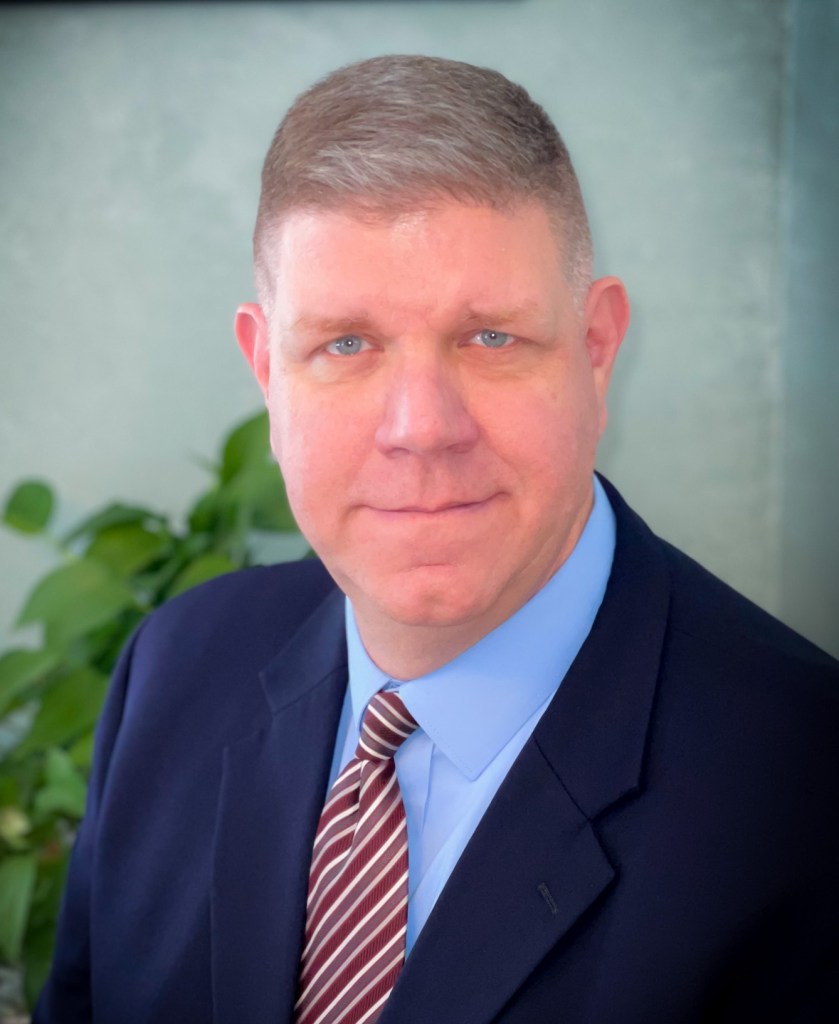

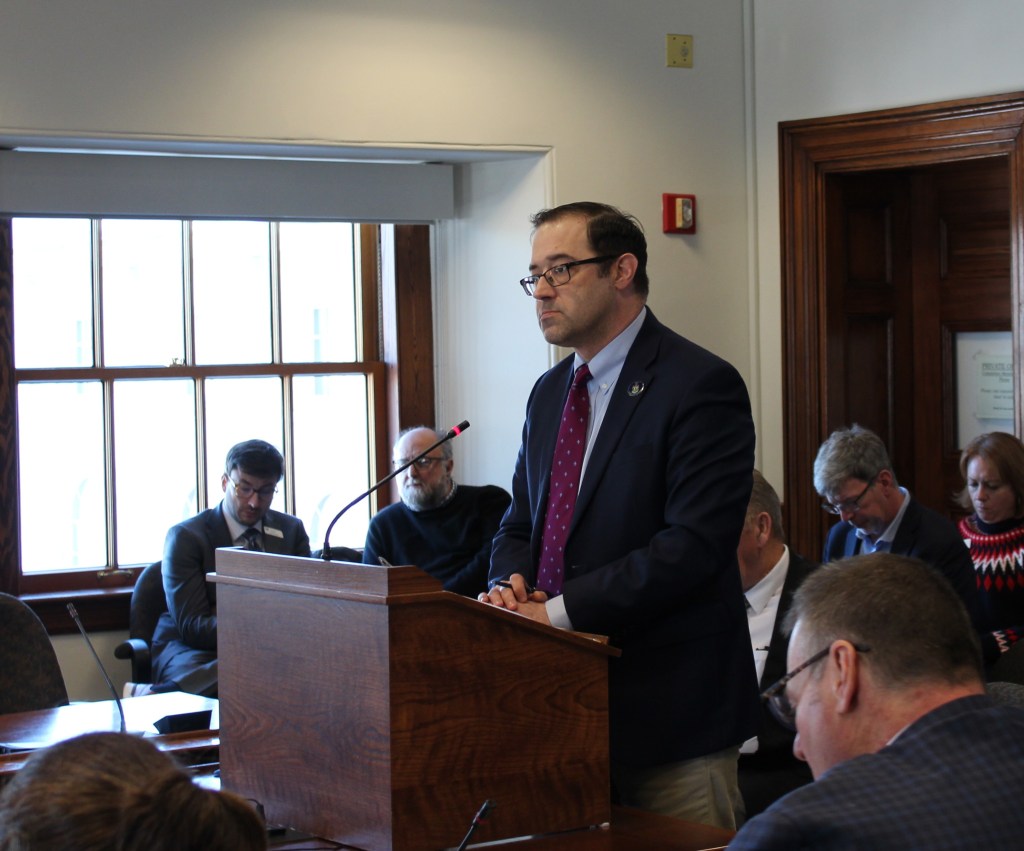










 BIDDEFORD GAZETTE