Finding meaning in community and each other

The holiday season can be difficult for many people, but there are resources for those struggling with the extra stress

By State Rep. MARC MALON

The holiday season is a source of joy for many. The lights are pretty, the kids get excited for Santa and families gather in reunion and celebration; and obviously for many, it is an intensely holy and spiritual time of year.

It is also for many a time of elevated stress and emotional turmoil. There is something about the season which brings out complicated feelings. If this is true for you, know that you are not alone.

A 2021 study highlighted by the National Alliance for Mental Illness (NAMI) found that three out of five Americans feel that their mental health is negatively impacted by the holidays. Some of this can be attributed to simple pressures such as finding presents, and more difficult terrain such as navigating difficult family relationships.

The fact that the holidays coincide with the arrival of winter, literally the darkest days of the year, contributes to seasonal affective disorder in many folks.

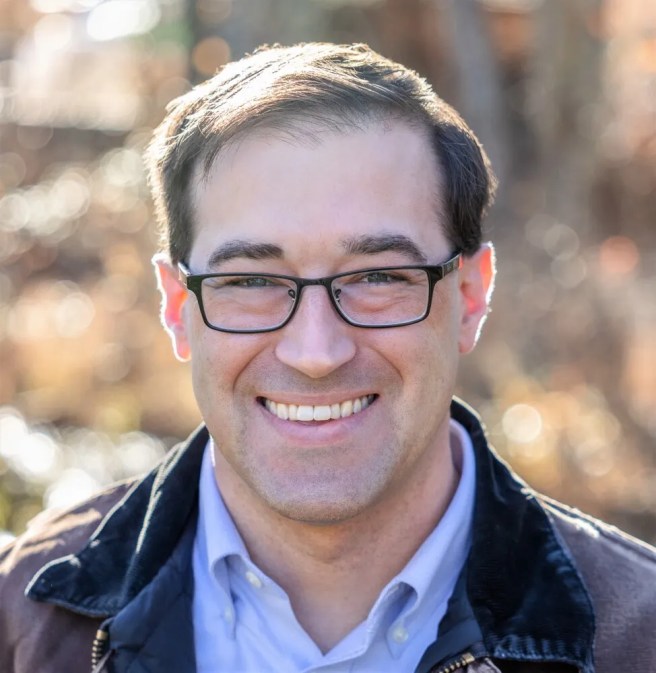
Although a time of hope and celebration, the holiday season can be difficult for many people. (Photo: Yale University)

I feel this as well. I frequently feel depressed and melancholy during the Christmas season, even though I love the holiday itself and the social aspect of gathering with family and friends.

Some of this is likely due to the fact that it is a rare time in which I slow down, which gives me more time to reflect and think about all aspects of life; good, bad and ugly. Many classic Christmas songs drive home the melancholy even further (except for “Grandma Got Run Over by a Reindeer” – that one just annoys me).

So, as we move through this season, it is important to remember that if you are struggling, you are not alone.

Many – myself included – feel the same, and there are many resources in our greater community which might be helpful while navigating this time.

The rising cost of food can make it difficult for many folks to afford feeding their family on a daily basis, making a special holiday meal outside the realm of possibility. Recognizing this, the Bon Appetit Community Meal Program serves supper Monday through Friday at 4:30 p.m. and a Sunday breakfast at the Second Congregational Church on Second Street from 8 to 9 a.m. The church also serves a community ham dinner on Christmas Eve. If you are interested in learning more, you may call 207-391-6279 or email secondcongbiddeford@gmail.com.

The Biddeford Food Pantry is open Tuesday, Wednesday and Thursday from 9 to 11 a.m. and all are welcome. This volunteer-run organization is not seasonal, it is a year-round miracle.

NAMI Maine operates a help line for mental health resources Mon. – Fri. from 8 a.m. until 4 p.m. Simply dial 1-800-464-5767 and then press 1. They can help you navigate options for mental health and substance use treatment.

This part is crucial: If you or a loved one are in crisis, please call or text 988.

These resources only scratch the surface of what is available.

Now, I think we can mostly agree that things in the world could be better. It needs to be easier to find affordable mental health care, both for immediate needs and for ongoing preventative services.

If you have ever tried to find a therapist who takes insurance, you know what I mean. And it would help if Congress could extend the Affordable Care Act health insurance subsidies so working families don’t see their premiums skyrocket at the start of the new year. We have to do better.

But we also must try to find mutual strength and support in each other. We’re often good at providing it to one another in an acute sense – by donating to GoFundMe campaigns or attending a community fundraiser, or maybe even by donating food to a local hunger relief program.

But we should also try to consider what is needed for people we don’t know, especially those who are different from us. Communities are stronger when support is coming from all and available to all.

One of my favorite Christmas carols is a classic, “O’ Holy Night.” It is a religious song, first written by a French poet named Placide Cappeau, set to music by composer Adolphe Adam, and translated to English by John Sullivan Dwight.

Dwight and Cappeau were abolitionists who saw universal meaning in the song, one which could be applied regardless of religious beliefs. The final verse, which is not sung in all versions, contains the following lyrics:

“Truly He taught us to love one another;

His law is love and His gospel is peace.

Chains shall He break, for the slave is our brother;

And in His name all oppression shall cease.”

Happy Holidays.

______________

Rep. Marc Malon is serving his second term in the Maine House of Representatives, representing a portion of Biddeford. He serves as a member of the Veterans and Legal Affairs Committee and the Housing and Economic Development Committee. He can be reached via email at marc.malon@maine.gov

Never miss another update! Subscribe for free today!

OPINION: Maine elections are already secure

By REP. MARC MALON, Special to the Gazette

Next week is Election Day, but for many, including my wife, Jenn, and me, ballots have already been cast. This is because of Maine’s excellent voting laws, which allow voters to cast an absentee ballot as early as 30 days before Election Day.

This flexibility is a godsend for many of our neighbors, especially seniors, folks with disabilities and people whose jobs make it difficult to vote during the business week. All of these neighbors share with us the sacred constitutional rights and freedoms to vote and to have our votes counted in a fair election. 

This year, in addition to the many seats up for election in Biddeford, Mainers are being asked to vote on two referendum questions, which can be found in detail here. In short, Question 1 limits citizens’ rights to request an absentee ballot, among other restrictive measures, and Question 2 allows concerned family or household members to petition the court to issue an extreme risk protection order that will temporarily remove dangerous weapons from an individual’s possession. These are important questions of public policy which I urge everyone reading this to consider carefully.

As someone who has professionally observed elections for 20 years, the mechanics of Maine’s elections are exceptionally well-run. Serving on the Legislature’s Veterans and Legal Affairs Committee — which, among many other issues, oversees the Secretary of State’s Elections Division — I have learned a great deal about this topic, including how ballots are distributed to communities. 

This system works because
it is thorough and fair

— Rep. Marc Malon

Ballots are printed at a reputable Maine printshop in Augusta and are then sealed with security tape and clearly marked as ballots at the printer. From there they are marked additionally for tracking and chain of custody purposes. They are shipped directly, with tracking information, from the printer to Maine’s towns and cities using the U.S. Postal Service and UPS. Once they arrive at the municipality, the appropriate municipal official must sign for it. That official must then count the number of ballots received, confirm the number and submit a receipt directly to the Secretary of State’s Elections Division. 

And that’s not all! Absentee ballot envelopes are printed separately at a different printer, and then sent — and tracked -– separately to towns across the state. This prevents them from being mixed up with ballots during shipment and provides extra security.

When a voter requests an absentee ballot, the clerk records the request, confirms the voter’s registration, marks the return envelope with the voter’s information and makes a record of sending the ballot to the voter. The absentee ballot must be returned in the envelope provided, then sealed and signed by the voter on the appropriate line. Upon return, the clerk will inspect the envelope and signature — and any affidavit and witness certification on the envelope — and determine whether the voter has returned the ballot appropriately. Then, they must mark whether the returned ballot was accepted or rejected. 

“Your vote is yours,
and it is sacred”

— Rep. Marc Malon

If there is an issue, the clerk is supposed to make a good-faith effort to contact the voter so that the voter may fix the issue if they are able. The envelope of an accepted ballot is not opened then, but rather stored securely until the time at which the town processes its absentee ballots — which can be no more than seven days before election day. Additionally, there is the added safeguard that all citizens who reside in Maine and wish to register to vote must provide ID and proof of residency upon registration. 

This system works because it is thorough and fair. It has appropriate checks, balances and safeguards to ensure that when something goes wrong, election integrity is not compromised. And it ensures that every eligible Mainer is able to cast their vote and have it counted. 

The safeguards and procedures behind how our elections are administered are essential to a free and fair democracy. In my committee, politicians sometimes introduce unnecessary bills to restrict voting rights or cause problems in the mechanics of our elections. Sometimes these politicians tell dishonest stories about election integrity or deny the legitimate results of elections, like Donald Trump did in 2020. Then they say we should pass restrictive measures because voters “have concerns.”

To me, the best way to alleviate voters’ concerns about our elections is to tell the truth about them. So when you see a proposal containing a mess of restrictions on voting, it is important to ask “why,” “is this really necessary,” and “is this information true and accurate?”  

Your vote is yours, and it is sacred. The truth about Maine’s elections is that they are safe and secure, and they are set up so that you can exercise a freedom that generations of Americans fought for. 

Happy voting. 

Happy? Not Happy? The Biddeford Gazette welcomes feedback from our readers, especially when it comes to different opinions and perspectives. For more information, about how to send a Letter to the Editor or Guest Column, please contact us.

_______________

Rep. Marc Malon is serving his second term in the Maine House, representing a portion of Biddeford. He serves as a member of the Veterans and Legal Affairs Committee and the Housing and Economic Development Committee. He can be reached via email at marc.malon@legislature.maine.gov

NEVER MISS ANOTHER UPDATE! SUBSCRIBE FOR FREE TODAY!

OPINION: Vaccines are vital, and Maine is leading

By State Rep. MARC MALON, Contributing Writer

Do you know anyone currently suffering from polio? 

My guess is you probably don’t. But polio has existed throughout recorded human history, and the worst outbreak in the United States killed more than 3,000 people in 1952. It left countless others with lifelong health consequences. 


Photo credit: South Dakota Department of Health

Finally, after years of research, Dr. Jonas Salk was able to develop the first effective polio vaccine. By 1961, only 161 cases in the U.S. remained. Salk was committed to ensuring that the vaccine was available to all, famously saying, “There is no patent. Could you patent the sun?”  

Life-saving vaccines have helped to all but eradicate some of the most dangerous diseases that affect humans. Now this progress, and the decades-long progress made against diseases like polio, measles and mumps is in serious peril due to recent actions from the federal government.  

Unfortunately, alongside the successful track record of vaccines, the anti-vaccine industry has sprouted up and flourished in recent years as a result of misinformation shared widely online. The unscientific views of anti-vaccine advocates gained an even stronger foothold due to the significant social disruption of the pandemic and the corrosive effect of social media. What was once an overwhelming bipartisan and nonpartisan societal agreement that vaccines are a good thing has sadly become polarized. 

Alongside the successful track record
of vaccines, the anti-vaccine industry
has sprouted up and flourished
in recent years as a result of misinformation
shared widely online.

And the groups that push these beliefs are profiting from their lies. In 2023, the Informed Consent Action Network, an anti-vaccine group run by Del Bigtree, who is an ally of Health and Human Services Secretary Robert F. Kennedy, Jr., reported $23 million in revenue. Kennedy’s own organization, Children’s Health Defense, has also raked in millions through the years. They push lies blaming vaccines for autism and various other maladies, use it to sell products and propaganda, and get rich off vulnerable people getting sick.  

This is why it is so distressing to witness Kennedy’s actions to gut the federal CDC and to stack vaccine advisory boards with anti-science skeptics, which will make it more difficult to effectively investigate rare but real cases of vaccine injury, and stifle necessary research and development. Right now, the federal CDC is attempting to restrict access to the COVID-19 vaccine for folks 65 and older and for younger people who have preexisting medical conditions, in contradiction to the fact-based guidance of experienced medical professionals.  

So, what are we doing about it in Maine? Thankfully, we have strong vaccine protections in place. Certain vaccines are mandatory for children to attend Maine schools, with exemptions only allowed for medical reasons. This helps preserve the herd immunity necessary to prevent the spread of life-threatening diseases. The weakening of standards in other parts of the country like Florida is still alarming. But that gives us more reasons to do everything we can to protect ourselves and our communities.  

Rep. Marc Malon says Maine is leading the way in ensuring public access for vaccinations

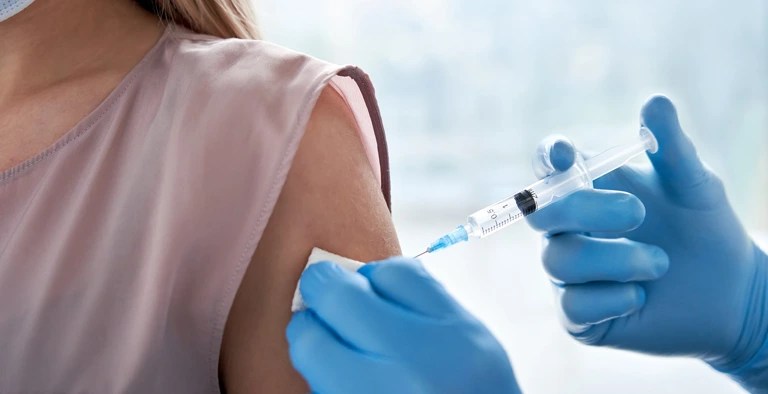
For the 2025-2026 COVID-19 vaccine, the Mills Administration has issued a standing order to ensure that every Mainer who wants a vaccine can get one. The standing order essentially serves as a prescription for all Maine people, and it will allow them to get the shot at local pharmacies, clinics and health care offices. 

It also requires state-regulated health insurance carriers,  including those with MaineCare, to provide full coverage of the cost of the vaccine. The shot is recommended for all children from ages six months to 23 months, all individuals ages 18 and older, and children two to 18 years old based on risk factors – check with your children’s medical provider. If you want a vaccine, you should be able to receive your COVID-19 booster at your local pharmacy. I encourage folks to do so. I did it this week.  

Vaccine opponents like to paint the decision to vaccinate as purely a personal choice. The problem is that these personal decisions can impact other families and broader communities. The miracle of vaccination is a miracle of community, and when communities need action, our history shows us that we take it because we care about not only our families, but those around us.  

So, let’s band together once again, roll up our sleeves, literally, and not take for granted the hard work, sacrifices and medical advancements that have actually made America healthier for decades.  

______

Rep. Marc Malon is serving his second term in the Maine House, representing a portion of Biddeford. He serves as a member of the Veterans and Legal Affairs Committee and the Housing and Economic Development Committee. He can be reached via email at marc.malon@legislature.maine.gov. 

Never miss another update! Subscribe for free today!