
Marc Malon, a two-term Democrat incumbent, is facing his first-campaign challenge from veteran Biddeford City Councilor Marc Lessard who says he can fill both roles simultaneously
1,882 Words | 8 -12 minutes
By RANDY SEAVER | Editor
For the first time in eight years, Biddeford voters will have a choice about who will represent them in Maine House District 133.
Incumbent Democrat Marc Malon was unopposed in his 2022 and 2024 campaigns, but is being challenged this year by veteran Biddeford City Councilor Marc Lessard who is running as an independent, unenrolled candidate.
Because the Democrats hold a very slim majority in the Maine House of Representatives, the consequences of this Biddeford election could have significant statewide implications as every seat is up for grabs this year.
Of the 151 members of the Maine Legislature, 75 are Democrats; 73 are Republicans; and three members are not affiliated with a political party.
Two candidates named Marc
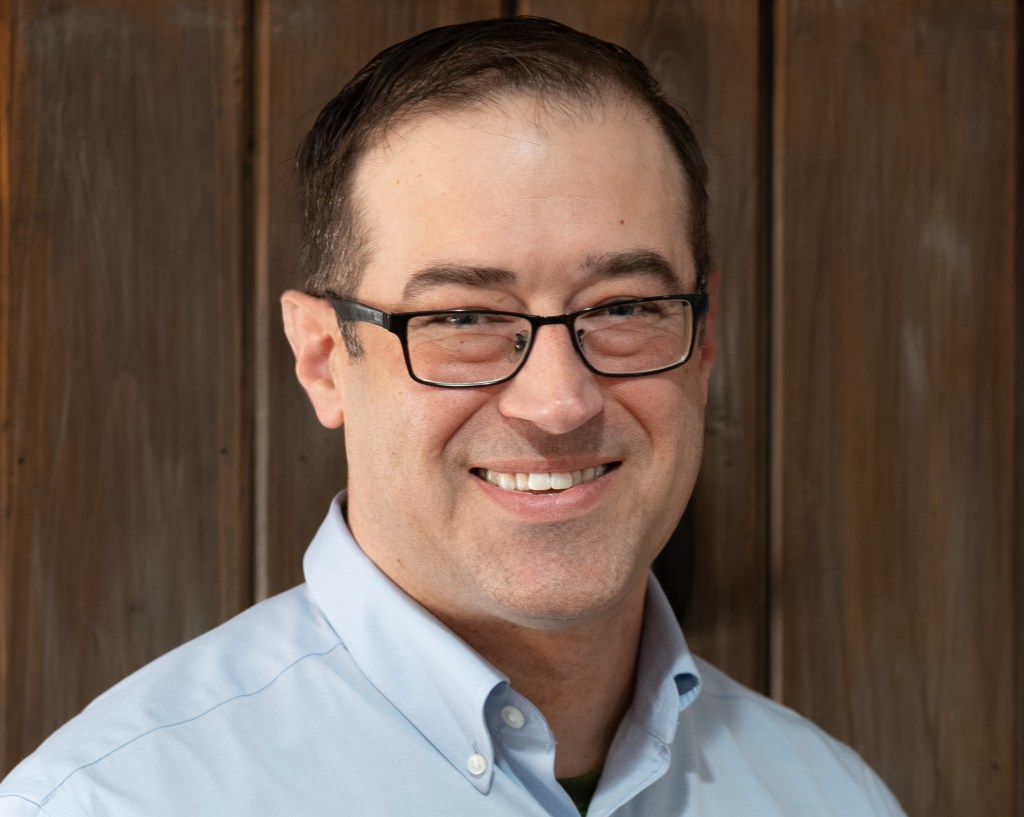

Marc Malon, 43, is a public service consultant. He serves on the Legislature’s Housing and Economic Development Committee and the Veterans and Legal Affairs Committee.
Marc Lessard, 63, is the director of external contract manufacturing for H.P. Hood. He has served as an at-large member of the Biddeford City Council for more than 30 years.
Both men say this election has serious consequences for Maine communities. Malon is hoping voters will recognize his experience and accomplishments in the Maine House. Lessard, however, says Augusta needs fresh energy and new ideas.
Both men have submitted introductory columns that were published by the Biddeford Gazette.
LESSARD | A big change is needed in Augusta
MALON | Government should work for the people
Top priorities & concerns
When asked to identify his top-three priorities for the next legislative session, Malon listed the state’s high cost of living, especially housing availability and affordability; supporting strong public schools, including career and technical education; and protecting Mainers from harmful federal actions, including cuts to Medicaid and food assistance.
Lessard said he is especially concerned about creating affordable housing “the right way that has direct benefit to the host municipality.” He also said the state’s recreational facilities should be improved to build upon Maine’s reputation as “Vacationland.”
As one of his priorities, Lessard said he thinks that Maine’s state revenue sharing for schools needs to be overhauled, downplaying the fact that his opponent voted in favor of a bill earlier this year to address inequities that cities and towns were facing because of high property assessments.
LD 2226 – sponsored by State Rep. Kelly Murphy — was enacted on April 16. That legislation received praise from Biddeford school officials and others who said the city was being unfairly penalized because of its high property tax assessments in comparison to the relatively low income levels of student population.
Lessard says Malon’s bill didn’t go far enough to level the playing field, especially when considering the state’s overall approach to state funding.
Why should voters choose you?
The Biddeford Gazette asked each candidate to succinctly explain in 200 words or less why they deserve the support of voters in District 133.
“For years, I have been asked to run for state government to help bring proper financial reasoning to Augusta,” Lessard said. “Citizens of Biddeford have watched me since 1993 argue for efficient use of tax dollars, not over extend spending and keeping a careful watch of our future.
“I’ll take the same passion for our city to Augusta,” he said.
Lessard said state lawmakers too often work in atmosphere of “Gumbyism,” simply rubber-stamping legislation in order to demonstrate party loyalty and ignoring innovation and new ideas.
“We need someone who isn’t loyal to any political party,” Lessard said. “We need people who can stand up and challenge the business-as-usual atmosphere in Augusta.”
“We need someone
— Marc Lessard
who isn’t loyal to
any political party.”
Malon said he is running for re-election because he believes government can and should work for people—not the other way around.
“We’ve made real progress on housing, healthcare and school funding, but there’s more to do. I’m focused on building an economy where working families can afford to live, strengthening our schools and making sure Biddeford continues to be a place where people can put down roots and thrive.
“The core value which animates my public service is the idea that we must respect the inherent dignity of every Mainer, and we all have a role to play in ensuring that we can achieve greater dignity in our own lives. This means standing with the most vulnerable people in our community. Sometimes this means standing up for others, even when it is unpopular.”
“Sometimes this means
— Marc Malon
standing up for others,
even when it is unpopular.”
Malon said he will continue being transparent, working hard and seeking results that will strengthen Biddeford and other communities across Maine.
Maine’s Housing Crisis

Both Lessard and Malon agree that one of Maine’s biggest statewide challenges centers upon issues connected to housing.
Lessard is critical of the scoring system and criteria the state uses to evaluate new affordable housing projects.
“They just seem to throw money at the problem without any real accountability,” Lessard said, pointing to recent projects in Biddeford that “offer little to no benefit for local taxpayers.”
Specifically, Lessard pointed to recent housing projects in Biddeford that he described as “fundamentally flawed.”
“Look at the new project (Thatcher Brook Apartments) being built on the Barra Road,” he said. “We sold that lot for one dollar, gave away a bunch of tax incentives — and we can’t guarantee that those new units will be occupied by Biddeford residents.”
Malon said state lawmakers must deal with state policy, saying decisions about tax increment financing (TIFs) or credit enhancement agreements are decisions made by local governments, not state representatives.
Malon pointed to LD 2003, a law sponsored and passed by State Rep. Ryan Fecteau of Biddeford in 2024.
“A lot of the things that Mr. Lessard is talking about were actually already put into action, including density bonuses and the ability to develop accessory dwelling units (ADUs).
Malon said he wants to remain focused on ideas and plans that cut red tape and make it easier for developers to build more housing.
“We have an inventory problem, whether we’re talking about affordable housing, market-rate apartments or options for first-time home buyers,” he said, pointing to communities such as Austin, Texas and Minneapolis as places where encouraging housing density created favorable results.
“Study after study shows that creating incentives and flexible zoning are valuable tools that will help increase the supply of homes, driving down demand and housing costs.” Malon said.
Maine is lagging in education test results

There is no denying that Maine’s public school testing results are much less than ideal.
Various studies about Maine’s standing in overall test scores are difficult to compare because the complex data used fluctuates, depending on the particular analysis.
Some recent reports have put Maine near the bottom of the pile when it comes to student proficiency in math and reading. Other reports show that Maine’s overall school quality is above average when compared to other states.
Malon said he believes there is much room for improvement when it comes to statewide student proficiency, but says any improvement cannot happen if the Legislature begins making sweeping cuts to education budgets.
“I think the right approach is making sure that we listen to the people on the ground,” Malon said. “Our teachers and our parents need our support. We need to do better, but I don’t have all the answers.”
Lessard said poor education metrics are the result of an overly simplified state approach to education.
“This is just another area where – year after year – we just keep blindly throwing money at the problem and telling ourselves that we’re helping our kids do better,” Lessard said. “That kind of approach stifles the opportunity for innovation; for thinking outside of the box.
“Maine kids deserve better than partisan politics that forces adherence to a political party over creating a solution that could be a game-changer.”
A river runs through it
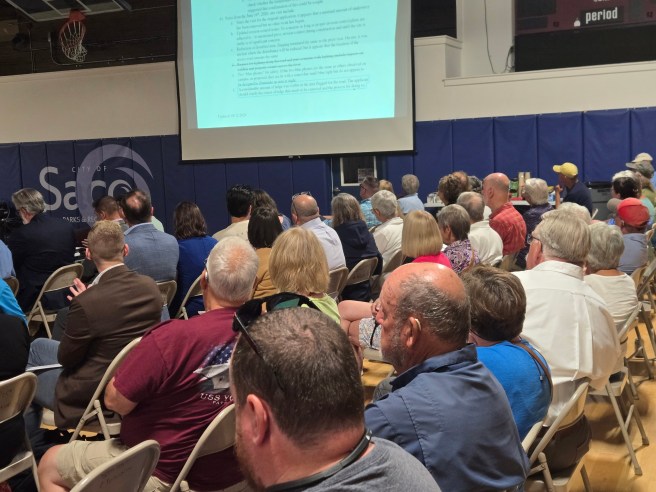
Over the last several weeks, the Saco River Corridor Commission (SRCC), a quasi-state agency, has dominated headlines in Biddeford.
Created by the Legislature in 1973, the SRCC has regulatory authority over the entire length of the Saco River but the agency’s approach to protecting the watershed has raised eyebrows locally.
Last year, the SRCC’s executive director admitted that the agency made a mistake and overlooked key details of a plan submitted by the University of New England for a research pier at its Biddeford campus.
The city of Biddeford was forced to file a complaint in York County Superior Court in an attempt to clarify whether UNE’s permit was valid.
During a public hearing last month, Benjamin Pinault — the SRCC’s chair — said “we are allowed to amend our own stuff at any time.”
That comment underscores increasing local complaints about how the agency operates and a common perception that the SRCC’s rules are somewhat arbitrary and its enforcement is often heavy-handed.
Lessard says the agency has outlived its purpose and is no longer needed.
When asked if he thought the state agency needed reform, Lessard said he would instead support abolishing the agency.
Malon said he has heard concerns about the SRCC since he “was a kid growing up in Biddeford.”
“I don’t support abolishing the SRCC, but I do think it needs reforms, and layers of accountability and transparency,” he said.
Malon said one of his main concerns for the next Legislative session centers upon how the state will be able to absorb the impacts of President Trump’s so-called “Big Beautiful Bill,” which will require deep cuts to Medicaid after the election.
“We’re talking about insurance options for seniors, people with disabilities and low-income workers,” Malon said. “We simply cannot allow our neighbors to fall through the cracks.”
Lessard acknowledges that the state is facing some difficult decisions, but says finger pointing, chest-thumping and partisan theatrics are not serving the people of Maine.
“We have to be willing to roll up our sleeves and stop worrying about political ideologies,” Lessard said. “We have to put common sense front and center to everything we do. That is why I am running. That is my promise to my constituents.”
Both candidates have agreed to participate in an upcoming candidate forum/debate that is being co-sponsored by the Biddeford-Saco Chamber of Commerce and the Heart of Biddeford. Details of that event will be announced soon.
Visit Marc Lessard’s campaign website | Marc Lessard for State Representative
Visit Marc Malon’s campaign website | Marc Malon for State Rep
CORRECTION | An earlier version of this story indicated that Malon sponsored LD 2226. That bill was actually sponsored by State. Rep. Kelly Murphy, chair of the Legislature’s Education Committee. It was a reporting error, and we apologize for any confusion this may have created. If you find an error in our reporting, please CONTACT US
,
PLEASE SUPPORT LOCAL JOURNALISM
If you enjoyed this story, please consider supporting local community journalism by making a donation to the Biddeford Gazette, a community-driven, non-profit news organization fueled by decades of professional experience.
.
STAY CONNECTED | SUBSCRIBE FOR FREE TODAY
.

BIDDEFORD GAZETTE
“Keeping You Connected to Biddeford”
Editorial Standards & Policies
© 2026 Biddeford Gazette, Inc. All Rights Reserved
JOIN US IN SUPPORTING COMMUNITY JOURNALISM




 BIDDEFORD GAZETTE