NEWSLETTER | Paradise City

It’s been an interesting, busy and somewhat exhausting week here at the Biddeford Gazette.

In fact, I was moving in some many directions that I forgot to send out this newsletter on Saturday.

My former boss David Flood always used to say there’s a lot more to running a newspaper than just writing and publishing news stories. I never appreciated that fact until I decided to launch my own publication.

Spreadsheets, meeting with our attorney, tracking expenses, insurance, content distribution, reviewing analytics and coordinating other people’s work.

It’s a lot. And I’m not getting any younger. More about that in a moment.
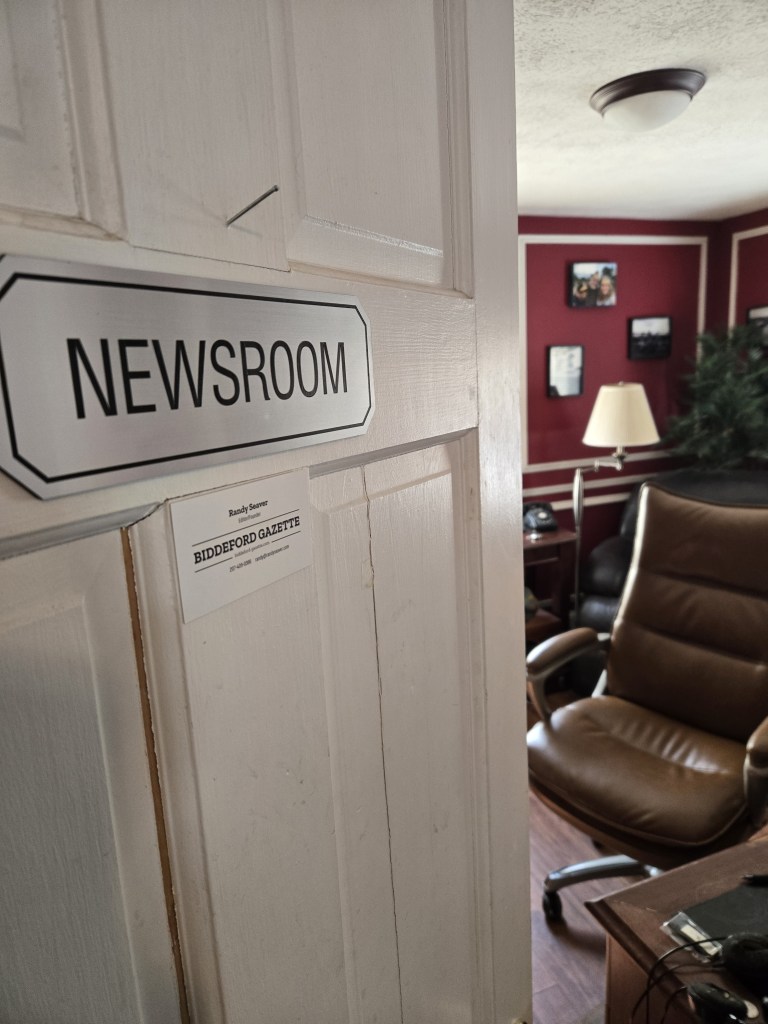
Running a news organization involves a lot more than writing news,

Beyond all the tedious business stuff (all of which is well outside of my comfort zone), our news and editorial content is growing by leaps and bounds.

Consider this: In February 2025 – about three months after the Gazette was created – we published 14 items on our website, not including our weekly obituaries.

Flash forward one year, and we have seen an increase of more than 300 percent! During the month of February 2026, we published 49 items on the Gazette’s site.

The good news is that nearly 40 percent of that material was generated by the community, not by us.

These community contributions include several letters to the editor, guest columns and high-quality news and feature pieces, such as last week’s story from Tammy Wells about a new partnership between the Catholic Church and the York County Jail, allowing inmates to celebrate weekly Mass.

When Rep. Ryan Fecteau – Speaker of the Maine House — wanted to share his thoughts about recent ICE enforcement efforts in Maine, he asked the Gazette to publish his column.

State Rep. Marc Malon and State Sen. Henry Ingweresen also publish their regular monthly columns in the Gazette. Former mayor Marty Grohman submitted his own op-ed last month in the Gazette.

We are honored that so many people in the community regard the Gazette as a reliable and trusted source for community news and information.

Getting older; Biddeford Primary School Fun

On a personal note, this is my last day of being 61, and tomorrow (March 2) will be the first birthday that I wanted to avoid.

Every Sunday morning for the past 14 months, I spend a few hours editing, formatting and publishing local obituary notifications.

With increasing frequency, I am posting the obituaries of people who were younger than me at the time of their passing.

Statistically speaking, the average life expectancy of an American man is 76 years.

That means I likely have only 14 years or fewer remaining — for the rest of my life.

I remember clearly where I was 14 years ago today. It goes by really fast. Really fast.

All the advice from my friends, family and the expert gurus suggests that you should live each day to its fullest and focus on the things that make you happy.

So, I am pleased to announce that I have once again been invited to read to students in Ms. Jillian Palladino’s second-grade class at Biddeford Primary School. It’s the one part of my upcoming birthday that I am actually excited about.

Coincidentally, March 2 is also the birthday of Theodore Geisel, more commonly known as Dr. Seuss . . . what a wonderful confluence of events!

Quick recap and preview

Ward Five City Councilor David Kurtz (Seaver photo)

My favorite story this week comes from my thoroughly enjoyable interview with City Councilor David Kurtz. I will be doing similar interviews with each member of the city council over the next few weeks. (Chatting with City Councilors)

Our goal is to peel back the perfunctory layers to give our readers some deeper context about the men and women running our city.

Our most popular story this week – by far –was our exclusive coverage and tour of the Adams Point Family Housing project that is scheduled to open in April. That story blew up our email and social media accounts, underscoring Biddeford’s pressing need for more affordable housing.

What’s coming up?

I will cap off my birthday celebration tomorrow (March 2) by attending the first public hearing for the Institutional Zone Review Committee, which will be making recommendations about ongoing development at the University of New England’s Biddeford campus.

That meeting begins at 6 p.m. in the Council Chamber at Biddeford City Hall.

Hope to see you there! Have a great week!

_________________
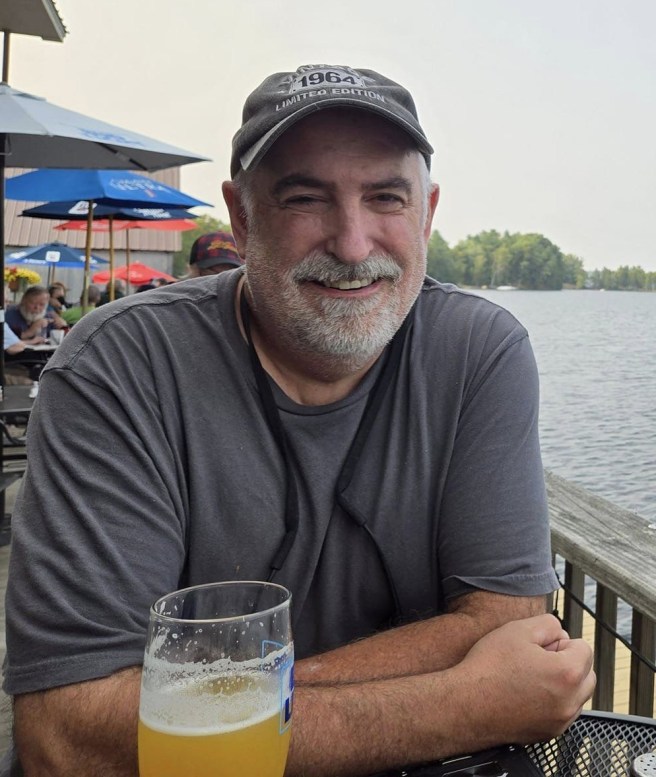
ABOUT THE AUTHOR:  Randy Seaver is the editor and founder of the Biddeford Gazette. He has been covering Biddeford news and politics for nearly three decades. He may be reached by email: randy@randyseaver.com

Never miss an update! Subscribe for free today!

THE BIDDEFORD GAZETTE | A Legacy of Trusted, Independent Journalism

Our editorial standards and policies: Biddeford Gazette | Standards & Policies

© 2026 Biddeford Gazette, Inc. All Rights Reserved
Offering Hope | ‘What they’ve done is not who they are’

By TAMMY WELLS, York County Government media

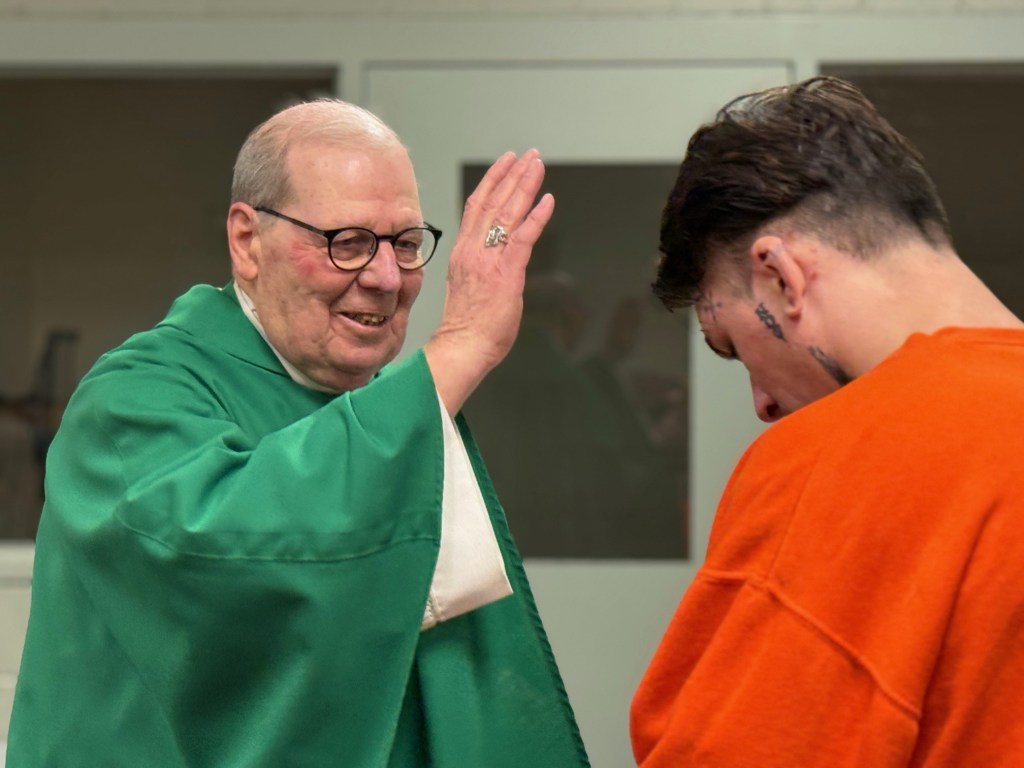
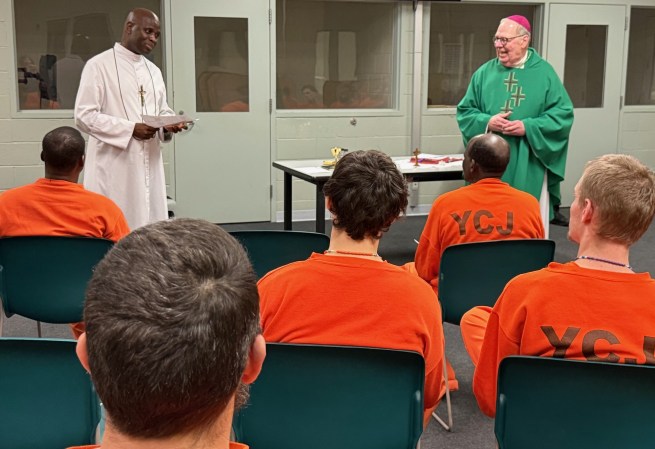
ALFRED, Maine – On a recent Saturday as the Mass at York County Jail neared its end, those eligible for Holy Communion moved to partake. Others were asked by Bishop Robert Deeley if they would like a blessing, and several residents stepped forward with their arms crossed on their chests, as instructed. He smiled at each one as he made the sign of the cross.

A York County Jail resident receives a blessing administered by Bishop Robert Deeley, who says Mass at the jail once a month for inmates who sign up to attend. While retired from administrative duties since 2024, he remains a priest and a Bishop and says Mass weekdays in his home parish. (Courtesy photo)

It was a special moment in an hour of special moments, as 17 general population jail inmates – some sentenced, some awaiting trial – took part in the Mass, repeating the familiar, and to some, not so familiar readings, and listening as Bishop Deeley delivered the homily.

Catholic Prison Ministry, a joint initiative of St. Therese of Lisieux Parish in Sanford and The Brothers of Christian Instruction in Alfred, has provided a regular Catholic presence at York County Jail since 2018, after planning for a year, said member Raymond Wallace.

“They need to know what they’ve done is not who they are,” said Wallace of jail residents. “God has a better plan.”

The prison ministry group had long desired a Saturday evening Mass for inmates, but, as Bishop Deeley noted, Saturdays are busy times for priests, who regularly say Mass on Saturday evenings in their own parishes. Deeley retired from his administrative duties when James Ruggieri was appointed Bishop of Portland in 2024, but he remains a Bishop and a priest and recently began offering the Saturday evening Mass at the jail once a month.

Brother Henry Monday, left, of the Brothers of Christian Instruction in Alfred, and Bishop Robert Deeley take part in a recent Mass at York County Jail.

Having Mass at the jail requires additional corrections officers to provide security, said  Sheriff Bill King,  and staffing levels are challenging so he, and Jail Administrator Maj. Lori Marks or an alternate attend to ensure the service is not cancelled. “It is truly an honor to have a retired Bishop come to the jail and celebrate mass,” King said. He said several inmates have become regular attendees and seem to have developed a connection with the Bishop –  who recognizes “the regulars.”

Many of those attending on a recent Saturday weren’t Catholic – the Bishop said most aren’t. They listened and participated respectfully.

“I emphasize to the inmates how fortunate they are to have a Bishop celebrating mass at the jail,” said King. “Even amongst the non-Catholics, they seem to recognize the Bishop’s importance to the Catholic faith.”  

York County Jail has an average daily population of about 230 people,  who hail from many walks of life. Religious or spiritual services are offered to the majority of the jail population, who sign up to attend, said King.

He said groups like Catholic Prison Ministry provide mentorship. “I’ve seen where people released relied on them for guidance,” King said.

In addition to the Mass, Brother Henry Monday is a regular visitor to the jail, and is often sought out by residents for counsel, Bishop Deeley said.

Brother Monday put it simply: “When we come together, we are all children of God,” he said.

There are other services and opportunities for religious and spiritual counsel. Maj. Marks, the jail administrator, said Calvary Chapel hosts a Tuesday Bible study at the jail.

Rabbi Levi Wilansky is available to provide guidance to  those of the Jewish faith, said King.

And York County Jail provides the services of a chaplain.

“Unlike chaplains in state facilities who often have the chance to build longer-term relationships, county jail chaplaincy mostly involves short-term care, meeting people facing an uncertain future and planting seeds of hope that may hopefully grow later,” said Chaplain Trent Boyd. “The Chaplain does their best to support each inmate’s right to practice their faith and to request reasonable accommodations for sincere beliefs.”

Bishop Robert Deeley, shown here greeting a York County Jail resident, is retired from his administrative work for the Diocese of Portland but remains a Bishop and priest, and says Mass once a month at York County Jail.

Boyd said chaplains listen, care, and are there to offer hope.

“A county jail chaplain tries to bring what we call “a ministry of presence” into the jail,” Boyd said.

On a winter Saturday evening, as the Mass was said, there was a warmth and a sense of peace and goodwill in the meeting room.

“I hope, through our presence with them, and having the Mass, they will know that whatever has gone wrong in their lives does not remove them from the love of God,” Bishop Deeley said of those who attend. “Remember that Jesus reached out to the prisoner next to him on Calvary. That prisoner is today in heaven. In whatever way we can help the people in the jail to know they are of great worth, and capable of doing great things, we have fulfilled our mission.”

_________________

ABOUT THE AUTHOR | Tammy Wells is a media specialist with York County government. You may reach her at tlwells@yorkcountymaine.gov

Never miss an update! Subscribe to the Gazette for free today!

THE BIDDEFORD GAZETTE | A Legacy of Trusted, Independent Journalism

Our editorial standards and policies: Biddeford Gazette | Standards & Policies

© 2026 Biddeford Gazette, Inc. All Rights Reserved
Counties urge lawmakers to use state funding — not county funds — to subsidize shelters


By TAMMY WELLS, York County government media

York County Commissioners understand the need to support the unhoused through shelter subsidies and are urging legislators to seek ways to support them within the state’s coffers, not the counties’ far slimmer purse.

In testimony to the Legislature’s Housing and Economic Development Committee at a public hearing Feb. 10, commissioners urged the committee members to vote “ought not to pass,” on L.D. 2124, a bill that would further dip into each county’s share of the real estate transfer tax.

And despite a 2025 state law that increased real estate transfer taxes on properties that exceed $1 million, York County officials say the increase won’t offset a further one percent hit L.D. 2124 would impose on their already modest share of the real estate transfer tax.

Photo: via York County Government, Facebook

A committee work session took place on Tuesday and was ultimately tabled. That means committee members will continue their research, and another work session that could potentially include a vote will be scheduled, possibly as soon as the week beginning Feb. 23, a committee staffer said.

Real estate transfer tax is collected by each county Registry of Deeds, which until recently sent 90 percent of the collected tax to the state, with counties retaining 10 percent. The county share was reduced to 9.2 percent in the first session of the 132nd Legislature, with 0.8 percent directed to a housing affordability program for two years.

L.D. 2124, if passed as written, would direct an additional 1 percent of the county share to subsidize shelters, leaving the counties with an 8.2 percent share going forward, and the state with 91.8 percent share.

The bill’s sponsor, Rep. Drew Gattine of Westbrook, whose district includes a portion of Saco, said as a result of a 2025 increase in the Real Estate Transfer Tax for home sales exceeding $1 million, counties are projected to receive an increase in revenue.

“This bill proposes that additional ongoing support be provided for shelters by utilizing a portion of the percentage of increased Real Estate Transfer Tax revenue that currently goes to the counties,” Gattine said in testimony to the committee on Tuesday. “To be clear, the intent here is not to reduce funding to the counties, but to redirect extra funds from the increased tax on high end homes.”

York County Manager Greg Zinser said the amount of money the bill’s sponsors believe will be generated for the counties through the 2025 increase in real estate transfer tax on properties that exceed $1 million will not materialize because of the current 90.8 percent state share and the 9.2 percent county share.

“With their cut, the only people receiving the windfall is the state of Maine,” Zinser said. “Taking an extra 1 percent from the counties’ small share as proposed in L.D. 2124 will further reduce the county share of real estate transfer tax. It is taking a greater percentage of the transfer tax retained by the county as a whole than the high-end home tax is putting in.”

Zinser said York County recognizes the shelters need assistance. He noted York County Commissioners have helped local housing initiatives, awarding $440,000 from York County’s share of ARPA funding to Sanford Housing Authority to assist with a supportive housing project, and about $750,000 to Kittery-based Fair Tide to develop supportive housing and a social services hub. York County Commissioners also voted to use APRA and a variety of other funds to build the York County Substance Use Treatment and Recovery Center.

Under construction now, the 58-bed center is expected to play a role in the circumstances of those seeking recovery services who may also be unhoused.

In their testimony, York County Commissioners said the proposal to further reduce the county share of the real estate transfer tax by 1 percent would mean direct annual revenue loss to York County of $244,000. They calculated that the additional state revenue gained if the bill is approved would yield about $1.2 million annually to subsidize shelters statewide.

RELATED: Biddeford city council splits on supporting state bill for emergency shelters

County operations are funded primarily through a portion of property tax and have few outside revenue streams – among them deeds recording fees and the real estate transfer tax.

In practice, this (bill) simply shifts limited funds from one unit of government to another, without creating new resources,” York County Commissioners testified.

Commissioners also wondered where the subsidy would go in York County, noting the 2025 closure of the sole emergency shelter that had been operated by the private nonprofit York County Shelter Programs, Inc. As well, they said some parts of the bill as currently written would require clarification to avoid a possible greater impact on counties.

“Please understand registers of deeds are not against funding of emergency shelters. In fact, we agree shelters need a funding source, but not at the expense of further burdening our property owners,” said Oxford County Register of Deeds and Maine Registers of Deeds Association secretary Cherri L. Crockett, who was among those testifying at the public hearing.

In practice, this (bill) simply shifts limited funds from one unit of government to another, without creating new resources,

Emily Flinkstrom, executive director of Fair Tide, testified on behalf of 10 organizations that are among members of the York County Committee on Homelessness. She said shelters in Portland and Portsmouth, NH have seen increased demand as has Seeds of Hope Neighborhood Center in Biddeford as a result of the closing of the York County Shelter Programs Inc. emergency shelter.

Flinkstrom said the group recognizes “there is some friction” regarding specifics of the funding mechanism and its impact on county budgets, but encouraged legislators to move the bill forward, with an understanding that the Legislature, counties, and state partners continue work to resolve implementation details.

Sanford Housing Authority Director Diane Small testified that state funding for emergency shelter operations has remained flat at $2.5 million annually since 2016, even as demand and costs have increased, creating an unsustainable funding gap.

Small noted the closure of the York County Shelter Programs emergency shelter has had a profound impact and urged an “ought to pass” vote.

Oxford County Commissioner Sawin Millett, a former longtime Maine legislator, testified that his county sensitive to and supportive of homeless shelters, but opposes the manner in which the subsidy would be funded.

“If you need $1.1 million, why take it away from us,” he asked, noting the shortfall created would impact property taxpayers. “We would like to work with you and look at other alternatives.”

Co-sponsors of the bill include Maine House Speaker Rep. Ryan Fecteau of Biddeford, Rep. Traci Gere of Kennebunkport, and Rep. Daniel Sayre of Kennebunk, along with state representatives from Penobscot, Waldo, and Androscoggin County and a Cumberland County state senator.

________________________

Tammy Wells is a media specialist with York County government. You may reach her at tlwells@yorkcountymaine.gov

Never miss an update! Subscribe for free today!

________________________

THE BIDDEFORD GAZETTE | A Legacy of Trusted, Independent Journalism

Our editorial standards and policies: Biddeford Gazette | Standards & Policies

© 2026 Biddeford Gazette, Inc. All Rights Reserved

York County treatment center gets big boost from two local banks

By TAMMY WELLS, Media Specialist, York County

ALFRED, Maine – Two local banks with deep roots in York County are leading the way in helping build the York County Substance Use Treatment and Recovery Center.

Partners Bank, headquartered in Sanford, and Kennebunk Savings, headquartered in Kennebunk, have each contributed $150,000 to First County Foundation, the charitable arm of York County government, earmarked for the recovery center.

The 58-bed center under construction at First County Way in Alfred will provide observation, detox, short, medium and long-term residential treatment for people with substance use disorders.

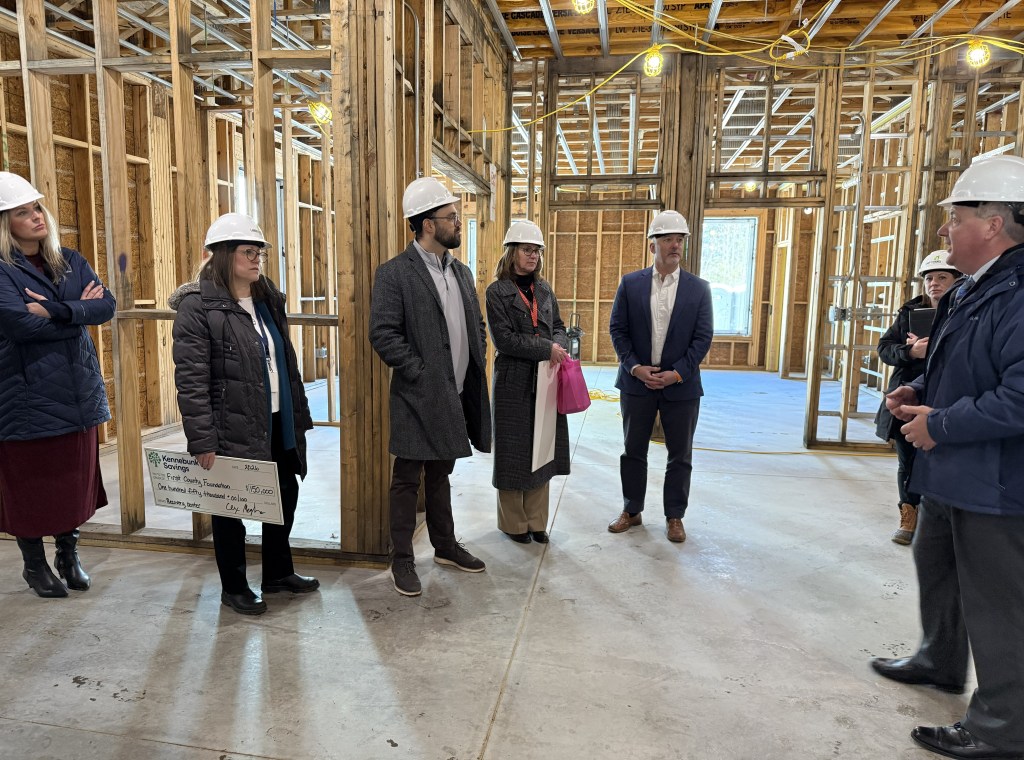
Partners Bank and Kennebunk Savings have each contributed $150,000 to First County Foundation, Inc. earmarked for the York County Substance Use Treatment and Recovery Center. York County Manager Greg Zinser, First County Foundation Board Chair Billy Shore, York County Chief Advancement Officer Rachel Stansfield, Partners Bank President and CEO Anthony Cataldi, Kennebunk Savings President and CEO Lex Meagher, and First County Foundation board members Candice Simeoni, Chris Burbank and Kathy Dumont. (Contributed photo)

Much of the project is funded through a portion of York County government’s ARPA funding, opioid settlement funds, county funding and reimbursements, but gaps remain.

“It’s a great cause,” said Partner’s Bank President and CEO Anthony Cataldi. “This strikes the right chord with us.”

Kennebunk Savings President and CEO Lex Meagher said the partnership representing the public, private and nonprofit sectors working together is an appealing model.

“(This facility) will have a huge impact on York County,” Meagher said.

The recovery center plan emerged as York County Commissioners sought projects in which to invest ARPA funds – projects that would make a long-term impact on the lives of York County residents.

Representatives of Kennebunk Savings and Partners Bank toured the York County Substance Use Treatment and Recovery Center currently under construction in Alfred. Each of the two banks donated $150,000 to First County Foundation, earmarked for the recovery center. (Contributed photo)

“This is going to be an incredible resource for the county and probably a model for the state and the region,” said First County Foundation Board Chair Billy Shore.

“We thank Kennebunk Savings and Partners Bank,” said York County Manager Greg Zinser. “Your commitment to these projects and your sense of community is phenomenal.”

Construction of the 52,000 square foot facility is expected to be completed sometime this fall.

York County Chief Advancement Officer Rachel Stansfield said Kennebunk Savings and Partners Bank see the value in the projects, and believes other partners will emerge to help fill the gaps.

“They are the leaders,” she said of the two banks. “I hope these generous contributions from Kennebunk Savings and Partners Bank will help ignite support from others.”

______________

Tammy Wells is a media specialist who works for York County Government

Never miss an update! Subscribe for free today!

York County government, college celebrate regional training partnership

By TAMMY WELLS, Contributing Writer

Come spring, Advanced Life Support and Pediatric Life Support training programs will be in place at York County Regional Training Center. Advanced EMT classes and labs are ongoing now at the new facility. Firefighting classes are happening. Law enforcement classes are scheduled. A citizens’ academy that gives residents a look at policing meets there weekly.

The decades-long dream of a centralized location for all manner of first responder training is now a firm reality.

And a couple of old friends have teamed up to offer it all, together.

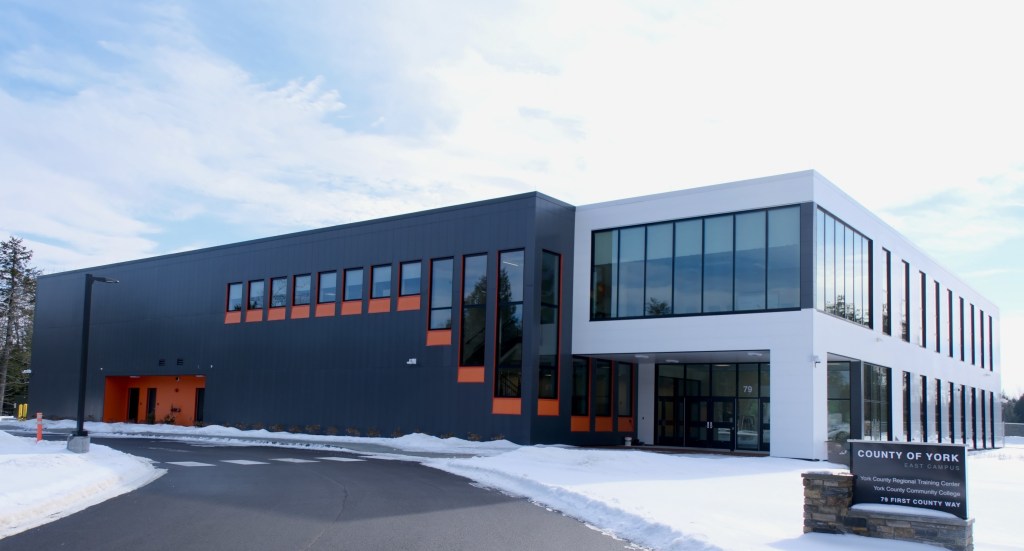
York County Regional Training Center is up and running. (Contributed photo)

The relationship between York County government and York County Community College began several years ago. Now, it is stronger than ever, with the signing of an agreement that further formalizes their relationship.

“I call it taking a handshake agreement and turning it into a true partnership,” said YCRTC Director Roger Hooper as York County Manager Greg Zinser and YCCC President Michael Fischer put their signatures to paper on Jan. 21.

What it means is that YCRTC instructors will be guiding firefighter training outside at the drill tower, sharpening their skills in safely rescuing a person trapped inside a burning building. Back inside the vast training center, YCCC instructors in an EMS lab outfitted with patient mannequins and a mock ambulance, will be leading another class.

A real jail cell will be a tool to aid those training as corrections officers, and other instructional equipment, like a dispatch console, is being considered. There’s a decontamination unit, an auditorium, and much more.

The collaboration is a system that works, those involved say.

“(This agreement) represents years of collaboration, careful planning and a shared belief that the best way to serve our communities is to invest in the people who protect them,” said York

County Manager Greg Zinser. “These agreements define roles and responsibilities, but more importantly, they align our missions.”

“When public entities work together with clarity and purpose, our communities are stronger,” said York County Community College President Michael Fischer.

“By aligning the County’s facilities and expertise with the College’s educational offerings, curriculum review processes, and assessment standards, we are able to ensure consistent, high-quality learning experiences that support education in fire safety, law enforcement, emergency medical services, and related public safety fields in a way that is coordinated and intentional,” he added.

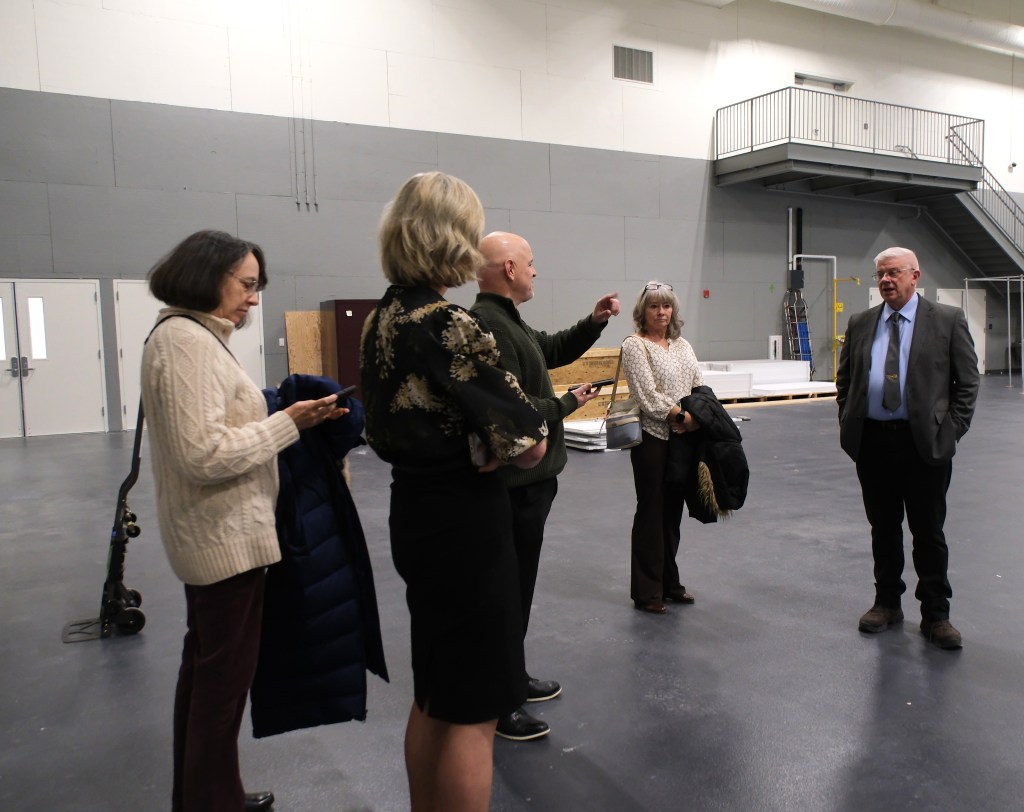
York County Regional Training Center director Roger Hooper points out features of the drill hall to reporters and others during a tour. (Contributed photo)

Richard Clark is in his ninth year as a York County Commissioner and previously served 18 years as a Wells selectman – and he pointed out, in both levels of government, the hiring and retention of public safety personnel figures largely.

“Training is continuous,” Clark said. So, when commissioners learned York County would be awarded $40 million under the American Rescue Plan Act – what they knew would be a once in a lifetime award – they sought community input and mulled several projects.

Ultimately the board decided on two major projects: a first responder training center and a separate substance use treatment and recovery center – the latter currently under construction – as well as providing financial support for in-house projects and for initiatives by area nonprofits.

“We knew we wanted to do something to benefit all of York County,” said Commissioner Donna Ring.

YCCC Criminal Justice Program Chair Tim Burton said the new first responder facility helps expand the college footprint further into the county – Alfred is the geographic center of York County.

“(It gives) York County residents greater access to courses,” Burton said. “It increases opportunities.”

The training center is a $24 million project, funded with a combination of ARPA money, congressionally directed spending funds, grants and county funds.

York County Regional Training Center is at 79 First County Way, off Route 4 and Layman Way in Alfred.

More information, including upcoming course opportunities, can be found at: Regional Training Center | York County Maine Government.

An open house is planned for later this year.

____________

Tammy Wells is a media specialist at York County government.

Dutremble to lead York County Commissioners in 2026

By TAMMY WELLS

York County Commissioner Richard Dutremble of Biddeford was unanimously voted as chair of the five-member board during its organizational meeting Jan. 7.

Dutremble has served as a York County Commissioner for 20 years including seven years as chair since 2007  – and said this year will be his last as a commissioner.

“I’m not running for re-election,” he said of the upcoming November vote. Noting two major projects the county has undertaken are winding down – The York County Regional Training Center which recently began offering classes to first responders and the York County Recovery Center, expected to be completed this fall – and with the county in good financial shape, he said it is time.

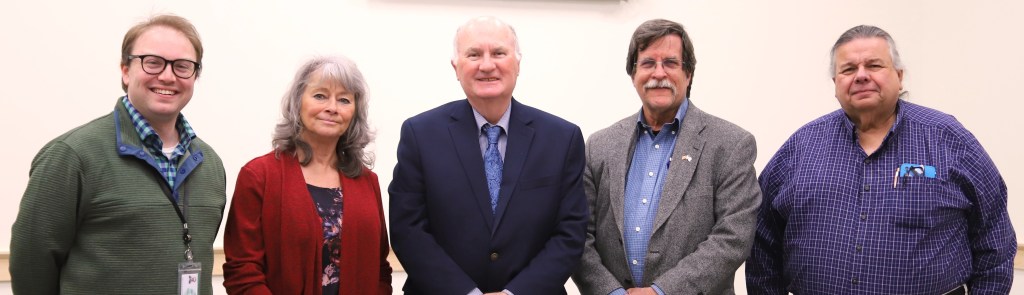
York County Commissioners Justin Chenette, Donna Ring, Chair Richard Dutremble, Vice Chair Robert
Andrews, and Richard Clark. (Contributed photo)

Dutremble represents District 2, which includes Arundel, Biddeford Kennebunk and Kennebunkport.

Robert Andrews of Lebanon, currently vice chair, will serve in that position again in 2026, his fourth time in the role. He represents municipalities in District 1 – Acton, Berwick, Cornish, Lebanon, Limington, Newfield, North Berwick, Parsonsfield, Shapleigh, and South Berwick.

Commissioner Richard Clark  f Wells, representing  District 5 Eliot, Kittery, York, Ogunquit and Wells – will continue as a director of Coastal Counties Workforce, Inc., a nonprofit that works to provide access to jobs, skill development and business services vital to the social and economic well-being of the communities in the six coastal counties it represents.

Commissioner Donna Ring of Alfred, who represents District 4 – Alfred, Dayton, Limerick, Lyman, Sanford and Waterboro, was voted as the board’s representative to Southern Maine Planning and Development Commission.

Commissioner Justin Chenette of Saco, who represents District 3 – Buxton, Hollis, Old Orchard Beach and Saco – was voted Maine County Commissioners Association representative as well as York County’s representative to the MCCA risk pool.

The five-member board of commissioners set fees for items ranging from mileage rates to notarization fees. For the most part, the fees remain the same as in past years, with the exception of the administration fee for serving civil papers. Currently at $10, commissioners voted to increase the civil process administrative fee by $25, as allowed by Maine statutes.

Those who need copies of accident reports will pay $20 – the same fee since 2021. Background check fees remain at the 2023 rate of $20; notarization and attestation fees are $5 and $10 respectively – the 2020 rate.

The county mileage reimbursement rate is 67 cents per mile – the same as in 2024, and meals for those on county business reimbursed $15 for breakfast, $20 for lunch and $25 for dinner, or a total of $60 per day.

The board approved a contract with Waterboro for deputy coverage. York County Manager Greg Zinser noted two changes – the contract spells out that the York County Sheriff’s Office will provide up to 80 hours a week coverage, and the county will purchase the cruiser and lease it hourly to the town. In prior contracts, the municipality purchased the vehicle. Zinser noted the county has always had the right to pull a deputy from coverage if needed elsewhere, and now the new contract spells it out with the “up to” 80 hours clause.

———–

Tammy Wells is a media specialist for York County government.

Never miss another update! Subscribe for free today!