OPINION: Should age matter in Biddeford elections?

Age has – apparently — become a factor in Biddeford’s upcoming municipal election.

Today, the Biddeford Gazette published an update to its ongoing updates of potential candidates, pointing out that two more former councilors are hoping for a political comeback: Patricia Boston in Ward One and at-large candidate Clem Fleurent.

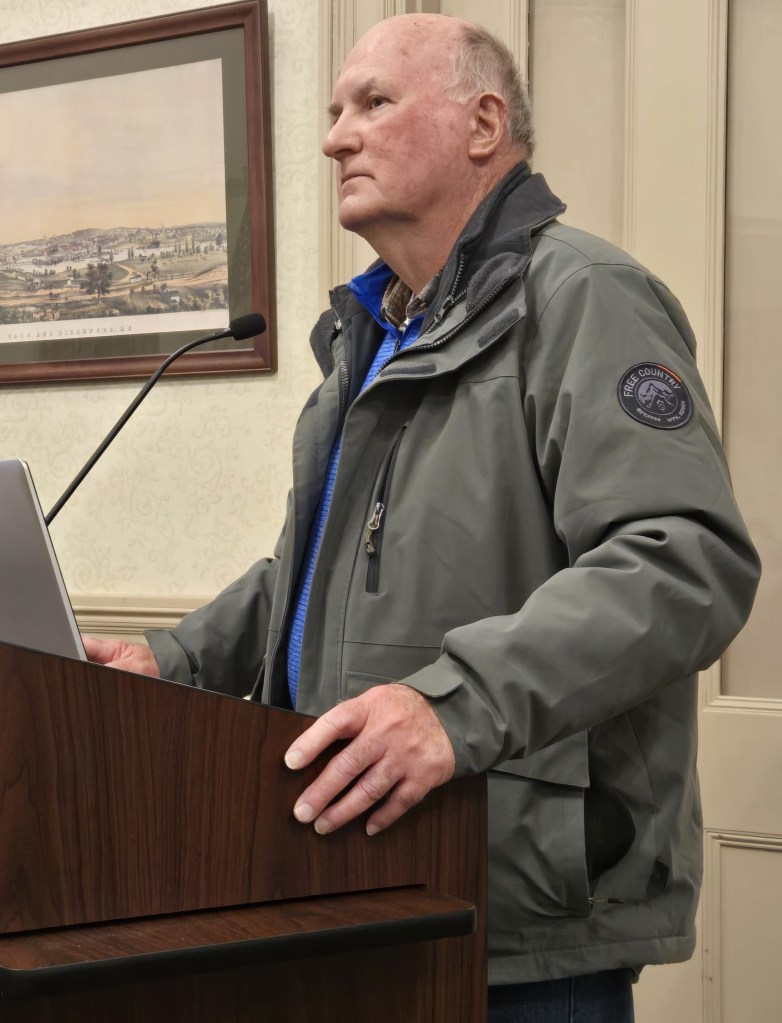
Former city councilor Clement Fleurent

The Gazette has been publishing these updates for several weeks. No one has questioned the age of any candidate – until today.

It should be noted that these brief updates are not stand-alone news stories, such as recent stories about both Liam LaFountain and Norm Belanger who are each hoping to replace Mayor Martin Grohman.

For the record, LaFountain – as we noted earlier – is 28. Likewise, Belanger – as we noted earlier — is 68.

Once the dust settles from all the flurry of the nomination process, our real news coverage of each and every candidate will begin.

Who raised the red flag about age?

Ironically, it was State Rep Ryan Fecteau who first asked for information (via a Facebook post) about Fleurent’s age. He did not make any inquiries about Boston’s age, nor did he reach out to provide us with the age of his partner, Dylan Doughty – another council candidate.

Fecteau – as I have previously reported – was only 16 when he stepped up to serve as a student representative on the Biddeford School Committee. A few years later, Fecteau became the youngest person to ever serve as Speaker of the Maine House of Representatives.

Last year, the age of political candidates became a big deal when President Joe Biden stumbled through his first televised debate with Donald Trump.

State Rep. Ryan Fecteau

For the record, Trump is only three years younger than Biden. Both men were in high school at the same time.

As the Biddeford Gazette recently reported, the median age in Biddeford is 36.1 years, meaning that half of the city population is 36 or younger.

Fecteau was only 19 when he decided to seek a seat on the Biddeford Charter Commission and said during a prior interview that his decision created a bit of a stir in the community.

“There were certainly a lot of skeptics who wondered about this new kid and what he was trying to prove,” Fecteau said, pointing out that the commission was chaired by one of the city’s most well-known politicians. “I was only 19, and I think some people wondered about my motivations.”

Today, I wonder a little about Fecteau’s motivations.

If we’re going to promote and celebrate diversity, well – that also includes older people and senior citizens.

I don’t think age matters. I think competence and positions matter much more.

This is Maine: Our governor is over 65. Both of our senators (King and Collins) are over 65. Congresswomen Chellie Pingree is well over 65.

Is Fecteau concerned about those candidates and their age?  Maybe, but I haven’t heard anything from him about it.

In closing, Fleurent is 90. I don’t know how old Pat Boston is, but I have asked her to call me back and reveal that secret.

The election ballot will not be finalized until September. At that point, the Gazette will begin in-depth coverage of all candidates — and their age.

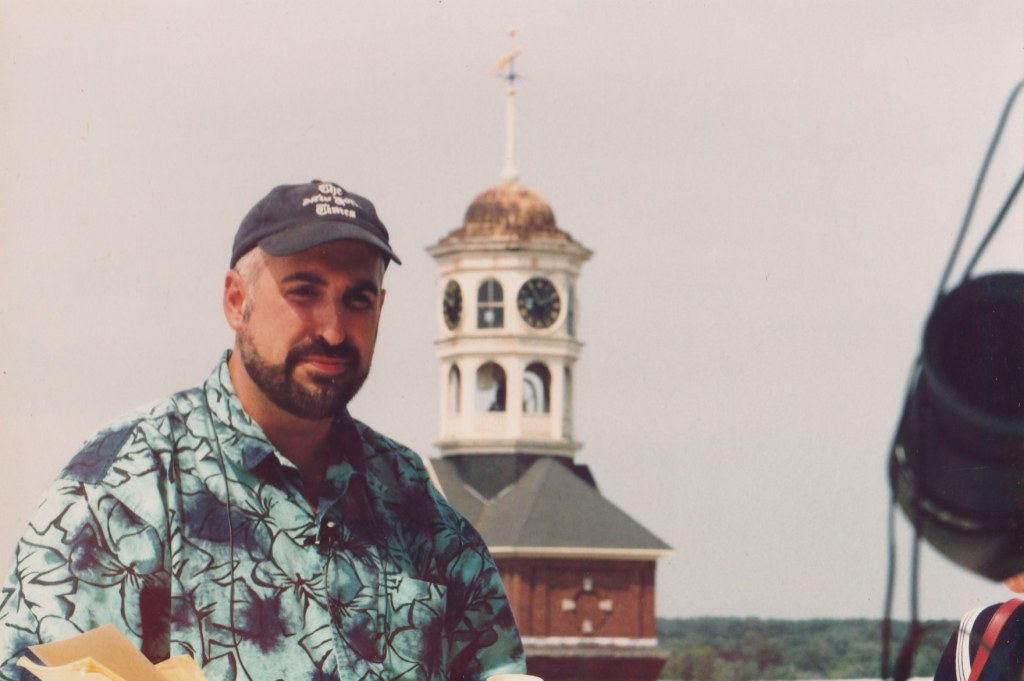
Randy Seaver is the editor and founder of the Biddeford Gazette. He may be contacted by email: randy@randyseaver.com

NEVER MISS ANOTHER UPDATE! Subscribe for free today!

What is ‘affordable’ housing?

You see it all the time.

Whenever elected officials or media outlets use the words “affordable housing,” there is often an almost immediate pushback from people who say those housing units are not really “affordable.”

This is especially true in the city of Biddeford, the latest community to join southern Maine’s so-called “gold coast.”

Until just a few years ago, Biddeford was an anomaly among coastal communities in southern Maine. It was a mill town. Its demographics were dominated by working-class families.

The city’s downtown struggled throughout the 1990s, as the mills began closing. The city’s biggest downtown asset and largest overall taxpayer was the MERC trash incinerator that produced foul odors while burning trash from all over Maine.

That’s all changed over the last few years. Today, Biddeford is a desirable community and has the state’s highest number of younger adults. Biddeford is now a “cool place” to live, and people from all over New England and beyond are moving here for a better quality of life.

RELATED: BIDDEFORD HOUSING CRISIS: Part One

That positive change, however, has a big impact on regional housing costs.

So, what is “affordable” housing?

“A lot of this is subjective,” said Mayor Marty Grohman during a previous interview. “What is affordable for one person may not be affordable for another person.”

So, who decides if a housing unit is “affordable?”

Federal, state and local rules

State Rep. Ryan Fecteau (D-Biddeford) is also a senior development officer for Avesta Housing, Maine’s largest, non-profit housing development firms.

“The term ‘affordable’ really depends
on the family or the individual.”

State Rep. Ryan Fecteau (D-Biddeford)

“There is no state or county in the United States where a renter working full-time at minimum wage can afford a two-bedroom apartment,” according to Avesta’s website. “Housing availability has shrunk to record lows while rental costs have increased dramatically. The magnitude of the affordable housing crisis we are currently facing calls for bold and innovative solutions.”

Fecteau says that he and other legislators view the need for affordable housing in Maine as a top priority.

“The term ‘affordable’ really depends on the family or the individual,” Fecteau said. “But we do have state and federal requirements that developers need to follow if they want tax credits or other incentives to build housing projects.”

RELATED: Biddeford Housing Crisis, Part Two: The Experts Speak

Fecteau says the city of Biddeford has made significant strides in addressing a wide range of housing needs, including low-income projects, senior housing and affordable housing.

For most of York County, Fecteau said, low-income is considered to be 60 percent or below of the area’s median income (AMI).

Today only a person earning $44,900 or less qualifies for low-income housing. Low-income housing (usually including basic utilities) is targeted to cost 30 percent of the household’s net income.

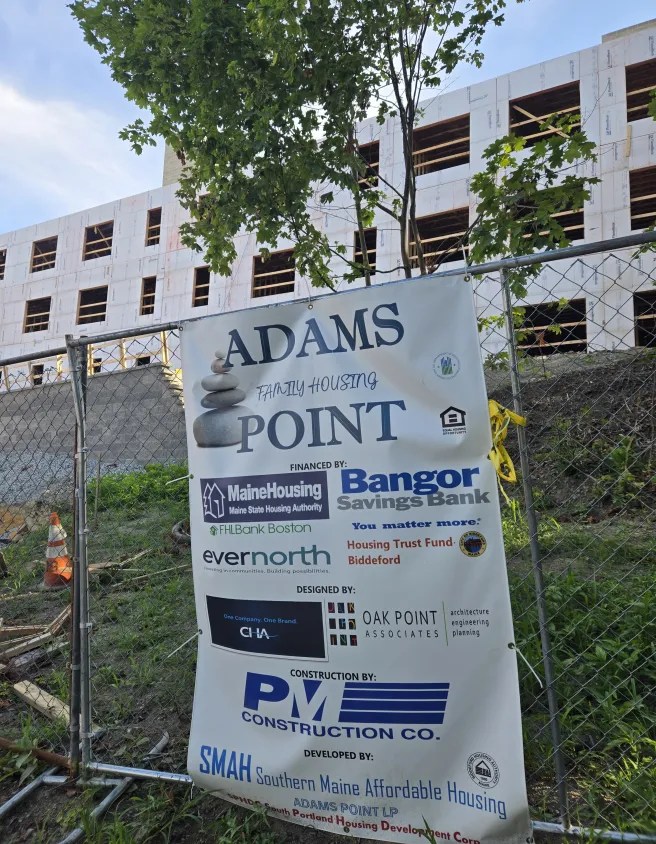
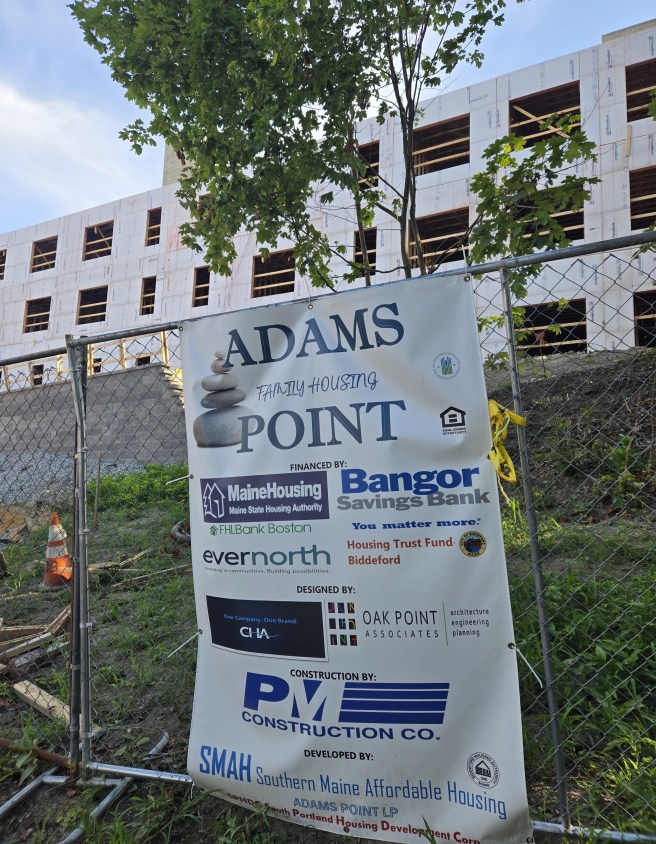
The Adams Point project in Biddeford is expected to open in March 2026, offering 39 low-income rental units. (Seaver photo)

Guy Gagnon, executive director of the Biddeford Housing Authority, says his non-profit organization caps their low-income rental costs at $1,350 for a one-bedroom apartment; and $2,125 for a three-bedroom unit.

Fecteau and Gagnon both point out that there is sometimes a big difference between low-income housing and other housing that is described as “affordable.”

Missing puzzle pieces

Gagnon points out that providing affordable housing is not just a Biddeford problem.

Since 2018, the rental cost burden across the state has increased sharply for most households, especially for those with household incomes between $35,000 and $75,000 in total household income.

According to George Gervais — Biddeford’s Director of Community and Economic Development — the city had 10,576 housing units at the beginning of March this year.

In just the last few months, several new housing units have been added to the mix, including projects such as The Levee and The Eddy, both of which are described as “affordable housing.”

More low-income housing is also being added to the mix. Within a few months, the Adams Street project will offer 39 new units for low-income renters.

Gervais said rental units make up slightly more than 53 percent of the city’s occupied housing.

Despite the increasing supply of housing, average monthly rents in Biddeford remain steep, ranging between $1,700 and $3,200, from studio apartments to three-bedroom units.

City Council President Liam LaFountain said he is feeling a bit discouraged because the increasing amount of housing is not doing much to drive down rental costs or the cost of a single-family home.

The average home values in Biddeford are continuing to rise, outpacing employment earning gains. The average home value in the city is slightly more than $478,000.

Earlier this year, Gervais told the city council that more than 2,100 units of housing are currently in some form of development.

Of those 2,100 new housing units, only 319 units are planned as affordable housing units in which rental costs are calculated by the area’s median income.

Grohman said that he and the city council set a goal last year to create 180 units of ‘affordable” housing every year for the next five years.

But can Biddeford residents keep up with rising housing costs?

Gagnon and LaFountain said they and others are doing everything possible to address the issue, at least on the local level.

“Our mission is to touch as many demographics as we can,” said Gagnon. “From our unhoused population to affordable apartments and homes for families and seniors.”

Gagnon said he is particularly concerned about families of two or more people being able to find an affordable living solution.

“You hear a lot of talk about one and two-bedroom apartments, but you don’t see much about three or four-bedroom units,” Gagnon said.

The Biddeford Housing Authority was responsible for the development of 47 “market-rate” units that range from $925 a month for a one-bedroom unit to $1,100 for a two-bedroom unit.

“We were able to pull that off because a lot of things went right for us,” Gagnon said. “We got our financing from a local lender with a very competitive interest rate and term. We were then able to pass those savings on to the renters.”

Gagnon said it is difficult for both non-profit and private developers to offer “affordable housing.”

“You have to consider interest rates, material and labor costs and lots of other factors,” Gagnon explained. “Typically, you don’t begin to see a return on your investment for 15 years or more.”

Gagnon said many people might be surprised to learn that it was President Ronald Reagan – a staunch fiscal conservative – who helped create federal tax credits for developers willing to build affordable housing for lower income families.

Gagnon says he would like to see the city and state move from a focus on creating more units and instead use that extra funding to develop fewer units that could be less expensive.

“People are generally impatient,” said Gagnon. “They want it fixed now, but the reality is that this is not just a Biddeford problem.”

Gagnon does, however, acknowledge that the city has some unique challenges.

“There are two very different groups of people in Biddeford,” Gagnon explained. “There is the old Biddeford and the new Biddeford. The new Biddeford people have access to higher regional incomes and can live here while tele-commuting.

“Meanwhile, the old Biddeford people are still relying on traditional incomes. I had a friend recently tell me that if Portland is Manhattan, then Biddeford is Brooklyn.”

The median household income in Biddeford is $69,794. For comparison purposes, the median household income in Saco is $84,328; and $93,167 in Kennebunk.

How do city officials define ‘affordable’ housing?

LaFountain says the city of Biddeford is using a diverse set of tools to address the costs of housing, including creating Inclusionary Zoning (IZ) rules that require any developer proposing to build more than eight units to offer at least 10 percent of those units within AMI guidelines.

“There should be housing that is attainable for all Biddeford residents,” LaFountain said. “That is the goal, but it’s going to take time, money, effort and a lot of other things beyond the city’s control to make that happen.”

The city of Biddeford describes affordable housing in the following ways:

Low-income: A development in which a household whose income does not exceed 70 percent of AMI as defined by the U.S. Department of Housing and Urban Development (HUD) stipulating that rental costs cannot exceed 30 percent of the household’s monthly income.

Owned housing: A development in which a household whose income does not exceed 120 percent of AMI;

Affordable housing: Housing for which the percentage of income a household is charged in rent and other housing expenses or must pay in monthly mortgage payments and does not exceed 30 percent of a household income.

Workforce housing: Housing where the rent is affordable to a household earning 80 percent or less than AMI, and where the units are rented to a household earning 80 percent or less than AMI.

“I understand why some people balk when we talk about affordable housing,” LaFountain said. “It is a subjective issue, but is also a very important issue.”

_____________

Randy Seaver is the editor and founder of the Biddeford Gazette. He may be contacted by email: randy@randyseaver.com

NEVER MISS ANOTHER UPDATE! Subscribe for free today!

Fecteau’s housing bill gets bipartisan approval

According to a press release, both the Maine House of Representatives and Senate voted unanimously last week to approve a housing bill that was introduced by Speaker Ryan Fecteau (D-Biddeford).

The bill, LD 1829, is intended to make it easier to build new housing units by amending zoning requirements and providing clarity for municipalities, developers and others.

“Too often, the creation of new housing units is hampered by onerous and overly complex rules that make it too expensive, or too frustrating, for homeowners to build,” Fecteau said.  “This law will cut red tape, remove government roadblocks, and empower everyday Maine people to build housing for their own families and neighbors.”

According to Fecteau, LD 1829 will reduce minimum lot sizes to no more than 5,000 square feet in designated growth areas and remove owner occupancy requirements for accessory dwelling units (ADUs) to unlock financing for construction.

Fecteau said LD 1829 will “streamline municipal review for smaller housing developments; create a one-story height bonus for qualified affordable housing and require training for municipal planning board members within 180 days of their appointment.

“This is a significant step toward
addressing Maine’s housing shortage.”

__ Sen. Rick Bennett (R-Oxford)

“Building any type of housing in Maine is extremely difficult and expensive. These costs and our home shortage are not isolated to one town or region. It is structural, systemic, and statewide,” said Laura Mitchell, executive director of the Maine Affordable Housing Coalition.

“LD 1829 sets us on a better path,” Mitchell added. “Maine communities will always be able to shape their futures, but with the understanding that solving our shared housing challenge requires consistency and commitment at all levels of government.”

“This a significant step toward addressing Maine’s housing shortage,” said State Sen. Rick Bennett (R-Oxford).

Bennett said the legislation “respects local communities and strengthens individual property rights.”

“This law cuts through outdated and overly restrictive regulations that have limited the ability of Mainers to make reasonable use of their own land,” Bennett added.

“I’m proud to have supported this bipartisan legislation that will help more Maine people secure housing they can afford.”

The bill will now go to Gov. Janet Mills for her signature and final approval.

Randy Seaver is the editor and founder of the Biddeford Gazette. He may be contacted by email: randy@randyseaver.com

NEVER MISS ANOTHER UPDATE! Subscribe for free today!

Court puts Fecteau in national spotlight

Maine House Speaker Ryan Fecteau of Biddeford is gaining some national attention after the United States Supreme Court ruled yesterday in favor of Republican lawmaker Laurel Libby who said he violated her Constitutional rights.

The case began in February after Libby (R-Auburn) posted a photo of a transgender athlete from Greely High School who won the girls’ pole vault competition. Libby’s post included a photo of the student and first-name identification in quotation marks and set off a heated debate across the state, divided mostly along partisan lines.

Fecteau, a Democrat, is the first openly gay person to serve as House speaker and has long been a champion of LGBTQ+ rights.

Fecteau censured Libby for her behavior, criticizing her post and subsequent comments identifying the student. The censure prevented Libby from speaking or voting on the House floor.

Maine Speaker Ryan Fecteau of Biddeford

The Democratically-controlled House of Representatives found that Libby’s post violated its code of ethics by putting the student at risk.

Fecteau said he would lift the censure if Libby simply apologized for the post.

Libby ultimately filed an “emergency appeal” with the nation’s highest court. She previously sued Fecteau and the House clerk in lower courts.

Many Republicans across Maine celebrated the Supreme Court’s 7-2 decision to restore Libby’s voting rights as the first session of Maine’s Legislature begins to wind down.

Fecteau was unavailable for comment on Wednesday morning, but did issue a statement to the Gazette.

“Representative Libby’s ability to vote on the floor of the House has been restored until the current appeal process runs its course,” Fecteau said in his statement. “The Clerk of the House, whom the injunction is against, has already complied with this court ruling. We look forward to continuing with the important work Maine people expect of us.”

But not all Democrats were disappointed by the high court’s decision. Former Democratic lawmaker Cynthia Dill, an attorney from Cape Elizabeth, took to social media Tuesday evening and proclaimed that the Court’s decision was a validation of girls’ rights.

And former Republican lawmaker Joyce Maker from Calais expressed disappointment about the Court’s decision on her Facebook page.

In Maine and across the nation, polling shows that many people –– regardless of political affiliation — are uncomfortable with the issue of transgender participation in high school sports.

“This is a victory not just for my constituents, but for the Constitution itself,” Libby told WMTW-TV. “The Supreme Court has affirmed what should never have been in question — that no state legislature has the power to silence an elected official simply for speaking truthfully about issues that matter.”

Libby said she is still not allowed to speak on the House floor. “We do have a bit of a long road, still,” Libby told WMTW.

Never miss another update! Subscribe for free today!

Biddeford’s Housing Crisis: Part One

Editor’s Note: This is the first installment of a three-part series that examines Biddeford’s housing crisis.

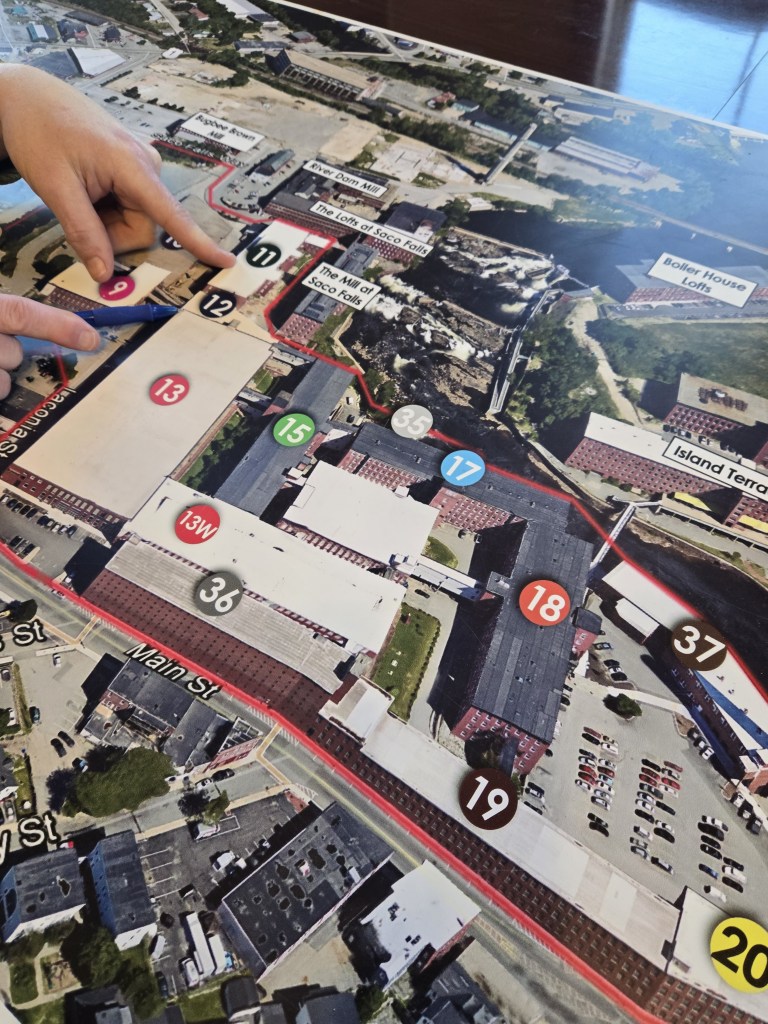
A large conference table takes up the center of Biddeford Mayor Marty Grohman’s second-floor office at City Hall. On that table is a large aerial photo of the city’s downtown area, where several new housing projects are either under construction or in development.

Grohman can’t help but to get excited when talking about the city’s potential for growth and prosperity, but he is also mindful of the struggles the city still faces in terms of increasing rental costs, home prices and the lack of affordable housing.

“It’s a big mix,” said Grohman during a recent interview with the Biddeford Gazette. “There are a lot of moving parts and they are all connected.”

All across Maine, cities and towns are struggling to keep pace with their community’s housing needs.

Mayor Marty Grohman points to several housing projects that are in development throughout the city’s downtown area.

“It’s not just Biddeford,” Grohman explains. “It’s virtually everywhere, and we – as elected leaders – have a responsibility to be part of the solution for this problem.”

In his search for creative solutions, Grohman is convening a special workshop meeting of the Biddeford City Council to address housing issues on Tuesday, Feb. 11.

At that workshop meeting, which will include an opportunity for public commentary, councilors and city officials will review the city’s goals and progress in meeting the various housing demands throughout the city.

For example, Grohman says the city council last year set a goal of creating 180 units of “affordable housing” each year over the next five years.

But even the term “affordable housing” creates confusion and resentment.

“A lot of this is subjective,” Grohman said. “What is affordable for one person may not be affordable for another person.”

In order to qualify for state and federal tax credits, affordable housing rental costs are based upon the region’s Area Median Income (AMI). The federal department of Housing and Urban Development (HUD) uses a formula that calculates rental rates at 80 percent of AMI.

According to the most recent statistics from the U.S. Census Bureau, Biddeford’s median income is $63, 261 per household or $32,763 for an individual.

For comparison purposes, the AMI in Saco is $81,326 per household or $44,596 for an individual.

Both the federal and state government use AMI data (and other measurements, such as total assessed property values) to determine a community’s need for federal grants and school funding.

“Our housing problems also adversely impact people who already have stable housing,”

State Rep. Traci Gere

While some people say that Biddeford’s population growth is creating an unsustainable spike in demand for housing, data from the U.S. Census Bureau shows only modest gains in the city’s population over the last 10 years.

Today, the city of Biddeford is listed with a population of 22,367 people, the largest of any of York County’s 46 municipalities. In 2000, the city’s population was 20,942. In fact, Biddeford’s population has actually decreased by 0.5 percent in just the last two years.

Like other urban centers throughout Maine, Biddeford has a notable population of unhoused residents, a problem Grohman says the city is fighting every day.

But the city is also facing some other serious housing issues, including a lack of so-called “work-force” housing options.

“If you talk with any of our department heads, whether it’s the school superintendent, the police chief or the fire chief, they will all tell you how hard it is to hire and retain new employees,” Grohman says. “We’re not going to get new teachers or police officers in our community if those people cannot afford to live here. It’s a big problem.”

Members of Biddeford’s legislative delegation all agree with Grohman’s assessment that housing is a big part of a growing problem in attracting workers and private businesses to the city.

Local legislative delegation rolling up its sleeves to tackle housing

“There are so many facets that fit under the umbrella of housing issues,” said State Rep. Traci Gere during a previous interview with the Gazette. This issue runs the gamut, she said, pointing out that roughly eight percent of Maine homeowners occupy manufactured housing.

Gere and other local lawmakers are hoping the Legislature will be able to help cities and towns across the state in revising zoning standards and cutting bureaucratic red tape, a problem that many developers say drives up the cost of housing.

“Our housing problems also adversely impact people who already have stable housing,” Gere said. “If we want a sustainable local tax base — and relief for homeowners — we have to find a way to help businesses maintain a stable pool of employees. For example, a hospital cannot function without support personnel, such as custodians or clerical workers.”

House Speaker Ryan Fecteau of Biddeford is very familiar with housing issues. In addition to his legislative service, Fecteau is employed as a senior officer of policy and planning for Avesta Housing, a non-profit affordable housing developer that operates throughout New England.

“There is an appropriate role the state can play in these local discussions,” Fecteau said. “We can certainly work harder in bringing resources to the table and help our municipal partners without stepping on their toes.”

A recent report issued by the Maine State Housing Authority (MSHA), says the state agency was able to complete 775 affordable housing units in 2024, and that 1,005 units of affordable housing are now in the process of being built.

The agency also points out that the average production costs of building those units is finally beginning to level off following three straight years of rising production costs.

Other factors pointed out in the report’s executive summary is that interest rates have leveled off and that MaineHousing’s “First Home” program is now maintaining rates well below the market average to a rate to 5.375 percent prior to the end of 2024.

But there are still many challenges that lie ahead for Maine’s housing landscape.

Although some recent “leveling off,” in home prices has helped cool the market, rising home prices continue to be a primary concern for homeownership access, according to the MSHA’s report.

From 2020 to 2024, the median home price in Maine grew by more than 50 percent, far outpacing a 33.3 percent increase in wages and salaries of Maine workers during the same period.

Other things such as utility and heating costs play big factors in housing affordability. For example, heating fuel prices have recently stabilized after record high prices in 2022 and 2023. According to the MSHA, heating fuel costs have now been trending downward since April 2024.

Since 2018, the rental cost burden across the state has increased sharply for most households, especially for those with household incomes between $35,000 and $75,000 in total household income.

NEXT: Housing developers discuss their challenges and opportunities.

Never miss another update! Subscribe for free today!

Housing, budget: top priorities for Biddeford lawmakers

As Maine lawmakers gear up for what is expected to be a grueling session, there are two topics that both Democrats and Republicans agree should be a top priority.

The 132nd Legislature will consider several bills aimed at tackling the state’s housing crisis while also addressing a projected $450 million budget shortfall and a new budget proposal that represents a 10 percent increase in state spending.

When it comes to issues of housing, Biddeford’s delegation is well poised and ready to tackle the complex issues of homelessness, the need for affordable rental units, protections for mobile home residents and the rather stagnant supply of workforce housing options, which includes starter homes for Maine’s families.

“There is a lot for us to do on these issues,” said State Rep. Traci Gere (D-Biddeford) “We’re just getting started, but I am optimistic that folks on both sides of the aisle are ready to roll up their sleeves.”

Gere was just elected to her third term. She represents coastal Biddeford and Kennebunkport, and was just appointed as the House Chair for the Joint Standing Committee on Housing and Economic Development.

Rep. Marc Malon (D-Biddeford) has also been appointed to serve on that same committee.

Though Gere’s coastal district is rich in land and real estate values, it is also home to an aging population – seniors who are wondering how they can remain in homes they have owned for generations while struggling to keep pace with rising property taxes.

“Our housing problems also adversely impact people who already have stable housing

— Rep. Traci Gere

“There are so many facets that fit under the umbrella of housing issues,” Gere said, pointing out that roughly eight percent of Maine homeowners occupy manufactured housing.

Gere is hoping the Legislature will be able to help cities and towns across the state in revising zoning standards and cutting bureaucratic red tape.

“Our housing problems also adversely impact people who already have stable housing,” Gere said, pointing out that both businesses and consumers are impacted when front-line workers cannot afford to live in the same community where they work.

Speaker Ryan Fecteau of Biddeford is very familiar with housing issues. In addition to his legislative service, Fecteau is employed as a senior officer of policy and planning for Avesta Housing, a non-profit affordable housing developer that operates throughout New England.

Like Gere, Fecteau believes the state can help municipalities by cutting some of the red tape that often slows housing development.

“There are more than 200 towns in Maine that don’t have any zoning regulations or designated growth areas for new housing,” Fecteau said. “That’s almost half of all municipalities.”

Fecteau said the Legislature can find an appropriate balance in working with communities without overstepping on the bounds of local, home rule.

State Rep. Traci Gere (Photo: Maine House)

“There is an appropriate role the state can play in these local discussions,” Fecteau said. “We can bring resources to the table and help our municipal partners without stepping on their toes.”

The looming budget battle

A few days ago, Gov. Janet Mills (D) submitted her proposal for the state’s next biennial budget.

Mills $11 billion budget request represents a roughly 10 percent increase over the current budget.

To support her proposed spending increases, Mills has suggested increasing taxes on a wide range of products and services, including a 50 percent increase on cigarette taxes and more modest increases on things such as streaming services, cannabis and ambulance fees.

Local lawmakers say they are still treading through the massive budget documents that were released less than two weeks ago, but say declining federal revenues that were available to states during the Covid pandemic are no longer available.

State Rep. Wayne Parry (R-Arundel) is back in Augusta for a third consecutive term. He previously served in the Maine House for four terms before taking a two-year hiatus because of Maine’s term limit laws.

Parry will once again serve on the Legislature’s Transportation Committee. When asked about the budget, Parry said he is not feeling very optimistic.

While a majority of Democrats, including Fecteau, say the state needs to increase revenues, Parry say he favors a spending freeze.

‘I know a lot of Republicans are going into this with a mantra of cut, cut and cut, I prefer that we do our best to freeze spending at its current level,” Parry said.  “Lots of people talk about the federal monies we received during Covid. Well, I have news, the pandemic is over.

“It just becomes a never-ending cycle of spend, spend, spend.”

Although a new state program designed to help seniors stay in their homes fell flat on its face last year because of huge demand and flaws in its implementation, Parry says there are still many opportunities to help seniors deal with crippling property tax increases.

“I find it really frustrating,” Parry said.  “We’re not taking care of our seniors and veterans. The focus is all about people who have lived in Maine for about five minutes.

“I support programs to help people out and lend a hand, but how can we keep inviting people who need financial assistance into our state when we can’t properly take care of the people who already live here?’

When asked about the budget shortfall and looming increase, Fecteau and Gere say that many of the newer programs the Legislature passed have wide and strong support among voters.

“When you look at some of the things we accomplished – as our commitment to fund 55 percent of local school budgets to help local property taxpayers, or the universal free me program for all students, I don’t think there would be much support for cutting those programs,” Fecteau said.

“But the cost for those programs does not stay flat. We have to consider inflationary impacts and shrinking federal funds.”

Parry criticized Mills for not recognizing the importance of Maine’s transportation needs, saying 100 percent of all revenue from the state’s vehicle sales tax should be used to support a vital part of Maine’s infrastructure.

State Rep. Wayne Parry (Courtesy photo)

Currently, Parry says, only about 40 percent of vehicle sales tax revenues are being used for transportation.

“It’s really frustrating,” Parry said. “Our transportation infrastructure, including bridges, highways and roads is essential for everything from day-to-day commerce to tourism.”

“It feels like we don’t have our priorities straight.” he added.

Editor’s Note: This is a corrected version of the story. In a previous version, we misquoted State Rep. Wayne Parry in reference to gasoline taxes, which should have read vehicle sales tax. We apologize for the error.

Never miss another update! Enter your email and subscribe for free today!