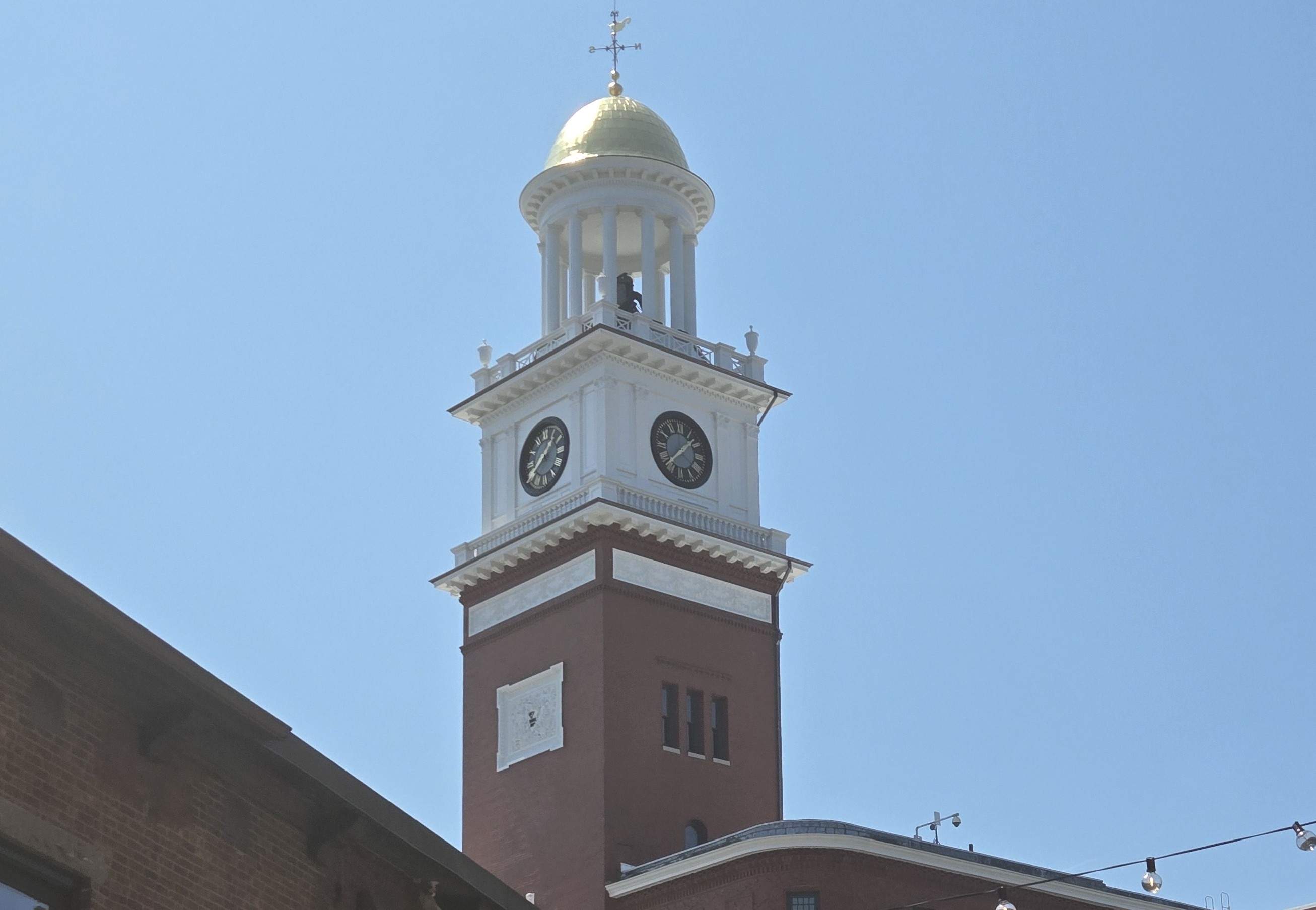

This is the first installment of the five-part ‘Biddeford After Dark” series that was originally published in 2001 by the Biddeford-Saco-OOB Courier
By RANDY SEAVER, Editor
[Oct. 2001] A heavy and ominous fog — the precursor of a cold and damp weekend — rolled westward over Biddeford early on Friday evening, and it remained like a blanket over the city for at least the next 48 hours.
Halfway through the weekend, near midnight on Saturday, that fog seemed to be the perfect backdrop for a lone reporter wandering the city’s streets. A reporter looking for stories — the tales of the weary and the songs of those who make the darkness their kingdom.
I didn’t have to travel far.
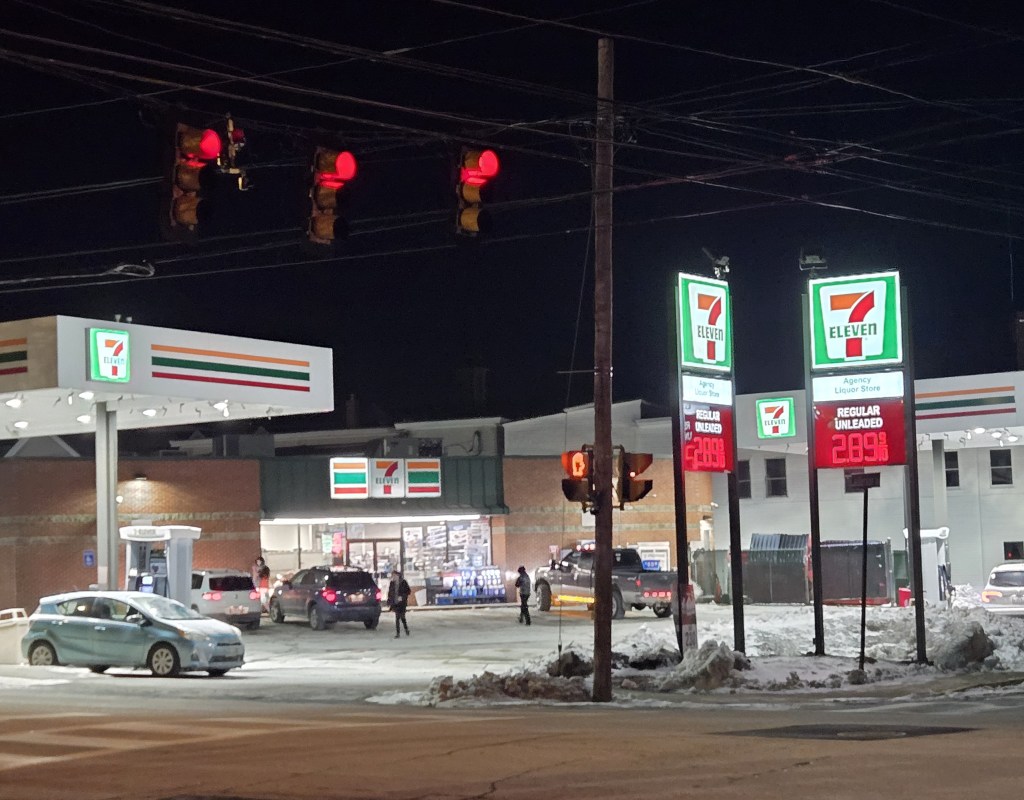
The fluorescent, unearthly glow of the 7-Eleven sign cuts through the late night fog and mist like so many shards of shrapnel. The wail of a police siren can be heard in the distance and the downtown bars are packed and rocking.
The late-night bargains are being struck over shots of tequila, and the lonely hearts are growing more and more desperate with each passing minute.
Welcome to Biddeford after dark.
A cut-rate Statue of Liberty
Perhaps by default, the 7-Eleven store, at the corner of Alfred and Jefferson streets, has become the de-facto epicenter of night life in downtown Biddeford.
It’s not hard to blend in, but my notebook and pen make me a curious commodity in a parking lot full of late-night activity. The store’s neon signs and its bright interior lighting serve collectively as a beacon for both the downtrodden and those who have nowhere else to go at this hour. It is almost akin to a cut-rate Statue of Liberty: send me your intoxicated, your restless and your lonely.
The store and its parking lot become a social scene unto themselves as wannabe gangsters, mostly teenagers, strut in and out of the store, buying Marlboros and Mountain Dew. After waiting in line for up to five minutes, many of those same customers leave the cash register only to sit in their vehicles or loiter near the store’s front door for as much as 30 more minutes.
___________________
Send me your intoxicated, your restless and your lonely.
__________________
Many of those wandering in the front door know each other, and they greet one another as if they were victims of watching way too much MTV. Suddenly, this portion of southern Maine (the way life should be) resembles an imagined life in “the hood” or some dilapidated barrio.
“Yo, G-man, what up?,” hollers a young man to an acquaintance as he jumps out of a shiny SUV. Inside that Jeep Grand Cherokee, the man’s girlfriend, obviously intoxicated, mascara dripping from her eyelids, fumbles with the stereo. The throbbing pulse of rap music fills the lot and the Jeep seems to pulsate to the beat of a song that, from only a few feet away, seems indistinguishable.
Somehow, this music seems to comfort the young woman in the Jeep. She tosses her head back and closes her eyes, silently mouthing the lyrics of a Tupac Shakur song.
There is an undercurrent of violence and uncertainty hanging in the air, lending an ironic balance to the comforting quiet of the rolling fog.
Tough guys don’t dance
Across the street, in front of the Mahaney building, I approach two young men who are wearing oversized jackets and gold necklaces.
“What’s going on?” I inquire, trying to sound hip.
The men stop and look at me, puzzled by my presence and my notebook. Paper makes these tough guys nervous.
“Why do you want to know?” the shorter man asks.
“I’m doing a series of articles about Biddeford after dark,” I respond.
“Oh yeah,” the taller man says. “Make it a love story and kiss my ass.”
I keep pressing, firing off questions and promising anonymity for honest responses.
They seem to think that I am a cop. Each of them shifts from foot to foot, making hand gestures as if to proclaim that they are not intimidated. “I’ll tell you about Biddeford after dark,” the shorter man says. “Biddeford sucks.”
“Why?” I ask.
“. . . ‘cause it just does,” he responds, carefully watching me write down his response. “Hey, do you believe this [expletive]? He’s writing down what I’m saying,” the short man tells his friend. “I’m gonna be in the newspaper. I’m gonna be famous.”
The taller man is making his way toward the ‘50s Pub on Franklin Street. He wants nothing more to do with me or my five-part series.
A few moments later, I come across another man walking along Alfred Street.
Patrick, 24, is clean-cut, wearing faded blue jeans and a maroon pull-over sweatshirt. He pauses to answer my questions, carefully contemplating his responses.
“Why does Biddeford suck,” he asks, rhetorically. “Well, they put a garbage dump [MERC] right in the middle of town. Who would think to put a waste facility right in the middle of the city?”
“Why aren’t there other businesses open late at night?” I ask.
“The downtown is lousy to look at,” he replies. “and there’s not enough parking.”
The downtown parking lots are virtually empty.
Twenty-four, seven—
Back at the 7-Eleven, Karen stands outside the front door, smoking a cigarette.
Karen, 30, has just returned to full-time work after a six-month hiatus. She is a third-shift clerk who says the late-night hours seem to match her sleeping habits.
“I’d rather work second shift,” she says. “But this shift is still better than first shift. I can’t get up in the mornings.”
Stewart previously worked at the store, and she gives an air of being nonchalant when talking about the things she sees while most of the city sleeps. She tells of a homeless man who waits each night for her to throw the old donuts in the garbage dumpster. She sees college students with fake ID cards and high school kids stumbling into the store, drunk or stoned.
“All of the weirdos come here because we’re the only place open,” Stewart explains between puffs of her cigarette. “Last Thursday night, we must have had 20 people waiting in line.”
What do they buy?
“Hot dogs, sandwiches and cigarettes,” Stewart says. “Once the ‘50s [Pub] closes, they all wander over here ‘cause they got the munchies.”
As for the late-night beer runs, just moments before 1 a.m., Stewart confirms what we already suspected. The store becomes a madhouse of activity.
“We lock the beer coolers at 12:45,” she explains. “That way, people who are just wandering around in the store can’t buy alcohol after one.”
Life During Wartime
Inside the store, roughly a dozen people wander aimlessly through the narrow aisles, browsing the selection of potato chips, pastries and the six hot dogs at the bottom of a steamer.
The store is brightly lit, and a bag of garbage has spilled into one of the aisles. The coffee pots are full, and Stewart rings up each customer, many of whom toss crumpled dollar bills at her from across the counter.
The song playing on the store’s radio seems fitting. The Talking Heads’ “Life During Wartime”: I got some groceries — some peanut butter — to last a couple of days — but I ain’t got no speakers, ain’t got no headphones, ain’t got no records to play. . . I sleep in the daytime, work in the nighttime . . . this ain’t no party, this ain’t no disco — this ain’t no foolin’ around.
Outside, a teenager from Thornton Academy makes a deal in the parking lot. Within moments, a young man emerges from the store with a six-pack of Budweiser beer. A quick, bleary-eyed handshake later, and the student takes the beer and returns to the car where his friends wait.
Romeo and Juliet
On the edge of the parking lot, just beyond where the police cruisers roll past on Jefferson Street, a young couple is in the middle of a hushed conversation. I dub them Romeo and Juliet.
Romeo is nervous, and Juliet bravely walks alone across the parking lot. She is all of 15 and wearing braces. She buys Romeo a Mountain Dew and walks back to greet him across the street.
Romeo is wearing a baseball cap in reverse. I approach these kids.
What are you doing out this late?
“I fell asleep at my boyfriend’s house,” she explains. “My watch broke.”
“Yeah,” Romeo chimes in. “We’re cousins.”
I’m not buying what Romeo is selling tonight.
“No, we really are,” Juliet insists.
Where are your parents?
“Ain’t got no parents,” Romeo pronounces, growing more cocky with each passing second. “I live in hotels and work on a paving crew.”
Juliet thinks her father might be inside the ‘50s Pub, and she peers through the bar’s tinted windows to confirm her suspicions.
“He’s going to be pissed if he finds out I’m not home,” Juliet says of her father.
Why don’t you go home?
“Because he might be there,” she responds.
What about your mother?
“Don’t have one,” she shrugs.
Inside the bar, a cocktail waitress weaves through the sweaty crowd and a doorman stands his post near the door, keeping a careful eye on the crowded dance floor. I look for Juliet’s dad, but he’s nowhere to be found.
Juliet is in trouble, I surmise. And then, I walk home — past the closed pawn shops, nail polish parlors and restaurants. I can’t stop thinking about Juliet and her uncertain future.
This is Biddeford After Dark. Sleep well.
______________
Randy Seaver is the editor and founder of the Biddeford Gazette. He may be reached by email: randy@randyseaver.com
c.) 2026 All Rights Reserved
Never miss another update! Subscribe for free today!
 BIDDEFORD GAZETTE