
By TAMMY WELLS, York County government media
York County Commissioners understand the need to support the unhoused through shelter subsidies and are urging legislators to seek ways to support them within the state’s coffers, not the counties’ far slimmer purse.
In testimony to the Legislature’s Housing and Economic Development Committee at a public hearing Feb. 10, commissioners urged the committee members to vote “ought not to pass,” on L.D. 2124, a bill that would further dip into each county’s share of the real estate transfer tax.
And despite a 2025 state law that increased real estate transfer taxes on properties that exceed $1 million, York County officials say the increase won’t offset a further one percent hit L.D. 2124 would impose on their already modest share of the real estate transfer tax.

A committee work session took place on Tuesday and was ultimately tabled. That means committee members will continue their research, and another work session that could potentially include a vote will be scheduled, possibly as soon as the week beginning Feb. 23, a committee staffer said.
Real estate transfer tax is collected by each county Registry of Deeds, which until recently sent 90 percent of the collected tax to the state, with counties retaining 10 percent. The county share was reduced to 9.2 percent in the first session of the 132nd Legislature, with 0.8 percent directed to a housing affordability program for two years.
L.D. 2124, if passed as written, would direct an additional 1 percent of the county share to subsidize shelters, leaving the counties with an 8.2 percent share going forward, and the state with 91.8 percent share.
The bill’s sponsor, Rep. Drew Gattine of Westbrook, whose district includes a portion of Saco, said as a result of a 2025 increase in the Real Estate Transfer Tax for home sales exceeding $1 million, counties are projected to receive an increase in revenue.
“This bill proposes that additional ongoing support be provided for shelters by utilizing a portion of the percentage of increased Real Estate Transfer Tax revenue that currently goes to the counties,” Gattine said in testimony to the committee on Tuesday. “To be clear, the intent here is not to reduce funding to the counties, but to redirect extra funds from the increased tax on high end homes.”
York County Manager Greg Zinser said the amount of money the bill’s sponsors believe will be generated for the counties through the 2025 increase in real estate transfer tax on properties that exceed $1 million will not materialize because of the current 90.8 percent state share and the 9.2 percent county share.
“With their cut, the only people receiving the windfall is the state of Maine,” Zinser said. “Taking an extra 1 percent from the counties’ small share as proposed in L.D. 2124 will further reduce the county share of real estate transfer tax. It is taking a greater percentage of the transfer tax retained by the county as a whole than the high-end home tax is putting in.”
Zinser said York County recognizes the shelters need assistance. He noted York County Commissioners have helped local housing initiatives, awarding $440,000 from York County’s share of ARPA funding to Sanford Housing Authority to assist with a supportive housing project, and about $750,000 to Kittery-based Fair Tide to develop supportive housing and a social services hub. York County Commissioners also voted to use APRA and a variety of other funds to build the York County Substance Use Treatment and Recovery Center.
Under construction now, the 58-bed center is expected to play a role in the circumstances of those seeking recovery services who may also be unhoused.
In their testimony, York County Commissioners said the proposal to further reduce the county share of the real estate transfer tax by 1 percent would mean direct annual revenue loss to York County of $244,000. They calculated that the additional state revenue gained if the bill is approved would yield about $1.2 million annually to subsidize shelters statewide.
RELATED: Biddeford city council splits on supporting state bill for emergency shelters
County operations are funded primarily through a portion of property tax and have few outside revenue streams – among them deeds recording fees and the real estate transfer tax.
In practice, this (bill) simply shifts limited funds from one unit of government to another, without creating new resources,” York County Commissioners testified.
Commissioners also wondered where the subsidy would go in York County, noting the 2025 closure of the sole emergency shelter that had been operated by the private nonprofit York County Shelter Programs, Inc. As well, they said some parts of the bill as currently written would require clarification to avoid a possible greater impact on counties.
“Please understand registers of deeds are not against funding of emergency shelters. In fact, we agree shelters need a funding source, but not at the expense of further burdening our property owners,” said Oxford County Register of Deeds and Maine Registers of Deeds Association secretary Cherri L. Crockett, who was among those testifying at the public hearing.
In practice, this (bill) simply shifts limited funds from one unit of government to another, without creating new resources,
Emily Flinkstrom, executive director of Fair Tide, testified on behalf of 10 organizations that are among members of the York County Committee on Homelessness. She said shelters in Portland and Portsmouth, NH have seen increased demand as has Seeds of Hope Neighborhood Center in Biddeford as a result of the closing of the York County Shelter Programs Inc. emergency shelter.
Flinkstrom said the group recognizes “there is some friction” regarding specifics of the funding mechanism and its impact on county budgets, but encouraged legislators to move the bill forward, with an understanding that the Legislature, counties, and state partners continue work to resolve implementation details.
Sanford Housing Authority Director Diane Small testified that state funding for emergency shelter operations has remained flat at $2.5 million annually since 2016, even as demand and costs have increased, creating an unsustainable funding gap.
Small noted the closure of the York County Shelter Programs emergency shelter has had a profound impact and urged an “ought to pass” vote.
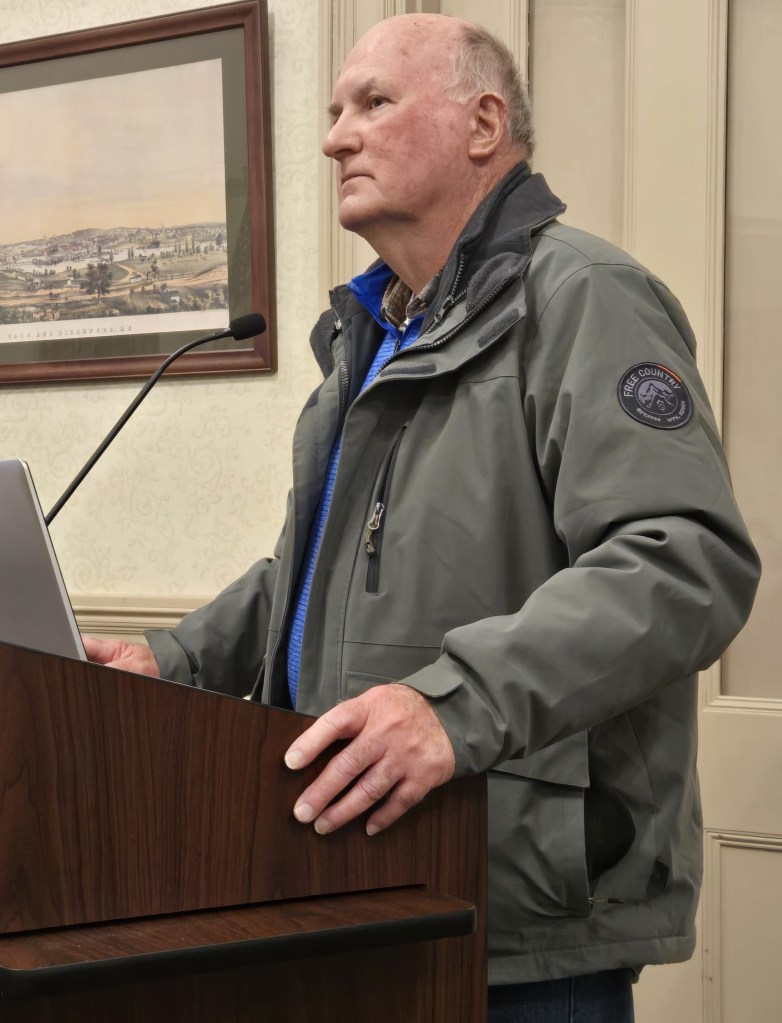
Oxford County Commissioner Sawin Millett, a former longtime Maine legislator, testified that his county sensitive to and supportive of homeless shelters, but opposes the manner in which the subsidy would be funded.
“If you need $1.1 million, why take it away from us,” he asked, noting the shortfall created would impact property taxpayers. “We would like to work with you and look at other alternatives.”
Co-sponsors of the bill include Maine House Speaker Rep. Ryan Fecteau of Biddeford, Rep. Traci Gere of Kennebunkport, and Rep. Daniel Sayre of Kennebunk, along with state representatives from Penobscot, Waldo, and Androscoggin County and a Cumberland County state senator.
________________________
Tammy Wells is a media specialist with York County government. You may reach her at tlwells@yorkcountymaine.gov
Never miss an update! Subscribe for free today!
________________________
THE BIDDEFORD GAZETTE | A Legacy of Trusted, Independent Journalism
Our editorial standards and policies: Biddeford Gazette | Standards & Policies
© 2026 Biddeford Gazette, Inc. All Rights Reserved
 BIDDEFORD GAZETTE