By RANDY SEAVER, Editor
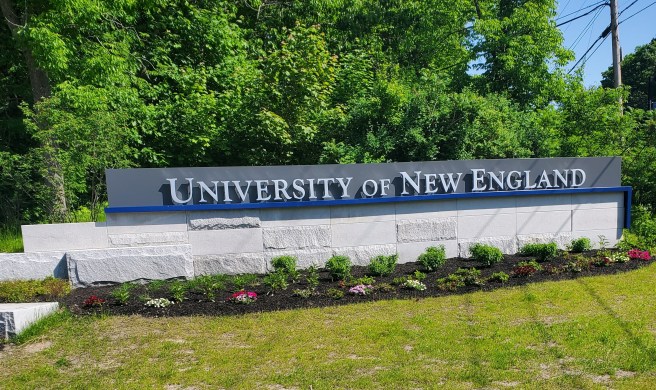
A former Biddeford resident who now lives in Ada, Mich., recently sent an email to the Gazette complaining that we have been “unfair and biased” toward the University of New England.
In his March 6 email, Bernard Roy – a 1971 Biddeford High School graduate – expressed disappointment regarding the Gazette’s coverage of issues connected to UNE.
Roy specifically raised concerns about our March 5 story | Was Sen. Collins misled by UNE?
Roy also expressed outrage that the Gazette “ignored” a letter-to-the-editor he sent to us on Feb. 28, somehow missing the fact that his letter was actually published by the Biddeford Gazette three days later, on March 2, 2026. LETTER | City is Treating UNE Unfairly
The Gazette regularly and frequently publishes a high volume of news focused on the city of Biddeford. Thus, it is understandable how Roy could have missed seeing his letter published on our site.
The Gazette strongly encourages and promotes transparency and reader feedback regarding our coverage. Go here to submit your own letter
In the interests of transparency and full disclosure, the Gazette is sharing its unedited emailed response to Mr. Roy today, March 7.
__________
Dear Mr. Roy,
I would advise you to tread carefully before you accuse me and/or the Biddeford Gazette of any negative “bias” toward the University of New England.
1.) We did, in fact, publish your letter to the editor on Monday, March 2, which coincidentally was my birthday and a very busy news day. Here is the link to your piece in the Gazette: LETTER: City is treating UNE unfairly – BIDDEFORD GAZETTE
2.) I did feel compelled to attach an “editor’s note” to your submission. I know that you grew up in Biddeford and graduated from Biddeford High School (Class of 1971) so I was quite surprised that you would complain about how poorly your sister was treated by parking enforcement at Goose Rocks Beach. Most Biddeford folks know that Goose Rocks Beach is located in the town of Kennebunkport, not in the city of Biddeford. I also was left scratching my head, trying to figure how that particular incident has any bearing on the issue at hand.
3.) Not only did I publish your letter, I also published your sister’s letter — and another guest column from someone else who is equally upset about how “unfairly the city is handling issues connected to UNE.” If you visit the Gazette’s website and simply use the “Search” function, you will find everything we have ever published about the university.
No Apologies
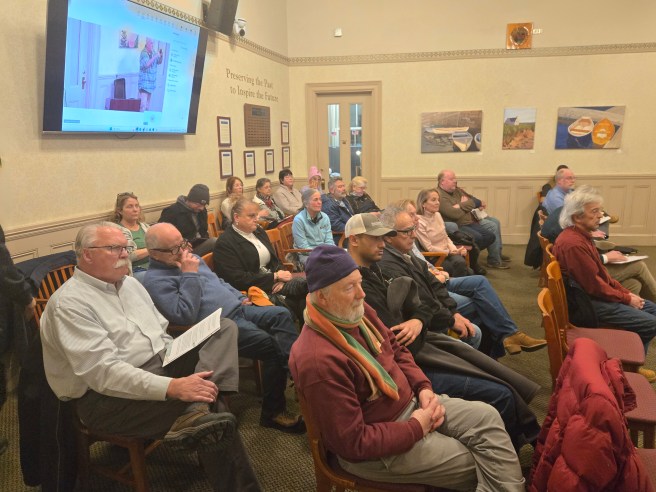
4.) I make absolutely no apologies for being a reporter and for rigorously covering this issue, which has been almost virtually ignored by every other media outlet in southern Maine. In fact, I am often the only reporter covering meetings about UNE, including the very first meeting of the newly formed Institutional Zone Review Committee on February 19, coincidentally my mother’s birthday. New UNE oversight committee begins work – BIDDEFORD GAZETTE
UNE Is a Big Part of Biddeford
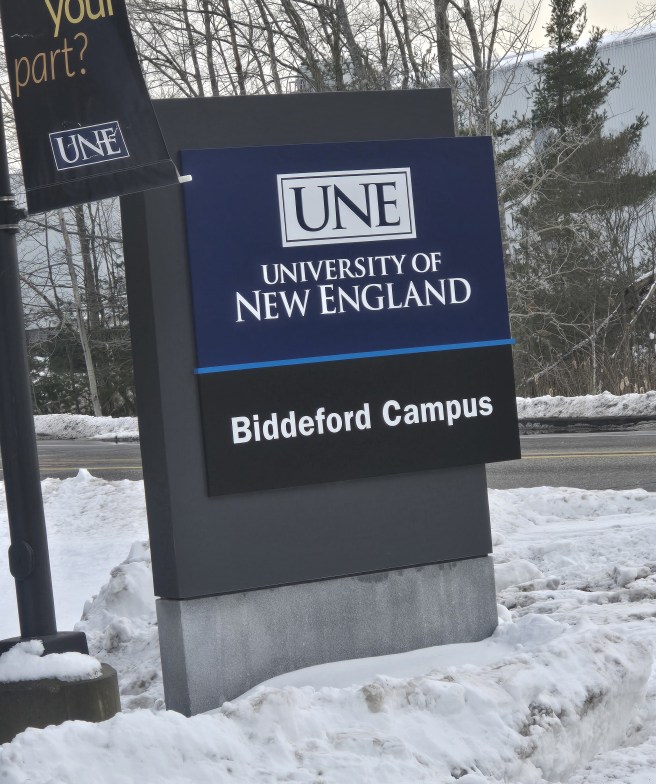
5.) Frankly, I do not understand why issues connected to UNE do not receive more attention from other media outlets, besides the Biddeford Gazette. As you, your sister and others have pointed out — the University is a major and vibrant part of the Biddeford community.
The university is one of the city’s largest employers and offers numerous and quite tangible economic benefits to its neighbors throughout the city. Development on UNE’s campus — most notably its proposed and controversial research pier — will have numerous impacts (positive and negative) on the community, from environmental impacts to public recreation on the Saco River and impacts to commercial fishermen who now lease moorings in proximity to the proposed pier. No one from the university has seen fit to return calls or answer questions from these mooring owners. They remain consistently ignored.
Criticism With a Familiar Theme
6.) Your recent letter has somewhat familiar fingerprints. The same recurring themes — and almost verbatim language — have been used repeatedly to criticize the city. It almost feels as if it’s part of a coordinated attack. You, your sister and others should relax. Despite being told repeatedly that the recent, temporary moratorium on development at UNE’s Biddeford campus has absolutely no bearing on the St. Joseph’s Convent — located roughly two miles away from the campus main entrance — that issue has become a red herring that you and others are trying to exploit. As a Catholic, I find such a move to be offensive.
City of Biddeford is Being Fair to UNE
7.) When he decided to establish a new committee to comprehensively review and evaluate potential changes to UNE’s master plan (last updated nearly a quarter century ago), Mayor Liam LaFountain took great pains to be fair. In fact, his first pick for the committee was Dr. James Herbert, the university’s president. All of the IZ Review meetings are held publicly, televised, and available to watch online. The media and all citizens have complete and unfettered access to the committee’s work and comments. Does this really strike you as unfair, or somehow nefarious?
The Gazette’s Real Relationship with UNE
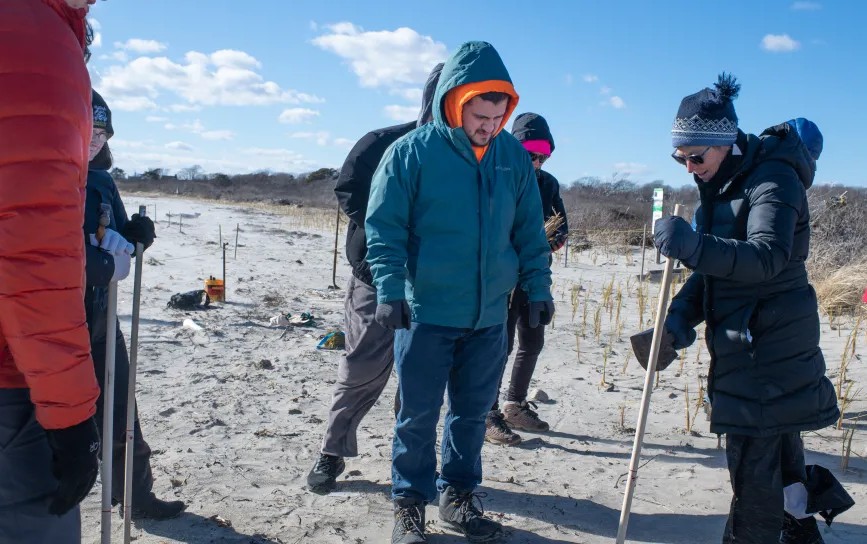

8.) It should be noted that I have a friendly, cordial and cooperative relationship with UNE, including its leadership team and members of its communications department including both Vice President Alan Thibeault and Sarah Delage, the university’s senior spokesperson. Over the past few weeks, the Gazette has published several “news releases” sent to us by the university, including a recent announcement about students helping to restore dune grass: COMMUNITY NEWS – BIDDEFORD GAZETTE
9.) I was recently invited to have lunch on UNE’s campus by Dr. Michael Cripps, a professor at UNE’s School of Arts and Humanities. Dr. Cripps and I had a thoroughly enjoyable discussion that culminated with a conversation about having UNE students who are interested in journalism and communications serve as unpaid interns with the Biddeford Gazette. Do you suppose Dr. Cripps was aware of my horrific bias toward the university when he bought me lunch? (In fairness, I only had a salad).

News, Not Public Relations
10.) Yes, I have covered UNE rigorously. There is absolutely no question that the Gazette has taken a leadership role in ensuring rigorous public conversation and overview of these important issues in our community. I am aware that my reporting has perhaps made some folks connected to UNE feel disquieted or otherwise uncomfortable. Tough cookies. I am a journalist, not a PR hack for the university. You may be interested to know that my reporting on these issues has earned accolades and praise from many of colleagues across the state of Maine.
Shoreline Buffer Concerns Are Not Random
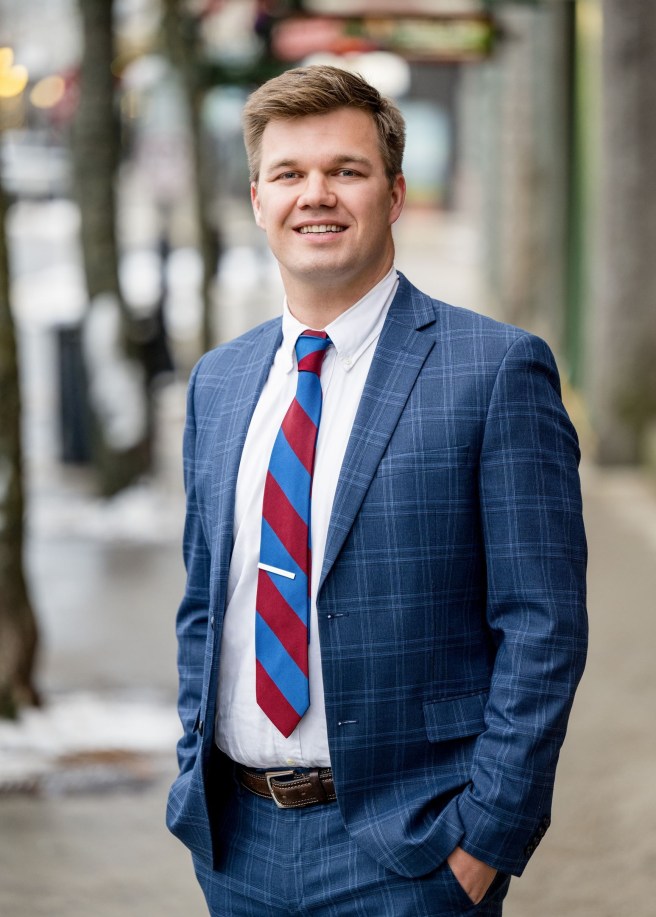
11.) Concerns about the “buffer” that will be impacted by the pier have been shared by Mayor LaFountain and each and every member of the Biddeford City Council who voted unanimously to seek relief on that issue in York County Superior Court, an argument supported by City Attorney Harry B. Center, esq. Hardly “random grievances” from one man, who happens to be the former chair of Biddeford’s Harbor Commission
As with everything I publish on the Biddeford Gazette website, I am completely comfortable with my fair, reasonable and dogged approach to covering important issues. If you have a problem with that, I invite you to send us another letter to the editor.
Cheers,
Randy Seaver, editor
_______________
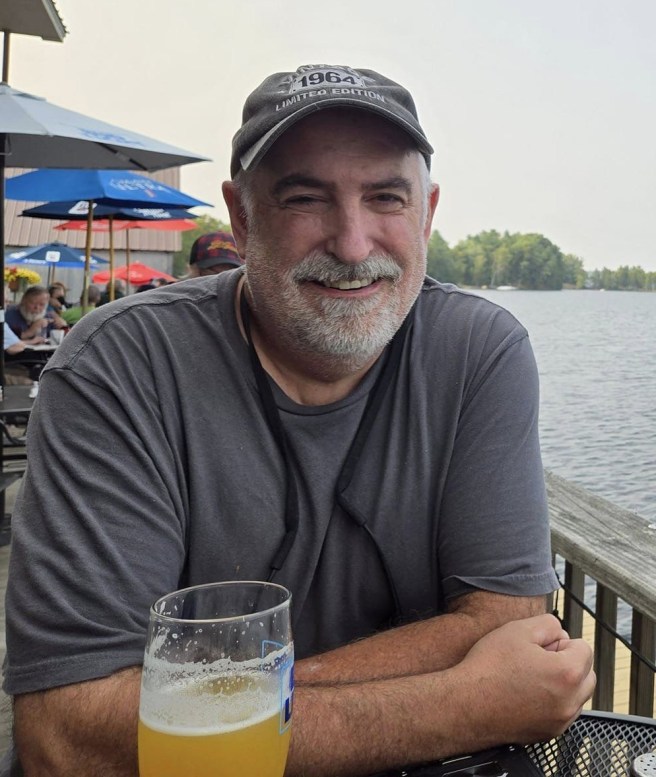
ABOUT THE AUTHOR | Randy Seaver is the editor and founder of the Biddeford Gazette. He has been covering Biddeford news and politics for nearly three decades. He may be reached by email: randy@randyseaver.com
Never miss an update! Subscribe for free today!
THE BIDDEFORD GAZETTE | A Legacy of Trusted, Independent Journalism
Our editorial standards and policies: Biddeford Gazette | Standards & Policies
© 2026 Biddeford Gazette, Inc. All Rights Reserved


 BIDDEFORD GAZETTE