Weighted UNE committee is appalling and patently unfair to UNE
By DIANE SNOW, Special to the Gazette
A recent Portland Press Herald story regarding the committee set up to review the plans for University of New England [Biddeford Committee plans public hearing, Feb. 24, 2026] left me appalled because the committee is comprised primarily by Hills Beach residents.
That the chairman of the committee [Councilor Patricia Boston] is a Hills Beach resident was surprising enough. Now to find out that three of the six committee members are Hills Beach residents, was not just surprising, it was shocking.
How can anyone expect an honest and objective assessment when the “plaintiffs” have become the “jury”?
This issue affects not just the residents of Hills Beach; it affects the entire community.
The university is a major prize in Biddeford. Most cities would give their right arm for this privilege.
A more disturbing question: Whose welfare do our elected officials represent? The wealthy beachfront residents or the community at large?
Members of the newly former Institutional Zone Review Committee held their first meeting on Feb. 19, 2026. The committee’s first public hearing will be held on Monday, March 2, beginning at 6 p.m., at City Hall in Biddeford (Gazette photo)
That the Hills Beach residents wield outsized power is clear. How long has this been going on? Do we need to remind city officials that the taxes in the city are paid by all property owners, not just the beachfront owners?
There is plenty of real estate in vacant mills that need interested entrepreneurs willing to establish flourishing businesses. A university, with its educational and cultural benefits, is a major attraction.
____________
The university is a major prize in Biddeford. Most cities would give their right arm for this privilege.
_____________
Impeding the progress of UNE is harmful to Biddeford. This outsized influence of a small, privileged group has also clarified the means by which beach access has become so restrictive.
Has anyone noticed how difficult it is to access our beaches? I once received a parking ticket at Goose Rocks beach when I stopped there to give a young girl from New York City — who was staying with us through the Fresh Air Fund — a chance to put her feet in the ocean for the first time.
The beauty of the world does not only belong to a select privileged group.
The mayor and city councilors were elected to represent the interests of the entire community, not just a single group.
It is time to address this travesty. Citizens of Biddeford, know whose interests your elected officials represent. Let them know of your concerns, and above all, think carefully next time you are at the polls.
Diane Snow was born and raised in Biddeford. Today, she lives in Cumberland, Maine
____________
NOTE: The Biddeford Gazette strongly encourages reader feedback and public commentary regarding our coverage and issues directly related to the city of Biddeford. To submit a letter to the editor or guest column, please contact us at biddefordgazette@gmail.com
Never miss an update! Subscribe for free today!
THE BIDDEFORD GAZETTE | A Legacy of Trusted, Independent Journalism
Biddeford Mayor Liam LaFountain ran his campaign last year on a platform dedicated to restoring accountability and increasing transparency at City Hall.
Those were good messages, and the voters agreed with LaFountain, giving him the edge over the incumbent former mayor.
LaFountain pledged to hit the ground running, and he’s already made good on those campaign promises.
As an example, LaFountain – with unanimous support from the city council – was able to revive a new committee to review ongoing development at the University of New England.
LaFountain has also steadily pushed for transparency on issues ranging from the city’s overdue financial audits to how city spending is handled; and how major development projects are reviewed by city staff.
We applaud LaFountain’s commitment to transparency and accountability, but we would caution the new mayor to carefully consider and weigh a proposed change to how the city handles its legal matters.
Shortly after his inauguration in December, LaFountain proposed an idea to do away with having an outside, private attorney represent Biddeford as its city solicitor.
While the council supported renewing City Attorney Harry B. Center’s contract for only six more months, it’s unclear whether a potential change would ultimately be supported by every member of the council, when push comes to shove.
Harry B. Center, a native son, has served the city of Biddeford for many years, first appointed by former mayor Roger Normand in 1992 (Courtesy photo)
Regardless of how the council feels about ditching Center and instead hiring an in-house, full-time city attorney, we think such a move would be a mistake.
The basis of our opinion is founded upon three basic points: experience, local knowledge and financial costs to the taxpayers.
EXPERIENCE:
Center began serving Biddeford as its city solicitor more than 30 years ago, first appointed to the job by former mayor Roger Normand in 1992.
Since that time, Center has served as city solicitor under five different mayors, including James Grattelo, Donna Dion, Alan Casavant, Marty Grohman and now Liam LaFountain.
Although Center resigned his position in 2004 to pursue a new job in the private sector, he returned after being appointed by Casavant to replace Keith Jacques upon his retirement as city solicitor in 2022.
Over the last three decades, Center has served as the city’s chief legal counsel on a wide range of issues – including controversial matters related to the former Maine Energy trash incinerator and widespread citizen concerns about a controversial research pier being proposed by the University of New England.
Simply put, Mr. Center’s institutional knowledge cannot be matched.
LOCAL KNOWLEDGE:
Center is much more than just another department head or city employee. His roots in the community go back for generations.
He was born and raised in Biddeford. He attended St. Mary’s parochial school and then graduated from Biddeford High School in 1980.
If Biddeford needs representation on issues involving far-reaching implications for the city’s future, we think it makes sense to have an attorney who truly understands the community he is fighting for and representing.
Mr. Center is not only a highly qualified attorney and a partner in a Biddeford-based firm, he also understands the city’s history, its culture and its people.
Mr. Center’s blood runs black and orange, and that should count for something.
Although we have sometimes found ourselves in disagreement with some of Center’s opinions, we also feel strongly that he has consistently represented the city with passion, dedication and a deep commitment to the highest standards of his profession.
_________________
Mr. Center’s blood runs
black and orange; and
that should count for something.
_________________
FINANCIAL CONSIDERATIONS:
Finally – although we recognize and appreciate some calls for a new approach and a breath of fresh air, we should all consider the financial implications of hiring an in-house attorney to serve as the city solicitor.
Currently, Center bills the city at an hourly rate of $255 per hour, a fraction of what most attorneys with his experience and credentials charge in the Portland metropolitan area.
The city’s primary financial advantage – in addition to Mr. Center’s deeply discounted fee — is the fact that he is not a full-time employee. Mr. Center receives no benefits from the city, unlike full-time department heads.
Center’s firm is headquartered on Main Street, almost directly across the street from City Hall’s main entrance. For all intents and purposes, he’s practically already ‘in-house’ counsel for the city.
Could the city hire a new attorney for less than what Center is charging? We strongly doubt that possibility, especially if the city wants someone with experience.
Moreover, creating yet another administrative position comes with all sorts of other somewhat hidden considerations, including office space, equipment and support staff, not to mention personnel benefits, including vacation and retirement benefits.
In summary, Harry Center has served the city of Biddeford with distinction and honor for many years. In our opinion, there is no compelling reason to throw away that experience and commitment on the gamble of a new approach.
That’s our opinion, and we welcome yours. You may submit either a guest column of the same length or a letter to the editor by contacting us at biddefordgazette@gmail.com.
_________________
Never miss another update! Subscribe for free today!
THE BIDDEFORD GAZETTE | A Legacy of Trusted, Independent Journalism
Guy Gagnon has been excited about this particular project for several years.
The project is Adams Point, a 39-unit affordable family housing project on the upper end of Adams Street in Biddeford.
Following more than three years of planning and construction, Adams Point is expected to finally open in April.
The four-story building will feature one, two, three and even four-bedroom apartments — all with competitive rental rates below current, average rental prices in Biddeford.
The Adams Point family housing project is expected to open in April (Seaver photo)
“This is huge for Biddeford,” Gagnon explains. “Our population is the youngest in Maine, but we don’t have a lot of housing opportunities for young families. True family housing hasn’t been built in Biddeford for many years.”
A native of Biddeford, Gagnon has served as executive director of the Biddeford Housing Authority (BHA) since 2010.
The BHA is a non-profit organization with a mission “to provide lower income families, including the elderly, disabled and unhoused, the opportunity to live in decent, safe and sanitary housing within the community.”
According to Gagnon, the rental rates at Adams Point will be “extremely competitive,” and each unit will include all utilities and free internet service.
For example, a two-bedroom unit will range between $1,200 and $1,500 per month. A three-bedroom unit will rent between $1,400 and $1,600 per month.
One- bedroom apartments will start at $1,000 per month.
“When you consider the fact that all utilities – heat, water and electricity — are included, it becomes really affordable,” Gagnon said.
Gagnon points out that providing affordable housing is not just a Biddeford problem.
Since 2018, the rental cost burden across the state has increased sharply for most households, especially for those with household incomes between $35,000 and $75,000 in total household income.
A Community Comes Together
Guy Gagnon, executive director of Biddeford’s Housing Authority, provided the Gazette with a preview tour of the Adams Point family housing project
The Adams Point project, Gagnon said, is the result of collaboration with private banks and contractors willing to offer competitive financing and rates. The project is also supported by the Maine Housing Authority and received some funding from the city of Biddeford’s Affordable Housing Trust Fund.
The city’s Affordable Housing Trust Fund is supported from required donations by private real estate developers.
When Gagnon requested a financial commitment from the city, he told the council that the BHA would refund any monies that were not used or left over from the project’s construction.
“I’m happy to report that it looks like we came in under budget on this project,” Gagnon said.
Residents at Adams Point will not only enjoy the convenience of included utility services, they will also have access to free internet services being provided by a grant from GoNetSpeed.
“This is a really exciting project for Biddeford,” Gagnon said.
Editor’s Note: For more information about availability and income guidelines, please contact theBiddeford Housing Authority.
______________________
ABOUT THE AUTHOR: Randy Seaver is the editor and founder of the Biddeford Gazette. He has been covering Biddeford news and politics for nearly three decades. He may be reached by email: randy@randyseaver.com
Never miss an update! Subscribe to the Gazette for free today!
THE BIDDEFORD GAZETTE | A Legacy of Trusted, Independent Journalism
Given recent complaints about the city of Biddeford’s sidewalk snow removal policies, Jeff Demers, the city’s public works director, recently sent the Gazette a detailed explanation regarding his department’s priorities when it comes to clearing snow from city sidewalk policies.
Jeff Demers, Biddeford Public Works Department director (Seaver photo)
Demers said resources are stretched thin, and if residents want changes, they should contact the city council and request more funding and manpower.
Here is a recent memo from Demers regarding sidewalk snow clearing:
“Sidewalks are a major concern for many people throughout our community year after year,” Demers wrote.
“Public Works can never do them all. As of today, we do an average of 34 miles of sidewalks taking up around 30 to 100 hours after any given storm.
“Not to mention the ongoing cleanup. More equipment and personnel are needed to add on more sidewalks at this time.
“If the City Manager and city council want to re-prioritize the way we do them today more discussion is warranted, in my opinion,” Demers said.
Demers said sidewalks are done by the following priorities.
Outside the Good Shepherd Food Bank in Auburn, the morning felt unmistakably like Maine. The sun was bright, the air was cold, the wind was sharp, and snow clung to the edges of the parking lot. It was the kind of day that makes you hurry from your car to the door.
Inside, the world felt entirely different.
The warehouse moved with purpose. Volunteers sorted boxes beneath lights that cast winter light across the concrete floor. Pallets of apples, pasta, cereal, and canned vegetables rose in every direction, bound for all corners of the state.
“This is Good Shepherd Food Bank,” says President Heather Paquette. “We are the Feeding America Food Bank for the state of Maine.”
She gestures to the vast space around her.
“You are in the Auburn facility, which is about 55,000 square feet. We also have a 48,000 square foot facility in Hampden, so in total we operate about 100,000 square feet of distribution space that services 33,000 square miles.”
On a cold Maine morning, the warmth of this place, its people, and its purpose feels even larger.
Good Shepherd Food Bank of Maine in Auburn, Maine.
One statewide food bank with rising need
Good Shepherd Food Bank is Maine’s only Feeding America affiliate, which is unusual.
“Every state in the nation has at least one Feeding America food bank,” Heather says. “There is not one food secure state in the United States. Maine is one of only a handful of states that has one Feeding America food bank that serves the entire state. We see that as an incredible responsibility and privilege.”
The numbers weigh heavily.
“When I took this job, Maine was at 11% percent food insecurity. We are currently at 13.8% percent and growing,” she says. “191,000 people in Maine are experiencing food insecurity. Within that number are 55,000 children.”
Good Shepherd receives USDA food, donated food from retailers, purchased food, and fresh produce from Maine farms through the Mainers Feeding Mainers program.
The food security ecosystem
Good Shepherd Food Bank Ecosystem
Early in her role, Heather began describing their work as a food security ecosystem.
“We provide food and support to more than 600 partners, who then provide direct service to the 191,000 neighbors experiencing food insecurity. That is the straight up and down part of our model,” she explains.
“But everything surrounding that line is just as important. Lawmakers, the business community, 22,000 donors, 1200 volunteers, other nonprofits, and our retail partners all affect the system.”
Retail pickup is especially significant. “Half of our distributed food comes directly from grocery retailers,” she says. “There are 215 pantries that pick up from 150 retailers, and that schedule operates every day of the year.”
The system works, but it is fragile. “When one part shifts, we must rely more heavily on the other parts,” she says.
This year brought a major shift.
A sudden crisis in SNAP
On October 21 (2026), Good Shepherd Food Bank received word that if a federal government shutdown continued, SNAP benefits scheduled for November 10th would not be funded.
“It was quite a crisis,” Heather says. “People who were food secure because they received SNAP were suddenly at risk of losing the ability to buy food.”
Agencies across the state felt the impact almost immediately.
“We heard from partners that lines were thirty to fifty percent longer overnight,” she says. “There were dozens of first time enrollments at food pantries. Our partners were looking to us to do more, and we needed to rise to that challenge.”
Meanwhile, federal food and federal funding had already been reduced.
“We receive less so we do less is not an acceptable answer,” she says. “We have agencies and people counting on us.”
The team increased its pace instantly.
When Maine stepped forward
Media attention intensified. Heather completed more than thirty interviews in a short period. “The media is very good to us,” she says. “They help us tell our story so people can understand what is happening and stand with us.”
Then came a call she will never forget.
“It was a first time donor who gave two hundred thousand dollars and wished to remain anonymous,” Heather recalls. “She said she could not sit back and do nothing.”
“After the governor’s contribution and the foundation gift, we distributed the funds to our 600 partner agencies,” she says. “Everyone received $1000 dollars. Biddeford Food Pantry, for example, spends about $190,000 dollars a year on purchased products. They were grateful, but the need is much larger.”
Still, every gift mattered. And then one gift changed everything.
The Onions and the gift of sunlight
Years ago, Susan and Fritz Onion, yes – that’s their last name, funded solar panels on the Auburn and Hampden facilities, saving Good Shepherd Food Bank about $200,000 thousand dollars annually. The plan was for the food bank to eventually purchase the panels from the Onions.
“We had the money set aside, but then we lost $1.2M dollars in federal funding and half of our food distribution. I was not comfortable writing that check,” Heather says.
During a meeting on October 22nd, the Onions surprised her. “Fritz said, ‘We have decided to donate the solar panels to the food bank,’ which is essentially an $800,000 dollar gift, plus $200,000 dollars in annual savings,” she says. “I was moved to tears. None of us knew that was coming.”
The panels now generate about 65% of the energy used in both facilities. “It was a beautiful sign of partnership and an enormous financial relief,” she says.
Small donations add up
During the SNAP crisis, donations surged.
“We saw about 900 new donors between late October and mid November,” she says. “We might normally see a couple hundred during that period. People really stepped up.”
Many gifts were small.
“We operate with 22,000 donors. Half give less than one thousand dollars,” Heather says. “We rely on generous Mainers who give what they can.”
Your $5 or $100 donation is not small. It truly matters. It is part of the lifeblood of the ecosystem.
A Biddeford upbringing and a path she never expected
Heather’s work ethic traces back to her childhood.
“I am a proud Biddeford Tiger alum,” she says. “Biddeford is a mill town at heart. There is a sense of pride and work ethic that comes from that.”
After graduating from the University of Southern Maine, she spent 24 years at Hannaford and its parent company, serving in 14 roles across three states.
One of her favorite roles brought her back home.
“I got to be the assistant store manager in the Biddeford store,” she says. “I loved seeing the people I grew up with and experiencing that incredible work ethic again.”
She tells the story of a 70-year-old seafood department employee whose daughter worked at corporate.
“He was very mad at me one day because he told me I could not force him to take a break because he had too much work to do,” she says, laughing. “This is an hourly employee and breaks are paid. I had to tell him that I was going to get in trouble if he didn’t take his break.”
Later, while working for Hannaford, a blind date with “some guy from Portland” turned out to be even more familiar.
“Four sentences into a blind date, it turned out he was from Biddeford and had graduated five years prior to me,” she says about her husband Brian. They have two children, Ben and Audrey.
‘This was always meant to be’
Heather never expected to leave Hannaford – until a restructuring eliminated her team. “I had an unfortunate event that many people have in their careers, where my team was part of a reduction in force and the entire team that I was leading was cut,” she says.
Around the same time, Good Shepherd Food Bank’s previous president, Kristen Miale, announced she was stepping down.
“The same day I learned about the significant reduction in force was the same day that Kristen announced to her team that she was departing,” Heather says. “And I truly believe that it was meant to be.
This was always meant to be.”
She knows herself well enough to know she might not have applied otherwise. “I think I would have seen that announcement in the paper and been like, drooling, like I would love to have that job, but I’m pretty sure I would not have been brave enough to actually put myself in a job search for it,” she says. “So I think the universe stepped in, and I’m grateful every day.”
The search took nine months and spanned the country.
“It was a nationwide search. There were several hundred candidates,” she says. “I’m really grateful to the selection committee.”
In the truck and at the pantry
Heather immerses herself in every part of the work.
She spent one memorable day riding with Sandy Swett of the Harrison Food Bank. “It was a twelve-hour day of lifting banana boxes full of frozen meat,” she says. “It was the hardest physical work I have ever done. Sandy is 71 and never slowed down.” At the end of the day, Sandy went to a bar to watch her husband play guitar and catered a wedding the next day. Heather, meanwhile? “I didn’t move off my couch,” she says. “My friends were texting me to go meet them. It was 8:00pm. I had my pajamas on. I just got my butt totally kicked. It was so humbling.”
________________
At a pantry during the SNAP crisis, she met a woman named Jasmine. “She arrived with a binder, ready to justify why she should be allowed to get food,” Heather says. “The pantry director told her, ‘You do not need the binder. Please fill your bag. That is why we are here.’”
__________________
Another man refused a ten dollar gift card to Walmart. “He said, ‘I have everything I need. I have this place where I can get food,’” she recalls. “It was incredibly moving.”
Her first pantry visit revealed a heartbreaking truth.
“I watched one hundred people line up for seventy spots,” she says. “Those who received boxes shared items with those who did not.”
“The work is tough, it’s emotionally tough,” Heather says. “I often shake my head thinking about the things that stressed me out in corporate America that very much do not matter in the real world. “
“That is when it hit me,” she says quietly. “This work is gratitude and service.”
Looking ahead
Good Shepherd had finalized a strategic plan before the SNAP crisis. It focuses on improving food distribution while addressing root causes of hunger and reducing stigma.
“My leadership purpose is always ‘press forward and always give back,’” Heather says.
The crisis made the mission more urgent, but also more visible.
“We have had a powerful spotlight these past months,” she says. “People who never knew our story now know it. That gives us hope.”
What Mainers can do — starting today
When asked what people can do to help, Heather doesn’t hesitate.
“The number one thing people can do for us is be our ally,” she says. “Be able to tell our story. This is who Good Shepherd Food Bank is. There’s 600 partners throughout the state and a 13.8% and growing population with food insecurity. These are people who you see at stores. These are people you go to church with. These are people whose children go to school with your children.”
“If you think you don’t know somebody who’s experiencing food insecurity, you do,” she adds. “So be an ally to that.”
Part of being an ally is practical:
“Go on to www.feedingmaine.org. There’s a button where you can donate. Every dollar you give the food bank, we can do really great things with,” she says.
“There’s also a button that says ‘Find Food,’ and you can type in ‘04005’, for example, and you’ll see Youth Full Maine, which is in the Biddeford High School parking lot, the Biddeford Food Pantry, and a number of different food pantries around the area. Reach out directly to ask them, what specifically do you need?”
“Some need volunteers, others are being overwhelmed with volunteers right now, which is a good problem to have. So they need food, and everyone needs money. Ask the question about what people need and give generously.”
In a state where one food bank shoulders the responsibility for all 30,000 square miles, Heather brings Biddeford grit, Hannaford know-how, and a simple conviction that “we receive less so we do less is not an acceptable answer.”
Thousands of Mainers – from anonymous donors quietly wiring $200,000 to neighbors giving $5 online – and everyting in between – are standing with her.
And somewhere in Auburn and Hampden, under solar panels given by a family named Onion, forklifts are moving, volunteers are packing, and boxes are headed out to 600 partners, so that another neighbor, on another hard day, can hear four simple words:
ABOUT THE AUTHOR: Cy Cyr www.cycyr.com) grew up in Biddeford and returned after 25 years away. He started BrickTides.com as a way to reconnect with the community that shaped him, using photography and longform storytelling to document the people shaping southern Maine today.
BRICK+TIDES is a weekly digital magazine based in York County, Maine. We share positive and inspiring stories about local businesses, people, and places that make Southern Maine special. If you’d like to read our free weekly email, we’d love for you to subscribe!
The first meeting of Biddeford’s revived Institutional Zone Review (IZR) Committee was held Thursday evening, giving members a chance to introduce themselves and to complete several organizational and administrative tasks, including scheduling their first public hearing.
The committee was launched earlier this year, at the direction of Biddeford Mayor Liam LaFountain who attended Thursday’s meeting as an observer.
Members of the newly formed Institutional Zone Review Committee begin their work during their first meeting Thursday. Left to right: Betsy Martin, Christine Stone, Matt Haas, Dr. James Herbert, Chair Patricia Boston and Code Enforcement Officer Roby Fecteau (Seaver photo)
The mission of the committee is to review planning documents that have been submitted by the University of New England over the last 20 years; to seek public input and make recommendations regarding future growth at the school’s Biddeford campus.
From the public podium, LaFountain spoke only briefly to welcome and thank the committee members for their willingness to “dig deep” into issues that will likely impact the city and the University of New England.
“You have taken on an ambitious timeline,” LaFountain told the committee, reminding them that the city hopes to receive their preliminary recommendations in May for city council review and input.
The final recommendations are expected for a public hearing in July, LaFountain said.
“The council will rely upon your diligence and judgment,” LaFountain told the committee. “What matters most is that you approach this work respectfully and thoughtfully and encourage public input and feedback.”
On that note – following a rather arduous process of coordinating various schedules and available meeting times at City Hall – the new committee tentatively scheduled its first public hearing for Monday, March 2, at 6 p.m.
The committee is scheduled to have at least two more meetings before the first public hearing.
Nearly a quarter-century ago, a previous IZR committee was tasked with similar objectives.
City Councilor Pat Boston, a Hills Beach resident, is serving as chair of the current committee. She recalled serving on the first IZR Committee in 2001.
“I recently came across a note from [former mayor] Donna Dion, thanking us for our service,” Boston laughed.
Thursday’s meeting was sparsely attended by members of the public.
John Shafer – an outspoken critic of the university’s controversial pier proposal – sat in the back of the room, carefully watching the meeting. UNE vice president Alan Thibault also attended the meeting along with City Planner David Galbraith and City Manager Truc Dever.
For more information about the Institutional Zone Review Committee, you may visit the committee’s webpage, which is a section of the city’s larger website.
In addition to Councilor Boston, other committee members include City Councilor Marc Lessard; Dr. James Herbert, the university’s president; Matt Haas, a former UNE employee and graduate; Christina Stone, a real estate agent and Hills Beach resident; and Associate member Elizabeth Martin of Biddeford.
Lessard did not attend Thursday’s meeting.
Code Enforcement Officer Roby Fecteau will serve as the committee’s staff liaison.
________________________
ABOUT THE AUTHOR: Randy Seaver is the editor and founder of the Biddeford Gazette. He has been covering Biddeford news and politics for nearly three decades. He may be reached by email: randy@randyseaver.com
________________________
THE BIDDEFORD GAZETTE | A Legacy of Trusted, Independent Journalism
City Councilor Marc Lessard falls on his own sword by saying he is partly responsible for some of the city’s ongoing financial problems
By RANDY SEAVER, Editor
Tuesday’s meeting of the Biddeford City Council’s Finance Committee made one fact abundantly clear.
The city is still struggling to clean up the damage done over the last few years by a Finance Department that was beleaguered by rapid staff turnover and minimal supervision from city leaders.
“You can spread the blame around like peanut butter,” said City Councilor Marc Lessard during a telephone interview with the Gazette on Wednesday.
“But you know what?” Lessard stated. “I’m partly responsible for the problem.”
Council President Roger Beaupre and Mayor Liam LaFountain discuss the city’s finances during Tuesday’s Finance Committee meeting about upcoming sewer work. (Seaver photo)
The city’s ongoing financial problems were raised again Tuesday evening when Finance Committee members took up the subject of how to pay for another state-mandated sewer update project.
The city is currently trying to catch-up on several of its long overdue financial audits. The city is now working to finalize the FY 2024 audit, now more than two years overdue.
The problem impacts the city in numerous ways, most notably preventing city departments from accessing bond funds that were approved by voters.
In November, voters approved a $20 million bond to complete long overdue sewer updates that are mandated by the state of Maine.
Last year’s major project on Elm Street was paid for from money in the city’s general fund versus an account that is replenished by sewer fee revenues.
That situation put Public Works Director Jeff Demers in an uncomfortable position. When he asked the former city manager about the lack of funds for the project, he was told to move forward and that funding for the project would come from another line item in the budget.
“I did what I was told,” Demers told the committee. “I took my marching orders, but I’ve lost sleep over it.”
Lessard – a member of the committee — asked how that decision to move funds around impacted other parts of the city’s budget.
“If we took $4.1 million from one part of the budget – roughly 5 percent of our budget – what item or work didn’t get funded?” Lessard asked.
City Manager Truc Dever said city staff is working overtime to sort out numerous issues that took place over the past few years, in addition to performing all of their current day-to-day responsibilities.
Although Mayor Liam LaFountain rang alarm bells about the situation, describing it as a “DEFCON 1 financial scenario,” he also offered at least one point for optimism during a follow-up conversation with the Gazette on Wednesday.
“We are doing everything possible to regain public trust and confidence in City Hall,” LaFountain said. “It’s nearly impossible to fix everything that took place over several years in just a few months.”
More importantly, LaFountain noted that the conversation – although difficult and somewhat concerning – took place in a public meeting with cameras rolling and members of the press in the room as opposed to “a couple guys meeting in an office behind closed doors.
LaFountain was able to oust former Mayor Marty Grohman in November by using a campaign pledge to bring “accountability and transparency” back to City Hall.
______________________
“It’s nearly impossible to fix
all of these problems
in just a few months.”
— Mayor Liam LaFountain
______________________
“It may not seem like it on the surface, but we are moving in the right direction,” LaFountain said. “It’s frustrating, but we now have the right people in place to help us in our overall course correction.”
Lessard said he was also feeling frustrated.
“There’s plenty of blame to go around,” he said. “And frankly part of that responsibility lies at my feet.”
Lessard – a veteran member of the council – said that, in retrospect, he should have pushed harder for accountability and transparency.
“There were many times when we allowed the former city manager and others to skirt, delay or obfuscate the issues,” he said. “That should not have happened, and I have to accept my own share of responsibility for that, even though that’s not what most politicians do.”
_____________________
ABOUT THE AUTHOR: Randy Seaver is the editor and founder of the Biddeford Gazette. He has been covering Biddeford news and politics for nearly three decades. He may be reached by email: randy@randyseaver.com
_____________________
THE BIDDEFORD GAZETTE |A Legacy of Trusted, Independent Journalism
Despite some misinformation floating about on social media, the Biddeford City Council did not vote Tuesday against funding for emergency shelters to assist unhoused residents.
Instead, the council took up a resolution introduced by Mayor Liam LaFountain to express support for a bill now being considered by the Maine Legislature.
The bill – LD 2124 – would change how some county tax revenues are used. The proposed legislation calls for shifting revenue generated by real estate transfer taxes to a fund that could be used to help municipalities offset the cost of providing emergency services to unhoused residents.
Before debating the proposed resolution, the council heard testimony from Richard Dutremble of Biddeford, the current chair of the York County Commissioners.
“We are totally against this,” Dutremble told the council, saying the transfer of county revenues to the state’s coffers for new spending would ultimately hurt individual cities and towns in York County.
County Commissioner Richard Dutremble addresses the Biddeford City Council. (Seaver photo)
“This will decrease our revenue and impact our ability to provide services,” Dutremble told the council. “If this bill passes, it will have an immediate impact on our communities. We’ll have to make up that budget loss by asking for additional tax money from communities such as Biddeford.”
“Once again, people in Augusta are trying to extract more money from the counties,” Dutremble said, noting that the county does provide funding for unhoused services.
One of the bill’s co-sponsors is State Rep. Ryan Fecteau of Biddeford, the Speaker of the House.
City Councilor Dylan Doughty — Fecteau’s domestic partner — asked permission to abstain from discussion or voting on the issue because of what could be perceived as a conflict of interest.
Doughty’s recusal set the stage for a 4-4 split on whether to vote in support of the legislative resolution.
LaFountain told the council that the city’s legislative delegation – including State Representatives Marc Malon and Traci Gere, along with State Sen. Henry Ingwersen – are all supporting the bill.
LaFountain serves on a group known as the Mayors Coalition, an advocacy group made up of the state’s 11 mayors, including Saco Mayor Jodi MacPhail and the mayors of Portland, Lewiston, Westbrook, South Portland, Bangor and others.
That coalition, LaFountain said, is supporting the bill.
Following rigorous debate and questions about the bill’s potential impacts on county government and Biddeford taxpayers, the council split evenly on whether to approve the expression of support for LD 2124.
Councilors Roger Beaupre, Brad Cote, David Kurtz and Abigail Woods voted to support the legislative resolution.
Councilors Patricia Boston, Marc Lessard, Jacob Pierson and Lisa Vadnais voted against supporting the resolution.
Councilor Doughty abstained from voting.
By council rules, the mayor only votes when the council is tied.
LaFountain – who supported the resolution – said he felt compelled to vote against the measure since it did not receive a majority vote of the council.
“This is a strange position to be in,” the mayor laughed.
During a follow-up interview, the mayor said residents should contact their state representatives to express support or concerns about the bill.
ABOUT THE AUTHOR: Randy Seaver is the editor and founder of the Biddeford Gazette. He has been covering Biddeford news and politics for nearly three decades. He may be reached by email: randy@randyseaver.com
_________________________
THE BIDDEFORD GAZETTE |A Legacy of Trusted, Independent Journalism
City Theater’s Spring production is the magical Tony Award-winning musical The Secret Garden, which will run from March 13 to March 29.
The book and lyrics are by Marsha Norman and music is by Lucy Simon.
Charlotte Van Ledtje as Mary and Nathaniel Cummons as Colin in City Theater’s magical production of The Secret Garden. (Photo by: Rich Obrey)
The Secret Garden is based on the novel of the same title by Frances Hodgson Burnett, considered a classic. It has elements of magic. It’s got nature. It’s beautiful and dark and quite wonderful.
The Secret Garden shows Fridays and Saturdays at 7:30 p.m. and Sundays at 2 p.m. There is no performance on Sunday, March 5.
Tickets are $30 & $35 (all fees included) and are available at www.citytheater.org or 207-282-0849.
Note: To learn more about other upcoming events, please visit the Biddeford Gazette’s COMMUNITY EVENTS page.
Biddeford City Councilor Marc Lessard confirmed Friday that he is considering a challenge against incumbent State Rep. Marc Malon to represent District 133 in the Maine House of Representatives.
District 133 includes the central and western area of the city. The upcoming election will be held in November.
If he does decide to run, Lessard says he will run as an unenrolled candidate.
“Honestly, I don’t feel that comfortable with any political party,” Lessard said during an exclusive interview with the Gazette. “Many people tell me they are tired of partisan politics.”
Biddeford City Councilor Marc Lessard (City Photo)
Lessard, 62, is a well-known fiscal conservative on the council and said there are several issues prompting him to consider running for state office.
“There are so many things that need our attention in Augusta,” he said. “Our public schools are underperforming; our utility costs are skyrocketing, and too many families are having a hard time just paying their basic bills. To me, this is unacceptable.”
In addition to serving as an at-large representative on the city council, Lessard also serves on the York County Budget Committee.
“I have a full-time job, grandchildren and responsibilities as a city councilor,” Lessard said, noting that is he planning to retire at the end of this year.
Lessard has served on the city council — off and on — for more than 30 years. He is historically one of the city’s biggest vote-getters in municipal elections
Lessard is planning to begin conversations with people who might be interested in supporting his campaign if he ultimately decides to toss his hat into the ring.
“There are a lot of things to consider,” he said. “Should I run as a Clean Elections candidate or as a traditionally funded candidate? I haven’t yet figured out all the details.”
According to state law, Clean Election candidates for the Maine House of Representatives must raise $300 in 60 individual $5 donations in order to qualify for the program.
Malon, a Democrat, is hoping to secure a third term in District 133.
_________________________
Randy Seaver is the editor and founder of the Biddeford Gazette. He has been covering Biddeford news and politics for nearly 30 years. He may be reached by email: randy@randyseaver.com
_________________
THE BIDDEFORD GAZETTE | A Legacy of Trusted, Independent Journalism
Revising a concept that received mixed results from the public two years ago, Biddeford city councilors who specifically represent one of the city’s seven voting wards plan to host small, personal ward meetings to get resident feedback regarding various city issues.
See below for details regarding dates and locations about the upcoming meetings.
According to a press release distributed by the city, councilors are hoping to hear from residents about their concerns, most notably how they think a recently approved $6 million recreation bond should be spent.
The meetings are scheduled to take place over the next several weeks.
Organizers say the meetings are designed to provide residents with an opportunity for open dialogue and direct engagement with their elected officials.
Pat BostonRoger BeaupreDylan DoughtyDavid KurtzJake PiersonBrad Cote
Staff representatives from the city’s recreation department will also attend the meetings to hear input and questions about the city’s various recreational facilities.
Organizers say input from the community will help inform upcoming decisions about recreation investments and neighborhood priorities.
Schedule of Ward Meetings:
(All meetings will be held from 6 – 8 p.m.)
WARD ONE: (Councilor Patricia Boston) March 18, Biddeford Pool Fire Department
WARDS THREE & FOUR: (Councilors Roger Beaupre and Dylan Doughty: February 26, J. Richard Martin Community Center, Alfred Street.
WARD FIVE (Councilor David Kurtz) February 24, City Hall Council Chambers
WARD SIX (Councilor Jake Pierson) March 2, Club House at Rotary Park (Former Teen Center)
WARD SEVEN (Councilor Brad Cote) March 4, Biddeford Ice Arena
Note: The Ward Two meeting with Councilor Abigail Woods will take place in late March; meeting details will be confirmed at a future date.
Wayne Roberts, 54, of Biddeford, was arrested by the Biddeford Police Department after officers were called to a Hill Street residence on Sunday, February 1, 2026.
According to a press release, the Biddeford Regional Communications Center received a phone call reporting that there was a physical altercation going on inside a residence on Hill Street with screaming heard.
The individual involved was identified as Wayne Roberts, 54, of Biddeford. The other involved individual was a protected party in a set of bail conditions belonging to Roberts from a previous domestic violence arrest.
Roberts would not answer the door when officers arrived. With quick thinking by the officers on scene, a Biddeford Police officer was able to obtain a search warrant for the residence. With safety and efficiency, officers executed the search warrant and located Roberts in direct violation of his bail conditions.
Roberts refused to submit to arrest or detention. The victim was located unharmed.
Roberts was charged with Refusing to Submit to Arrest or Detention, Physical Force (Class D) and Violating Conditions of Release (Class E)
Due to the underlying charges of Roberts’ conditions of release, a bail commissioner deemed bail was not an option. Roberts was brought to the York County Jail.
A new legislative session is now underway, and there are many pressing matters in front of us that impact Biddeford residents and Mainers from all over. Whether addressing Maine’s housing crisis to overcoming federal funding cuts to important programs like SNAP and healthcare, we have a lot of work to do to make sure Maine families can get ahead and stay ahead.
While our legislative work progresses with the normal cadence of public hearings, work sessions, and floor votes, what has been happening outside the State House, and in our own community here in Biddeford, is anything but normal.
I was dismayed by the surge of ICE agents in our state under the grotesque title of ‘Operation Catch of the Day’. These agents were shirking good policing standards in favor of warrantless, indiscriminate, and quota-driven detentions. I know their actions sowed fear in our community, especially for people of color. It was painful to hear from friends, including those who are lifelong U.S. citizens, who feared they could be profiled and detained based entirely on the color of their skin. So many are now carrying their “papers” (e.g., a birth certificate or passport). Is this America?
House Speaker Ryan Fecteau (D-Biddeford) Contributed photo
Moreover, the surge of ICE agents and their actions were completely inconsistent with President Trump’s campaign promise to “go after criminals”. The headlines told the true story: whether restaurant workers at Kobe in Biddeford, or corrections officers at Cumberland and York Counties, or a civil engineer with a work visa, this “immigration crackdown” appears less focused on criminals and more about inciting fear and terror among people who came here to chase the promise of America: life, liberty, and the pursuit of happiness. I was horrified at the news of a single mom snatched by agents after dropping her daughter off at Biddeford Primary school, and the arrest of Marcos Gaspar Da Silva, who worked on a home renovation project for me. He’s highly rated on the handyman app Thumbtack, because, as I learned, he is hardworking and diligent.
While politicians in DC may say that the “surge” or “enhanced operations” have ended, the devastation left in the wake of ICE’s actions is far from over. ICE agents are still operating in Maine. Families are still seeking information on loved ones who continue to be detained. Lawyers are still trying to connect with their clients as those clients are shuffled among detention centers outside Maine and across the country. Our neighbors are still fearful of going outside, of simply being seen in our community, because they worry they could be next.
_______________
“What has been happening outside the State House,
and in our own community here in Biddeford,
is anything but normal.”
__________________
If what’s happening in Maine wasn’t enough, a nurse who worked at the VA hospital in Minneapolis was killed by an ICE agent just a few weeks ago, at least the fourth shooting fatality linked to immigration enforcement since Trump returned to the Oval Office. The Trump Administration hurriedly made public comments that suggested Alex Pretti was going to carry out a mass shooting against ICE. Of course, this assertion unravels when you see with your own eyes the video of Alex with his hands down on the pavement, surrounded by six or more ICE agents, being shot. Alex is shot just moments after a different agent removes Alex’s gun from a holster. Alex was exercising his Second Amendment rights and had a permit to carry. It didn’t matter. He was killed.
These operations across our country are not making us safer. What we are seeing is inconsistent with safety. There is a reason why we are a nation of laws. There is a reason why warrants are required to conduct searches and arrests. These things demand precision and liability. The rogue, indiscriminate, inhumane, and brutish nature of these ICE operations means innocent and lawful people are being wrongfully detained. It means this agency’s credibility is now nonexistent.
In the legislature, we’ve taken action to protect the rights of Mainers. This fall, LD 1971 became law, ensuring that workers are not detained, investigated, arrested, or searched by state, county, and local law enforcement officers solely for immigration enforcement purposes. And this session, LD 2106 proposes to require a valid, judge-signed warrant for immigration enforcement in sensitive locations like schools, hospitals, daycares, and libraries.
These are uncertain and perilous times. I’ll be honest, it can feel hopeless to see such federal abuses of power and have little oversight. However, I am proud of the ways in which Mainers across our state are standing up for their neighbors, and making it crystal clear that ICE is not welcome to bring their reckless tactics here to foment fear and chaos. These are the moments where we show the best of who we are. These are the moments where we conquer hate with love, fear with hope, and stand strong against a tide that seeks to weaken the pillars of our constitutional republic. These are the moments that define us.
_____________________
Ryan Fecteau of Biddeford is currently serving as Speaker of the House in the Maine House of Representatives.
The former Biddeford city councilor said she is excited about the prospect of returning to public service
By RANDY SEAVER, Editor
Doris Ortiz had to give up her at-large seat on the Biddeford City Council last year when she and her partner decided to buy a home in the adjacent town of Arundel.
During an interview with the Gazette this week, Ortiz said she missed being able to help her neighbors as a local government representative.
Today, Ortiz is hoping that she can once again have a meaningful impact on her community and another chance to help her neighbors.
Ortiz, 58, has formally announced that she is seeking the District Two seat on the York County Commissioners board. That seat is currently held by Richard Dutremble of Biddeford, who is now serving as the commission’s chair.
Former Biddeford City Councilor Doris Ortiz says there are a lot of similarities between serving as a city councilor and as a county commissioner (Contributed photo)
In January, Dutremble announced that he would not seek reelection after 20 years of service on the commission.
District Two includes the communities of Arundel, Biddeford, Kennebunk and Kennebunkport.
Ortiz says there are a lot of similarities between serving as a city councilor and as a county commissioner. Both organizations address many of the same issues, from regional housing needs to infrastructure updates and improvements.
“I found serving on the city council to be very fulfilling,” Ortiz said. “It was a tremendous experience, and I learned a lot during my almost six years of being a city councilor.”
One of the things Ortiz learned was that county government has a big impact on the city of Biddeford.
“Whether you’re talking about the city’s share of the county’s budget or about shared resources, including emergency services and other things, what happens at the county level makes a big impact on the city of Biddeford and other communities.”
Because Biddeford is the largest municipality in York County, Ortiz says the city shoulders a lot of the burden for people who live just beyond the city’s borders.
“Biddeford is a service center community in York County,” Ortiz said. “As a result, the city gets a lot of traffic and growing demands for a variety of services.”
Those services include a regional hospital and state services, including the county’s combined district courthouse, the Department of Health and Human Services and a plethora of popular retail outlets.
The county, meanwhile, offers municipalities several services and facilities, including operations of the jail, a full-time sheriff’s department and support services for both emergency housing options and a regional food pantry.
Ortiz said she was intrigued by some of the things she has seen the county take on over the past few years.
“The new First Responders Training Center got me really excited,” Ortiz said. “It’s an excellent opportunity for collaboration between the city and the county, and will help municipalities as they struggle to find, hire and train emergency first responders.”
But Ortiz says the biggest reason she’s running again is because it could be another opportunity to give back to her community.
“It’s really a central part of who I am and what drives me,” Ortiz said. “I know it may sound weird, but I actually enjoy digging into public policy and finding innovative ways to help people around me.”
Ortiz is employed by Bernstein Shur, a Portland-based law firm, where she has worked as a client service specialist for nearly 13 years.
Ortiz was first elected to the Biddeford City Council in 2019 and was then twice reelected for successive terms as one of the city’s two at-large representatives.
_______________________
Randy Seaver is the editor and founder of the Biddeford Gazette. He may be reached by email: randy@randyseaver.com
Two Biddeford High School students are being recognized for their award-winning artwork in the prestigious Scholastic Art and Writing Awards at the Maine College of Art & Design in Portland next month.
Junior Brynn Wilkinson earned a Silver Key Award for her “Drawn by Light”, an 8-by-10 acrylic still-life painting, and Sophomore Shayleigh Kennedy earned an Honorable Mention for her “Chromatic Shades of Me”, an 18-by-24 portrait.
The program honors the creativity of teens at both the regional and national levels through awards, exhibitions, publications, and scholarship opportunities.
Biddeford High School Junior Brynn Wilkinson’s artwork, “Drawn by Light,” has been recognized with the Scholastic Art and Writing Silver Key Award for her acrylic still-life painting.
Open to students in grades 7–12, the competition invites submissions across 29 categories in art and writing. All entries are reviewed through a blind judging process by leading professionals in the visual and literary arts, ensuring that work is evaluated solely on its merit. Evaluators look for pieces that demonstrate originality, technical skill, and a developing personal voice or artistic vision.
“I’m incredibly proud of these students—not just for the quality of their work, but for the courage it takes to share their creativity beyond the classroom,” said Elizabeth Ames, Biddeford High School Art Teacher. “Year after year, students from the Biddeford art program earn recognition through this program, reflecting the depth of talent, dedication, and creative risk-taking across our classes.
Biddeford High School Sophomore Shayleigh Kennedy’s artwork, “Chromatic Shades of Me,” has been recognized with the Scholastic Art and Writing Honorable Mention Award for her portrait.
“Their pieces demonstrate strong technical skills and emerging artistic voices, and it’s been a joy to support them through the process. Attending the exhibit at Maine College of Art & Design later this month is a meaningful way to celebrate their achievements and show them that their work truly belongs in the broader artistic community.”
Both Wilkinson and Kennedy will be honored at an awards ceremony on March 14, 2026, and their award-winning artwork, along with other Maine student artwork, will be on display at the Maine College of Art & Design in Portland from 9:a.m. to 5 p.m. between February 20, 2026, and March 14, 2026.
Biddeford High School encourages the arts through an extensive Fine Arts curriculum, which includes Foundations of Art, Drawing and Color, Painting, Advanced Studio Art, Ceramics, Music (Theory, Concert Choir, Chamber Choir), Band (Symphonic, Concert, Jazz, Percussion, Guitar), Theater (Dance, Choreography), and Video Production.
___________________
Karen Garnett is Director of Communications for Biddeford, Saco and Dayton schools.
The moratorium on the sale of St Joseph’s convent by the city council took me by surprise.
It is not just that the city council appears so unwelcoming to the university, but it is their callous disregard for the plight of the nuns who so crucially need the income for their continued maintenance. Council unanimously halts UNE development
Have the members of the city council forgotten that these nuns spent their lifetimes giving the children of the city an exceptional education, permitted many of them to go on to graduate and postgraduate educations and professional lives? How many on the city council had their parents, themselves, or their children taught by the nuns?
The University of New England has expressed interest in purchasing the former St. Joseph’s Convent on Pool Road in Biddeford to be used for additional student housing (File Photo)
Do the city council members not realize that the plight of the nuns results from the fact that they worked without salary and do not receive social security benefits as the rest of the community which they taught?
You would think that there would be an outpouring of gratitude for the immense benefit to the community provided by these sisters. Instead total ingratitude and disregard.
I cannot believe the citizens of Biddeford who I grew up with would support this callousness. It leads me to wonder how representative of the community the city council is.
A second issue: Most communities welcome a university campus in their city. The professional management, teaching, and research staff enhance the economic, social, and cultural fabric of the community, not to mention the educational benefits available locally. Many people looking for a community to relocate will consider a local university as a major benefit.
I also find it surprising that someone would bring up the value of the land the school sits on. You can be land rich and finances poor.
I myself had to go out of state to medical school because Maine was one of the few states with no in-state medical school at that time. I’m also convinced that my education at St Joseph’s Gramnar and High School were a major factor ability in my admission to that most competitive of professions. I also know how to be grateful.
This brings up another question. Who are these people whose complaints have such an outsized influence on the council?
Are they on the council themselves? What is their relationship to the council members? Who is the council representing? Certainly not the community, and certainly not its most deserving and vulnerable members, women in their 80s and 90s who taught generations of children without pay.
The ingratitude shown by the city council cannot possibly represent the sentiments of the community and the entire process should be investigated and reviewed.
Shirley Roy, Biddeford
Editor’s Note:The city’s six-month moratorium on development at UNE’s Biddeford campus, does NOTHING to prevent the university from moving forward with its planned purchase of the St. Joseph’s Convent.The moratorium also does not apply to St. Joseph’s Convent, which is located nearly two miles west of UNE’s Biddeford campus.
_________________________
The Biddeford Gazette encourages robust community conversations and welcomes letters to the editor and guest columns submitted by our readers. For more information about submitting a letter or column, please click this link. CONNECT WITH US
In the very crowded race to become Maine’s next governor, former State Sen. Rick Bennett is hoping to stand out as an Independent candidate who is ready to tackle tough issues with a common-sense approach and a commitment to people rather than any political party.
Bennett, 62, brought his campaign to Biddeford on Saturday, at the height of the city’s annual WinterFest celebration.
Rick Bennett — one of five Independent candidates hoping to become Maine’s next governor — visited Biddeford and said the state’s leaders need to stop bickering and worrying about political affiliation. “The system is broken,” he said. “We need to focus on solutions.” (Seaver photo)
So far – according to the Maine Secretary of State’s office – there are seven declared Democratic candidates hoping to win the June primary and 10 Republicans running for their party’s nomination.
Bennett is one of five independents who are hoping to gain support and build a coalition from both sides of the political aisle.
Bennett is the most well-known of the five Independent candidates and leads that field in fundraising, raising nearly $530,000 for his campaign so far. His closest challenger, State Rep. Ed Crockett of Portland, has raised just shy of $10,000 for his campaign.
A former president of the Maine Senate, Bennett has a long history of public service that dates back to the early 1980s. As a teenager, he volunteered on various political campaigns and participated in the YMCA’s Model Legislature program, in which young people attend a three-day conference to learn about how the Legislature works and how ideas become state laws.
Bennett was elected to the Maine House of Representatives, representing the town of Norway in 1990 and was unopposed for a second term.
He didn’t wait long to jump onto the national scene. In 1994, he became the Republican nominee for Congress in Maine’s second district, narrowly losing the general election to John Baldacci, 46-41 percent with two other candidates in the race.
In 1996, Bennett was elected to the Maine State Senate where he later became senate president.
Described as a successful business innovator, Bennett served as chair of Maine’s Republican Party from 2013 to 2017.
Today, he says, Maine needs political leaders who are not focused on political affiliation.
His campaign website paints a picture of a man with a long history of reaching across the political aisle to achieve legislative goals in environmental leadership, consumer protection and campaign finance reform.
Bennett co-sponsored several laws targeting toxic PFAS “forever chemicals” and reforming Maine’s solid waste and recycling practices. He was an outspoken opponent of the “CMP Corridor” project and sought to end foreign ownership of Maine’s electric utilities. He also sponsored legislation to end “predatory practices” by payday lenders.
The candidate enjoys Winterfest
We met with Bennett and his wife, Karen, at the home of Biddeford resident Jason Briggs, a well-known community volunteer and local Republican leader.
While touring the Makers Market, Bennett couldn’t resist picking up some treats from Tabarek Alabbooti from Amira Cuisine in Biddeford. (Seaver photo)
Briggs described Bennett as “the real deal,” pointing out that they have known each other for nearly 40 years.
When asked why he is not running as a Republican, Bennett didn’t hesitate with his response. “Our government is broken, and political parties are a big part of the problem,” he said.
Bennett said partisan politics are becoming increasingly divisive in Maine, a rural state that is well-known for its hard-working, down-to-earth populace.
“Both parties have become very strident, focusing more on partisan bickering than the needs of Maine people,” Bennett said.
____________________
“Our government is broken,
and political parties are
a big part of the problem.”
— Rick Bennett
_____________________
When asked what he believes are the top issues facing Maine residents, Bennett pointed to skyrocketing and “outrageous” energy costs, underperforming public schools and a statewide housing crisis.
“These are issues that need and deserve a collaborative approach,” Bennett said. “We’re a small state. We know each other and take care of our neighbors. We need to find a better way forward.”
Bennett – who shared the Maine Senate President’s office with Democrat Mike Michaud when the senate was briefly evenly split – said today too many legislators are afraid to pick up the phone and talk to their peers on the other side of the aisle.
“We cannot afford to see bipartisanship as a weakness,” Bennett said. “The people of Maine have real needs, and they deserve a better approach.”
Bennett received a warm response as he toured Biddeford’s downtown area during the WinterFest celebration.
He spoke briefly with both Mayor Liam LaFountain and City Councilor Jake Pierson, telling them “we’re all in this together” and that local leaders play an important role in Maine’s future.
Rick Bennett (right) shares a laugh with Biddeford Mayor Liam LaFountain during Saturday’s Winterfest celebration in downtown Biddeford. Both men agreed that city and state governments need to be “solutions-focused.” (Seaver photo)
Bennett said he was “blown away” by the revitalization of the city’s downtown area, including the business incubator concept being used in the city’s former textile mill buildings.
“What’s happening here is really exciting,” Bennett said while touring the Makers Market event in the former Pepperell Mill building.
But Bennett wasn’t the only gubernatorial candidate visiting Biddeford on Saturday. Democrat Dr. Nirav Shah was also touring the Pepperell Mill building on Saturday.
“I think we can both agree that this is a pretty awesome community event,” Bennett told Shah.
“You are absolutely correct about that,” Shah replied with a big smile.
If elected as governor, Bennett said one of his first moves will be to convene a weekly “Legislative Leadership” dinner meeting with legislative leaders from both parties.
“We need to break bread together, and work together to develop meaningful solutions,” Bennett said. “That’s what people want us to do. That’s the Maine tradition.”
_______________________
Randy Seaver is the editor and founder of the Biddeford Gazette. He may be reached by email: randy@randyseaver.com
You may view and learn more about our editorial standards and policies here:
Feedback from our readers reinforces the Gazette’s mission statement
Wow! What a busy week it’s been.
In a few moments, I’ll be headed out the door and on my way to this year’s WinterFest activities in downtown Biddeford.
WinterFest is so much than just a giant man-made sledding hill on Adams Street. It is now three-days of various activities and fun for people of all ages. Over the last 14 years, WinterFest has grown and become one of Biddeford’s most notable community events.
But none of it would be possible without dozens of volunteers and community sponsors. Go here: to learn more about this year’s WinterFest celebration.
Good times return to Biddeford for annual WinterFest celebration. File photo: Devin Wright
A peek behind the scenes at the Gazette
Speaking of celebrations, Laura and I — and some of our closest friends and supporters –celebrated a few milestones achieved this week by the Biddeford Gazette.
It’s mostly some little, housekeeping things — but they all reinforce the idea that the Gazette has grown from just a simple concept to a full-fledged media outlet.
This week, we received our registration papers as a non-profit media company and secured a PO Box for the Gazette. We also opened a business bank account at PeoplesChoice Credit Union. Things are getting real!
We also updated our website with a few new static pages, most notably a section that details our Standards and Policies and a page that describes our history, but there is another new page that leaves me almost speechless and close to tears each time I look at it.
Support from the community
If you get a chance, please check out our READER FEEDBACK page. We have archived some of the comments we have received from the community over the last few months.
If you want to know why I do this, what motivates me and keeps me going — check out some of the feedback we have received from our readers. From my perspective, these comments are more valuable than gold. Thank you so much!
If we pick your suggestion, you will score a $20 gift certificate to Reilly’s Bakery on Main Street. Talk about motivation.
What’s ahead?
It’s election time again, and the Biddeford Gazette will soon begin our coverage of local legislative and York County races with the comprehensive approach that our readers have come to expect.
We also plan to do a deeper dive on several issues now brewing just beneath the surface in Biddeford. Stay tuned! We have some good stuff in the pipeline!
The Biddeford City Council discusses a controversial downtown parking plan that has been discontinued.
From the “Very Good News” department: we posted an update this week, letting people know that the IRS has opted to waive more than $700,000 in penalties and fees dues to some missing health insurance forms on the city’s 2021 tax return.
The Gazette first broke that story last year, and it’s nice to see that it was resolved with a positive outcome.
Okay, now it’s off to WinterFest! We’ll be posting some photos of this year’s celebration later today.
Be safe! Stay Warm! Have fun and . . . Go, Patriots!
______________________
Randy Seaver is the editor and founder of the Biddeford Gazette. He may be reached by email: randy@randyseaver.com
You may view and learn more about our editorial standards and policies here:
Friday morning, I engaged with a post on the Instagram account of U.S. Senate candidate Graham Platner. My comment was not a personal attack, but a critique of messaging and political culture. Earlier that day, I had been watching a panel of reporters, cultural critics and activists discussing a racist meme Donald Trump posted and later deleted about the Obamas.
Like many people, I’ve had a hard time disengaging from the nonstop dystopian news cycle. One point from that discussion stuck with me: a racist president does not emerge in a vacuum, but from history and cultural norms. It made me think about how often we focus on political figures as personalities or celebrities rather than the communities they are meant to serve. It also pushed me back to question how some people are more readily granted credibility, relatability and benefit of the doubt than others.
U,S Senate candidate Graham Platner visited Biddeford in November (File Photo)
That same morning, I saw a Platner post celebrating his status as a Senate frontrunner. Even though I wasn’t sure any good would come of it, I decided to speak up. My comment was sharp but focused: I may ultimately support his policy positions, but I questioned ego-driven messaging and the tendency to rally around someone simply because they feel relatable, even when others have long championed the same ideas.
My motivation was not that I dislike Graham Platner, or even that I don’t personally relate to him. I grew up in rural Maine. I’ve worked since high school to put myself through college. I have friends from many demographics, viewpoints, and walks of life, including veterans who are no longer with us. I’m outspoken, and in some ways I can see pieces of myself in Graham, as much as a woman can. I was initially excited about his candidacy and even defended his rugged, relatable rhetoric to my skeptical mother.
Later, I learned about past comments he made about sexual assault in the military and about Black people tipping. I was told those remarks were from 2012 by people I respect, but it has still been a lot to grapple with. Wanting to be fair, I attended an event where he spoke at Biddeford Middle School. In person, he was engaging and more humble than his social media presence suggests. He spoke about hardworking Mainers and real community issues (he also mentioned liking Kurt Vonnegut — hey look, not something I’m gonna base my vote on, but respect). I found him personable, but I also noticed him shy away from more specific policy questions. That mirrors what I see in his campaign messaging: broad themes, with far less discussion of specific legislation.
He does come across as an everyman. It’s admirable that he served as a Marine. It’s also great that he was able to fly his wife out of the country for IVF, and I fully support access to that care. But that level of access isn’t feasible for many Mainers. Is he really the everyman of Maine?
I also find myself questioning why many people readily frame him as inherently virtuous. Is it the polished image? But if I suggest it may also relate to who he is and how he presents, I risk being accused of “identity politics,” yet image clearly plays a role in how candidates are received. More than that, the tone of his campaign also gives me pause. Much of his messaging focuses on projecting confidence, bravado, and victory, while specifics go unaddressed.
I question why we so often elevate candidates based on relatability and image rather than depth of policy discussion. For me, this raises broader questions about who we instinctively see as credible and why. Is this result of a two-party system? Of our own ability to embrace nuance? Modern culture? Something else?
________________
I question why we so often elevate
candidates based on relatability and image
rather than depth of policy discussion.
_________________
When I made my comment, perhaps not unexpectedly, I received dismissive replies from his supporters. One person, who said he was a friend of Graham’s, said I seemed “insufferable” and focused on defending Mr. Platner’s character instead of addressing the substance of my comment. Another person mischaracterized my argument in a way that echoed familiar tropes often used to trivialize women’s political voices, and suggested I must think Graham is unintelligent because he is a man. After several rounds in which he ignored my actual points and resorted to personal attacks, I checked his profile and saw that he does not appear to be a U.S. voter.
I continued monitoring the comments partly out of concern, because expressing political opinions online can invite harassment. I then noticed that Waukeag Oyster Company, an oyster farm business founded by Graham Platner, “liked” comments suggesting my critique was simply about him being a man, while my original comment went unanswered. Public “likes” may seem small, but they signal which messages a campaign chooses to acknowledge or amplify. I do not know whether it was Graham himself, a business partner, or a social media manager engaging with those comments. Still, liking a response that framed my critique as gender-based, rather than engaging with the substance of what I said, felt dismissive and unnecessarily divisive. Especially considering that this person, according to their Instagram bio, is not even part of Mr. Platner’s voter base.
I messaged Waukeag Oyster Company to point this out and received no response.
Look, if Graham Platner gets elected, I can live with it. I may end up voting for him if he is truly the frontrunner, and I will more than likely include him in my ranked-choice ballot in the primaries. But what concerns me is when supporters place personality and relatability over policy. In an age of rising authoritarian tendencies, we should be asking where solidarity turns into conformity, and why we tolerate brashness in some demographics while condemning it in others. Not for the sake of purity, but for equity and for preserving our own critical thinking, rather than saying yes to whoever is speaking the loudest.
The Biddeford City Council received an update Tuesday regarding how the city’s local allocation of Opioid Settlement funds has been used over the last year.
The funds come from several class action lawsuits that were filed against opioid manufacturers and distributors roughly 10 years ago.
Jake Hammer, Biddeford’s General Assistance supervisor, gave the Biddeford City Council a presentation Tuesday about how the city is using its portion of the Opioid Settlement Funds.
The defendants – including Johnson & Johnson, Walmart, Walgreens and CVS –reached a $56 billion settlement with those states, counties and municipalities that filed suit against them. The funds can only be used to provide for treatment and other services directly linked to opioid use.
Opioids — more commonly known as “painkillers” — are often prescribed to treat severe pain. They can be highly addictive and addiction causes consequences for communities in terms of crime, economic instability and fractured interpersonal relationships.
Examples of opioids include Oxycontin, Fentanyl and Demerol.
According to reporting by Emily Bader from The Maine Monitor, Maine communities and counties have received roughly $20.3 million from the $66.4 million they’re set to receive by 2038.
The money, Bader reports, “has been used for a wide range of initiatives, from grants to community organizations providing recovery services to scholarships for residential treatment beds.”
Biddeford’s General Assistance Supervisor — Jake Hammer – provided the council with an annual overview of how the city has been handing its portion of the funds allocated to Maine communities.
According to Hammer, the funds began flowing in 2022 and are scheduled to continue through 2038.
Hammer told the council that at least 70 to 85 percent of the funds must be used for future opioid remediation, including treatment, harm reduction, prevention, and recovery services.
In September 2024, the city council adopted an ordinance to track and report how the city’s share of Opioid Settlement Fund (OSF) is being used.
A little more than a year ago, the city council approved an OSF Strategic Action Plan, Hammer said. That plan includes Strategic Goals and measurement criteria, which are required by the Maine Attorney General’s office, as spelled out by state law.
Hammer told the council that the city now has six recovery residences — total of 95 beds –available for those struggling with opioid addiction. Roughly 83 percent of the city’s allocation last year was used to support those residential facilities.
The city received roughly $378,039 during the last calendar year as its annual allocation of funds.
Hammer also supplied the council with some demographic information about the 58 people who have requested addiction treatment during the past year.
The bulk of those requesting or applying for services were white men (44), Hammer said. 18 individuals identified as having a physical or mental disability; and 14 applicants were employed when seeking services.
Councilor Dylan Doughty asked if the city could use some of its allocation for further public outreach about treatment options in the city.
“That is absolutely something we can do,” Hammer responded.














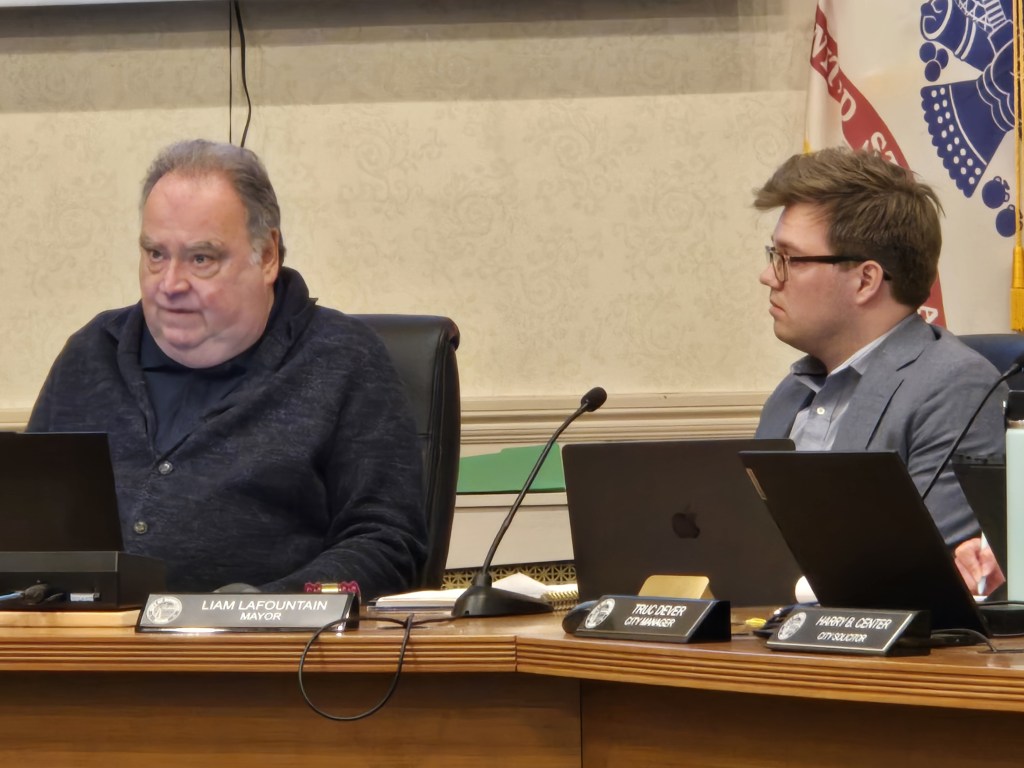




















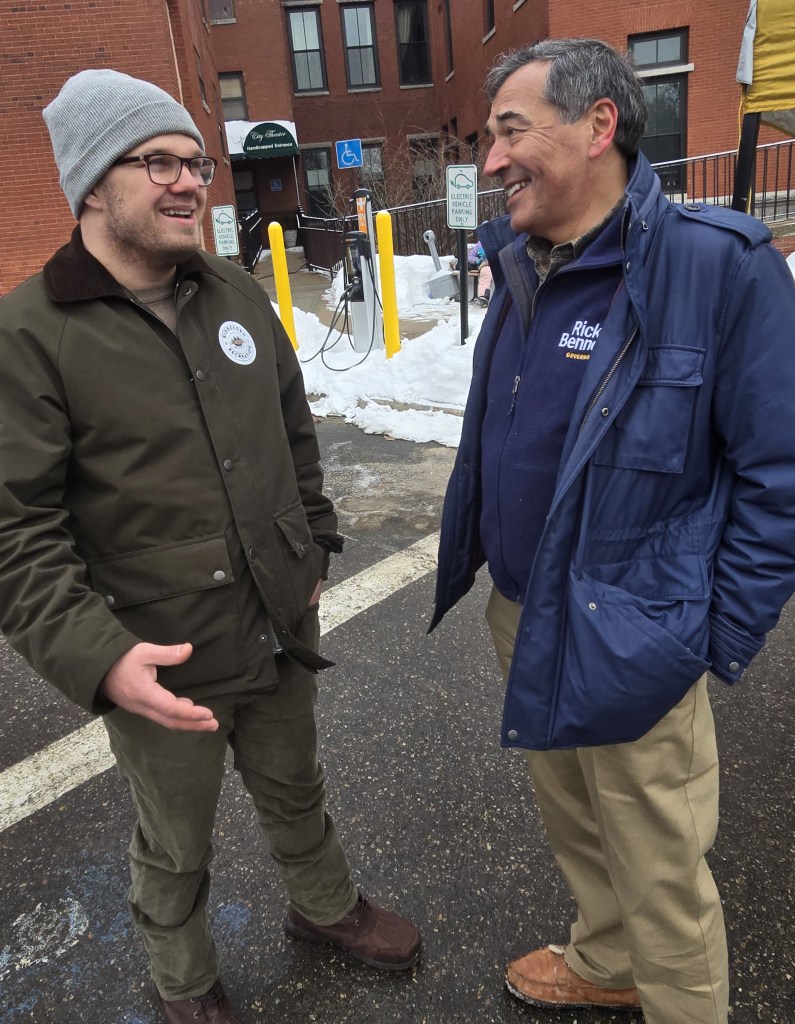

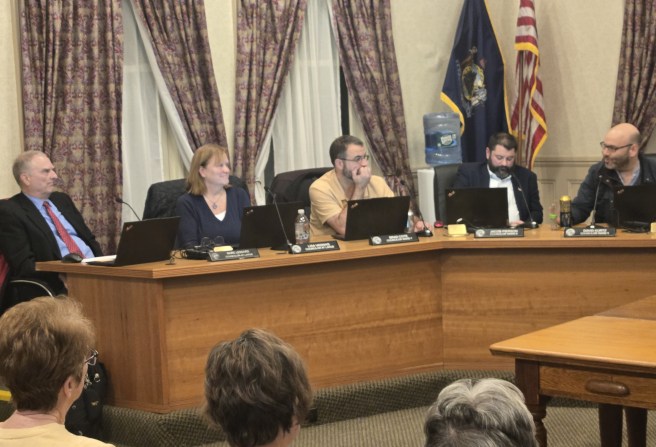

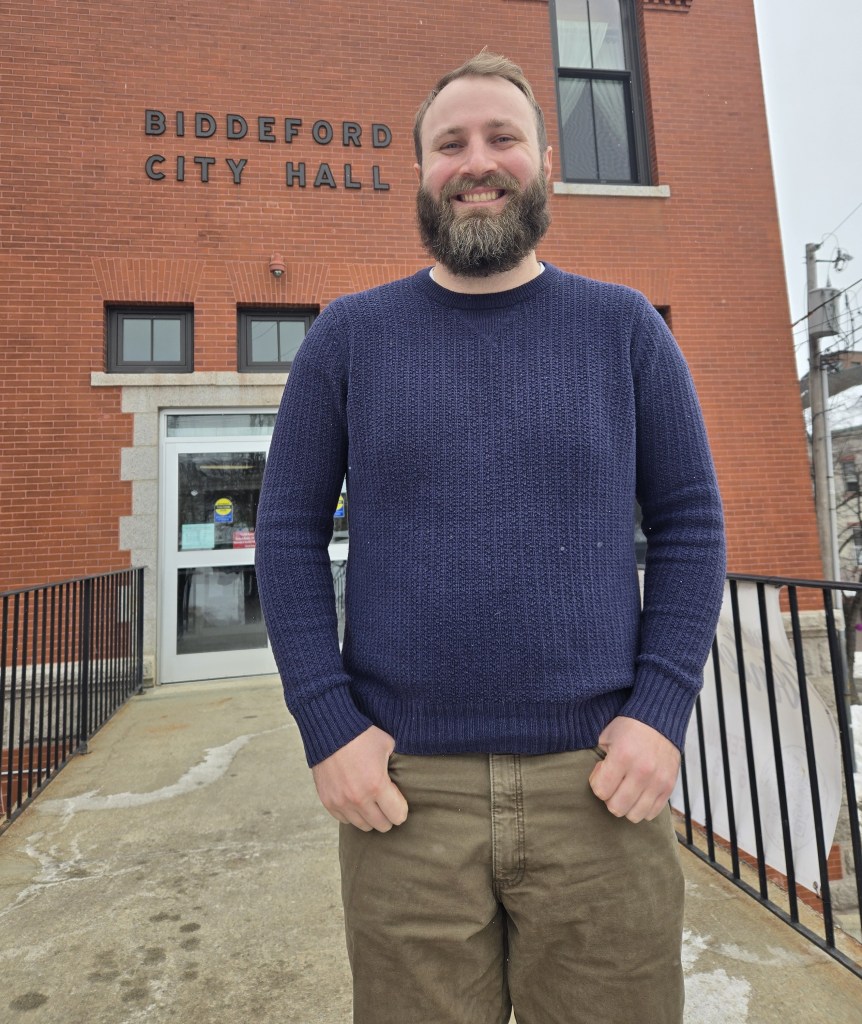
 BIDDEFORD GAZETTE